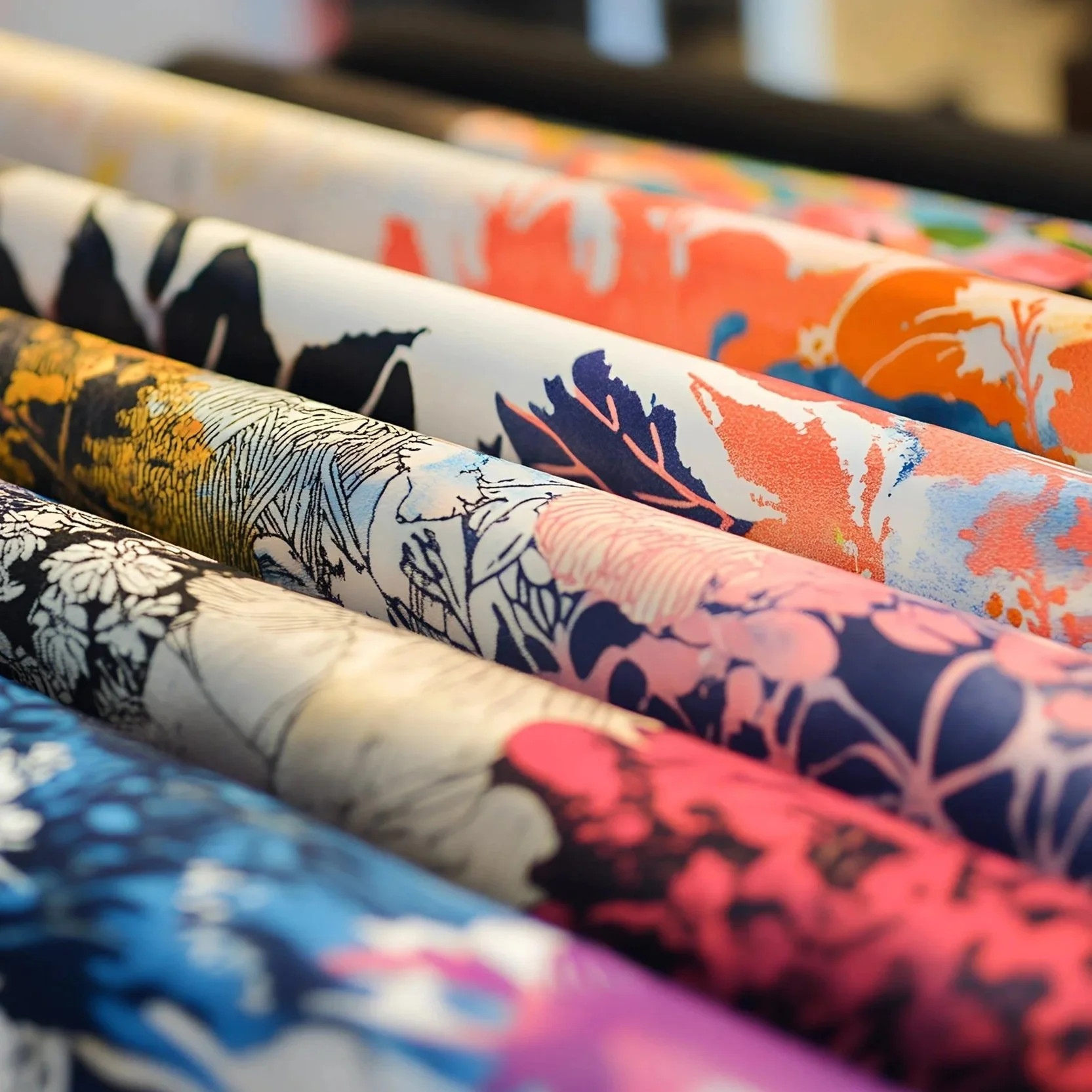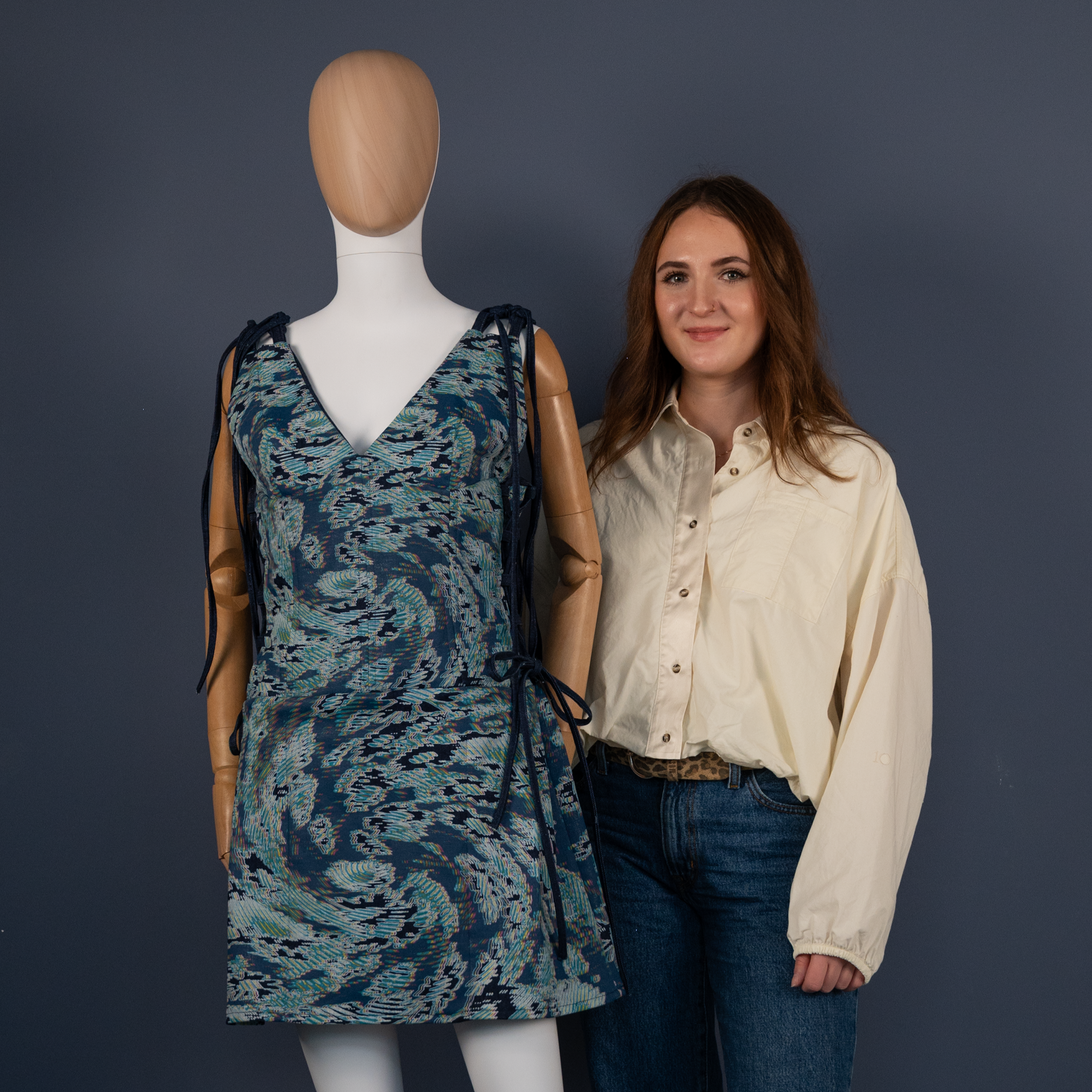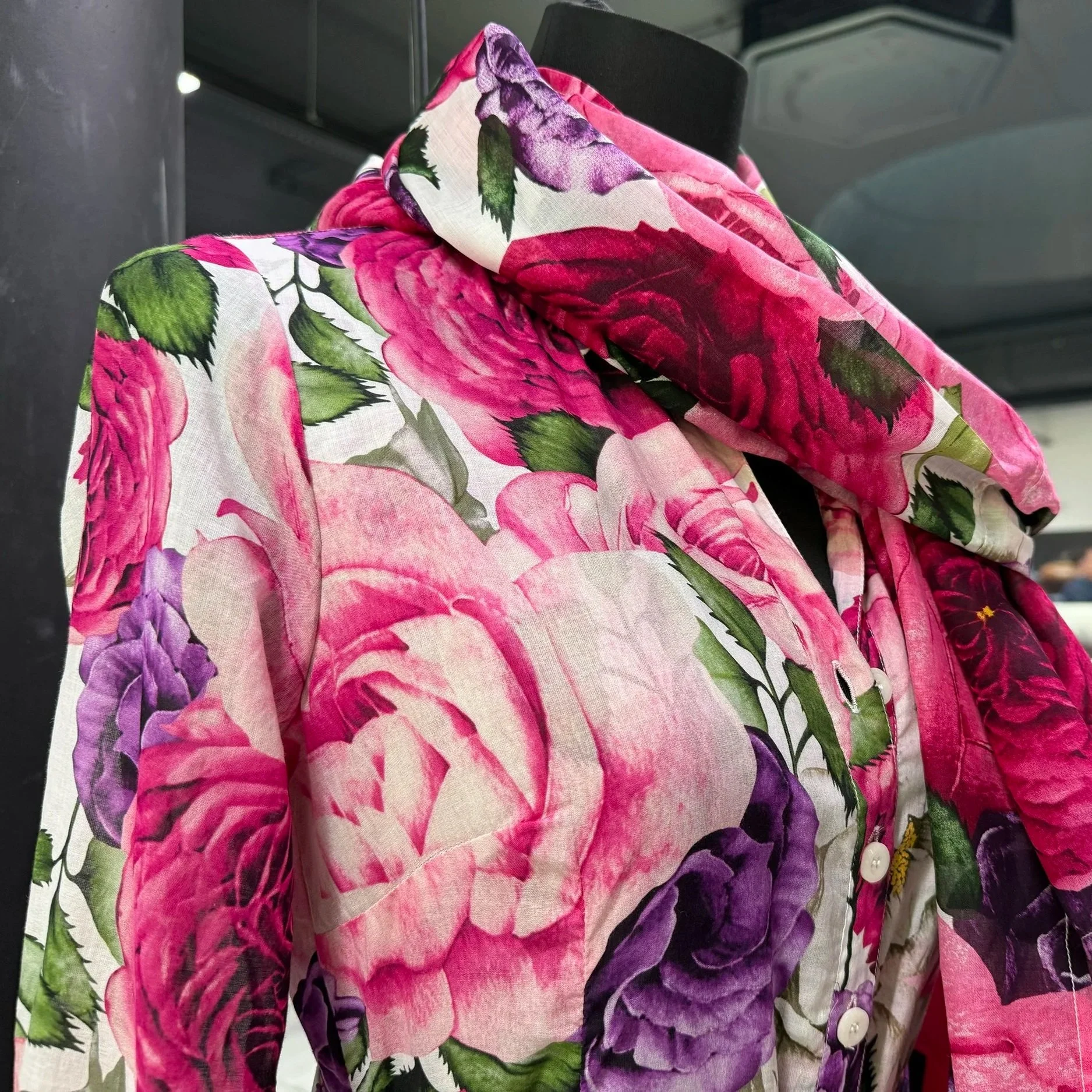
THE DIGITAL TEXTILE INDUSTRY LOOKS FORWARD TO AN ON-DEMAND FUTURE WITH INCREDIBLE OPPORTUNITIES - GROWING BY 14.4% to 2030

“The digital textile technologies of the future must deliver a new hybrid for production by removing much of the ancillary machinery required to offer a simpler solution. It must also deliver a high-quality product that meets the needs of the textile consumer, and that goes beyond the printed surface”.
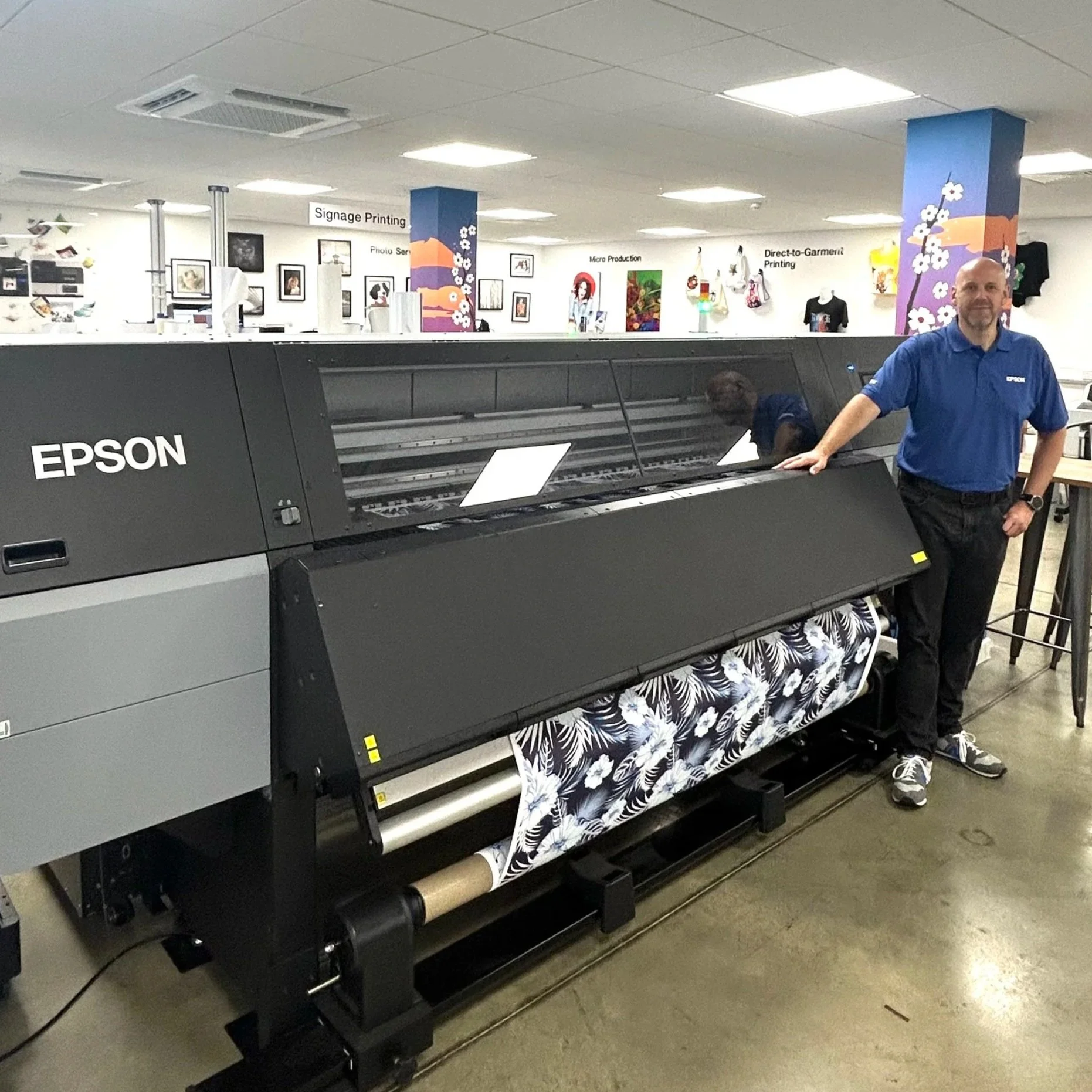
The global digital textile printing market size was valued at USD 2,669.9 million in 2022 and is expected to expand at a compound annual growth rate (CAGR) of 14.4% from 2023 to 2030. The precision provided by digital textile printing is driving the demand. [Grand View Research]
It requires advanced machinery and there is an acute shortage of skilled manpower to operate these machines. It is utilized with various types of textiles such as clothing, bedsheets, banners, sports apparel, flags, vehicle wrapping, and interior textile. The growth of the industry can also be attributed to rapidly changing fashion trends and the need for manufacturers to quickly adopt those trends to stay relevant.
This growth will be driven by the success of web based on-demand business models - the urgency of the sustainability agenda - and the sheer economic efficiency of digital textile printing.
All over the world web-based on-demand businesses such as Printful, Cottonbee, Spoonflower and Merch by Amazon are clocking up huge growth rates, servicing demand with minimal inventories, speedy deliveries and high-quality product.
Equally, as the consumer searches for custom product, they also have an increasing sensitivity to sustainability.
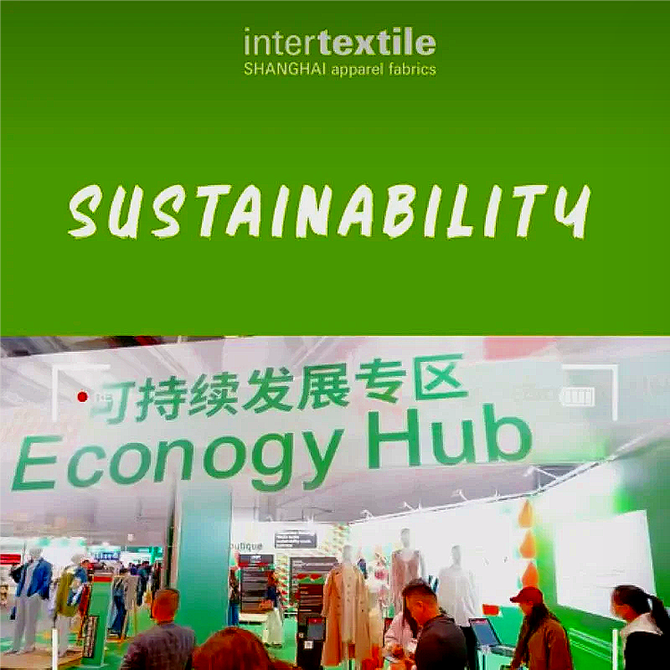
Here, digital textile printing ticks all the boxes, using a fraction of the water, a minimal amount of energy and a greatly reduce operational footprint. Digital is demonstrably an eco-friendlier solution to textile printing than traditional screen printing. Moreover, the Digital Textile Printing route cuts out many of the time and energy- consuming tasks that go alongside analogue production.
No longer do designs have to be painstakingly separated and engraved onto cumbersome rotary screens, no longer do vast tracts of the factory floor have to be given up to rotary screen storage, no longer do colour kitchens have to accurately mix litres and litres of printing inks, and no longer do rotary screens have to be meticulously washed after printing - all of which inherently unsustainable.
In the digital textile print business model, all of the above tasks are a thing of the past, as the digital workflow removes laborious manual process and progresses smoothly through all actions generating economic efficiency as it goes.
Equally, there are significant dynamics in the digital inks sector, where Research and Markets predict a 75% growth in the market by 2025.
It is interesting to note that this is against a predicted background of reducing prices where digital ink as a proportion of digital textile printing prime costs declines from 47.3% to 24.20% between 2020 and 2025 (Source: Research and Markets & Allied Market Research). This means that the growth in digital ink consumption volume is predicted to be in the order of 200%.
Similarly, the Global Digital Printing Machine Market is forecast by Verified Market Research to double in size to over $470 m by 2027, reflecting the fundamental shift of the textile Industry away from rotary screen printing to digital.
Looking further ahead, undoubtedly the most striking feature of all of the current research predictions, is that although digital textile printing as proportion of all textile printing is predicted to double by 2025 (Allied Market Research) even by 2025 it will still only represent about 5% of all the textiles printed (Grand View Research).
This number alone is confirmation of the opportunities that lie ahead for digital textile printing. Over the coming years, as machinery in existing mills has to be replaced, as web to print business models develop, and as capital becomes available, so the proportion of digital print machines will continue to grow - as will the proportion of printed textiles that are digitally printed.
In these circumstances current rates of growth are likely to be maintained and it is not unreasonable to expect that by 2035, digital print machines annual sales will exceed $1 billion, as digital ink annual sales beat $6 billion and digital textile printing exceeds $35 billion annually.
No wonder that the Printing United Alliance, as they concluded their PRINTING United Digital Experience, described the digital textile market as an ‘exploding market’ as they focused on ‘the most exciting market in the Industry’.
So what does that all mean for the textile industry as a whole – switching to digital printing technologies offers both new opportunities for entrepreneurial growth and the agility required for sustainable production at industrial volume.
It unlocks past processes, and moves forward to replace analogue production, handing the power back to the consumer by enabling on-demand manufacturing. In doing so it also engages the design community, and the consumer, freeing them from mass production, something that the retail sector must now address if they are to remain viable.
The textile marketplace is primed for change – the consumer demands diversity and the industry must now take flight and adopt the technologies that deliver industry 4.0.
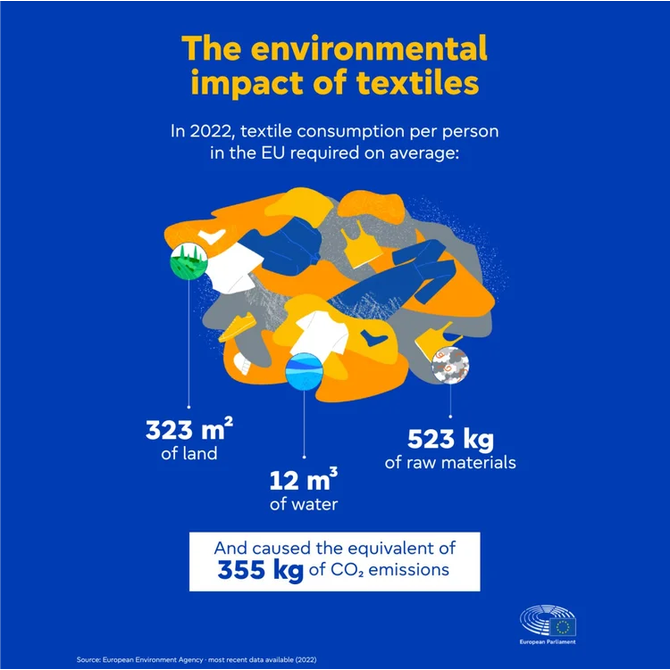
Recent innovations are pushing the boundaries of print in an established market. As new entrants gain traction, the opportunities are infinite when twinned with digital technology. However, the textile industry has a historic footprint, and whilst technology is disrupting how we actually print, many of the textiles we print onto haven’t changed in construction for over a hundred years. But that’s also about to change with new sustainably sourced or circular fibres becoming mainstream. Much of the issue of sustainability is upstream from print, created in the manufacture of fibres, natural and synthetic, alongside the weaving and processing of woven or knitted fabrics and is responsible for large volumes of carbon emissions and global toxicity.
Printing onto these fabrics using traditional printing methods is now equally challenged by digital technology. Transparency within the supply chain will soon become a requirement for the retailer and new digital technologies such as blockchain can and will facilitate this.
Platforms such as TextileGenesis, a pioneering traceability company now enable complete traceability from fibre to retail. Lenzing, Tencel and Ecovero fibres now incorporate the tools to trace a fabrics certification of the fibre from its origin through to spinning, weaving, knitting, dying and up to garment making. To date supply chain transparency has become a top priority for apparel and home brands, it addresses both the consumers demand for such and the increasing risk for accurate compliance as now faced by all brand partners. The platform continues to progress with a phased onboarding pilot program with leading bands H&M, ArmedAngels, Mara Hoffman, Chicks and core supply chain players from 10 countries in three regions Asia, Europe and the Americas.
It’s at this point that digital technology comes to the fore, with an increasing requirement for traceability and sustainability.
In order to deliver a new chapter for the textile industry we have to comply and seek to simplify past production process if we are to reverse the environmental legacy of traditional production. Historically conventional printing has been a complicated science, and the digital switch a steep learning curve. Traditional analogue printing demands a complicated series of processing steps, and each step demands additional equipment. The digital textile technologies of the future must deliver a new hybrid for production by removing much of the ancillary machinery required to offer a simpler solution. It must also deliver a high-quality product that meets the needs of the textile consumer, and that goes beyond the printed surface. Textiles are tactile, and the final product is designed for both quality, durability and performance.
Regardless of market sector, and there are many, textiles and their performance specifications are established, they cannot change.
In order to simplify the process of production and meet demand and specification, the digital textile printing machine technology utilised must be adaptive – it must function without complexity to print onto multiple substrates and fabric constructions. It must meet specific customer requirements and move to replace traditional processes at the push of a button. Printing onto a fine polyester Chiffon by example would usually demand a laborious set of processes for the traditional print house, as does printing onto a heavy cotton twill. Each fabric will react to printed colour, handle, and shrinkage differently - all factors must be controlled to ensure that the final finished textile output meets expectations, this would usually require an arsenal of expensive in-house textile finishing equipment and a high proportion of labour and energy.
Digital printing technology companies such as Kornit Digital have overturned the challenges of conventional manufacturing and are disrupting the analogue marketplace.
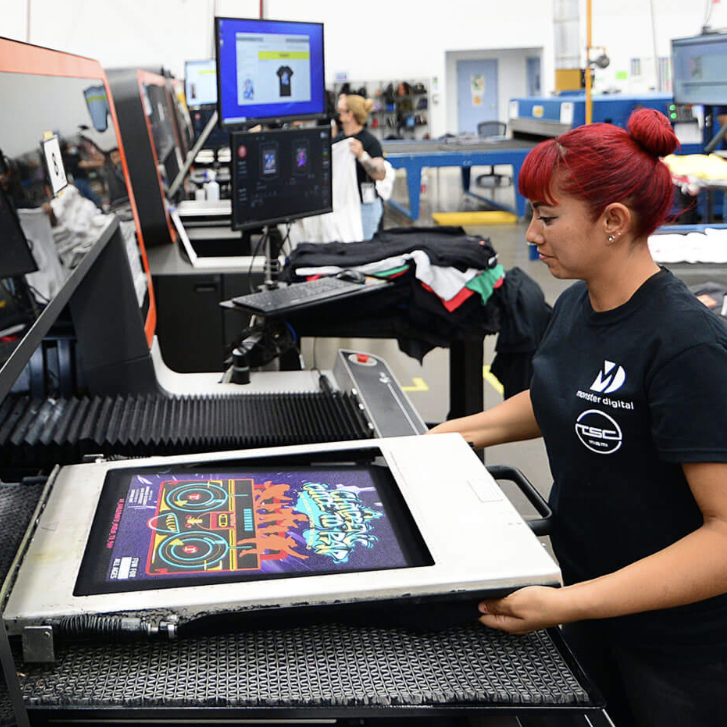
Kornit have developed a printing machine that is built for a new innovative vision of the textile industry, one that moves to simplify manufacturing across all sectors of Apparel and Home Decoration. With one machine, the Kornit Presto, the digital textile printer can adapt on the fly to meet client demand and to enable on-demand, high quality textile printing. All of which ensures that the manufacturer can reap the benefits and opportunities that now arise for on-demand production. With just one machine and a greatly reduced operational footprint the printer can control all aspects of textile production, in a clean, certified production supply chain.
As we enter a new, accelerated chapter for our industry, technology paves the way towards a new future that offers the designer, retailer and consumer incredible creativity, diversity and opportunity alongside certified printed production and supply chain visibility. Each and every partner in the supply chain of one single product will soon come under increasing scrutiny.
To build a future safe business model the textile printing industry must now adapt and choose its technology partners and suppliers wisely in order to meet market demands and do all of this at an accelerated pace. Switching to a certified supply chain, with a sustainable digital footprint will deliver a successful on-demand commercial future.