Securing the Future of Creative Production: Key Insights from Our Latest Roundtable

The Security Case for Indentity Based Licensing
A lack of visibility is not just a security risk - it is a missed business opportunity. Without knowing who is actually using your software, you cannot personalise the experience, identify underused features, or proactively engage with customers between renewal cycles.
The textile and design industries are at a crossroads. Legacy systems that served creative teams for decades are no longer fit for purpose in a world defined by distributed workforces, global supply chains, and the relentless pace of digital innovation. The question is no longer whether to modernise - it's how quickly businesses can move before the gap between where they are and where they need to be becomes impossible to close.
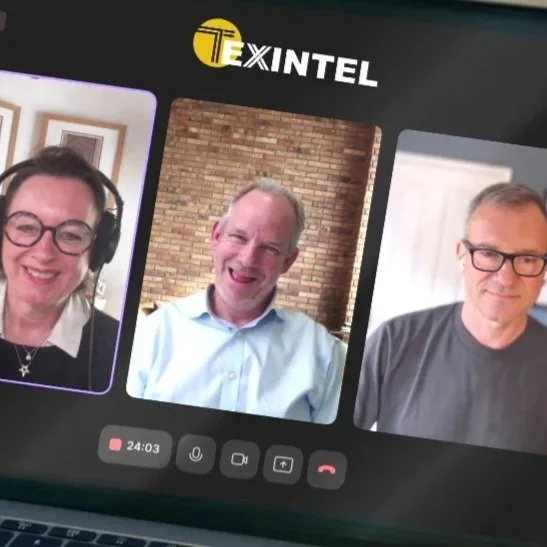
To explore these challenges head-on, we hosted a roundtable discussion featuring two leaders at the forefront of this transformation: Frank Maeder, President of NedGraphics, and Neil Fenton, CEO of 10Duke -a London-based technology company specialising in software licensing, managing over £4 billion in licensing value across verticals ranging from mining and CAD/CAM to special effects software. Together, they unpacked the evolution of creative production, the shift away from legacy hardware, and what it truly means to future-proof a design business.
Here is what we uncovered.
The Legacy Problem: Why the Dongle's Days Are Numbered
It might seem like a small thing - a physical dongle plugged into the back of a machine. But for companies like NedGraphics, which has been in business for over 40 years, that small piece of hardware represented something much larger: a fundamental approach to how software was secured, distributed, and accessed.
Frank Maeder was candid about the scale of the problem when he joined NedGraphics nearly four years ago. "Licensing was probably the single biggest problem that we had," he said. "It affects every single customer that we have and it was also taking up a lot of resources on our side."
The dongle model made sense when teams were static, working from a fixed machine in a fixed location. But the world changed, and COVID-19 accelerated that change dramatically. Overnight, designers had to work from home, grabbing their dongles and plugging them into laptops. What followed exposed just how fragile the old model was.
"Moving the dongle from one machine to another is usually not enough," Frank explained. "We actually had to make sure that the licence itself was also somehow moved and that was taking time from us and causing downtime for customers."
Beyond the operational headaches, there is also a psychological dimension to consider. In production-heavy environments, the dongle had become a physical representation of a software investment - a tangible "thing" that teams could point to and say, "that is our software." Letting go of that mindset, Frank acknowledged, has taken time. But the industry is now decisively moving past it.
The Security Case for Identity-Based Licensing
One of the most compelling arguments to emerge from the discussion was the security advantage of tying a software licence directly to a user's identity, rather than to a physical key or device.
Neil Fenton used a striking analogy to illustrate the problem with traditional key-based licensing: "When I issue a key to a customer, it's like I walk up to a very tall brick wall, I throw the key over, and I have absolutely no idea who catches it on the other side."
That lack of visibility is not just a security risk- it is a missed business opportunity. Without knowing who is actually using your software, you cannot personalise the experience, identify underused features, or proactively engage with customers between renewal cycles. The only time vendors historically heard from customers was at renewal- often when it was too late.
Identity-based licensing changes this entirely. As Neil explained, it opens the door to product-led growth: "If you have a kind of state-of-the-art, identity-based licensing system, you're much more connected. You can see which features they're using, suggest new features, and make amendments if the product isn't hitting the mark."
For NedGraphics, this visibility is particularly valuable as the business looks to bring together its two product lines - NedGraphics and Optitex - to serve overlapping customers across fashion and production. Without digital, user-centric licensing, coordinating access to multiple products across a shared customer base would be logistically unworkable.
User-Centric Licensing and the Frictionless Future
A recurring theme throughout the discussion was friction - or rather, the urgent need to eliminate it. Neil pointed to a generational shift in user expectations that is reshaping the entire software industry.
"If you take a young design professional in London or New York, their expectation as to how they access a piece of software has already changed," he said. "Just like in your personal life- you log into Netflix, you log into Spotify, it should just work. That expectation has now shifted to B2B."
Frank echoed this sentiment, describing the ideal end state for licensing as one where it effectively disappears from the user's experience entirely. "If licensing were to disappear completely - that's exactly the experience we want. We don't want people to think about it."
This is not a trivial aspiration. Achieving frictionless access for a roaming designer moving between a New York studio, a home office, and a supplier facility in the Far East requires a sophisticated, cloud-based licensing infrastructure. It requires a system that can accommodate fixed workstations on a factory floor in India, offline access for engineers working in remote locations, and seamless cloud-based collaboration across time zones - all under a single, consistent user experience.
The partnership with 10Duke was built precisely to solve for this complexity. "Every time we came with a new requirement," Frank noted, "we would have a way to accommodate it. The beauty of it is we don't need to do that thinking - someone has already done it."
Cloud Integration as a Competitive Differentiator
The move to cloud-based licensing is not an end in itself, it is the infrastructure that enables far greater opportunities for global collaboration and competitive advantage.
NedGraphics serves brands and retailers in North America and Western Europe, whose suppliers are often based in the Far East. In a supply chain that remains highly fragmented and, in many areas, still analogue, cloud connectivity is the only viable mechanism for enabling real-time collaboration across those distances.
"The cloud is a means to an end," Frank said. "It is how we can facilitate these exchanges and this collaboration. Anything cloud is really a lot of focus for us going forward."
Neil reinforced this point from a broader industry perspective, noting that the pattern of extending desktop applications with cloud-based complementary services is becoming standard across verticals. The key is ensuring that, regardless of where or how a user accesses the software, the experience remains seamless and consistent.
He was equally direct about the business logic of outsourcing infrastructure decisions to specialist partners: "If you're a fast-growing software vendor, you are looking for the quickest route to efficiency. Outsource your licensing, outsource your CRM - but pick your partners carefully, who can show you a proven track record and help you think through issues you haven't even realised you're going to have."
The Sustainability Dividend
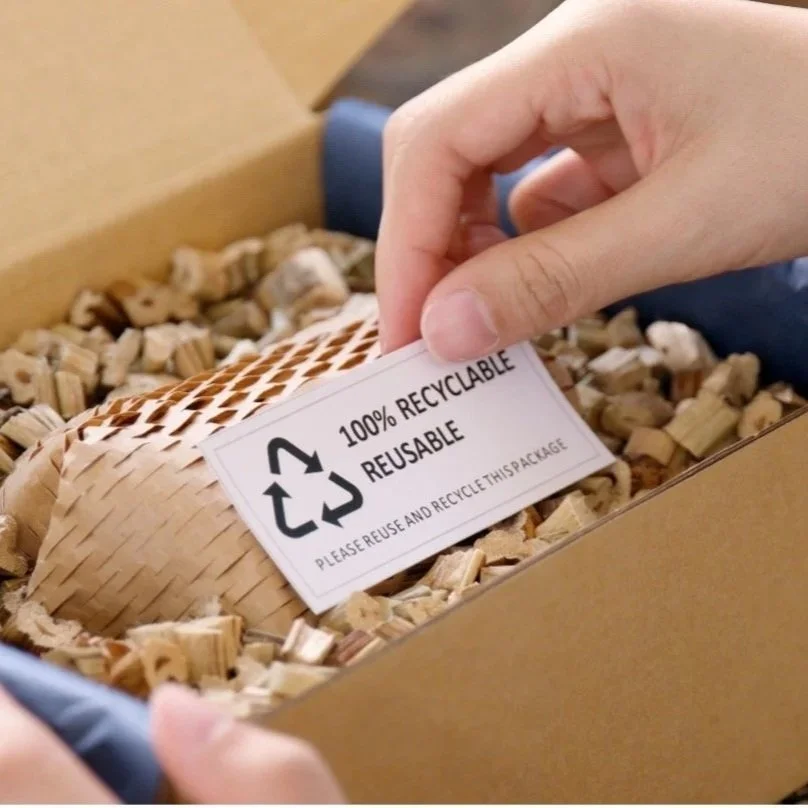
Perhaps the most unexpected dimension of the conversation was sustainability. It is not an angle that immediately comes to mind when discussing software licensing but the environmental case for retiring physical dongles is more significant than many businesses realise.
Neil shared the example of a vendor in Southeast Asia who, prior to moving to digital licensing, was shipping approximately 300,000 physical dongles annually. "You have the physical dongle," he explained, "but more importantly, from an environmental impact perspective, you have the actual shipping process the petrochemicals being used to transport them, whether by plane, train, or van."
For NedGraphics' customers - many of whom are large brands with formal sustainability KPIs - this matters. The ability to point to a measurable reduction in physical waste and logistics emissions is a genuine value-add, even if it is not the primary driver of the transition.
Beyond dongles, Neil spoke about the responsibility that technology companies have to minimise their own environmental footprint through efficient code that reduces CPU cycles, and by actively selecting infrastructure providers who are investing in sustainable data centre operations.
"Everybody in this chain needs to be doing as much as they can to minimise that impact," he said. "It's not just about the business case - it's about what we leave behind."
Key Takeaways and Action Points
The discussion surfaced a clear set of priorities for design and production businesses navigating this transition:
Audit your current licensing model. If you are still reliant on physical dongles or static licence keys, the operational, security, and sustainability risks are only going to grow. The question is not whether to move, but how fast.
Adopt a user-centric approach to licensing. Knowing who is using your software - and how - unlocks product-led growth, improves customer satisfaction, and gives you the data you need to make informed decisions.
Embrace cloud infrastructure, but choose partners carefully. The cloud creates transformative opportunities for global collaboration, but only if your licensing and infrastructure partners can deliver on resilience, security, and uptime guarantees. Ask hard questions before you commit.
Plan for hybrid environments. The future is not purely cloud or purely desktop - it is both. Ensure your licensing solution can accommodate roaming users, fixed workstations, offline access, and cloud-based modules under a single, seamless experience.
Build sustainability into your technology decisions. From eliminating dongle shipments to selecting energy-efficient infrastructure providers, every decision compounds. Make environmental impact a lens through which you evaluate your technology partnerships.
In Summary
The transition from legacy hardware to cloud-based, identity-driven licensing is not simply a technical upgrade - it is a strategic repositioning. Companies that move decisively will be better placed to serve global customers, retain top creative talent, and build the kind of efficient, sustainable operations that the next decade demands.
The conversation between NedGraphics and 10Duke offers a compelling template: identify the problems that are not core to your expertise, find best-in-class partners who have already solved them, and free your own teams to focus on what they do best.
The future of creative production is seamless, secure, and sustainable. The tools to get there already exist.
NEDKey is available across a wide range of NedGraphics applications, including:
Manager Assistant
Design Finder