The Structual Shift is Real and its Already Here
Volumes are moving east, where digital production is accelerating rapidly. Consumer behaviour has shifted.
Demand is now driven by personalisation, shorter buying cycles, and an expectation of near-instant responsiveness. Regulatory pressure is intensifying, with supply chain transparency now a legal and commercial fact in many markets. And margins? They are under sustained, structural pressure.
This is not a temporary disruption. It is a fundamental reordering of how textile manufacturing must operate.
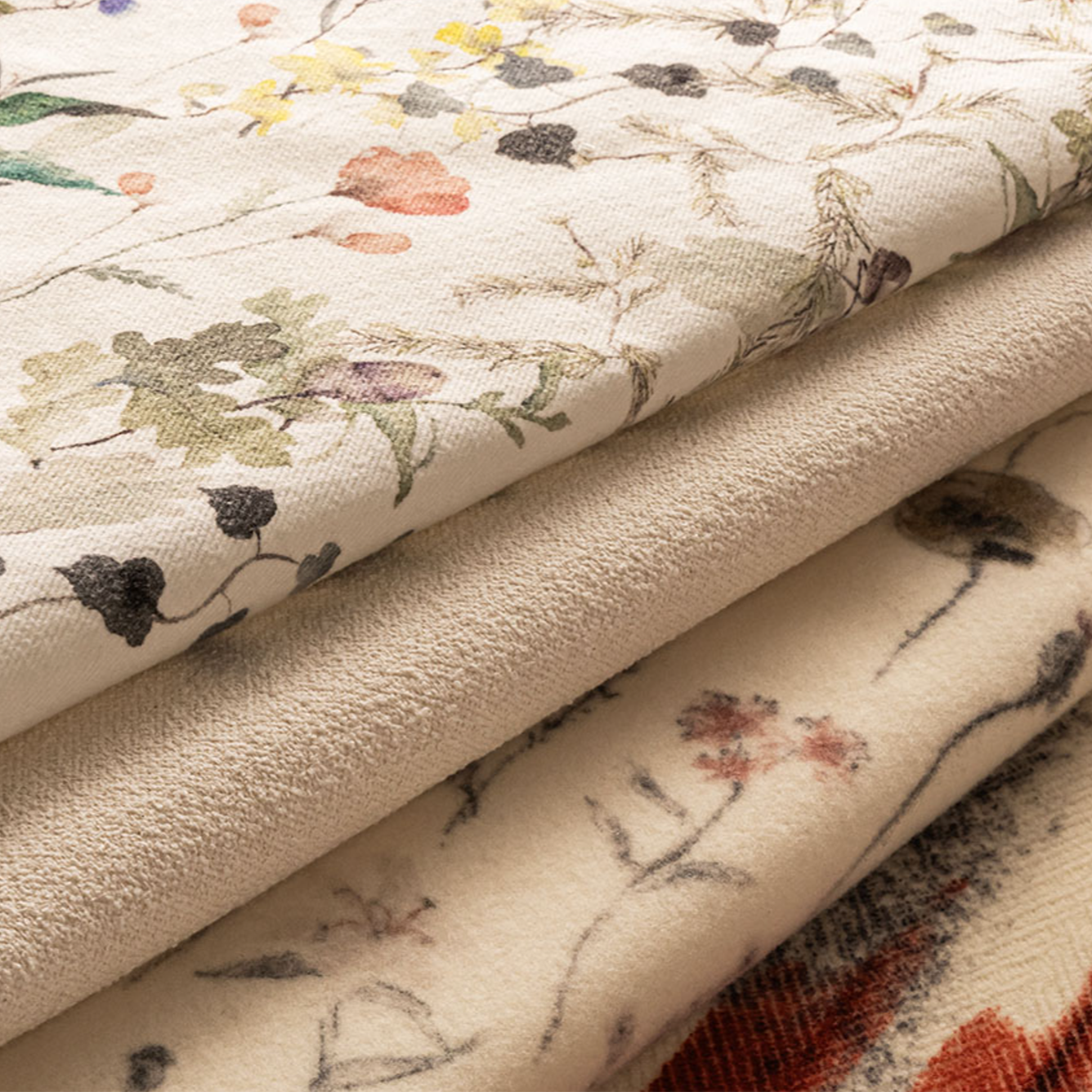
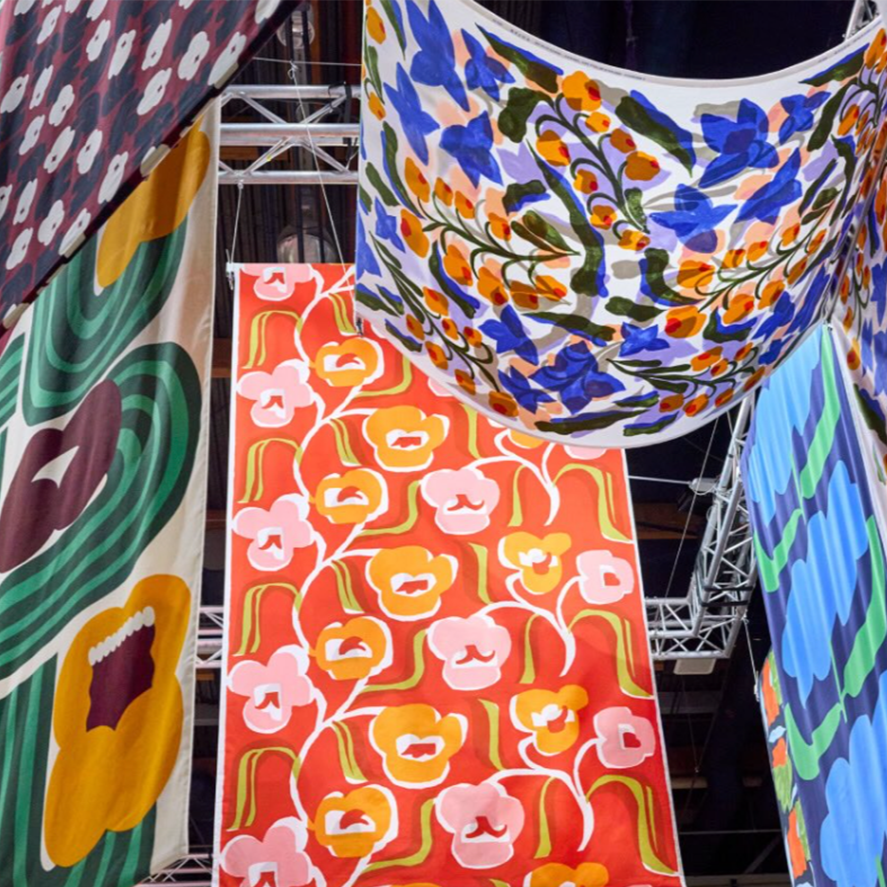
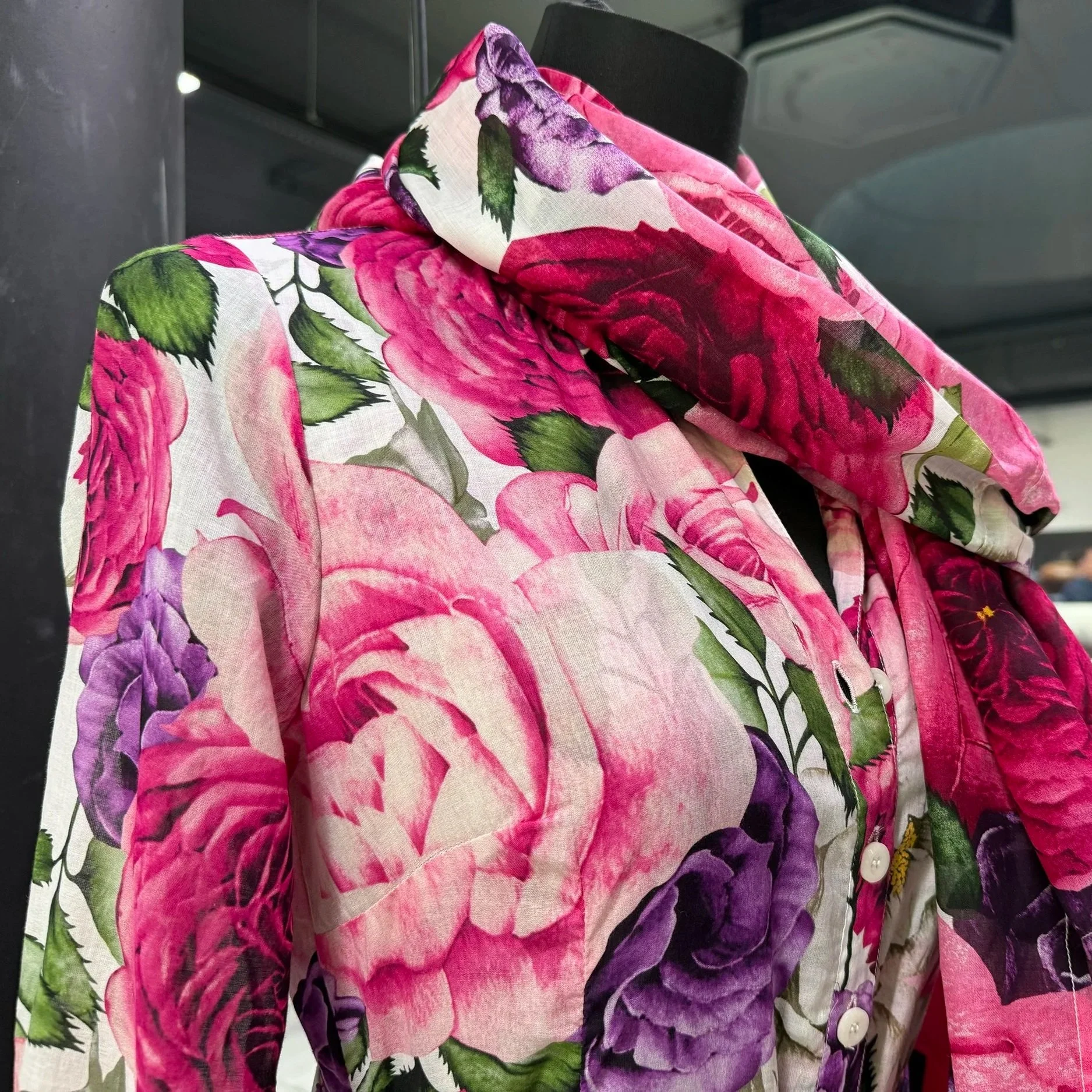
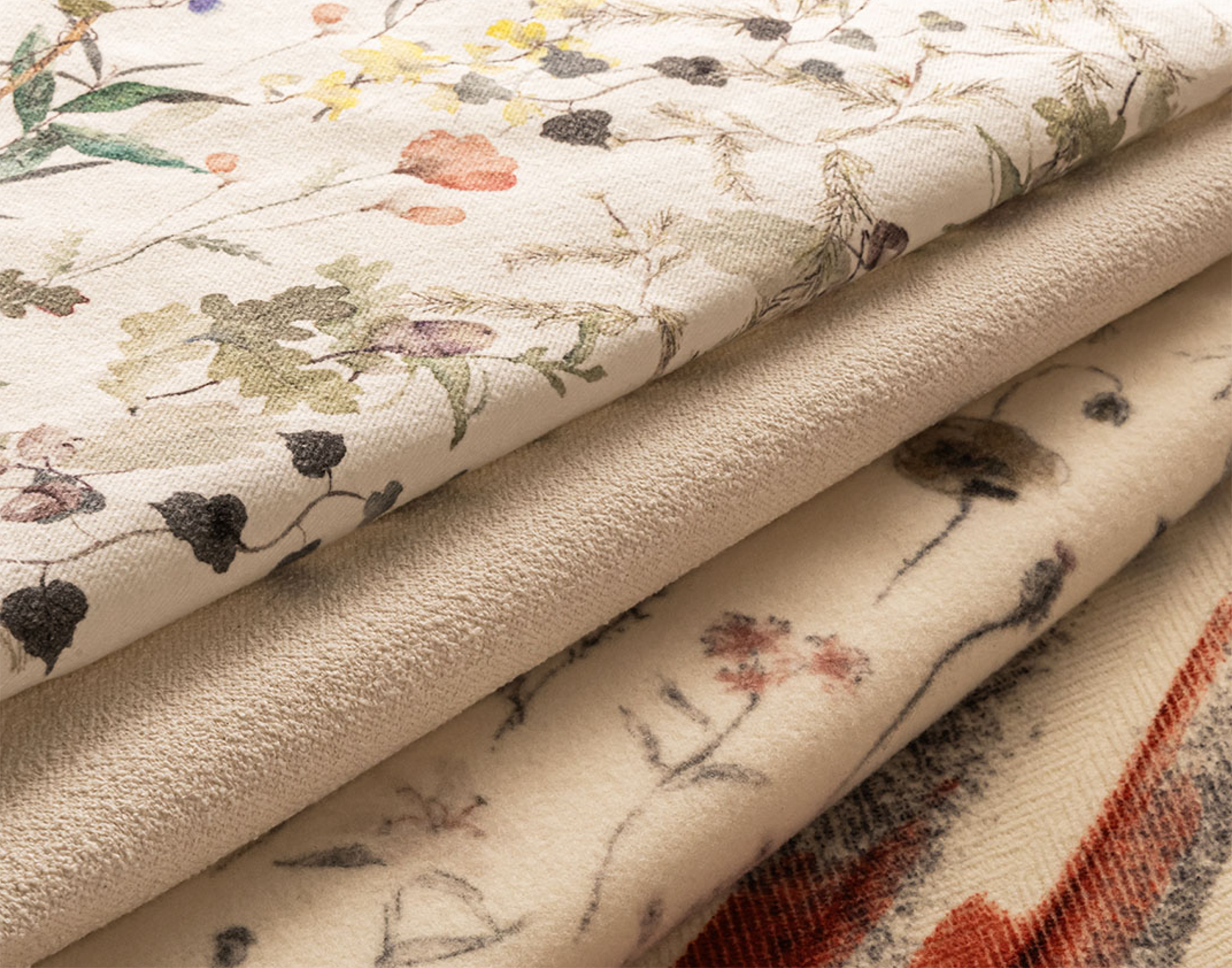
The question the panel addressed was not whether to adapt, but how and at what pace. Image Credit: Ratti S.P.A
WRITTEN BY FESPA TEXTILE AMBASSADOR DEBBIE MCKEEGAN
The textile industry is not simply evolving. It is resetting. And the manufacturers navigating that reset most successfully are not those with the highest volumes, they are those with the sharpest vision, the most agile operations, and the deepest commitment to collaboration.
That was the central message to emerge from a remarkable panel discussion held recently at Durst AG's headquarters in Brixen, Italy, as part of the Durst Next festival. Moderated by Debbie McKeegan - CEO of Texintel and FESPA Textile Ambassador the conversation brought together four leaders at the forefront of industrial-scale digital textile production:
Alessandro Manes, Durst
Jay Purmessur, CDL Knits Ltd, Mauritius
Alessandro Ivaldi, Ratti S.p.A, Italy
Alessandro Floridia, Fasac S.p.A, Italy
What followed was a candid, insightful, and forward-looking conversation not to be missed and this article distils its most critical takeaways.
The Structural Shift Is Real and It Is Already Here
Before diving into the voices from the panel, it is worth framing the scale of change currently reshaping the textile industry.
Volumes are moving east, where digital production is accelerating rapidly. Consumer behaviour has shifted. Demand is now driven by personalisation, shorter buying cycles, and an expectation of near-instant responsiveness. Regulatory pressure is intensifying, with supply chain transparency now a legal and commercial fact in many markets. And margins? They are under sustained, structural pressure.
This is not a temporary disruption. It is a fundamental reordering of how textile manufacturing must operate. The question the panel addressed was not whether to adapt, but how and at what pace.
Why Como, Why Now: Durst's €15 Million Commitment
The panel opened with a significant announcement. Durst has committed more than €15 million to a new innovation hub in Como, Italy - the birthplace of digital textile printing, and still one of the most symbolically important districts in global fashion.
For Alessandro Manes, the rationale is clear: proximity to the customer is a competitive advantage.
"Como is a symbol in the world for textile. Digital printing was born in Como, 25 years ago. We want to stay in contact with our customers, brand designers - to listen to the market, to develop innovation."
The new facility - set to open in January 2027 - will include an interactive innovation lab, a new chemistry centre, and a 1,000 square metre customer experience centre where brands, designers, and technology partners can co-develop the next generation of textile solutions. This is not merely an upgrade. It is a deliberate repositioning of Durst as the connective tissue between technology and creativity at the heart of the Italian textile ecosystem.
The merger between Aleph and Durst - creating what is now the only Italian-owned digital printing company of its scale - further deepens this commitment. With Aleph bringing 25 years of Como textile knowledge and software expertise, the combined entity is uniquely positioned to accelerate innovation in a district that is now 80% digital.
Looking ahead to 2027, Durst plans to arrive not with a prototype, but with a full modular ecosystem - new inks, advanced software, artificial intelligence, and next-generation print technology - developed collaboratively across its Brixen, Como, and Lienz research and development (R&D) production facilities. The message is unambiguous: the future of textile printing is a system, not a machine.
From Fabric Supplier to Solution Provider: The Ratti Transformation
Ratti S.p.A holds one of the most extraordinary assets in global fashion: an archive of more than one million design pieces, representing centuries of Italian silk heritage. For Alessandro Ivaldi, digital printing has not simply improved production - it has transformed what Ratti sells.
"In the past, we sold fabric and accessories. Now we have to sell solutions. That is the main difference."
The numbers tell part of the story. In 2009, Ratti operated a single digital printer capable of producing 1,000 metres per day. Today, 24 machines produce up to 20,000 metres daily. But the more profound shift is strategic.
Brands - particularly those at the luxury end of the market - no longer arrive with clear briefs. Uncertainty is now the operating condition. Ratti's role has evolved from executing a customer's vision to translating that uncertainty into tangible business outcomes. With dedicated product managers working daily alongside clients, the company has become an active creative and commercial partner, not merely a production facility.
Ivaldi also raised a point that resonated strongly throughout the discussion: identity is the new competitive currency. When markets contract, brands instinctively retreat to solid, safe fabrics. The antidote for both brand and manufacturer is the ability to create something genuinely distinctive. Digital print, with its capacity for special effects, unique colourways, and near-limitless design expression, is the tool that makes differentiation possible.
"They want ingredients to make their product different. They want identity."
And critically, Ivaldi was direct about what he needs from a technology partner to deliver this: longevity, collaboration, and the capability to certify every step of the production process. Digital product passports are coming. Transparency is no longer optional.
Competing From the Middle of an Ocean: The CDL Knits Story
Of all the perspectives on the panel, Jay Purmessur's was perhaps the most instructive because CDL Knits operates under constraints that would defeat most manufacturers before they even begin.
Based in Mauritius, thousands of kilometres from both supply chains and end markets, the company produces 12 million garments per year for retailers in the USA, Europe, and South Africa. Competing on cost or volume against Asian or Latin American suppliers was never a viable strategy. So CDL Knits chose a different game entirely.
"We knew that we had to play a different game." That game was digital pigment printing, making CDL Knits, by Purmessur's account, potentially the first pigment digital printer in the Southern Hemisphere. The results were transformative across three dimensions:
Speed: Development cycles that once took weeks - screen engraving, proofing, customer approval - were compressed to hours. Distance was effectively neutralised.
Design diversity: Unlimited colourways, gradients, and design complexity that conventional screen printing simply cannot match. A dedicated in-house design team became a genuine competitive asset.
Cost efficiency: Sampling costs dropped dramatically. The cost of 100 digital print samples is comparable to developing a single conventional screen.
But the deeper insight Purmessur offered was about the integrated mill model as a strategic weapon. By controlling the full production chain - from yarn development through knitting, finishing, and digital print - CDL Knits can run small drops, replenish quickly, change a print week to week, and offer full traceability. In a market that increasingly demands flexibility over volume, this is a formidable position.
"We made a mill that behaves like it's sitting just next to the customer." Service, in Purmessur's framing, is not a support function. It is the product.
The Shock Absorber Economy: Fasac S.p.A.'s New Reality
Alessandro Floridia offered perhaps the most viscerally honest account of what it means to be a manufacturer in the current market. His framing was arresting:
"We are no longer just suppliers. I consider ourselves shock absorbers."
The metaphor is precise. Brands are navigating an increasingly unpredictable road - volatile consumer behaviour, compressed decision cycles, regulatory complexity, and the ever-present pressure to demonstrate sustainability credentials. They need a manufacturer who can absorb the shocks, smooth the journey, and reduce their risk at every turn.
For Fasac, this has required significant investment in people, in machinery redundancy to manage demand peaks, and in inventory held on behalf of clients to ensure certified, sustainable products are available without forcing brands to carry the financial risk themselves.
Quality, Floridia noted, is no longer a differentiator. It is a baseline expectation:
"Ten years ago, in Como we were claiming we have quality. Nowadays, quality is expected. It's the real minimum factor."
What customers now pay for is responsiveness, flexibility, and speed - not speed of production, but speed of answer. The ability to respond to a customer's uncertainty, quickly and decisively, is what separates the manufacturers who will thrive from those who will not.
Floridia also offered what was perhaps the most striking vision of the future: Fasac's manufacturers are becoming their clients' R&D departments. As brands shed internal capability and push complexity outward, their manufacturing partners must step into the gap - not just with machines, but with expertise, ingenuity, and the agility to solve problems that have never been solved before.
The Sustainability Paradox: Where the Industry Must Have an Honest Conversation
Sustainability was threaded throughout the entire discussion, but the most illuminating exchange came when the panel confronted what Floridia called the paradox at the heart of the industry's green ambitions.
Brands want to claim sustainability. They also want one-metre samples by tomorrow, short runs on demand, and unlimited flexibility. These two demands are, in many contexts, structurally incompatible.
"If you want to claim sustainability, you have to work all together across the entire supply chain."
For Fasac, achieving genuine environmental improvement requires planning lead time, something that constant short-run, last-minute demands actively undermine. The industry cannot have both without a serious, supply-chain-wide commitment to planning discipline and mutual respect between buyer and producer.
In Mauritius, the stakes are even more tangible. CDL Knits operates beside the blue lagoons and coral reefs that define its island home.
"For sustainability to really mean something in Mauritius, we produce exactly what the customer has asked for. Overproduction defeats everything."
Digital printing helps: less water, fewer chemicals but overproduction can rapidly reverse every environmental gain. The technology is not sufficient on its own. Intent and discipline must accompany it.
Ivaldi, meanwhile, offered a point of quiet pragmatism: companies can only maintain their social and environmental role if they are first economically sustainable. A manufacturer operating at a loss cannot invest in green chemistry, certified processes, or talent development. Profitability is not the enemy of sustainability. It is its prerequisite.
What Remains Constant: People
The panel's final question: What will remain constant in the textile industry over the next decade - produced what may have been the most important insight of the entire discussion.
Alessandro Floridia's answer was immediate and unequivocal: people. "Machines create efficiency, but people create value."
In a world where technology evolves faster than any strategic plan can anticipate, the sustainable competitive advantage is not a machine, a process, or even a patent. It is the ability to build an organisation that can adapt, and the people within it who make adaptation possible.
Floridia's philosophy at Fasac is instructive: "We always say: we first buy the taxi, then we look for the passengers."
Talent is not a consequence of opportunity. It is its precondition. The manufacturers who will lead the next chapter of the textile reset are those investing now in the people capable of navigating whatever comes next alongside the right technology partners to help them get there.
The Path Forward: Innovation, Collaboration, and Courage
The Textile Reset is not a moment. It is a condition - a sustained state of transformation that demands ongoing adaptation from every participant in the supply chain.
The panel in Brixen made three things abundantly clear:
First, digital production is no longer an emerging technology. It is the industrial standard for any manufacturer serious about competing on speed, flexibility, and design diversity. The question is no longer whether to digitalise, but how deeply and how strategically.
Second, the manufacturers who will define the next decade are not those who produce the most - they are those who solve the most. The shift from fabric supplier to solution provider is already well underway at companies like Ratti, CDL Knits, and Fasac. For those who have not yet made this transition, the urgency is real.
Third, no single company, manufacturer, brand, or technology provider can navigate this complexity alone. Collaboration across the supply chain is not a nice-to-have. It is the mechanism by which complexity becomes opportunity.
The future, as Debbie McKeegan framed it in her closing, belongs to those who can connect demand, design, and production. That connection requires investment, courage, and an honest reckoning with what the market is truly asking for.
The reset is already underway. The only remaining question is who will lead it.
A sincere thank you to Durst AG for hosting this extraordinary conversation at their headquarters in Brixen, Italy, and for their continued investment in the future of industrial digital textile production.
Gratitude also to each of our panellists: Alessandro Manes (Durst), Jay Purmessur (CDL Knits), Alessandro Ivaldi (Ratti), and Alessandro Floridia (Fasac) for their candour, generosity of knowledge, and willingness to share the realities of leading at the frontier of this industry. This is the kind of conversation that moves the industry forward. Thank you for being part of it.