
Digital transformation doesn't announce itself.
It accumulates - one innovation at a time - until an entire industry looks back and realises the ground has shifted beneath its feet. That's precisely where textiles stands today.
The conversations happening now about AI, automation, sustainability, and digital product passports are not theoretical. They are shaping decisions being made on factory floors and in boardrooms right now.
WRITTEN BY FESPA TEXTILE AMBASSADOR DEBBIE MCKEEGAN
At the FESPA Conference in Barcelona, four industry leaders explored how digital printing, AI, sustainability mandates, and on-demand manufacturing are converging to fundamentally reshape the textile industry - from fibre sourcing to the consumers front door.
Digital transformation doesn't announce itself. It accumulates - one innovation at a time - until an entire industry looks back and realises the ground has shifted beneath its feet. That's precisely where textiles stands today.
Hosted by Debbie McKeegan, FESPA Textile Ambassador, this panel brought together four prominent voices in the sector: Gart Davis, Kerry Maguire King, Mitesh Patel of Premier Textiles, and Duncan Ferguson of Epson whose combined experience spans print-on-demand, fabric supply, garment decoration, design, and technology for digital manufacturing. The conversation, held live at the FESPA Conference in Barcelona, moved swiftly from post-Covid market dynamics to AI-driven pattern making, digital product passports, and what a truly on-demand textile future might look like.
What follows is a review of the key themes uncovered, along with concrete action points for anyone operating in this space.
What Did the Post-Covid Textile Landscape Actually Look Like?
The panel opened with an honest assessment of where the industry found itself after the disruptions of recent years. The expected reshoring wave which many had confidently begun building product strategies around had stalled. Geopolitics, tariffs, and rising energy costs created a difficult operating environment, particularly for traditional textile producers.
Panellists noted a marked shift for home decoration, fashion, and promotional gifting emerging as the segments most likely to drive recovery. Sustainability, though it receded slightly from the headlines during this period, remained a structural force - however, the panel agreed would return with greater regulatory force.
The message was clear: the setback was temporary. On-demand digital printing, design, and production are gaining pace again, driven not just by commercial demand but by incoming regulation that will require the industry to account for its environmental footprint far more rigorously.
How Are Fabric Suppliers Innovating on Cost and Sustainability?
Rising energy costs and increasing regulatory compliance have placed real pressure on fabric suppliers. Rather than compromising on quality - a line the panel was firm about - suppliers are finding smarter ways to reduce cost structurally.
One approach gaining traction is applying pretreatment at the mill level and arranging direct shipments to customers, eliminating a step in the chain and reducing landed cost. Equally important is the refusal to cut corners on fabric specification: reducing GSM (grams per square metre), altering thread counts, or switching blends to save money produces inconsistent product quality, durability and output across print platforms and erodes the trust that long-standing supply relationships are built on.
On the sustainability front, the innovations being brought to market are genuinely encouraging:
Take-back services for print production waste (not post-consumer), with waste shredded and respun into fibre for reweaving
100% recycled cotton fabrics printed on pigment platforms, now available at scale
Organic fabric ranges being actively expanded across supplier portfolios
DNA markers in recycled polyester to enable traceability, with the technology being explored for cotton applications
What Role Is Digital Technology Playing in Manufacturing Efficiency?
This is where the conversation accelerated considerably. The panel pointed to fast-fashion leaders as benchmarks: some companies can move a product from concept to sale (at scale) in 90 days. Others, through fully digital models, have pushed that figure to a remarkable minus ten- taking payment before the product is made and shipping it only once an order is confirmed. For larger brands, strategic partnerships between manufacturing vendors are now essential to ensure swift, on-demand, close proximity manufacture that’s aligned with data and demand.
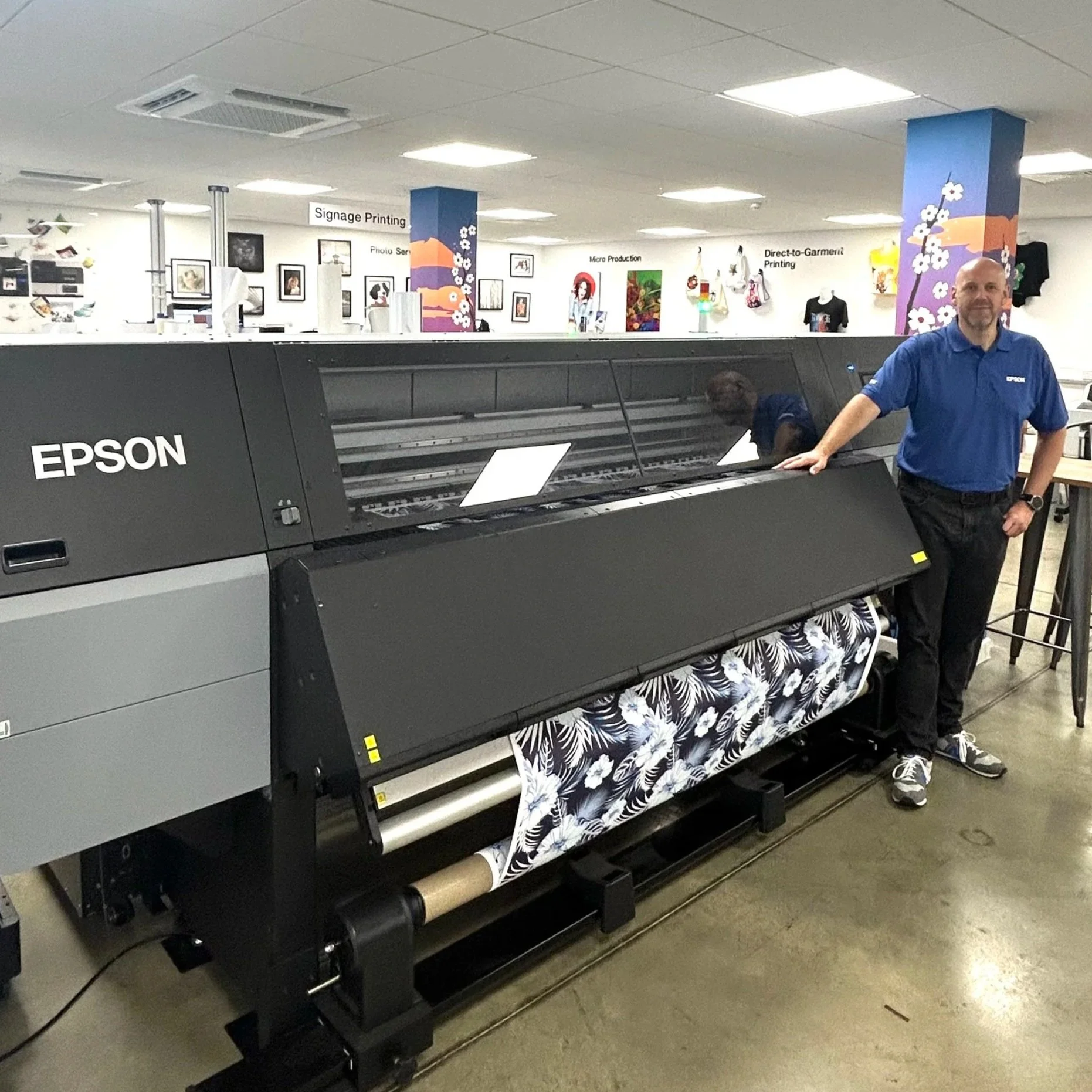
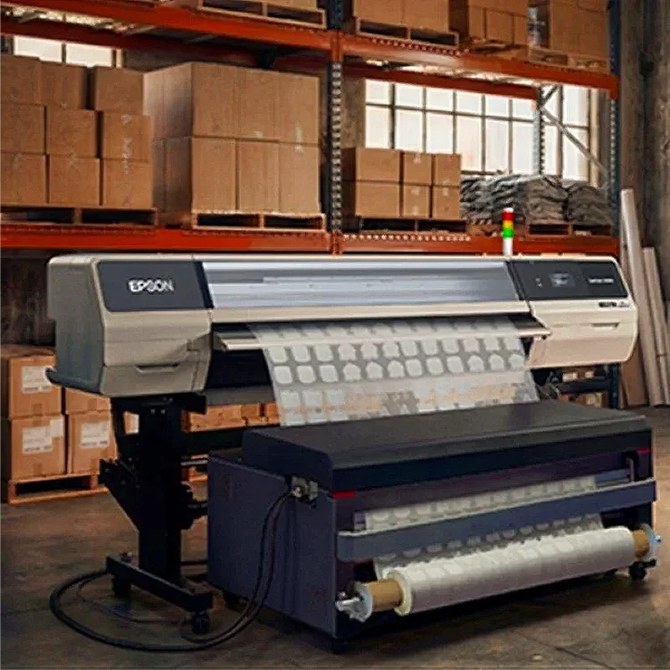
The integration of pre and post-treatment directly into digital printers such as the Epson ML 13,000 was highlighted as a genuinely progressive step. For decades, digital printing in textiles largely replicated the analogue model, including its energy-intensive post-processing requirements: steaming, washing, stenting. By integrating these steps into a single machine using pigment ink and specially formulated jetting fluids, the industry can dramatically reduce its energy footprint while simultaneously opening new applications and commercial opportunities.
The point was made forcefully: the energy cost in textile printing is rarely in the printing itself. It sits in the post-process. Eliminating or reducing that step is one of the most impactful changes a production facility can make.
Where Does Assembly Sit as a Barrier to On-Demand Apparel?
Direct-to-garment (DTG) and direct-to-film (DTF) technologies have already demonstrated that the consumer values personalisation and customisation. The conversion rate in those markets reflects a genuine sweet spot with end users.
The challenge in apparel, however, goes beyond printing. Sewing remains a largely manual, offshore process and that single step undermines much of the value that digital printing and reshoring strategies are designed to create. You can convert the print process to digital, but if you still send garments offshore for assembly, you haven't changed the model.
The panel identified AI and robotics as the most credible pathway through this bottleneck. Vision-language-action models where robotics are combined with visual and language processing are now capable of folding and pushing fabric interactively. Sewing, when broken down, is fundamentally a process of folding and guiding fabric. The billion-dollar investments currently flowing into these model types are not abstract: they point directly at the assembly problem.
How Is AI Transforming Pattern Making and Garment Design?
One of the most forward-looking threads in the discussion centred on what might be called "large pattern models"- AI systems trained on vast libraries of cut-and-sew patterns, capable of deconstructing and reconstructing those patterns dynamically in response to a verbal prompt.
The vision articulated by the panel: a designer or consumer could reference a garment silhouette from 1962, describe their body, their preferences, their intended use and receive a fully constructed, personally fitted pattern ready for digital cutting and sewing. The raw materials, the surface design, and the assembly instructions could all flow from a single interaction.
This is not science fiction. The panellists were careful to note that a year ago, this capability felt implausible. Today, it is noticeably closer. The convergence of multimodal AI, robotic sewing automation, and on-demand digital printing creates a genuine pathway to truly personalised garment manufacturing at scale.
What Are Digital Product Passports and Why Do They Matter?
Digital product passports were introduced as a topic that applies to every single manufacturer shipping good’s globally - not a future consideration, but a present obligation arriving rapidly through regulation.
Panellists who have been working on product data and certifications for three to four years described a landscape where detailed data sheets, certification records, and traceability documentation are no longer a differentiator - they are table stakes. The use of DNA markers in recycled polyester to verify fibre origin is already in commercial use. Similar applications for cotton are available.
The practical challenge, particularly for smaller brands and startup retailers, is navigating the certification landscape. What documentation is required? Which certifications matter for which markets? The panel's wish is for this space to become considerably simpler with frameworks like schema.org beginning to provide structure that suppliers can feed into, making traceability data machine-readable and accessible to AI agents.
How Is AI Connecting Design, Production, and the Consumer?
The final thread the panel explored was perhaps the most commercially urgent for brands operating online today. AI agents are already being used by consumers to research and purchase products but do not work like search engines. They engage in a dialogue. They learn preferences. They surface products based on deep, structured data rather than a handful of keywords.
The implication is significant: if your product data is thin, your brand will be invisible to an increasingly AI-mediated shopping journey. Detailed material specifications, sustainability certifications, fibre sourcing, production methods, ink types - all of this data, when published through platforms like Shopify using schema.org standards, becomes findable and citable by AI systems. The conversion rate from an AI-assisted product discovery session is reportedly more than four times that of a traditional search engine result.
One panellist, Kerry Maguire-King shared a practical example of using ChatGPT to drive trend research and optimise print designs specifically for digital textile printing processes - demonstrating that AI is useful not only on the consumer-facing side, but as a production and design tool as well.
Key Takeaways and Action Points
The discussion at FESPA Barcelona covered a huge amount of ground. Here are the priorities that emerged most clearly for practitioners across the supply chain:
Invest in data infrastructure now. Prepare detailed product metadata - deep material specifications, sustainability certifications, and traceability information and publish it in AI-readable formats. This is not optional; it will determine your visibility in the next generation of commerce.
Explore on-demand print technology. If you have not yet looked at integrating digital into your print process, the cost and energy savings make it one of the highest-return investments available to you.
Take waste seriously. Take-back services for print production waste are viable, commercially interesting, and increasingly expected. Pilot programmes are underway - this is a space worth joining.
Build AI literacy into your business. From trend research to pattern making, from product data management to consumer-facing search, AI is already reshaping every part of the textile value chain. Curiosity is not optional.
Simplify your sustainability story. If you are a supplier or fabric partner, invest in making certification and traceability documentation easy to access and easy to pass downstream. Small brands and startups need this to be simple.
Think about the assembly problem. If on-demand garment manufacturing is part of your vision, the sewing step deserves serious attention. Watch the developments in vision-language-action AI models closely.
The pace of change in this industry is striking. The conversations happening now about AI, automation, sustainability, and digital product passports are not theoretical. They are shaping decisions being made on factory floors and in boardrooms right now.
A sincere thank you to Gart Davis, Kerry Maguire King, Duncan Ferguson and Mitesh Patel for joining Debbie McKeegan on the FESPA panel and contributing their depth of experience, insight, and vision for where this industry is headed.
The quality of this conversation reflects years of work at the frontier of textile innovation, and the industry is better for having these voices in the room.
Frequently Asked Questions
What is on-demand textile manufacturing and why does it matter?
On-demand textile manufacturing means producing garments or fabric products only after an order is placed, rather than holding finished stock. It eliminates inventory risk, reduces waste, and enables personalisation at scale. Some digital-first companies have achieved a "minus ten day" model - collecting payment before production begins.
How does integrating pre- and post-treatment into digital printers reduce energy use?
The majority of energy consumption in traditional textile printing comes from post-processing steps - steaming, washing, and stenting - not from printing itself. Machines like the Epson ML 13,000 integrate pre and post-treatment with pigment ink in a single process, removing or significantly reducing those energy-intensive steps.
What is a digital product passport and which businesses need one?
A digital product passport is a structured, machine-readable record of a product's materials, certifications, manufacturing origin, and sustainability credentials. Regulatory frameworks being introduced across global markets will require these passports for any manufactured goods moving across borders. Every textile manufacturer shipping globally needs to prepare for this.
How can AI help smaller brands navigate textile certifications?
AI tools can help startup brands research certification requirements and understand what documentation is needed for specific markets. Frameworks like schema.org also allow suppliers to structure and publish certification data in formats that AI agents can read and surface to consumers - reducing the burden on brands who lack in-house expertise.
What role does AI play in the future of garment pattern making?
AI-powered "large pattern models" can ingest extensive libraries of cut-and-sew patterns, deconstruct them into their component elements, and reconstruct them dynamically in response to verbal prompts. Combined with robotic sewing automation, this creates a credible pathway to personalised, on-demand garment production at commercially viable scales.