INDUSTRY INSIGHT: Discover how Waterless Digital Textile Printers like the EFI Reggiani ecoNEXT Plus are Driving Sustainable Agile Manufacturing in Home Decor
A Profound Shift is Currently Reshaping the Sector
Changing consumer expectations demand greater design diversity, faster turnaround times, and sustainable manufacturing practices.
To thrive, interior brands must adapt their supply chains, bringing production closer to the end consumer and moving away from bulk manufacturing.
Digital textile printing offers a definitive solution to these operational bottlenecks.
The Home Textile Decor market is rapidly shifting toward sustainable, on-demand production to reduce excess inventory and enable nearshoring. Waterless digital textile printers, like the latest EFI Reggiani ecoNEXT Plus, empower manufacturers to print vibrant, durable designs locally while drastically cutting water and energy consumption.
The traditional home interiors industry operates on a model that demands large warehouses, extensive pattern book stocks, and significant upfront investments in printed stock. For decades, interior brands have produced thousands of metres of fabric in multiple colourways, hoping consumer demand aligns with their inventory. This speculative approach creates substantial financial risk and generates unacceptable levels of textile waste.
A profound shift is currently reshaping the sector. Changing consumer expectations demand greater design diversity, faster turnaround times, and sustainable manufacturing practices. To thrive, interior brands must adapt their supply chains, bringing production closer to the end consumer and moving away from bulk manufacturing.
Digital textile printing offers a definitive solution to these operational bottlenecks. By adopting agile, waterless digital printing technologies, manufacturers can eliminate the need for extensive stockpiling. This transition allows brands to produce high-quality fabrics on demand, significantly reducing their environmental footprint while improving profitability.
Why is the Digital Textile Printing Market growing so Rapidly?
The global digital textile printing market is experiencing unprecedented expansion. According to Market Research Future, the market valuation is projected to reach USD $21.59 billion by 2035, growing at a compound annual growth rate (CAGR) of 12.29%. While fashion has historically dominated this space, the home textiles sector is now emerging as the fastest-growing application.
Consumers increasingly expect personalised, unique home furnishings. They want custom-printed curtains, bespoke upholstery, and tailored bedding. Brands increasingly need to align design with demand, to do so they must utilise on-demand print partners. Traditional screen printing cannot accommodate these demands without incurring prohibitive setup costs and extended lead times. Digital textile printers bypass these limitations, allowing manufacturers to print intricate designs in small batches efficiently.
This growth is fundamentally tied to sustainability. Regulatory pressures and consumer awareness are forcing brands to abandon resource-heavy processes. Consequently, manufacturers are investing heavily in pigment ink technologies and waterless digital textile printers to mitigate their environmental impact and future-proof their operations.
What are the Current Challenges in Home Textile Manufacturing?
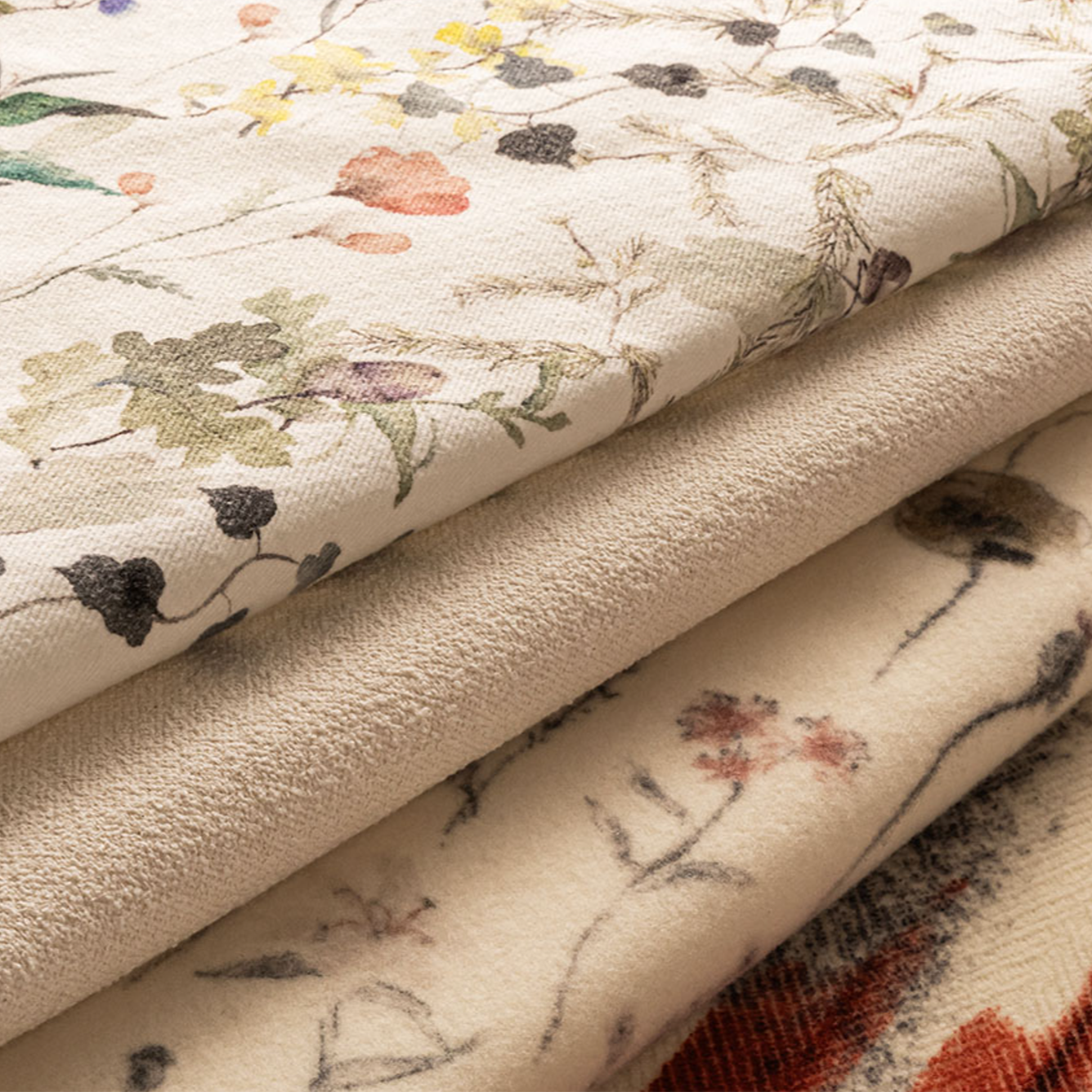
The home decor market requires fabrics that behave differently from fashion textiles. Interior fabrics are typically heavier, more durable, and demand exceptionally high lightfastness to prevent fading at the window. Historically, achieving these characteristics required complex, printing and finishing processes that consumed vast amounts of water and energy.
The home textile industry suffers from a rigid supply chain. Relying on overseas mills for large production runs creates long lead times and restricts design agility. If a specific furnishing pattern suddenly trends on social media, brands using traditional supply chains cannot restock quickly enough to capitalise on the demand.
To overcome these hurdles, interior brands need technology that simplifies the printing process. They require robust equipment capable of handling woven home furnishing fabrics without the need for and the associated environmental cost of inefficient post print steaming and washing treatments.
Real-World Impact: Central Italy Case Study
The theoretical benefits of this technology are already translating into tangible business growth. A textile manufacturer based in Central Italy recently became an early adopter of the ecoNEXT Plus system.
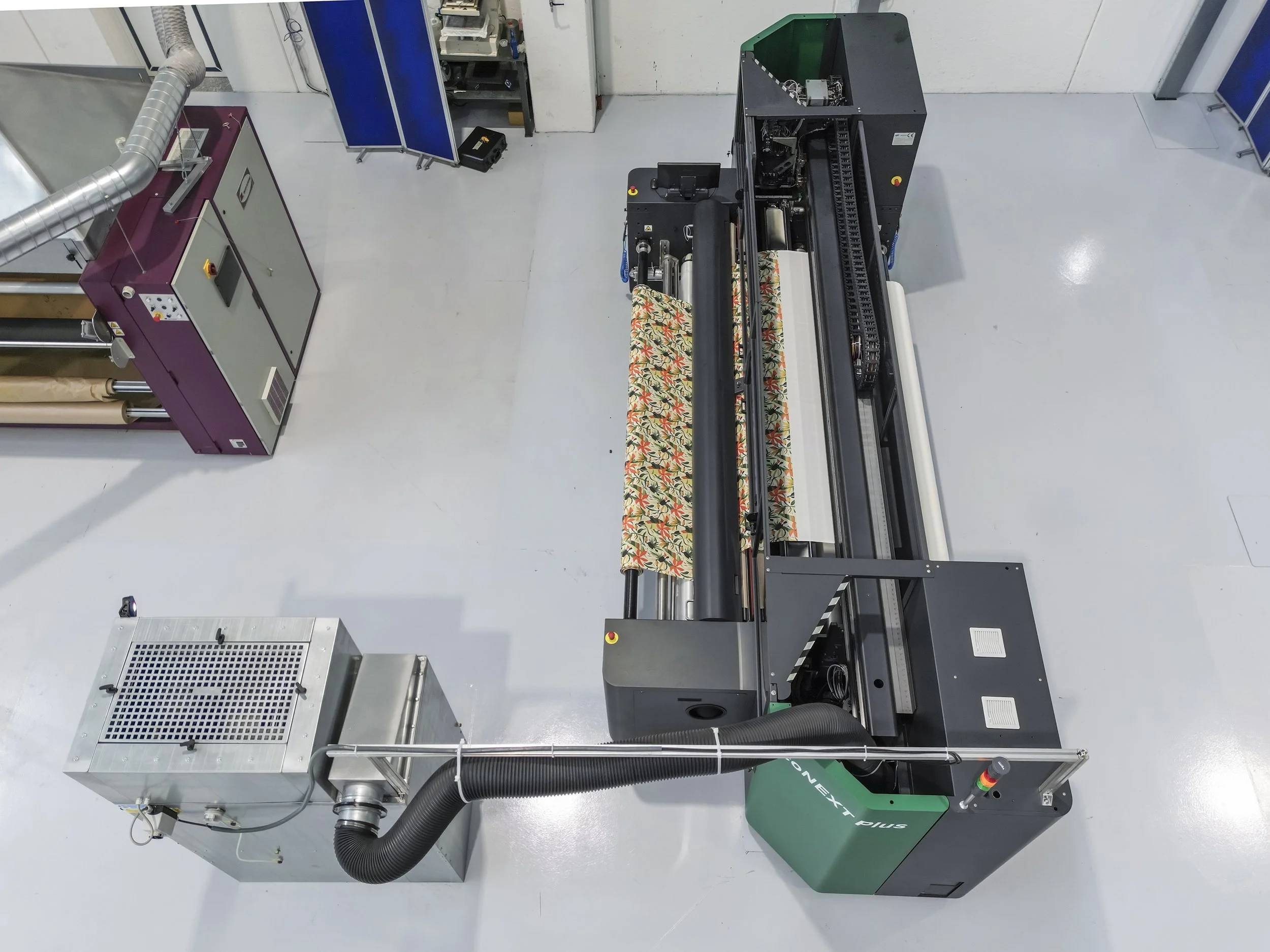
Previously focused on standard poly-cotton bed linens, the company sought to elevate its market position without undertaking a massive facility overhaul. By integrating the 3.4-metre digital pigment printer, they seamlessly transitioned to producing premium, higher-quality textiles. The integration was remarkably frictionless; the machine fitted into their existing operational footprint, and the interface was intuitive enough that operators required no extensive retraining.
By bringing digital production in-house, they eliminated their reliance on traditional methods, reduced their environmental footprint, and unlocked the ability to offer premium, on-demand products to their clientele.
How does the EFI Reggiani ecoNEXT Plus enable Sustainable Reshoring?
The drive to bring production back home requires technology that is both sophisticated and accessible.
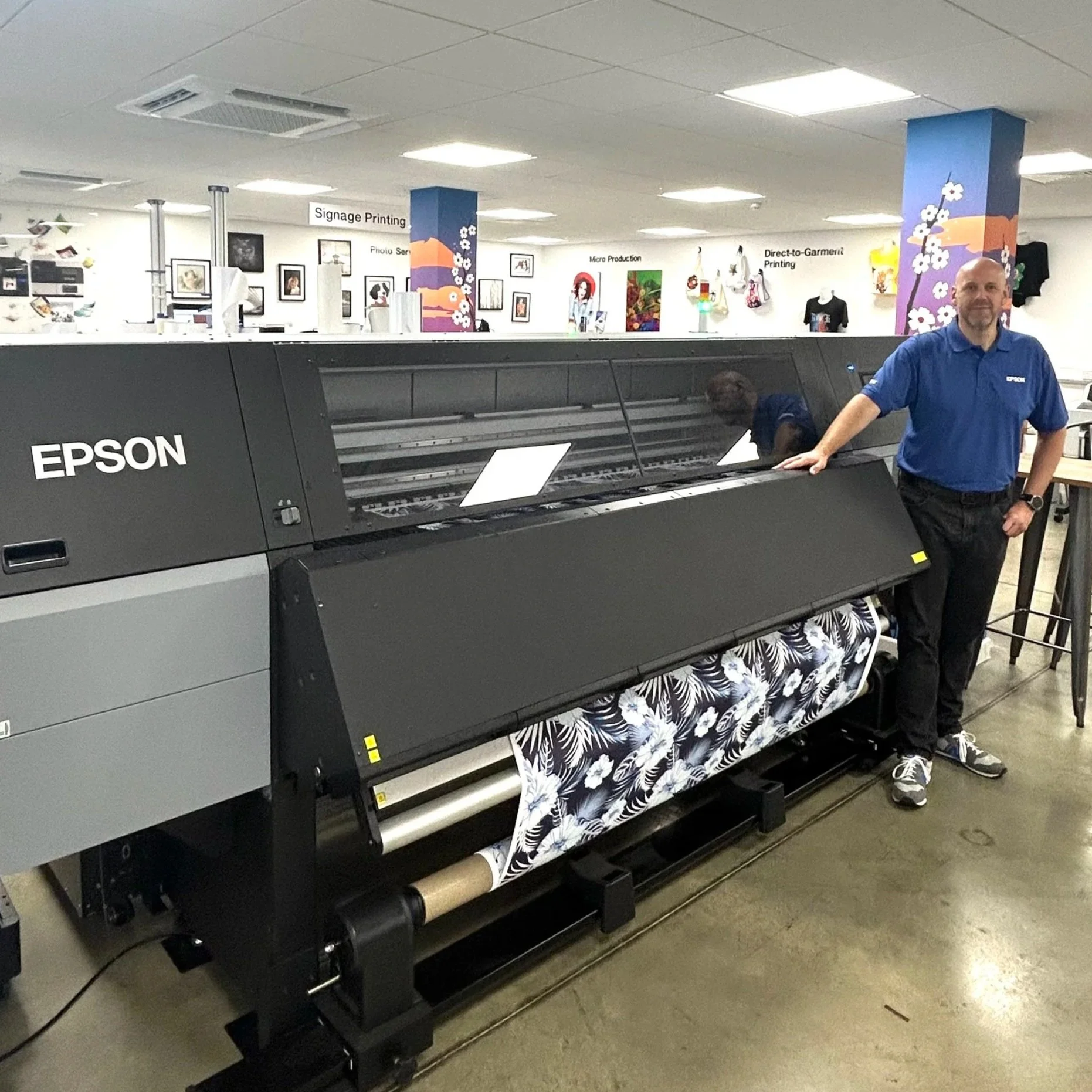
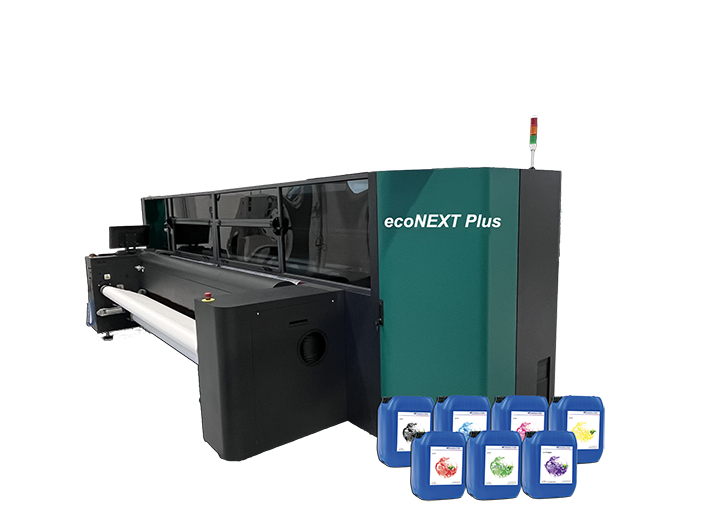
The EFI Reggiani ecoNEXT Plus represents a new standard in industrial digital printing, specifically engineered to streamline the direct-to-fabric pigment printing process.
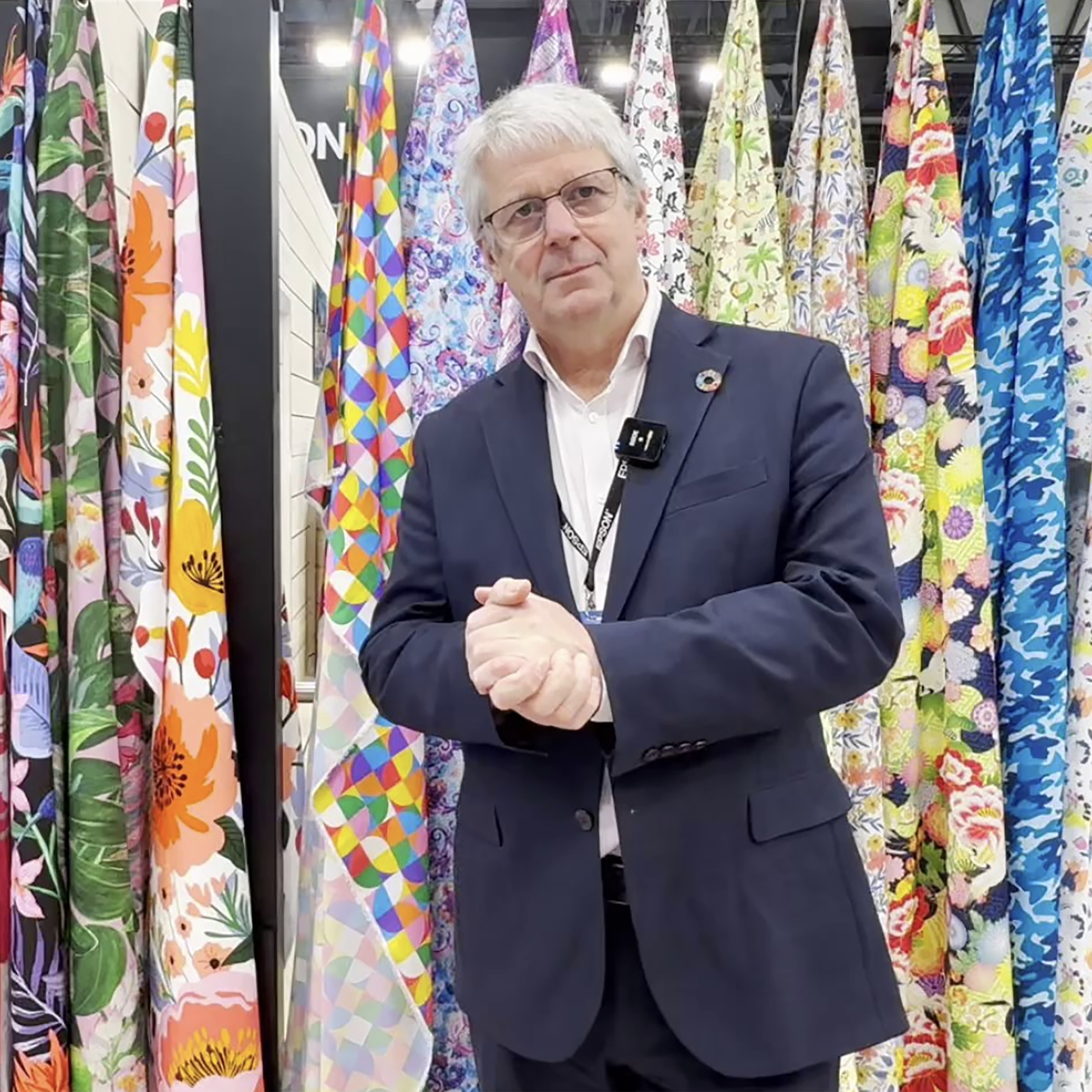
During the recent FESPA exhibition in Barcelona, Micol Gamba from EFI Reggiani highlighted the fundamental purpose of this new technology.
"The EFI Reggiani ecoNEXT Plus digital textile printer is designed to enable companies to produce home textiles locally, facilitating the reshoring of manufacturing to Europe and North America". Micol Gamba
Simplifying the Production Workflow
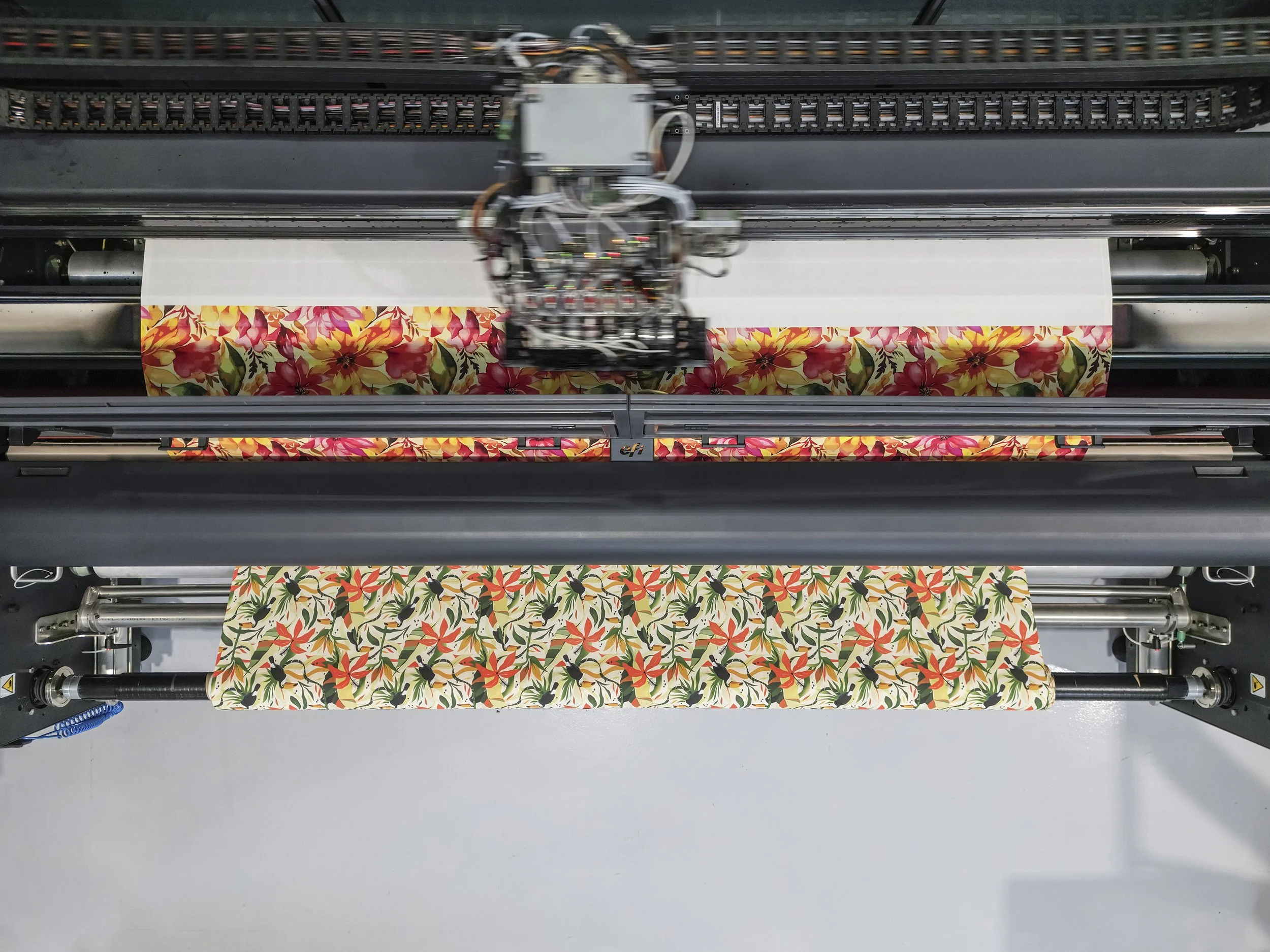
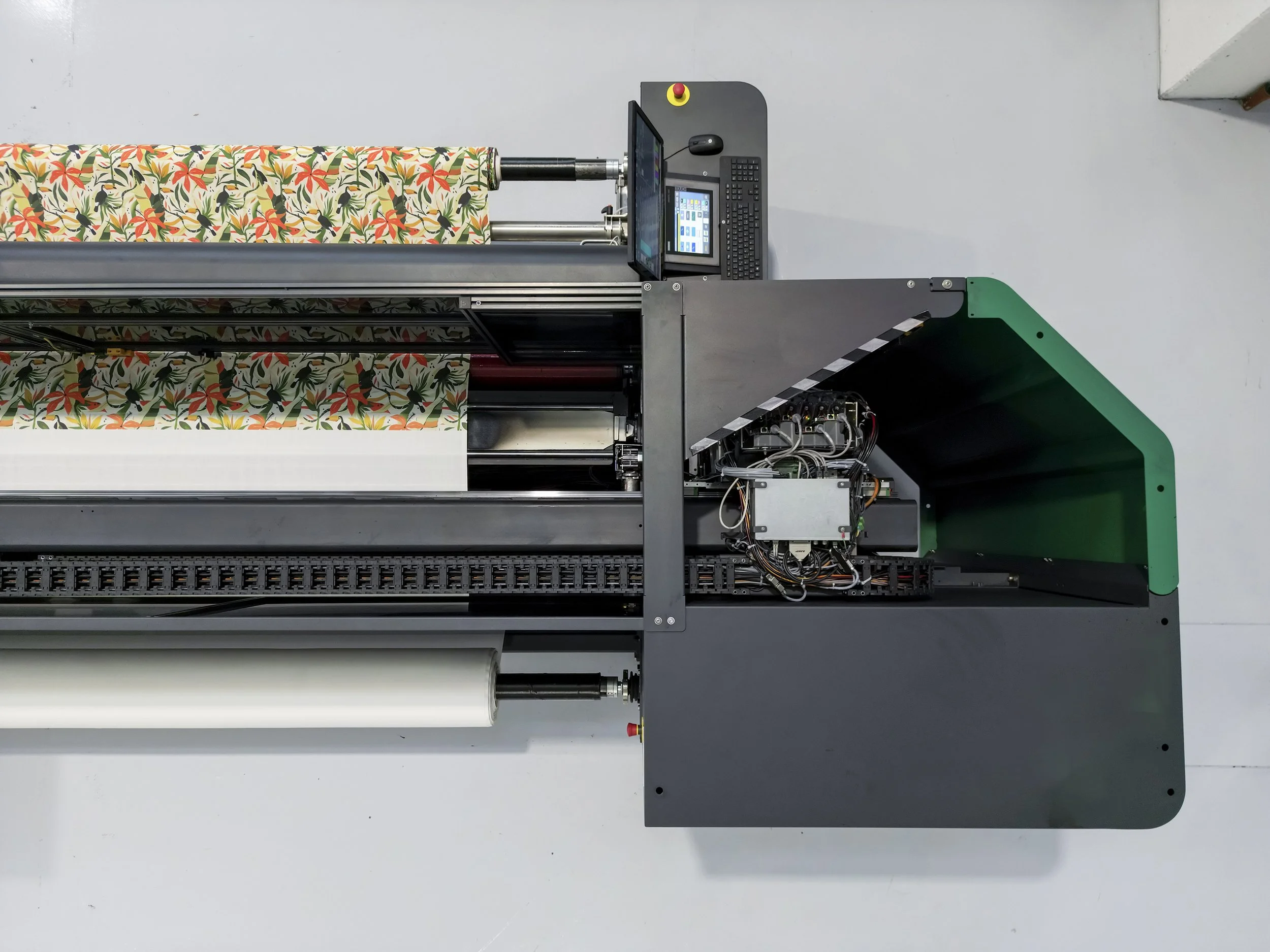
The ecoNEXT Plus functions as a true all-in-one solution. Unlike traditional belt printers, this beltless system prints on pre-treated fabrics and fixes the colour inline. By integrating the fixation unit directly into the machine, the fabric is ready for the next production step the moment it exits the printer. This capability eliminates the need for external washing or steaming, drastically reducing the production footprint and enabling smaller facilities to implement in-house manufacturing.
Enhancing Colour Quality for Interior Fabrics
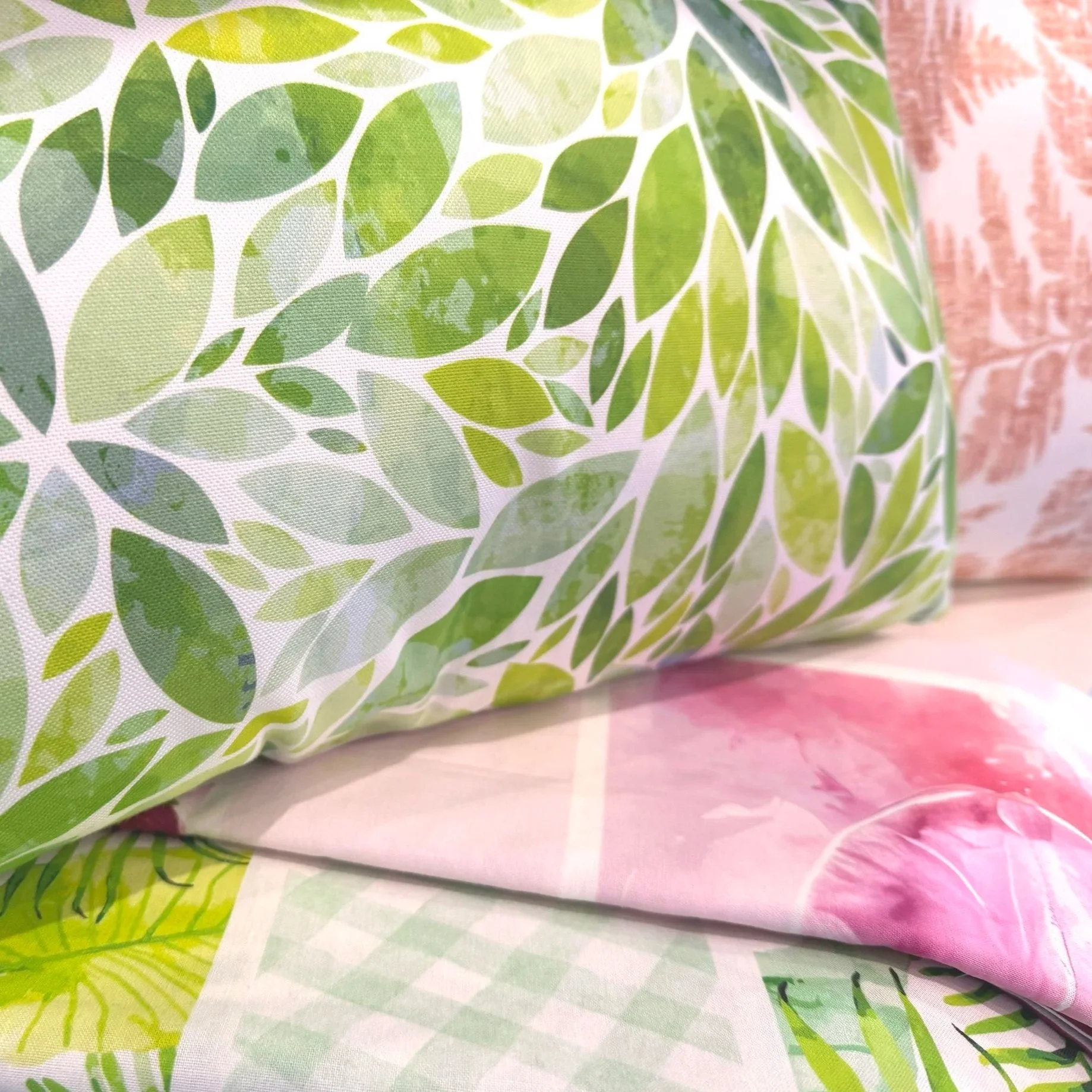
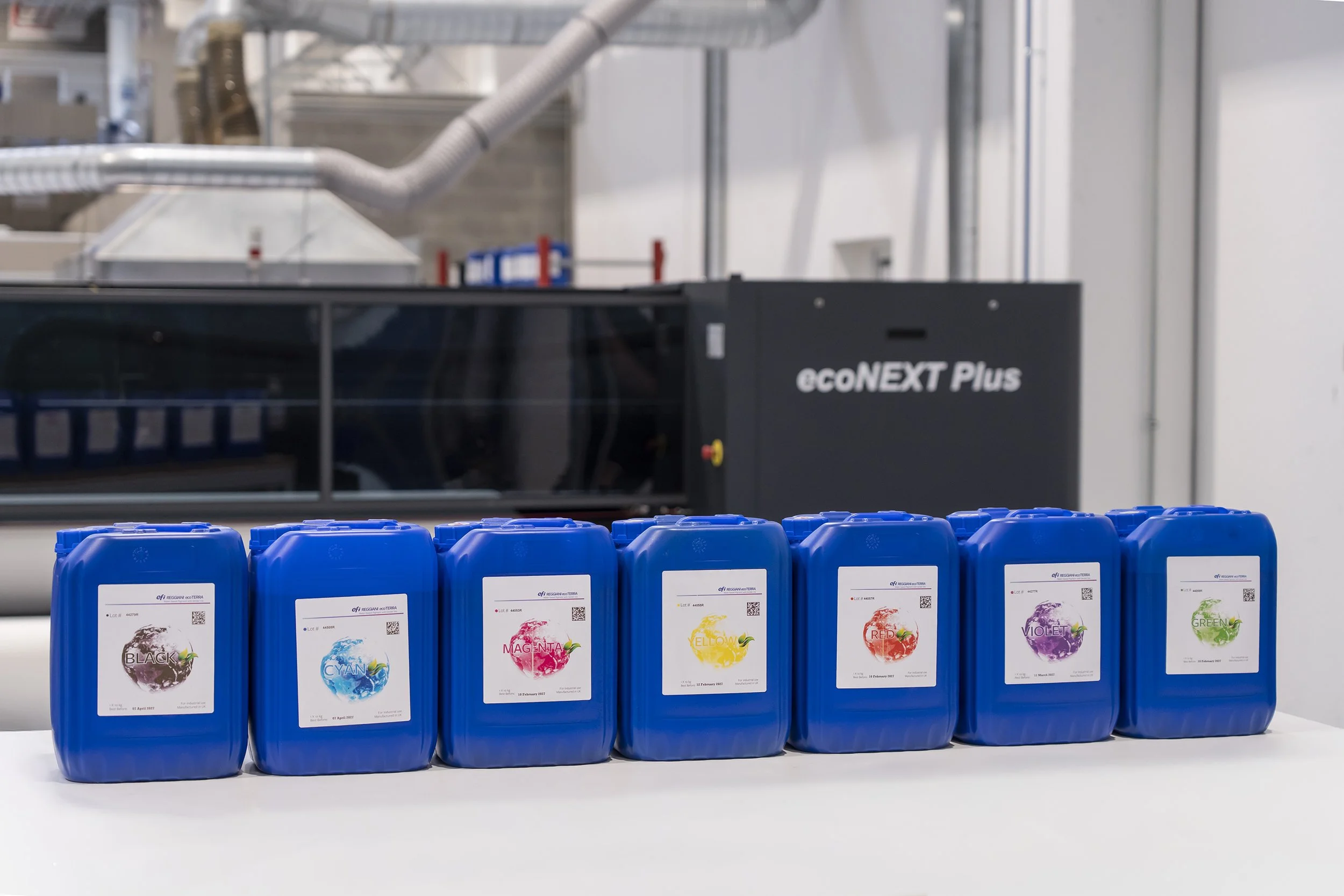
Colour accuracy is critical for home decor. The ecoNEXT Plus utilises a seven-colour pigment ink configuration from the ecoTERRA family. Alongside standard cyan, magenta, yellow, and black, the system incorporates red, green, and a unique violet ink. As Gamba noted, “violet is highly effective for achieving the deep navy blues and rich ambient shades essential for interior design. Pigment inks also provide the superior UV resistance required for window treatments and upholstery”.
Prioritising Data and Sustainability
Artificial intelligence and production analytics are vital for modern manufacturing. The ecoNEXT Plus connects directly to EFI Reggiani QUERY, an advanced analytics software that tracks real-time production data. A specialised kit measures exact water and energy consumption per square metre printed. This precise tracking provides manufacturers with the accurate environmental footprint data required for the upcoming Digital Product Passports (DPP), ensuring full regulatory compliance.
Navigating the Future of Home Decor Manufacturing
The transition toward agile, sustainable manufacturing is no longer optional for the home textile industry; it is an operational necessity. As the market expands, companies that cling to outdated, inventory-heavy models will struggle to remain environmentally competitive.
To thrive in this evolving landscape, textile manufacturers and interior brands should consider the following recommendations:
Invest in waterless technologies: Choose waterless digital textile printing technologies like the ecoNEXT Plus to reduce environmental impact and facility footprint. If sourcing print – ask for more details on the technology used to manufacture the fabric you require.
Embrace on-demand production: Shift from bulk ordering to print-on-demand models. This approach reduces warehousing costs, eliminates dead stock, and allows for infinite design diversity.
Leverage production data: Utilise integrated analytics software to monitor energy and water consumption. Transparent data collection is essential for meeting incoming sustainability regulations and proving ethical manufacturing practices to consumers.
By adopting integrated digital printing solutions, the home decor industry can finally break free from its rigid past, bringing sustainable, high-quality production closer to home.

Frequently Asked Questions
What is the most sustainable method for printing home textiles?
Waterless pigment digital printing is currently the most sustainable method for home textiles. Systems like the EFI Reggiani ecoNEXT Plus eliminate the need for water-intensive washing and steaming processes, using heat to fix the pigment inks directly to the fabric.
How fast can industrial digital textile printers produce fabric?
Modern industrial digital textile printers operate at highly efficient speeds. For example, the EFI Reggiani ecoNEXT Plus can produce up to 100 metres of printed fabric per hour, making it suitable for both short runs and robust commercial production.
Why do digital printers use pigment inks for home decor?
Pigment inks are preferred for home decor because they offer excellent lightfastness, meaning the colours resist fading when exposed to sunlight. Additionally, pigment inks sit on the surface of the fibres, making them compatible with the heavier, weight fabrics frequently used for upholstery and curtains.
Can digital textile printing help reduce excess inventory?
Yes. Digital textile printing allows brands to produce fabrics on demand rather than predicting trends months in advance. This capability drastically reduces the need to warehouse thousands of metres of unsold stock, cutting financial risk and textile waste.