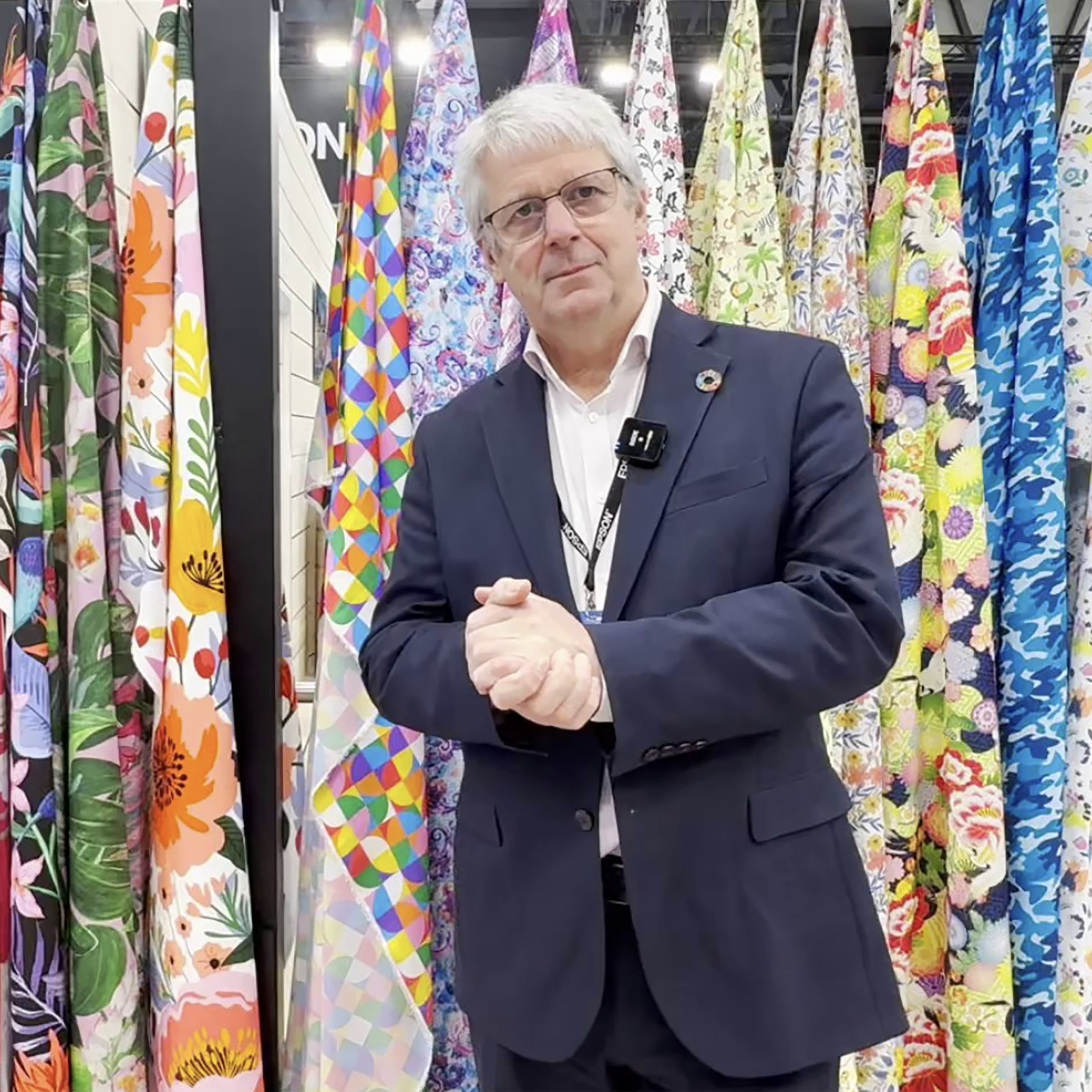
“We’re learnt how to work without being present in a particular space - that might mean the same virtual space (i.e. Zoom meetings rather than gathering in the same location). E-meeting is here to stay, though we’ve not fixed all the bugs yet. Many companies in the US are thinking hybrid first - distributed teams are here to stay. That’s led to increased demand for visualization…” Mike Scrutton | ADOBE
GUEST INTERVIEW WITH MIKE SCRUTTON OF ADOBE BY DEBBIE MCKEEGAN FESPA TEXTILE AMBASSADOR
In our recent podcast interview with Mike Scrutton, Director of Print Technology and Strategy at Adobe we discuss how software has a critical role to play in the advancement of digital textile printing technologies.
As we emerge from the global crisis, the textile manufacturing landscape continues to advance towards a digital workflow – with an unprecedented urgency. How we adapt to enable such progress relies greatly on industry collaboration and the speed with which emerging technologies can be adopted.
You can listen to the full podcast here >>
As we emerge from the challenges of the last 18 months – What have learned and what’s here to stay?
We’re learnt how to work without being present in a particular space - that might mean the same virtual space (i.e. Zoom meetings rather than gathering in the same location). E-meeting is here to stay, though we’ve not fixed all the bugs yet. Many companies in the US are thinking hybrid first - distributed teams are here to stay. That’s led to increased demand for visualization, which is difficult because in the textile space we’re dealing with a very tactile media. But travelling (to visit mills, see production first-hand for every job) is going to be done less, at least for a while. We’re going to do more virtually and / or bring tasks closer to home. We need to build our “trust muscles” for virtual to become a reliable.
Has the pandemic accelerated the digitisation of our industry – and where will we see the biggest impact?
Absolutely yes. We’ve been gradually increasing the amounts of digitization in our workflows, but in the past, often they’ve been to digitize adjacent steps in a workflow. What we’re seeing is the potential for multiple steps – even unrelated functions – to use the same digital data, a single source of truth. For example, the designer’s digital files are not just being used for manufacture, they’re also being used for marketing and ecommerce. That’s disruptive for all of these different dimensions.
The creative role of the designer increasingly encompasses production - With greater responsibility - how must designers adapt?
I think this change is subtle, or at least it ought to be! 30-40 years ago, a designer (in another industry) wouldn’t have thought it was their responsibility to make a paper print of their design in colour – now colour printers are commonplace. In the textile space, designers might increasingly be creating their own strike-offs and samples rather than that role being someone else’s responsibility. You might want to do that because of speed and efficiency – you don’t want to wait (hours, days or weeks) for a strike-off to come back before you can iterate on your design and sign-off. But to achieve this, the designers shouldn’t be doing the work of the off-site sample maker. If the tools exist to get a sample at the click of a single button, why shouldn’t the designer be the one that presses the button?
It’s the responsibility of the equipment manufacturers to make the production processes easier to use and more accessible (think of desktop T-shirt printers which have largely simplified this process already). Hopefully, designers will get a better appreciation of the production process and be able to use that to benefit their design skills, but I’d hope they don’t need to re-learn their existing skills completely. Maybe learn some efficiencies (from both sides) but we won’t see designers learning the job of today’s production.
In a digital supply chain – How do designers and manufacturers ensure transparency and real-time embedded data?
Simply: put all of the information is the same place, and all use the same truth. A good example would be in digital printing for cut-and-sew – a single PDF file can contain the information for the printer (the exact colours to use, the different grades of the pattern pieces, the print to be applied, any fonts to be used) as well as the outlines that need to be cut from the printed fabric for the cutter. We could even put information in the same file that says which edges need to be sew together, though we don’t have the solutions to make that commonplace yet.
Can you tell us more about your recent announcement regards Aquario and Ned Graphics textile design software?
When my team started focusing on digital textile printing workflows 4-5 years ago, we identified some gaps in the end-to-end workflows for designers and manufacturers – some inefficiencies in the steps, and missing features in the tools. We built a plugin for Photoshop as a proof-of-concept which we shared with invited testers in our prerelease program as “Adobe Textile Designer” to test some of our theories and improve our understanding while enabling beta users to apply our thinking to their workflows.
One thing we learnt was that although we’re experienced in digital printing and manufacture, what we need to do as an industry is to empower all users and components to improve their efficiency – from individual users and studios up to major brands. We’ve announced a partnership with Aquario Design and NedGraphics which will see them launch products targeted at designers that use Adobe Textile Designer technology and produce files that are compatible with the Adobe PDF Print Engine for manufacturing. Today, I’m focused on delivering the ‘back end’ solutions with our print partners and separately working with the creators of solutions for designers (like Aquario and NedGraphics) to help them build more efficient tools to drive those production workflows.
Circular design starts with the designer – How can they utilize software to eliminate waste?
Waste occurs in the supply chain in so many different places – producing a product in volume, shipping it to a retailer and failing to sell it – that’s wasteful. That might be due to a technical problem in design, or simply creation of a product that doesn’t appeal to the customer. You can think of many other places in the supply chain where there might be waste, I’m sure. Now, some of these might be efficient if optimized as a complete system but change one variable and the efficiency breaks down.
For example, if I need 50,000 units of a product maybe I can produce them somewhere far away and ship them at low cost per unit to my destination. But if I only want 50 or 5, I can’t use the same supply chain solution because the cost is shared over a much smaller number of units. I’d be better of making those products closer to my destination even if the cost to manufacture each is higher, because the shipping will be much less.
Software can play a role in this too – for example reducing errors by including all the information that will be used by manufacturing so that it doesn’t have to be communicated via a different method. We can use visualization tools in software to get a better feeling for how the product will look, even before it’s made. For a designer it doesn’t eliminate the need to make samples, and it doesn’t guarantee that the product will sell, but it will reduce the amount of waste.
Eventually however, software will enable us to visualize the product even before it’s made – so we don’t have to make a product with every possible print, or every length, or every trim. And we can use those same tools for eCommerce so that our customers can choose their options even without a single product being manufactured, or any inventory being held. Just-in-time manufacturing powered by software helps avoid massive amounts of waste.
Can you explain spectral data – and what the future holds for the management of colour online and off?
Spectral Colour allows us to refer to a colour unambiguously. If I told you that I wanted to use Adobe Red, that might mean different things to different people – there’s not enough information in just the name to accurately reproduce that colour on any substrate, in any lighting condition, with any technology. Similarly referring to a colour as #ff0000 doesn’t allow us to fully describe how a colour should look when reproduced across any technology and device. In colour science we’ve developed multiple techniques to describe colours – including colourspace, reference colour systems and ICC profiles. Spectral Colour is a way of defining a colour based on the energy it reflects or emits at different wavelength – it’s highly detailed and accurate and can be used in colour systems that take different lights into account (e.g. indoor and outdoor lighting).
Traditional digital colour management uses an ICC profile to refer to a colour space defining a set of colours and then use a set of numbers (typically 3 or 4) to index into that colourspace. It’s good if you’re describing the colours in a photograph, or the range of colours that a digital printer or a screen can reproduce (the “gamut”). The problem is that if you want to represent a single, specific colour very accurately then it’s not a great solution. Spectral colour is a much more precise solution to refer to a single colour instance.
We’ve solved this problem in the textile world often using “colour standards” – physical sample of colours, maybe on ribbons or samples of fabric, that we give names to and that can be referred to by designers who might keep the standards on their desks and then are used to list the colors used in a product. The colour standards are then shared with the mill and matched at the time of manufacture whenever the name of the colour is referenced. An alternate to shipping a physical sample of the colour to the mill is to use a digital Spectral Colour definition which can be used to manufacture the product, and also used by quality control for testing compliance.
What advice would you give to the print creative or manufacturer as we move forward to print-on-demand?
Focus on the concept of a single definition of ‘truth’ - work to remove ambiguity from the information you exchange. But at the same time, don’t be tempted to ‘dumb-down’ the information you share to the lowest common language – it’s better to be more precise and not need all the information exchanged than to leave it to assumption or worse – guesswork. I’ve been discussing the benefits of using PDF as a single container that can contain both printing and manufacturing information for other processes, visual information and metadata. Look to see how PDF might benefit your workflows – you can find more at https://www.adobe.com/go/textiles
If you had a wish list – what would the future hold??
My dream is of a world where a designer can digitally create a design for a product, that they can visualize on a screen in full colour – even better immersively. That the same digital information can be used by the brand to approve the design. That the same digital information can be visualized by a customer online and that they chose to purchase it. That the same digital information is used to manufacture the product on-demand and deliver it to the customer who is delighted with the result.
We’re close to achieving this reality, but it’s not commonplace yet let alone scalable to any product. It’s not quite as simple as I describe – fit and feel is of course important, and there’s still more innovation to come.
The pandemic has been disruptive to the way we work – I don’t think we’ve seen all the aftershocks play-out yet. “Web 2.0” happened after the dot-com bubble burst around 2000, but it didn’t emerge immediately – it took a few years to materialize. Likewise, the impact of the 2007-2009 recession, which saw a big growth in 3D technology that only started to materialize in the mid-late twenty-teens. I don’t think we’ll see the full shakeout of what the pandemic has taught us for another couple of years.
Special thanks to Mike Scrutton for this Interview, thought leadership and insight….
Colour Separation: The Craft Digital Textile Design Shouldn’t Forget
Textile designer Stephan Alker draws on more than 40 years in the industry, going back to his start at Transfertex in 1980, to trace how colour separation moved from drum scanners, hand-retouched films and engraved gravure cylinders to fully digital workflows.
He argues that this production knowledge still matters in the age of digital printing, because properly separated designs give brands far more freedom.
The Path Foward: Connect Every Link:
Design, colour, workflow, production, data. Each link now depends on the one before it, and the printers who will lead the market are those who strengthen the whole chain, not just the machinery at its centre.
So, this autumn, ask the bigger question on your own shop floor.
Not "Which printer?" but "How well does my business connect demand, design and production?"
Rebés's story isn't one of nostalgia - It's a working blueprint for how heritage manufacturers can stay indispensable in a market that rewards speed, certification, and specificity in equal measure. Four million metres of stock mean nothing without the digital printing capability to turn it into something distinctive.
A 150-year name means nothing without the R&D discipline to win a tender for antistatic, carbon-fibre-infused uniform fabric on the first attempt.
Image Credit: Tejidos Rebé
What if the next dress you wore never touched the factory floor?
This is no longer a fringe experiment. It is a maturing production model, backed by genuine material science, real circularity, and an AI-assisted workflow that is becoming more accessible by the month.
Her advice to designers and brands alike is refreshingly practical: start small, get hands-on with an accessible 3D printer, and build fluency before the technology becomes table stakes. The businesses that treat this moment with curiosity, rather than scepticism, will be the ones shaping fashion's next decade rather than reacting to it.
The 2027 FESPA Awards are now open for entry, and the message to businesses across textiles, apparel, interiors and beyond is simple: your work deserves recognition. Every gold winner featured here started in the same place every entrant does - with a project they believed was worth submitting.
As the only independent awards programme with 18 categories dedicated to print and signage, FESPA offers a genuinely global stage, with shortlisted entries displayed at FESPA Global Print Expo in Spring 2027.
Colour Is Too Important to Leave to Chance
Print will always be the part of the garment people see first.
But the sum of all parts — the fabric, the trims, the fasteners, the finish — is what determines whether a design actually delivers on its promise. Brands that continue to treat colour as a single creative decision, rather than a coordinated technical discipline spanning their entire supply chain, will keep paying for it in re-dips, delays, and disappointed design teams.
A Century of Textiles, and an Ever-changing World
Few companies can trace their roots back more than a century and still count themselves among their industry's innovators. Texia, headquartered in Monistrol de Montserrat, Spain, is one of them.
But the story of Texia is not simply one of longevity.
It is a story of continual reinvention. As the textile industry has grown more global and competitive, Texia has repeatedly reshaped its business, investing in technology, developing its own brands, and placing sustainability at the centre of its mission. In doing so, it offers a compelling example of how a heritage manufacturer can lead rather than follow through a period of profound industry change. Image Credit: Texia
What are we craving Ultimately?
The instinct to slow down while simultaneously optimising every measurable aspect of life isn't a passing curiosity. It's a structural response to a world that feels increasingly unstable, and it's reshaping what people expect from their homes, hotels, workplaces and healthcare environments alike.
For the design and manufacturing sectors, this means rethinking both product and process.
The Structual Shift is Real and its Already Here
Volumes are moving east, where digital production is accelerating rapidly. Consumer behaviour has shifted.
Demand is now driven by personalisation, shorter buying cycles, and an expectation of near-instant responsiveness. Regulatory pressure is intensifying, with supply chain transparency now a legal and commercial fact in many markets. And margins? They are under sustained, structural pressure.
This is not a temporary disruption. It is a fundamental reordering of how textile manufacturing must operate.
The Challenge: Standing Firm as the Industry Shifts
The wallpaper landscape has changed dramatically. Digital printing has lowered the barrier to entry, spawning countless direct-to-consumer brands and pushing much of the market towards faster, cheaper production.
At the same time, manufacturing in the UK has grown steadily harder - rising minimum wage, national insurance, energy and substrate costs all bear down on margins. Surface Print have embraced all of these challenges - and stand resolutely prepared for the future.
From Helsinki's printing mill to Paris's Le Marais, discover how Marimekko is scaling a design-led brand with purpose, craft, and bold innovation.
But what makes Marimekko's story compelling is not just its aesthetic legacy?
The word "toxic" carries weight. It conjures danger, harm, and things best avoided.
“Yet in the textile industry - Where between 3,000 and 10,000 chemicals move through the supply chain, a reflexive fear of the term is one of our biggest obstacles to progress.”
This article distils the key takeaways and what buyers, designers, and brands should be asking right now.
What Is the Digital Product Passport?
At its core, a Digital Product Passport is a digital record attached to a physical product - For a printed textile product, this means the DPP would capture data on the substrate, inks and dyes used, the printing process and technology, chemical compliance, environmental impact (including water and energy use), supply chain traceability, and end-of-life instructions.
The Market Gap that Changed Everything
Future Fashion was founded in 2019, timed deliberately to coincide with a pivotal moment in global textile technology: the commercial launch of the EFI Reggiani BOLT Single-Pass digital printing system.
The founders recognised that single-pass architecture had fundamentally changed what was industrially possible - and that Pakistan's domestic market had yet to catch up.
Print is no longer defined by the inefficiencies that once characterised it…as advances in production processes and technology have significantly improved its environmental performance.
Taran Rai, Corporate Sustainability Manager at Epson explains why?
The story of what happens when young designers access digital technology is still being written.
What once was a theoretical sustainability goal seems to have shifted into an active regulatory reality.
Is the Textile Market Finally Recovering?
After a difficult few years, there are genuine reasons for optimism. Duncan was candid about the challenges: "The market for textiles has been very difficult over the last three years. I'm not going to hide the truth there. But the tide is turning.“
A profound shift is currently reshaping the sector
Changing consumer expectations demand greater design diversity, faster turnaround times, and sustainable manufacturing practices.
To thrive, interior brands must adapt their supply chains, bringing production closer to the end consumer and moving away from bulk manufacturing.
Digital textile printing offers a definitive solution to these operational bottlenecks.
Digital transformation doesn't announce itself.
It accumulates - one innovation at a time - until an entire industry looks back and realises the ground has shifted beneath its feet. That's precisely where textiles stands today.
The conversations happening now about AI, automation, sustainability, and digital product passports are not theoretical. They are shaping decisions being made on factory floors and in boardrooms right now.
“By leveraging advanced digital textile printing, Marylene Madou has successfully merged traditional craftsmanship with cutting-edge technology. Her approach offers a blueprint for how independent designers can scale their brands globally while maintaining a minimal environmental footprint.”
The textile industry is undergoing a vital transformation. As the insights from Techtextil and Texprocess reveal, the path forward relies on a combination of sustainable hardware, intelligent chemistry, and seamless digital workflows.
From Zimmer's industrial-scale energy reductions and Stratasys's on-demand 3D embellishments, to Kornit's single-step technical printing and the unified digital ecosystems of NedGraphics and Optitex, the tools for change are here. To stay competitive, brands and manufacturers must adopt these innovations, moving away from fragmented, wasteful processes towards a truly connected, circular economy.
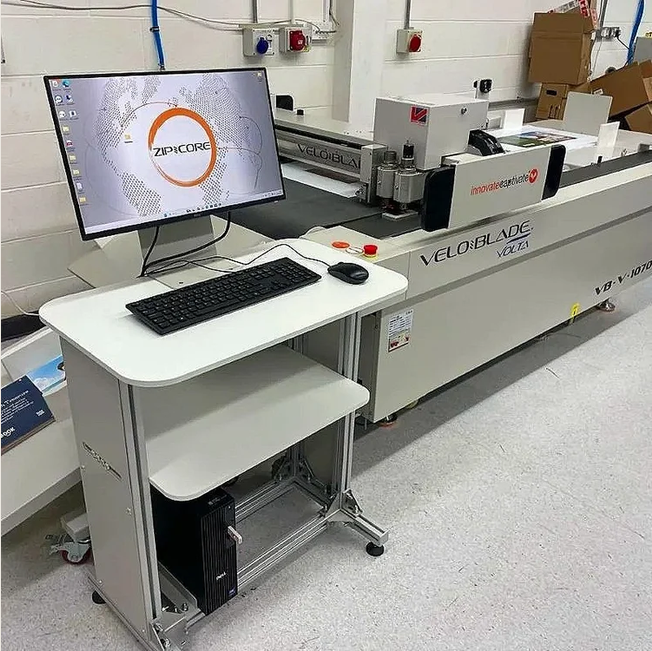
Shrewsbury, UK – November 2026 – Big Value Banners, a UK-based manufacturer of custom printed banners and signage, has chosen the Veloblade Nexus from Vivid Laminating Technologies Ltd to support its growing production capabilities. The announcement follows a period of evaluation, culminating in staff training completed today in Shropshire.
Exclusive Mimaki distributor, Hybrid Services will host two Mimaki Technology Taster Days at its Crewe showroom this November, giving businesses the opportunity to explore their next printing investment, diversification or upgrade in a relaxed, informal setting.
Taking place on Thursday 12th and 19th November, from 10am - 4pm, the events are designed for companies at any stage of their research, including those still considering which direction to take. Visitors can explore the Mimaki range, see printed applications and discuss their ideas with Hybrid’s product specialists.
Milan, 4 November 2026 – The 37th edition of Viscom, the international exhibition dedicated to visual communication, has concluded in Milan, debuting its new Exhibition & Conference format at the Allianz MiCo Convention Centre. The refreshed venue and identity reflect the transformations underway across the industry, delivering two dynamic days that brought together 5,189 visitors and more than 90 exhibitors to explore the sector's emerging opportunities.
Wednesday, November 04, 2026 - Aarhus, DK & Milwaukee, WI — To provide the proper level of support for customers in the Americas, Mikkelsen Innovation ApS has registered and started its U.S. subsidiary, FASTSEWN, Inc., located in Milwaukee, WI. In addition to the U.S. sales and management team, Steve Aranoff (Chief Business Officer) and Jim Manelski (Director of Sales, Americas), whom many in the industry already know, industry veteran Ranjan Singh has now joined as COO for FASTSEWN, Inc. Part of the engineering team is also in Milwaukee, bringing the number of U.S. employees to six so far.
Oswestry, UK – November 2026 – China Print Supplies (CPS) has confirmed it can supply ink, spare parts and servicing for Gongzheng printers across the UK, following the voluntary liquidation of Your Embroidery Services (YES) on 15 October. YES notified customers by email on 20 October that it could no longer provide servicing, technical assistance or customer support.
Gongzheng was one of the brands YES supplied in the UK, covering UV flatbed, eco solvent and UV DTF machines. The sudden withdrawal of support has left an unknown number of owners without a clear path to consumables, parts or engineering help, raising concerns about machine downtime across the sector.
CPS already supplies Gongzheng equipment and holds the supplier relationships needed to source consumables and parts for any Gongzheng machine in the country, regardless of where it was originally purchased.
South Normanton - UK – November 2026 - As the out-of-home advertising market continues its rapid expansion, Sun Chemical is driving the industry's shift toward water-based ink technology with its Streamline™ Toccata range, engineered to meet the rising demand for high-quality, durable graphics while reducing environmental impact.
London, UK – November 2nd 2026 – Spandex UK has today announced a new partnership with HP, bringing HP Latex printing technology to its customers across the UK. The collaboration marks a significant expansion of Spandex's large-format hardware offering, giving its customers greater choice across print technologies.
The initial line-up under this partnership will include the HP Latex 630, 730 and 830 series. These additions build on Spandex's existing portfolio, reinforcing its commitment to equipping sign and display professionals with the tools they need to stay competitive in an evolving industry.
Malvern – Worcestershire – November 2026 Vivid Laminating Technologies has announced that PB Signs, a leading UK print and signage specialist, has chosen its multi-award-winning Velobade Nexus for use across its production operations. The decision follows a thorough review of the market, with PB Signs selecting the Velobade Nexus as the finishing solution best suited to its high standards of craftsmanship.
Speciality print leaders from five Southern European countries will meet in Porto next month for the eleventh FESPA Southern European Congress, taking place on 11–12 November at HF Ipanema Porto, Portugal.
The two-day event, which is organised by five FESPA member associations – FESPA France, FESPA Italia, FESPA España, APIGRAF (Portugal) and the FESPA Hellas Association (Greece) – gives members of the community in Southern Europe the opportunity to benchmark their own strategies against peers facing similar conditions, as well as compare notes with neighbouring markets on customer expectations, workforce shortages, investment and new technology.
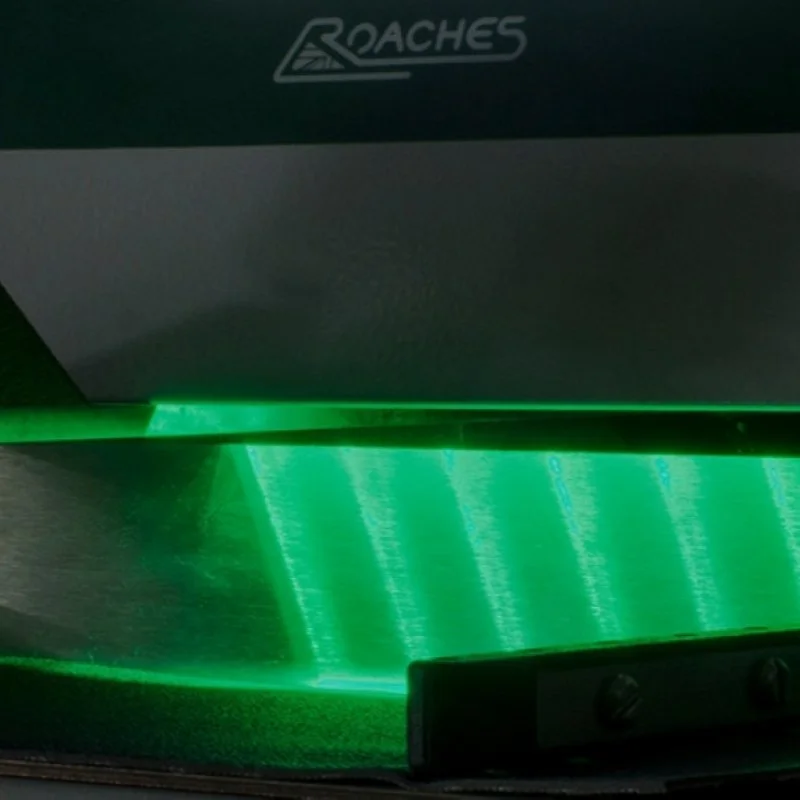
Batley, West Yorkshire – October 2026 – Roaches International, a member of the British Textile Machinery Association (BTMA), has dispatched its largest integrated order for textile laboratory equipment to date.
A total of 19 testing machines weighing more than two tonnes have been delivered for a new laboratory being established by Indonesia's Alia Digital Printex, underscoring the British manufacturer's capability to supply complete testing facilities rather than individual instruments alone.
Mortsel, Belgium – October 29th 2026 – Agfa Inkjet Solutions has announced Experience Day 2026, a hands-on event dedicated to demonstrating how advanced inkjet printing and precision finishing can work together within a single, integrated workflow.
The event will take place on Thursday, 26 November 2026, from 09:00 to 15:00 at Agfa Headquarters in Mortsel, Belgium.
Developed in partnership with Kongsberg Precision Cutting Systems, Experience Day 2026 will give print service providers a first-hand look at how combining print and finishing technologies can boost productivity, broaden application possibilities, and open up new business opportunities across sectors including signage, display, packaging, and corrugated production.
Balrothery, Ireland – October 2026 – Retink Graphics has added a second Epson SureColor R5000L latex printer to its Balrothery production floor, supplied by digitalprint.ie.
The investment follows strong returns from the company's first R5000L, which the team says paid for itself before they decided to expand.
Tübingen, Baden-Württemberg – October 2026 - The CHT Group has announced the expansion of its dyes portfolio with two new additions: BEMACID Brilliant Blue F-WN for polyamide and wool, and BEZAKTIV Solar Yellow ONE for flexible dyeing processes.
The launch reinforces CHT Group's commitment to delivering high-performance, sustainable colorant solutions for the global textile industry.
Both new dyes address growing demand among textile manufacturers for products that combine color brilliance, process reliability, and responsible formulation.
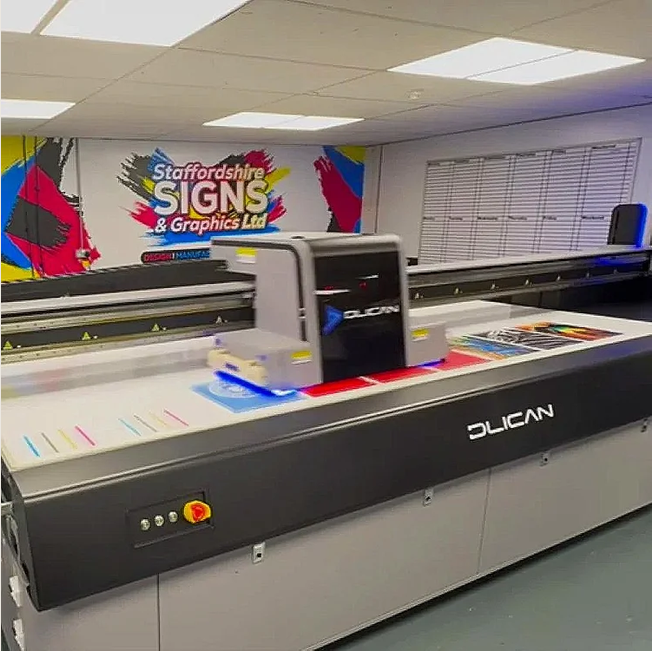
Staffordshire, UK – October 2026 – Staffordshire Signs & Graphics Ltd has announced the installation of a new DLI-3325 flatbed printer, supplied by China Print Supplies UK Ltd.
The investment marks a significant step forward for the business, enhancing its production capabilities and expanding the range of signage solutions it can offer customers.
The installation follows months of careful planning, with the new machine now in place and undergoing fine-tuning and staff training ahead of full commissioning
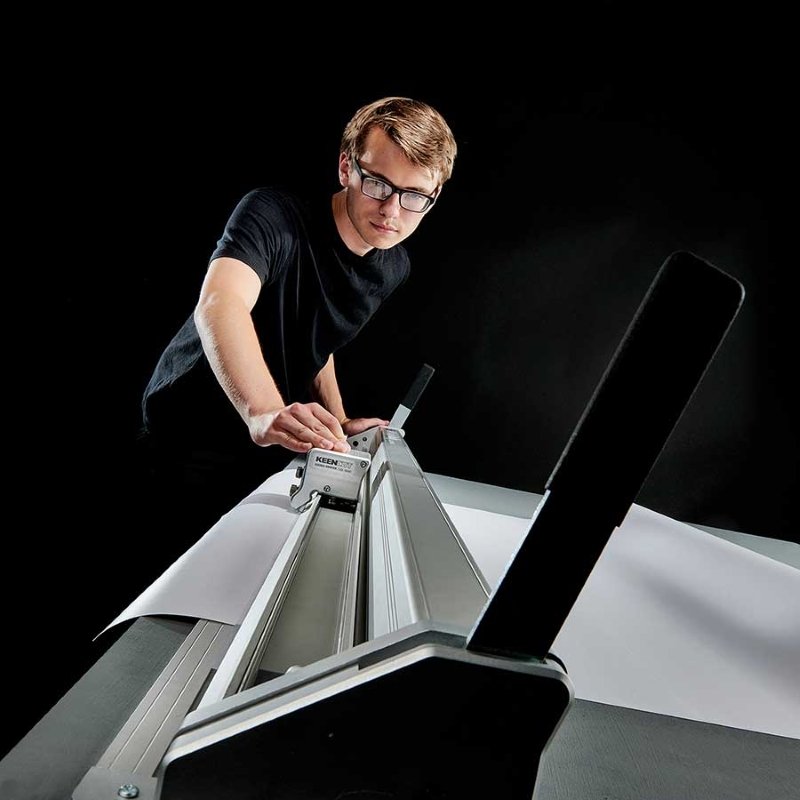
Corby – Northants – October 2026 – Keencut Ltd, a leading innovator in the cutting and finishing equipment industry, has today highlighted its Evolution3 Lift & Hover technology, a breakthrough system designed to make material positioning faster, easier and more accurate than ever before.
The new technology allows operators to adjust, align and achieve perfect positioning with precise control, all through simple single-person operation.
By streamlining what has traditionally been a multi-step, often cumbersome process, Keencut is addressing a long-standing challenge faced by professionals across the sign-making, graphics and framing industries: achieving exact cutting precision without compromising on speed or efficiency.
Istanbul – Turkiye – October 2026 – Optimum Digital has announced that Kilim Home, an established Turkish carpet manufacturer serving international markets, has invested in its direct-to-carpet printing technology.
The move strengthens Kilim Home's production capabilities and marks a significant step forward in the company's ongoing embrace of innovation within digital carpet manufacturing.
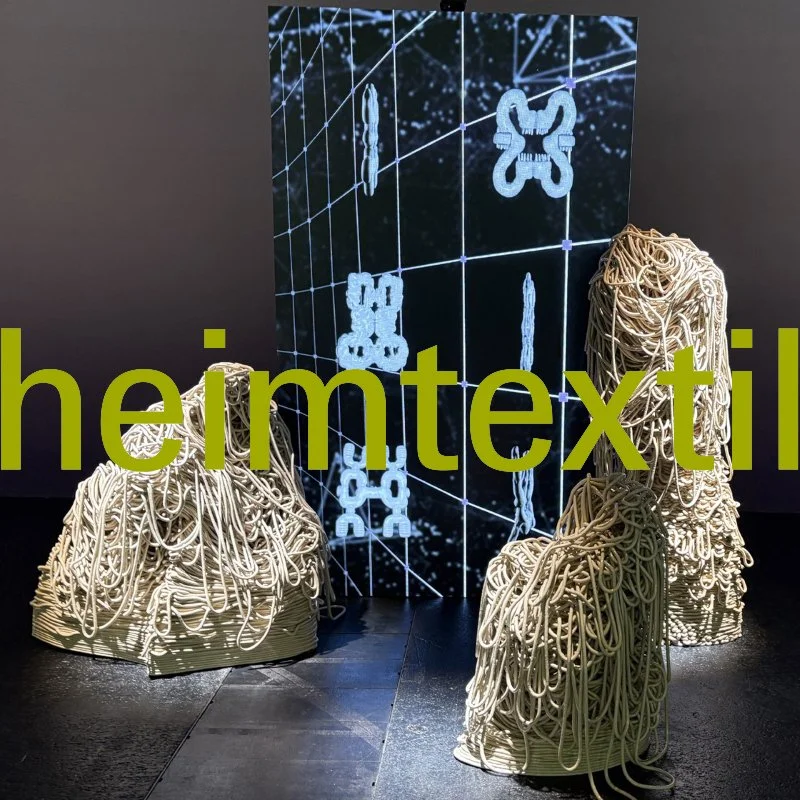
Frankfurt am Main, Germany – 27 October 2026 – Heimtextil, the international trade fair for home and contract textiles, has announced the launch of the Functional Futures Lab, a new showcase curated in partnership with Future Fabrics Expo.
Taking place from 12 to 15 January 2027 in Hall 4.1, the exhibition will spotlight materials engineered to meet the evolving functional demands of architecture, interior design and hospitality, from thermal regulation to flame resistance and durability.
The Functional Futures Lab will present both visionary prototypes and commercially available solutions, with each exhibit's stage of development made transparent through Technology Readiness Levels
Shanghai, People's Republic of China – October 2026 – KARL MAYER will present a comprehensive portfolio of advanced warp knitting and warp preparation technologies at ITMA ASIA 2026, taking place from 20 to 24 November at the National Exhibition and Convention Center (NECC) in Shanghai.
The company's presence spans two exhibition halls, with warp knitting innovations on display in Hall 4.1, Booth C18, and warp preparation solutions featured in Hall 3, Booth
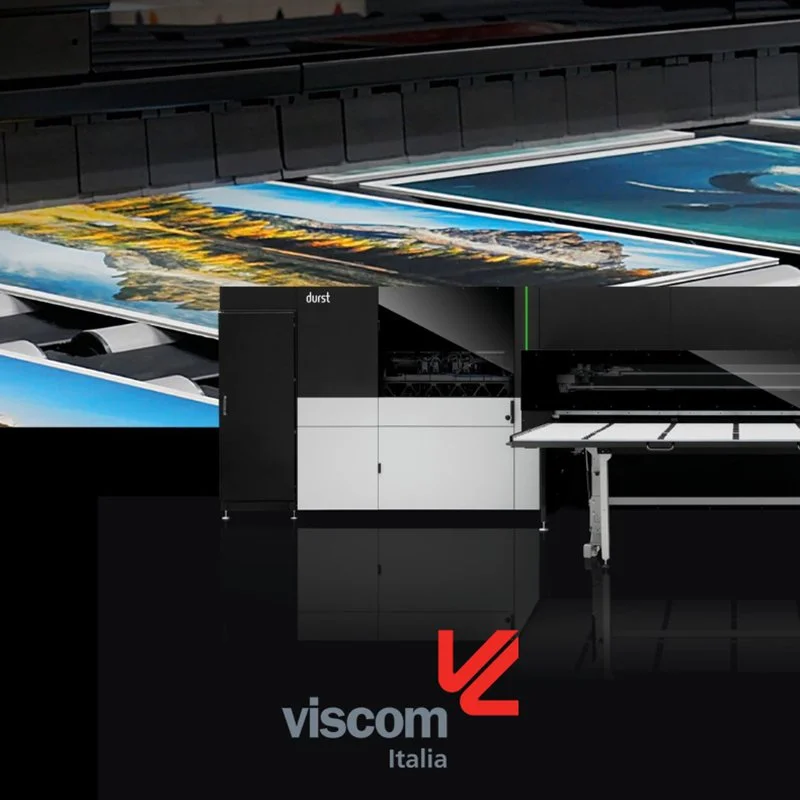
Bolzano, Italy – 26 October 2026 – Durst will participate as Leading Sponsor at Viscom 2026, taking place on 28 and 29 October at Allianz MiCo Milan.
In the year marking its 90th anniversary, the South Tyrolean company returns to the leading event for the Italian visual communication market with a new format, a new location, and the Italian debut of a new printing technology.
Durst's presence at Viscom underscores the company's commitment to maintaining close dialogue with customers, prospects, and industry professionals.
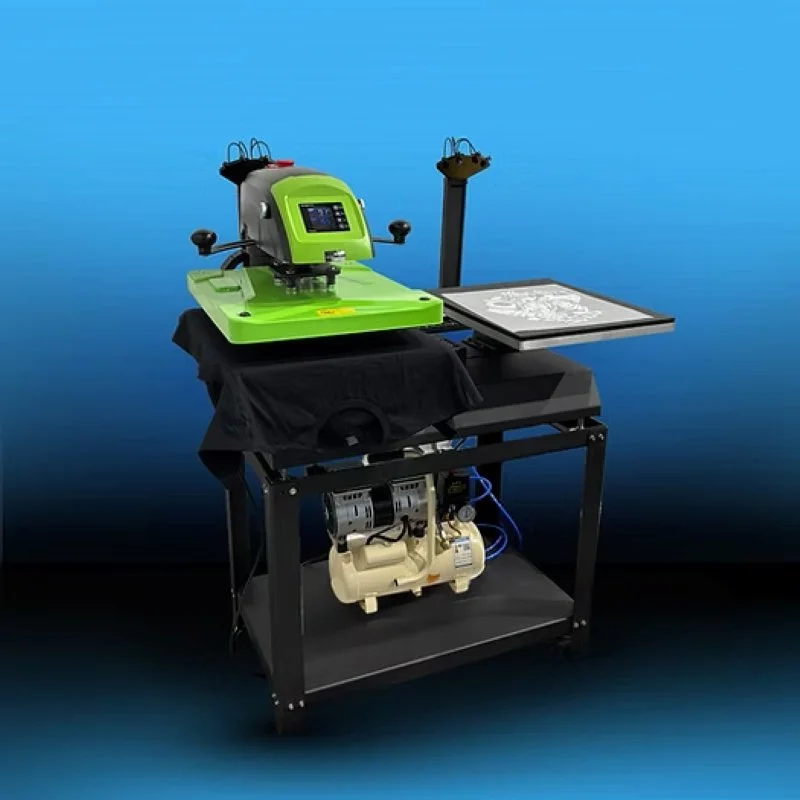
Clay Cross – UK – July 2026 – Resolute highlights its new DTF Pneumatic Twin Platen Heat Press, a professional-grade heat press designed to help print shops increase output, improve consistency, and reduce downtime across high-volume production runs.
The machine's dual-platen design allows operators to prepare the next garment while the current one is being pressed, significantly reducing idle time and increasing throughput.
This makes it particularly well-suited to print shops running large direct-to-film (DTF) and transfer print operations, where speed and consistency are critical.
Pattern Room Launches New Pattern Room Experience, Making Online Design-to-Pattern Faster Than Ever
Victoria, Australia, 27/10/2026 – Pattern Room, the online pattern-making studio founded by Australian pattern maker Julia Watts, today announced the launch of its updated platform, introducing a new guided design pathway, an in-house sampling service, and an expanded catalogue of styles for apparel businesses worldwide.
The update is designed to make it faster and easier for designers, garment technicians, and manufacturers to move from concept to production-ready pattern, without the friction that has traditionally slowed the early stages of garment development.
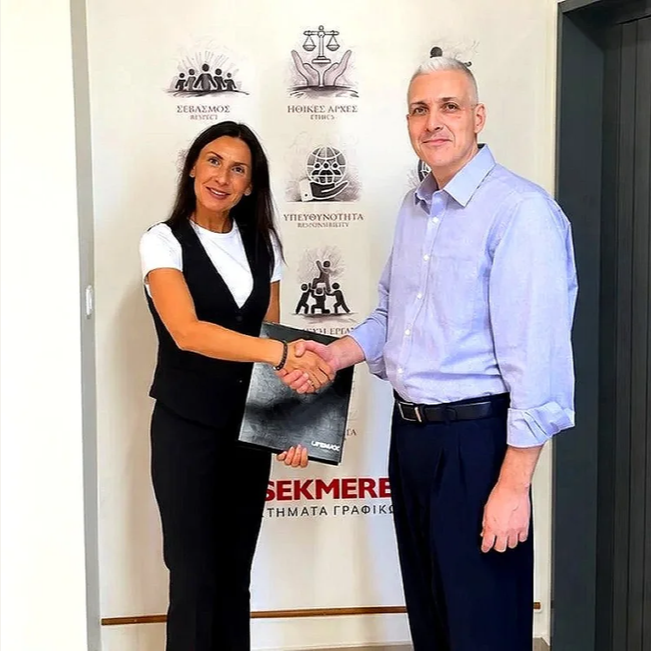
Athens , Greece – 23 October 2026 – UFABRIK has extended its European distribution network into Greece with the appointment of TSEKMERES GS, an established supplier to the country's textile, screen and large-format digital printing industries.
The agreement brings UFABRIK's digital textile portfolio to a market where UV and Latex technologies remain dominant, but where dye-sublimation is emerging as a significant area of potential growth.
The partnership will focus on providing high-quality textiles for silicone edge graphics (SEG) applications, alongside a wider substrate offering for the Greek market.
São Paulo, Brazil – October 2026 – FESPA has announced that FESPA Brasil 2027 will take place from 1 – 4 March in the Blue and White Pavilions of Expo Center Norte, São Paulo.
The leading digital printing exhibition will bring together the sector's biggest global players to showcase the latest solutions across packaging, textiles, signage, and personalised products.
As one of the most visited exhibitions organised by FESPA, FESPA Brasil 2027 will give visitors access to complete solutions and technological innovations spanning print shops, packaging and labels, textile printing, personalised products, 3D printing, and signage and wide format, among other sectors
New York City, USA, October, 2026 – NedGraphics, a global leader in textile and apparel design software, today announced the official launch of NedGraphics 2027, a major software release designed to bring creativity, technology, and production closer together through a more connected and flexible digital ecosystem.
At the center of NedGraphics 2027 is OPTINEDCloud, a new cloud storage and asset management environment integrated across key NedGraphics applications.
OPTINEDCloud gives design, approval, and production teams a centralized space to store, organize, visualize, share, and manage product development files.
Mönchengladbach, Germany – Monforts will showcase its latest advances in finishing, coating and energy-efficient processing at India ITME 2026, as the region's textile manufacturers increasingly look beyond volume production towards higher-value fabrics.
The German finishing machinery specialist will exhibit in Greater Noida , India at stand A5 in Hall 1 from December 4-9.
Milan, Italy – October 22nd 2026 – Agfa Inkjet Solutions today announced it will present its award-winning Jeti Bronco H3300 HS live at Viscom Italia 2026, taking place 28–29 October at the Allianz MiCo Convention Center.
Visitors can see the hybrid wide-format printer in action at Stand 8 B17/C20, where Agfa will demonstrate its capabilities for sign and display businesses seeking greater productivity without compromising on image quality.
The 3.3-metre Bronco H3300 HS delivers print speeds of up to 450 m²/h while maintaining high image quality, combining the flexibility to handle both rigid and roll media in a single hybrid platform.
Berlin, Germany – 21 October 2026 – NVIDIA today announced that Europe's leading ecosystem partners are adopting the NVIDIA DSX™ AI Factory Platform to build AI factories that minimise water consumption for cooling and use less power for the same AI output.
The platform also helps partners bring new capacity online faster and adapt workload power consumption to support grid reliability.
NVIDIA DSX is a full-stack AI factory reference architecture, co-innovated with the world's leading infrastructure companies, in which compute, networking, storage, software, power and cooling are codesigned as one system.
East Sussex, UK – October 2026 – Vivid Laminating Technologies has announced that Pureprint Group, a leading print and marketing services business, has selected its multi award-winning Veloblade technology for use across its operations.
The decision underscores a shared commitment to innovation and efficiency within the print industry.
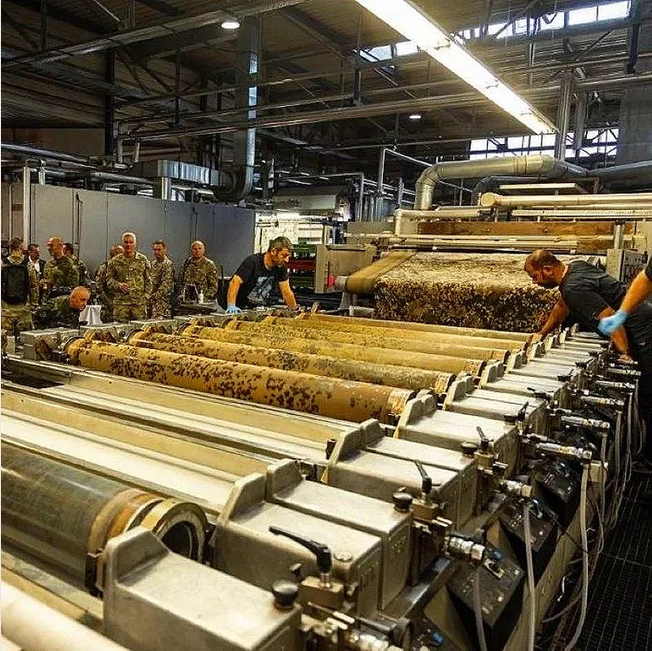
Imst – Ostreich – October 2026 – DyStar, a global leader in textile chemistry and innovative solutions, has announced its pivotal role in helping Textildruck Imst (TDI) achieve successful certification of the German "Multitarn" camouflage print.
The achievement, reached within a matter of months despite an ambitious timeline and exceptionally stringent requirements, enabled production to commence on schedule as part of a strategic collaboration with Getzner Textil.
The certification process demanded rigorous standards across colour performance, durability, infrared signature, and safety compliance.
From the outset, DyStar supported TDI by supplying the necessary products, technical expertise, and hands-on application support required to meet these demanding benchmarks.
Milan, Italy – October 2026– Epson will present its latest advancements in signage, UV printing and textile customisation at VISCOM 2026, taking place at Allianz MiCo Milan on 28-29 October.
Visitors can find Epson at Gate 3, Stand G14, where the company's specialists will demonstrate how its newest technologies are helping businesses expand into high-value applications through superior print quality and precise colour management.
As visual communication and personalisation markets continue to evolve at pace, Epson is positioning itself at the forefront of that change.