THE NEXT BIG THING FOR TEXTILES: REUSE, RECYCLING AND UPCYCLING

“The pandemic has placed increased focus on supply chain issues in textiles and apparel, but a lot of this has been figuring out how to manufacture the same items more efficiently, especially Fast Fashion. But underneath it all, there is a burgeoning interest in better ways to extend the life of existing textile and apparel items—from reuse and recycling to upcycling. Will this be the next big thing for the industry, and how will it adapt?” By Cary Sherburne
GUEST ARTICLE WRITTEN BY CARY SHERBURNE OF WHATTHEYTHINK
A recent report[1] from Lux Research stated:
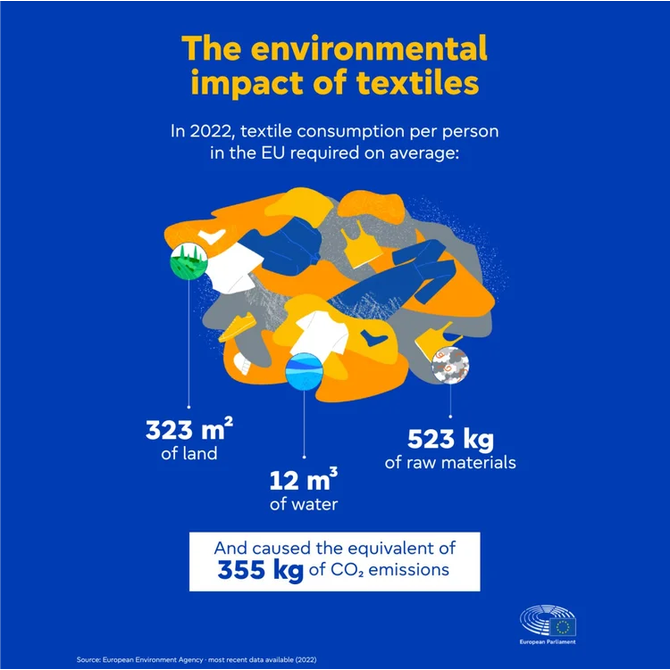
“The fast fashion and apparel industry has been under fire for its linear take-make-waste model, where overproduction of garments has resulted in landfilling of millions of tons of both worn and unworn clothes. This has pushed the apparel industry to move toward sustainable materials and the idea of the circular economy. Consequently, fashion brands are incentivizing the development of new textile recycling methods that enable circular materials.”
This is an important point, but it is broader than just recycling, especially with consumers and environmental activists looking to extend the life cycle of fabric-based products. As the Lux report points out, there are still many barriers to overcome in order to recycle textiles efficiently, including textiles with mixed fiber content, and it may take some time to get where we need to be, both from a recycling technology perspective and the ready access to recycling services.
That’s why brands must be pursuing multiple avenues to reduce the amount of textile waste that is either incinerated or ends up in landfills around the globe. The Lux researchers suggest this should encompass multiple initiatives beyond recycling, “including reuse/resale channels, takeback programs, EPR[2] [extended producer responsibility] schemes, and municipal support. There is an opportunity to develop a textile recovery infrastructure through resale channels with sorting capabilities that feed into textile recycling. Consortiums will be critical to building the textile recovery value chain and promoting the circular economy in apparel [and other textile products].”
Reuse and Resale
One aspect of the circular economy for textile-based products is reuse and resale. As we reported earlier this year, Poshmark’s very successful IPO, with a 142% pop, demonstrates there is an appetite for services like theirs and others such as ThredUp that provide platforms for resale of apparel. We have long had thrift shops to turn to when our closets get overcrowded, but oftentimes those donated items end up in the landfill anyway. Not to say that we should stop donating to thrift stores—they remain an important part of the apparel life cycle. But giving consumers alternatives to offload unwanted items is a good thing, and because they can monetize their items, it’s another piece to the puzzle that may incentivize consumers to engage in more sustainable practices. Both donations to thrift shops and broader resale activities can extend the life cycle of these items. And resale is not just limited to mobile apps—retailer JC Penney has partnered with ThredUp to create in-store shopping for items, sorted by categories:
New with Tags
Like-New
Gently Used
Signs of Wear
And items are priced accordingly. These are important initiatives which we hope to see gaining steam and expanding across more buy/sell opportunities—from mobile apps to retail stores and more.
Upcycling
According to Wikipedia, “Upcycling, also known as creative reuse, is the process of transforming by-products, waste materials, useless, or unwanted products into new materials or products perceived to be of greater quality, such as artistic value or environmental value.”
Sites such as Etsy, Pinterest, and Upcycle Studio are tagging items as “upcycled.” These could be apparel products, or based on unwanted apparel, but could also be items created from industrial and other materials, all of which helps take pressure off of landfills.
Another form of upcycling is transforming unwanted used clothing into new pieces. A good example of this is Unspun. Not only does the company create custom-built jeans that fit well and are more likely to be worn longer than mass manufactured jeans, but they offer a credit against a new pair when their jeans are returned. They then remanufacture used jeans into other products such as cut-offs, giving the fabric new life. A growing number of brands and retailers are starting to offer such options; an early and ongoing example is Patagonia who offers the ability to repair, share, and recycle gear. Why? The company says, “Because the best thing we can do for the planet is cut down on consumption and get more use out of stuff we already own.”
As the buying power of the younger generations continues to grow, they are supporting companies who have these types of initiatives in place. They are looking beyond greenwashing, or empty talk, to real initiatives that will have a positive impact on life on our planet.
Recycling
Ultimately, though, these items do reach an end of life where today the bulk of them are ending up incinerated or in landfills. A recent BBC article on the topic states:
Around 85% of all textiles thrown away in the US – roughly 13 million tonnes in 2017 – are either dumped into landfill or burned. The average American has been estimated to throw away around 37kg of clothes every year. And globally, an estimated 92 million tonnes of textiles waste is created each year and the equivalent to a rubbish truck full of clothes ends up on landfill sites every second. By 2030, we are expected as a whole to be discarding more than 134 million tonnes of textiles a year.
That’s not good. In fact, that’s beyond not good! The article also notes that just 13.6% of clothes and shows thrown away in the U.S. end up being recycled, with a global recycling rate of 12%. The article adds “Compare that to paper, glass, and plastic PET bottles—which have recycling rates of 66%, 27% and 29% respectively in the US—and it is clear clothing lags behind.”
That’s why greater collaboration is required on improving fabric recycling efforts around the world. Aside from lack of easy access to recycling facilities for unwanted clothing, the technologies for recycling them need improvement. A key challenge is the mixed fiber content in many clothing items, such as poly/cotton blends or multiple fiber types combined with elastomers for stretchiness.
Some progress is being made. An example is Swedish company Renewcell, founded in 2012, that has developed a means of decomposing the cellulose in cotton and viscose, which they believe is key to recycling textiles on a massive scale. Their process starts with used garments and textile production waste with high cellusosic content being shredded with buttons, zippers, and color removed. Non-cellulosic content is removed from the resulting slurry and the slurry is dried to produce Circulose sheets that are packaged into bales and fed back into the textile production value chain as a replacement for virgin materials.
A more widely used method is solvent-based, where chemical solvents are used to separate polyester and cotton, with each component undergoing separate further processing. The cellulose component can be sold as pulp for further processing and spinning into fiber, while polyester components can be sold for production of polyester fabric or PET plastics.
Key to the success of solvent-based textile recycling is the ability to recover solvents efficiently for reuse.
The Lux Research report states, “[Our] analysis shows textile recycling breaks even when solvent recovery efficiency is 98.5% or more or if solvent costs are reduced by half. In order to be viable, the resulting recycled cellulose and recycled PET monomers would have to be sold at a significant premium (as much as a 50% premium over virgin cellulose and polyester) if there is no change in the process.”
Getting to Scale
Lux Research believes that full scale-up of textile recycling is “still years out, as companies are still stuck trying to figure out how to turn a profit at scale.”
To counter these barriers and add another dimension to recyclability of fashion, there are many other research initiatives underway. One that appears promising is the development of mono materials that can offer the same performance as the fiber blends in use today. An example is the Adidas TERREX FUTURECRAFT.LOOP Anorak: Sustainable Jacket Made from Ocean Plastic which recently won an ISPO award for sustainability.
The company states, “Instead of making jackets that are increasingly complex and made of different materials, adidas is using undyed mono-material made of 100% polyester, making this weatherproof jacket extremely easy to recycle. Only ocean plastic provided by Parley is used, which is fished out from the seas and recycled. Primaloft’s insulation is also made of plastic waste.”
These efforts are all very encouraging, but will take time to get to scale and be able to have a significant impact on the problem of textile waste. In the meantime, we can all help by banishing the concept of Fast Fashion from our shopping, buying fewer clothes and washing and wearing them less often, and taking advantage of resale/upcycling opportunities to delay their entry into the landfill waste stream.
What will you do?
[1] Closing the Loop: Understanding the Viability of Textile Recycling, published by Lux Research.
[2] According to OECD, “Extended Producer Responsibility (EPR) is a policy approach under which producers are given a significant responsibility – financial and/or physical – for the treatment or disposal of post-consumer products.”
About Cary Sherburne: Cary Sherburne is a well-known author, journalist and marketing consultant whose practice is focused on marketing communications strategies for the printing and publishing industries.
Cary Sherburne is available for speaking engagements and consulting projects. To get more information contact us. Please offer your feedback to Cary. She can be reached at cary@whattheythink.com.