MEET THE DESIGN DUO BREATHING LIFE INTO VINTAGE FURNITURE USING CREATIVITY AND PRINT
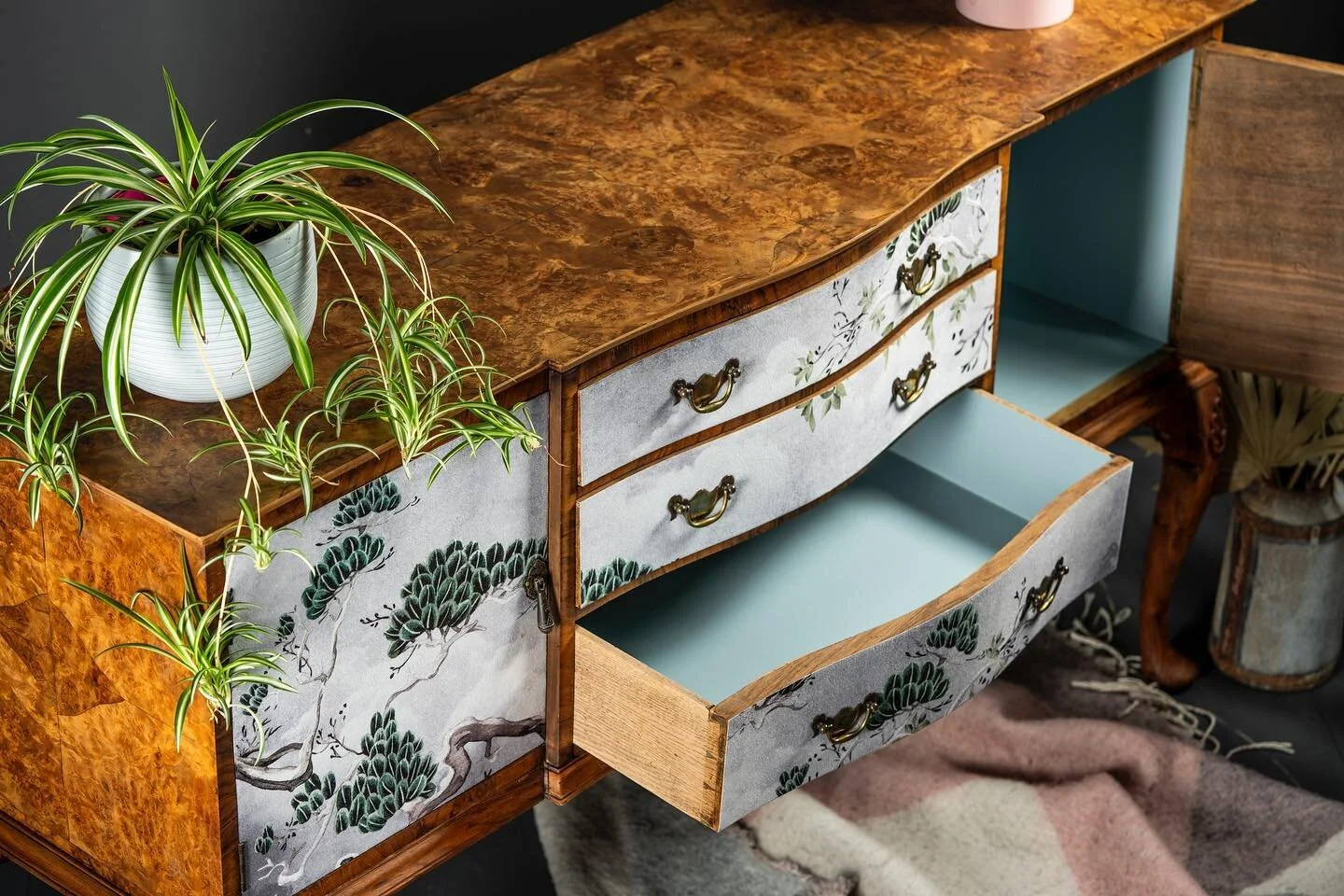
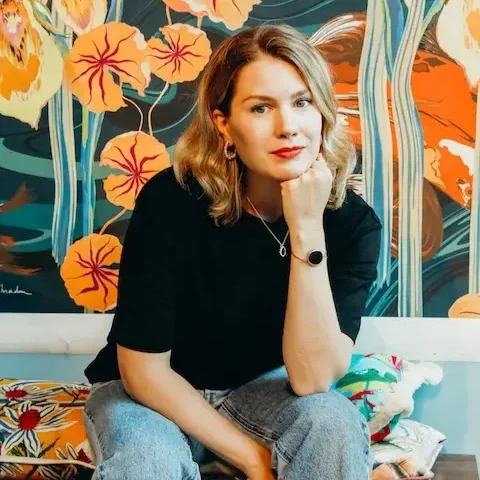
“Educating people that mass production and mass waste is having an uncontrollable impact on our environment is paramount. If we can do our bit toward forming a new path in which re-use is a top priority, then we will be on our way to living in the future we all want to see.” Beautiful Furniture lovingly recycled with a splash of Colour and Print - meet the design duo Alice and Ollie of Patience&Gough based in the heart of the Lake District, UK.
When did you found Patience & Gough and why?
I started upcycling nearly 10 years ago now. My first project was an awful computer desk my dad had built out of stair bannister offcuts. I painted it pink, yellow and blue. We all have to start somewhere, this project made me realize I love working with my hands. I used the skills I had learnt in art college and University and moulded them to work on furniture. For a long time upcycling was done in my spare time, alongside cafe work. I finally decided to take the leap of faith into full self-employment when I met Ollie... we fell in love and he also fell in love with the paintbrush. He is a photographer by trade and definitely has an eye for design, so we joined forces and rebranded in 2018 to Patience & Gough. I realized I wanted to be the creator of beautiful and unique things, upcycling combined my love of art and interiors and over the years, I came to see the true environmental benefits of it, pushing us further to create beautiful and high-quality pieces that could be reused and loved for another generation.
What inspires your design story and creativity?
I would say, the desire to recycle and push a circular economy is what really drives what we do. We are both passionate about the planet, and the nature it houses. We also love design and being creative so combining the two whilst creating a living doing so is a dream really! We are so lucky to live in the Lake District, the surrounding area has had a huge impact on our lives, growing up amongst the fells and lakes has given us a perspective to cherish the nature that is all around us and preserve it in any way we can.
As a design duo – how do you split tasks or do you?
Haha, Ollie is defiantly the sander! No, to be honest, we both do pretty much everything, except I specialize in the fabric side of things and ollie in the different paint techniques, like the Ombre. We split the boring stuff too like I do the taxes and keep on top of social media stuff while Ollie designs the website and edits all the photography.
How do you decide how to lovingly restore each piece?
All of our designs stem from the original characters of a piece, we let these be the focal point and our added finishes complement or enhance them. We try to keep the integrity of much older pieces and restore what we can while letting the ageing be a part of its beauty.
Which design genre’s inspire you most?
This is such a tricky question to answer because we work on furniture from all different eras of design and genres. One week we could be adding a geometric pattern and fabric to a mid-century sideboard and the next week be restoring some walnut veneer on an 18th-century chest of drawers. Because of the variety of furniture that is brought to us, I feel our styles have to remain quite fluid. This is especially important as we take on so many commission projects, working with a client's tastes it is important you guide them but do not overpower their vision.
How long does a restoration take, and what’s involved?
Good question, and it totally depends on the piece and its condition. The restoration is the most time-consuming part! An average piece generally takes 4-5 full days, but in between these you have a lot of back and forth of ideas between a client and sourcing products like paint and fabrics etc, delivery times, drying times, mockups, photography and editing, the list goes on. A lot of people see upcycling as just slapping some paint on to cover the old, but a lot more goes into each piece and each stage has to be carefully planned and perfected, from the restoration right up till the topcoat, to achieve a high standard finish. Our most time-consuming project was a restoration of a wardrobe that took 28 full days.
How do you approach bespoke interior projects?
We work closely with both the client and a 3d artist to create a vision the encompasses our style and design along with the clients brief. 3D modelling has come along so much and it allows the client to fully visualize the design before any work starts, potentially saving them some very costly mistakes.
We work slightly differently from most interior designers, as such that we base the design of a room around a focal piece of furniture that we design. Once the client is happy with the furniture, we can build upon the idea and create a full room using highlights from the piece. We incorporate a lot of texture and layers into a design using natural, locally sourced materials.
Our design process can be as small or as encompassing as the client needs it to be, from something as simple as choosing curtains to compliment a piece we have designed for them, up to project managing an entire interior.
You combine print in your beautiful furniture – do you customise designs?
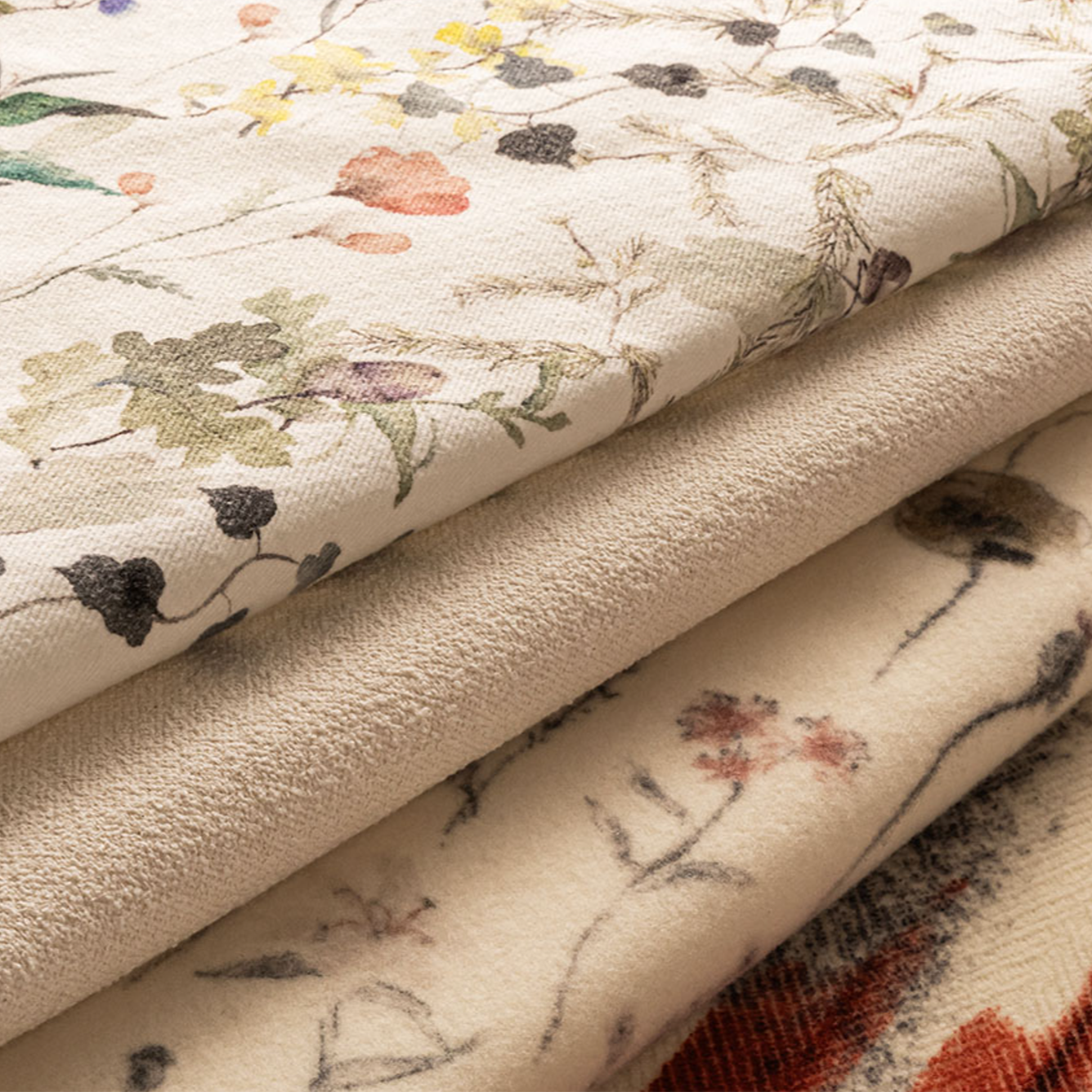
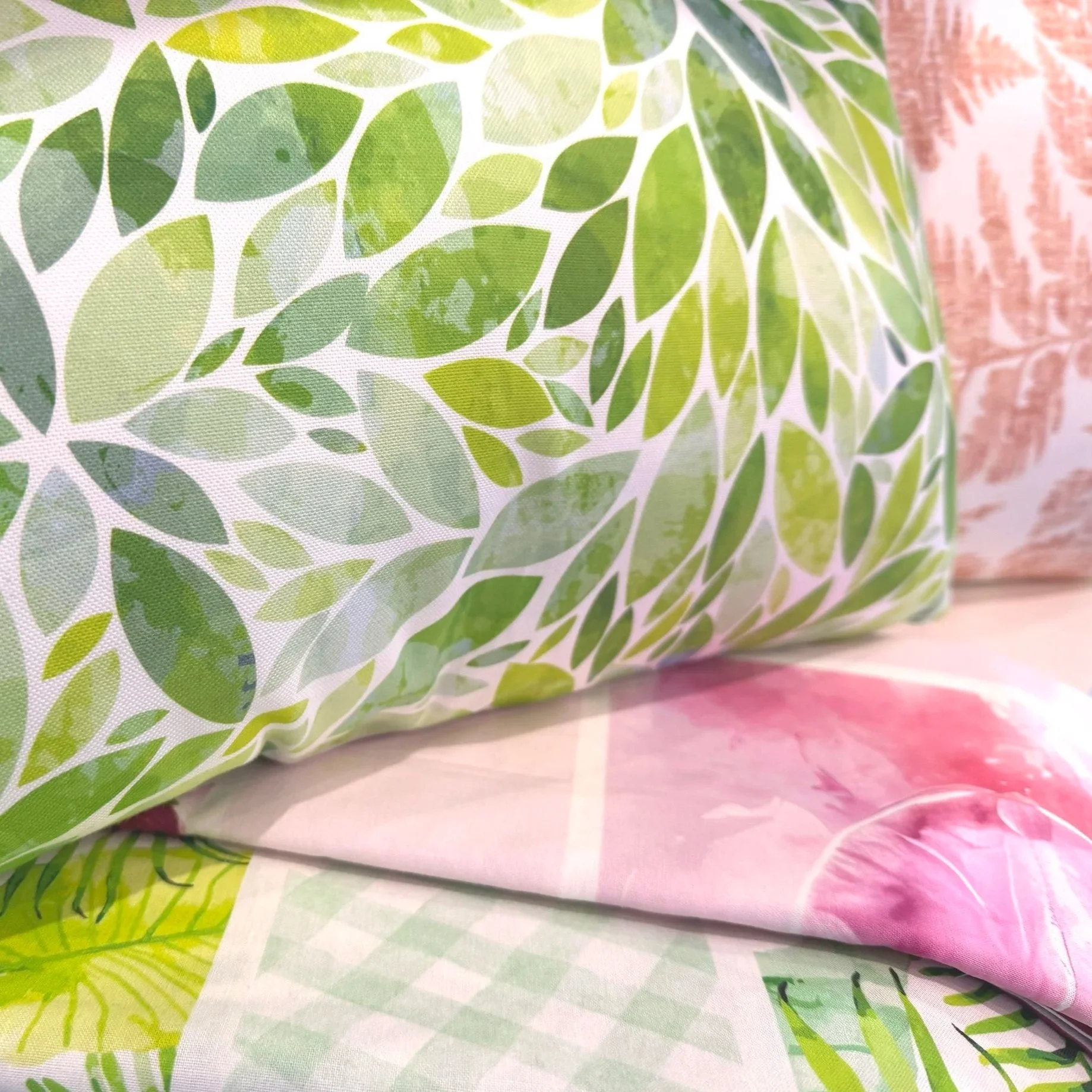
We have been wanting to create our own fabric design for a long time now. We have so many ideas and would love to work with pattern designers and artists to bring them to life! We have found an incredible velvet that is made from 100% recycled plastic bottles, which would make the perfect base for our designs and go hand in hand with our brand ethos.
We will always continue to use the amazing fabrics and designs from the best fabric houses across the industry.
What’s your favourite creation?
This is constantly evolving. Each piece brings with it new challenges and accomplishments as we try to push ourselves to develop new skills and techniques. If we had to pick one that really stood out, it would be the 18th-century chest of drawers. We inlaid raw brass into the top of it to hide some damaged veneer and covered two of the drawers in beautiful William Morris fabric. The veneer we managed to save looked incredible once it had been carefully sanded and oiled.
What’s next and what’s your vision for the future?
We have just renovated a beautiful building in the heart of the Lake District, Windermere, for us to use as an open studio workshop. Our aim is to build a local presence and promote a circular economy within our local community. Commercial spaces have taken a huge hit during these lockdowns, putting even more pressure onto the already struggling high street. Our vision is to be a part of a change that could reinvent the high street, bringing independent businesses into the public eye instead of huge brands and conglomerates dominating the space. If councils were willing to incentivize independent, creative people taking a place on the high street, I feel we could transform how people shop, bringing people away from online mania that has plagued our lives and back to the magic of exploring real life and real people’s creativity when we shop.
Having our furniture taken by Liberty London has shown us there is a real market for recycled stuff.
A genuine, viable industry of recycling is being born out of the overproduction and waste of generations before ours.
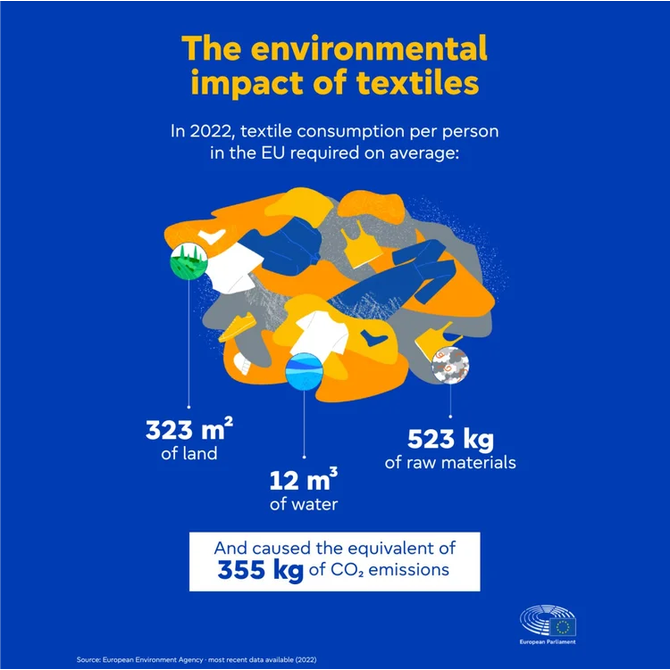
Educating people that mass production and mass waste is having an uncontrollable impact on our environment is paramount. If we can do our bit toward forming a new path in which re-use is a top priority, then we will be on our way to living in the future we all want to see.