HOW MUCH SEWING AUTOMATION IS ENOUGH? THE RISE OF THE ROBOT AND THEIR IMPACT FOR RESHORING SEWN MANUFACTURE
“Clearly, with a sewbot, much less labor is required. But the rest of the industry is not standing still. Some on-demand manufacturers, like OnPoint Manufacturing in Florence, Ala., have implemented automated manufacturing lines that, using barcodes and conveyors, direct pieces to be sewn to operators with the particular skill required—such as cap sleeves—whose backlog can handle the work and who have the right color thread installed”. Cary Sherburne - WHAT THEY THINK
GUEST ARTICLE WRITTEN BY CARY SHERBURNE OF WHATTHEYTHINK
Manufacturing automation in textiles and apparel is moving ahead apace, accelerated by advances in digital technology. But the remaining “last mile,” sewing, continues to be a barrier to reshoring of apparel manufacturing on a large scale. This article explores some of the efforts underway to automate sewing and what impact that could have on the future of apparel manufacturing in North America and Europe.
Earlier this year, we spoke with Palaniswamy "Raj" Rajan, Chairman and CEO of Softwear Automation, to get an update on the company’s sewbot technology. The original vision of the company was to be able to enable on-demand made-to-measure production of certain apparel items with minimal human intervention, relying on “sewbots” to accomplish the sewing. Raj points out that garment manufacturing can be complex, with some 18 steps required to make a T-shirt, and 70 to 80 steps to make jeans. While jeans were an initial target based on early R&D, about four years ago the company decided that the technology, including fit technologies, and the overall supply chain were not ready yet for full automation, perhaps for another two to three years. Currently the company is producing T-shirts, a less complex process. Plus, sizing is easier for made-to-measure, and customization is easier. In addition, due to the pollution caused by microfibers from synthetic fabrics, Softwear Automation has also focused in on T-shirts made of cotton, both to reduce the overall environmental footprint and to support the US cotton industry. He points out that 98% of T-shirts are imported, and he believes the company can be responsible for producing a billion cotton T-shirts in the US over the next decade. That being said, the company is not yet selling its equipment, likely for another 18 to 24 months. Instead, they are running the machines internally in full 24/7 production, creating some 100,000 T-shirts per month.
So what’s the alternative?
Clearly, with a sewbot, much less labor is required. But the rest of the industry is not standing still. Some on-demand manufacturers, like OnPoint Manufacturing in Florence, Ala., have implemented automated manufacturing lines that, using barcodes and conveyors, direct pieces to be sewn to operators with the particular skill required—such as cap sleeves—whose backlog can handle the work and who have the right color thread installed. This makes completion of a manufactured piece of clothing much more efficient, but still requires skilled sewists to do the work, albeit likely fewer than in a traditional cut-and-sew operation.
Another approach was explained by Rick Frye of Brother in a recent TexProcess webinar [password required for replay]: what the company is calling Electronic Programmable Bridge sewing technology. Frye pointed out that programmable sewing machines have been around since the 1970s, especially for smaller items like athletic shoes, seatbelts, airbags, etc. But its Programmable Bridge technology takes sewing automation to a new level, and can handle larger items with complex stitch patterns.
The Brother Nexio BAS360H and BAS-375H bridge-type sewing machines can deliver high-quality sewing at speeds up to 2,500 stitches per minute with a resolution of 0.5 mm and a maximum sewing area of up to 1200 x 700 mm.
Frye explained that patterns can lose shape when sewing with conventional sewing machines. Not so with bridge-type machines, he says. That’s due to the fact that in conventional sewing, the needle point is fixed, and the piece to be sewn is moved along both the X and Y axes. With Brother’s bridge-type machines, the needle point moves only on the X axis while the clamp holding the fabric to be sewn moves along the Y axis. This allows for very accurate, very high-speed sewing.
He stated, “This also provides for a reduced footprint and beautiful, stable stitches. Feed drifting doesn’t occur, even with high speed or heavyweight goods, due to closed-loop servo control where you tell it where [the needle] is supposed to go, and get feedback that it actually went where it was supposed to. With 0.5 mm resolution per pulse, even slanted stitch lines and curves are accurately sewn with up to size 207 nylon thread.”
This video shows the machine in action.
This approach requires a skilled person to do the programming, usually not the operator. But once the programs are developed, Frye says, a sewing operator can be trained within a day, adding, “The artisan part is done by servo motors. It’s really more loading and unloading. They don’t need a sewing skill set. Someone who has never operated a sewing machine before can be a good operator within a day.”
The other issue the industry faces, of course, is attracting new talent.
An educational effort is required to dispel the belief that a cut-and-sew operation is a “sweat shop” or a dirty environment. These days, with modern technologies both in cutting and sewing, a cut-and-sew shop can really be a high-tech operation. Programs like Detroit-based ISAIC have a multitude of programs in place to attract and train new industry talent, manufacture sewn goods such as masks and gowns, T-shirts, sweatshirts, and more, and to implement the newest technologies. Watch our interview with ISAIC CEO and Chair of the Industrial Sewing and Innovation Center Jennifer Guarino.
With all of these technology developments, the industry is well on its way to completing that last mile of automation that can help bring cut-and-sew operations back to North America and Europe. We will continue to follow developments as they occur and would welcome discussions with anyone who has experience in implementing these new solutions.
About Cary Sherburne: Cary Sherburne is a well-known author, journalist and marketing consultant whose practice is focused on marketing communications strategies for the printing and publishing industries.
IMAGE CREDIT: Brother Nexio BAS-375H bridge-type sewing machine
The story of what happens when young designers access digital technology is still being written.
What once was a theoretical sustainability goal seems to have shifted into an active regulatory reality.
Is the Textile Market Finally Recovering?
After a difficult few years, there are genuine reasons for optimism. Duncan was candid about the challenges: "The market for textiles has been very difficult over the last three years. I'm not going to hide the truth there. But the tide is turning.“
A profound shift is currently reshaping the sector
Changing consumer expectations demand greater design diversity, faster turnaround times, and sustainable manufacturing practices.
To thrive, interior brands must adapt their supply chains, bringing production closer to the end consumer and moving away from bulk manufacturing.
Digital textile printing offers a definitive solution to these operational bottlenecks.
Digital transformation doesn't announce itself.
It accumulates - one innovation at a time - until an entire industry looks back and realises the ground has shifted beneath its feet. That's precisely where textiles stands today.

The conversations happening now about AI, automation, sustainability, and digital product passports are not theoretical. They are shaping decisions being made on factory floors and in boardrooms right now.
“By leveraging advanced digital textile printing, Marylene Madou has successfully merged traditional craftsmanship with cutting-edge technology. Her approach offers a blueprint for how independent designers can scale their brands globally while maintaining a minimal environmental footprint.”
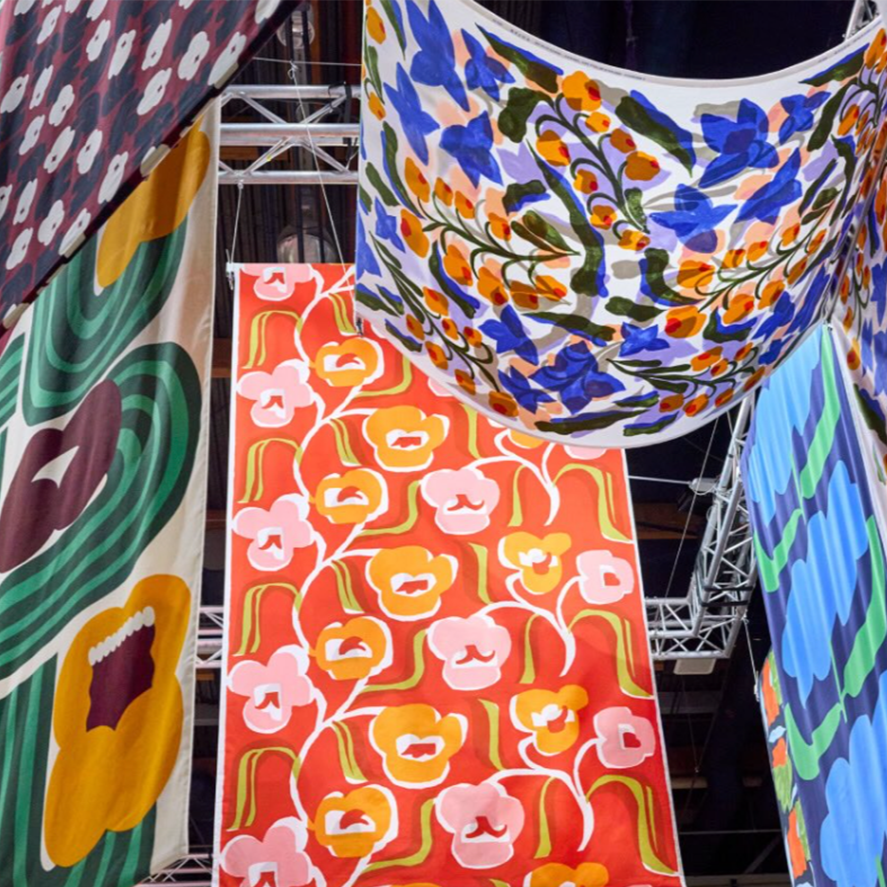
From Helsinki's printing mill to Paris's Le Marais, discover how Marimekko is scaling a design-led brand with purpose, craft, and bold innovation.
But what makes Marimekko's story compelling is not just its aesthetic legacy?
The textile industry is undergoing a vital transformation. As the insights from Techtextil and Texprocess reveal, the path forward relies on a combination of sustainable hardware, intelligent chemistry, and seamless digital workflows.
From Zimmer's industrial-scale energy reductions and Stratasys's on-demand 3D embellishments, to Kornit's single-step technical printing and the unified digital ecosystems of NedGraphics and Optitex, the tools for change are here. To stay competitive, brands and manufacturers must adopt these innovations, moving away from fragmented, wasteful processes towards a truly connected, circular economy.
Friedmans stands as a testament to the power of combining traditional textile knowledge with forward-thinking innovation.
“Operating from their UK headquarters, Friedmans now serves a diverse array of sectors, including swimwear, dance, entertainment, sportswear, interior decor, prosthetics, and even pet apparel. With a strategic supply chain that reliably serves clients worldwide”
The apparel decoration industry is decisively moving away from isolated, analogue production tools toward connected digital manufacturing environments.
"Kornit’s unwavering commitment to transformative technology continues to disrupt the status quo. For business leaders and innovators ready to capture the future of apparel manufacturing, the path forward is clear”
The Urgent Need for Sustainability at Scale
The transformation at Coats provides a vital blueprint for the wider textile and apparel sector. True sustainability cannot be achieved in silos. As Dearing emphasised:
“Cross-industry collaboration is the engine of meaningful change. Brands, machinery suppliers, chemical providers, and fibre producers must act as an interconnected ecosystem”
Today’s customers demand superior product quality, real-time data visibility, and lightning-fast turnaround times.
For large-scale garment decorators, managing these expectations while balancing seasonal demand fluctuations - such as the massive surges seen during Black Friday - presents a monumental challenge.
"Relying on transactional vendor relationships and outdated legacy equipment is no longer sufficient to secure long-term stability and growth.”
Printing method is never a secondary detail. It shapes the entire life cycle of a product, from concept to customer. In today’s fashion industry, where margins are tighter and speed matters more than ever, technical knowledge has become a competitive advantage.
“The future of textile design belongs to professionals who can combine creativity with execution, aesthetics with practicality, and vision with production reality”.
Are we witnessing the reinvention of Merch driven by adaptive, digital technologies?
The commercial opportunity presented by printed, personalised merchandise is already a lucrative revenue stream; it is the core driver of growth in a multi-billion-pound industry. And the mandate for print businesses is clear: automate, adapt, and offer undeniable added value, or choose to gradually lose market share.
Powderless DTF is an important area of innovation. It deserves research, investment, and thoughtful development.
“But at its current stage, it often feels like the industry is attempting to commercialize the concept ahead of the underlying chemistry and system readiness”.
All Apparel Manufacturers face an Urgent Mandate: “Automate or be Left Behind”.
Industry leaders like Super Nova Sports and Ryozo International were struggling with severe pre-press bottlenecks and unsustainable fabric waste. By integrating AI Sublimation Software into their workflows, these forward-thinking businesses eliminated manual variable data entry, boosted fabric efficiency to over 80%, and reduced delivery times by more than half, establishing a highly profitable, agile, and environmentally responsible production model.
The Future of Manufacturing belongs to those who Embrace Connected Digital Ecosystems
“Whether you produce garments, car interiors, or home furnishings, the transition from creative concept to production-ready product often remains fragmented. Design teams work tirelessly to develop compelling materials, yet technical teams struggle to interpret these visions without losing data along the way.”
The European digital wallcovering marketplace is expanding at an impressive rate.
“For print professionals and interior designers, this transition presents a distinct set of challenges. Achieving flawless colour consistency, managing complex substrates, and meeting stringent environmental standards are no longer optional extras; they are fundamental requirements for commercial success.”
If you're looking to optimize your website for AI search, hang onto your cowboy hat. It's the Wild West out there. Former (and current) SEO companies see the handwriting on the wall as more search moves from traditional SEO to AEO (answer engine optimisation). Opportunists are popping out of the woodwork.
(There are good options out there, but vet them carefully.)
A swimsuit might start life as a sketch. By the time it reaches the shop floor, dozens of hands have touched it - designers, dye houses, printers, trim manufacturers, quality controllers. Each one interprets colour in their own way, under their own conditions, with their own tools. The result is often a product that looks nothing like the original vision.
London UK – July – 2026 – British digital fabric printing company Prinfab has been commissioned to produce a commemorative tea towel to celebrate the landmark birthday of iconic English fashion designer Sir Paul Smith.
The bespoke piece features hand-drawn self-portraits of nearly 800 members of his team, making it a truly unique tribute to one of Britain's most celebrated designers.
The tea towel, gifted to Sir Paul Smith by his team, showcases the creative spirit that has long defined the Paul Smith brand.
Manchester – August 2026 – Premier Digital Textiles today highlights its 2555 Dimout, a versatile, dual-purpose fabric designed to bridge the worlds of fashion and interior design.
With its distinctive silver finish and subtle sheen, the fabric is positioned as a premium material for designers and makers operating across both industries.
2555 Dimout features a smooth silver surface that lends itself naturally to elegant occasionwear, flowing garments, and bold statement pieces.
Its fluid drape and refined aesthetic make it particularly well-suited to summer collections, where lightness and visual impact are equally valued.
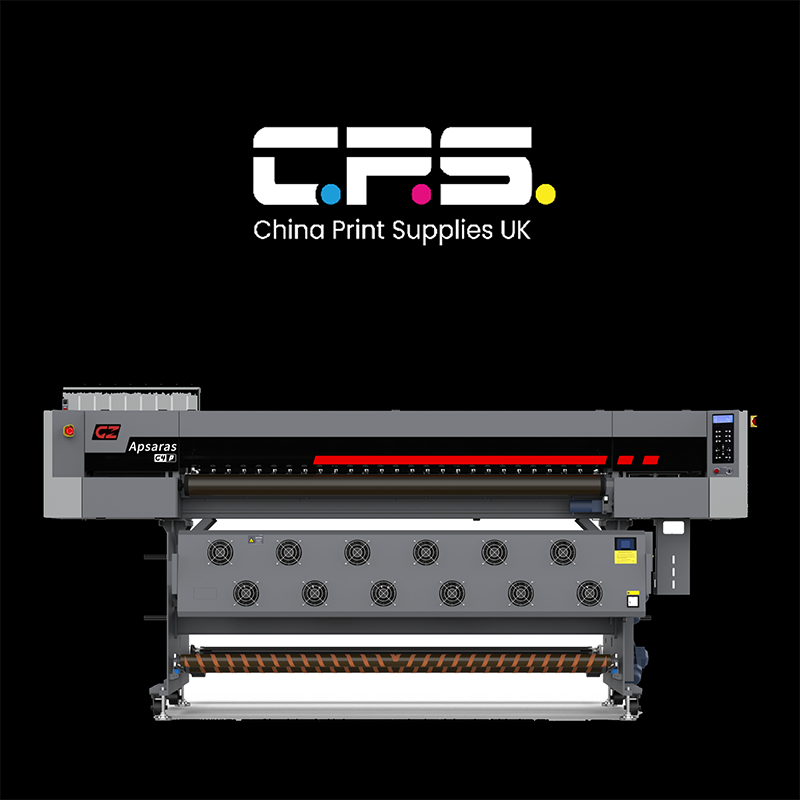
Oswestry – Shropshire – August 2026 - Fujifilm Ink, the UK-based global supplier of UV inkjet technology, has strengthened its partnership with China Print Supplies UK Ltd (CPS), becoming the recognised ink supplier for the company's range of Dlican UV printing systems.
The partnership follows the successful rollout of Fujifilm Ink's thermoforming flexible ink technology, reinforcing the company's commitment to delivering high-performance, application-specific ink solutions for the wide-format print market.
Birmingham, UK – July 2026 – swissQprint UK is set to exhibit at The Print Show 2026, taking place from 29 September to 1 October at the NEC in Birmingham, Great Britain.
Visitors can find the swissQprint UK team at Stand P420, where they will have the opportunity to experience the company's latest flatbed printing technology firsthand.
Paris, France – August 2026 – Optitex and NedGraphics will present their integrated design and manufacturing solutions at Première Vision Paris, taking place from 1st to 3rd September 2026 at Parc des Expositions, Paris Nord Villepinte, France.
Visitors can find the companies at Booth 3L11 in Hall 3, Smart Creation Area.
The joint appearance marks a significant opportunity for textile brands and manufacturers to experience first-hand how NedGraphics and Optitex deliver a unified workflow — one that connects textile design, colour refinement, and end product development within a single, seamless process.
Emmerich am Rhein, Nordrhein-Westfalen – August 2026 – Brother Industrial EMEA has announced the launch of its GTX300, a hybrid direct-to-garment (DTG) and direct-to-film (DTF) garment printer that the company says sets a new benchmark for textile print quality.
To mark the occasion, Brother Industrial EMEA is offering eligible print professionals across the EMEA region a complimentary demo package to experience the printer's capabilities firsthand.
FREMONT, CA. August , 2026 – Fiery, a global leader in digital printing technology, has announced the launch of a new free online course designed to help print professionals master colour management for direct-to-film (DTF), direct-to-garment (DTG), and UV printing workflows.
The course, Fiery Specialty Production 301 v1: Colour Management Basics in Digital Factory, is now available on Fiery's learning platform at no cost.
Geretsried, Bavaria, August 2026 – RUDOLF, a leading textile chemistry company, has announced the launch of its Summer Campaign, a dedicated series exploring advanced finishing technologies designed to enhance the performance, comfort, and protection of swimwear and summer apparel.
The campaign arrives at a time when the demands placed on modern swimwear are greater than ever. Prolonged sun exposure, repeated contact with water, and the physical demands of summer activities require textiles that go beyond attractive design.
RUDOLF's Summer Campaign aims to demonstrate how the right finishing technologies can meet these challenges head-on.
Frankfurt, Germany – August 2026 – Heimtextil, the world's leading trade fair for home and contract textiles, has announced the launch of the Italian Lounge, a dedicated exhibition space celebrating Italian craftsmanship at its 2027 edition.
Taking place from 12 to 15 January in Frankfurt, the Italian Lounge will be located in the heart of Hall 4.1 and will bring together manufacturers of decorative and furniture fabrics, leather, and fibres and yarns under one roof
Pembrokeshire, Wales – August 2026 – National Weaving, a family-owned textile manufacturer with nearly four decades of experience, was honoured to receive a visit from HRH The Princess Royal, President of the UK Fashion & Textile Association (UKFT), at its Pembrokeshire facility.
The visit celebrated the company's longstanding contribution to British textile manufacturing and its commitment to combining traditional craftsmanship with modern, sustainable production methods.