
TEXINTEL LIVE INTERVIEW - FESPA Barcelona: Driving the Digital Textile Switch with Dr. Simon Daplyn of Sun Chemical
Join Debbie McKeegan in Barcelona as she talks with Dr. Simon from Sun Chemical about the future of textile printing.
They discuss the launch of Zenia Sapphire pigment inks with upgraded wash fastness, the slow but crucial shift from analog to digital textile printing, and how education, skills, and supply-chain partnerships can unlock on-demand, sustainable production.
They also explore upcoming digital product passports, why chemistry and transparency matter, and what the industry must do now to prepare for 2027–2033 compliance.
Watch to learn more >>
KEY TAKEAWAYS
New Zenia Sapphire pigment inks raise the bar on performance
Sun Chemical’s Zenia Sapphire range has been upgraded with “clever chemistry” to significantly improve fastness, especially wash resistance, achieving 5* under severe test conditions—a key requirement for retail-quality textiles.
Digital pigment printing is a major but underused opportunity
Although over 50% of printed textiles use pigment inks in analog (rotary/screen) processes, only 8–10% of textile printing is digital. Moving pigment into digital offers huge potential in flexibility, speed, and waste reduction.
Digital enables agility, reduced inventory, and less waste
Traditional long-run screen printing ties up capital, demands high volumes, and often leads to overproduction and landfill. Digital printing lets producers print what sells, replenish on demand, and improve cash flow and sustainability.
Skills gaps and missing local hubs block re-shoring
There is a major skills gap in finishing, cutting, and sewing in Europe and the US, which keeps production concentrated in Asia. To re-shore and be more agile, the industry needs regional hubs, investment in skills, and partnerships across brands, printers, and manufacturers.
Digital product passports will force full transparency
Textiles will be first to face digital product passport requirements (from around 2027–2033), demanding complete visibility of materials and chemistry. Ink formulators must know every raw material to inform brands, and the industry must replace greenwashing with verified, open-book sustainability data through better communication, collaboration, and education at all levels.

The world of garment decoration is moving fast—and staying ahead means embracing new technology, finding your niche, and adapting to what customers need.
In this interview from Printing United in Las Vegas, Debbie McKeegan sits down with Joshua Gill of Brother Industrial to explore the latest trends shaping direct-to-garment (DTG) and direct-to-film (DTF) printing.
Josh discusses how automation can help print businesses tackle staffing challenges and increase production, including Brother’s digital line, designed to let one operator manage the process from a blank shirt to a finished garment. He also shares how Brother’s product range supports businesses at different stages, from entrepreneurs and smaller shops to larger-scale production.
Whether you’re considering your first printer, adding DTF to an established DTG workflow, or scaling up your production, this conversation offers insight into the evolving print landscape—and the importance of growing with your customers. Watch the full interview for a closer look at the technology and trends driving the industry forward.
Watch to learn more >>

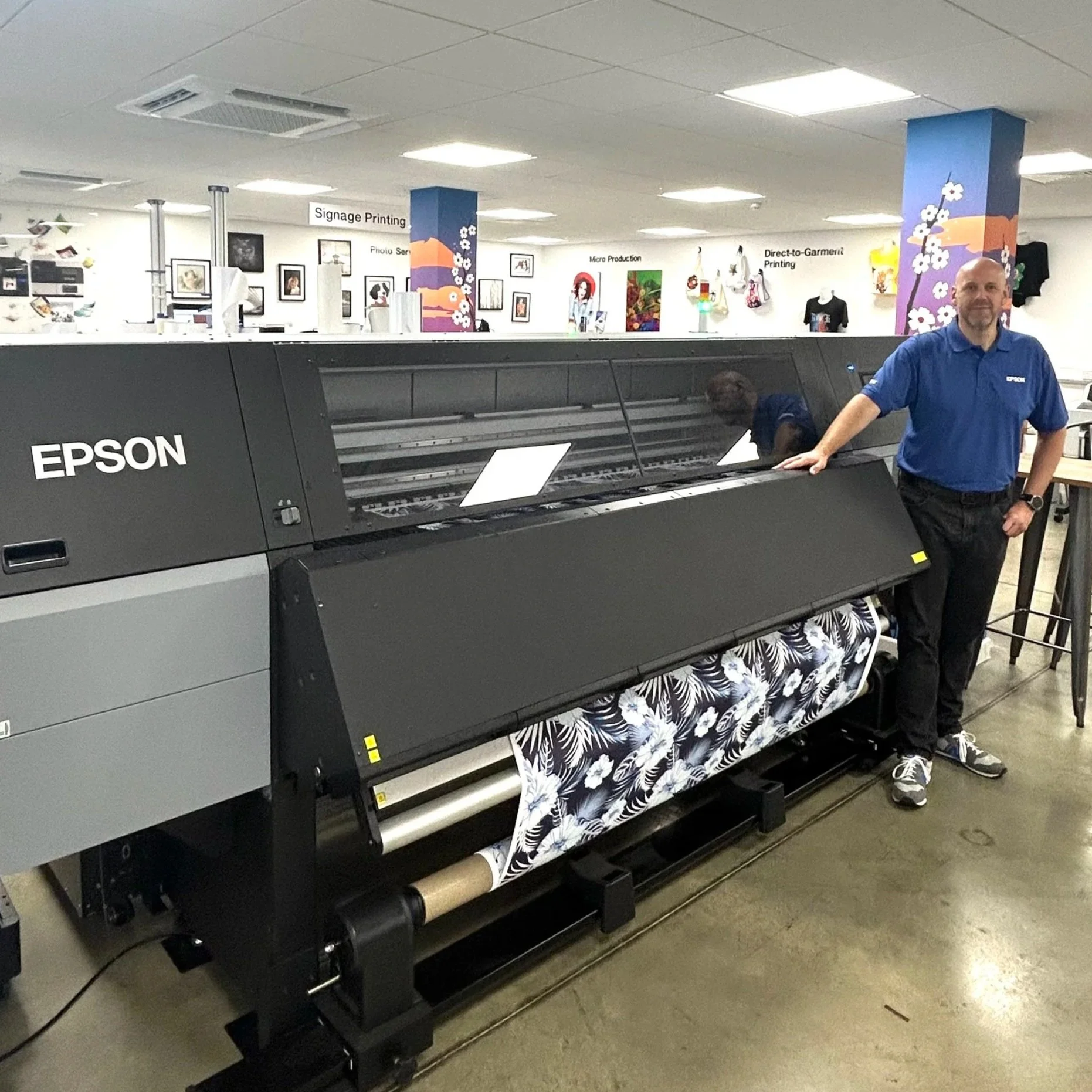
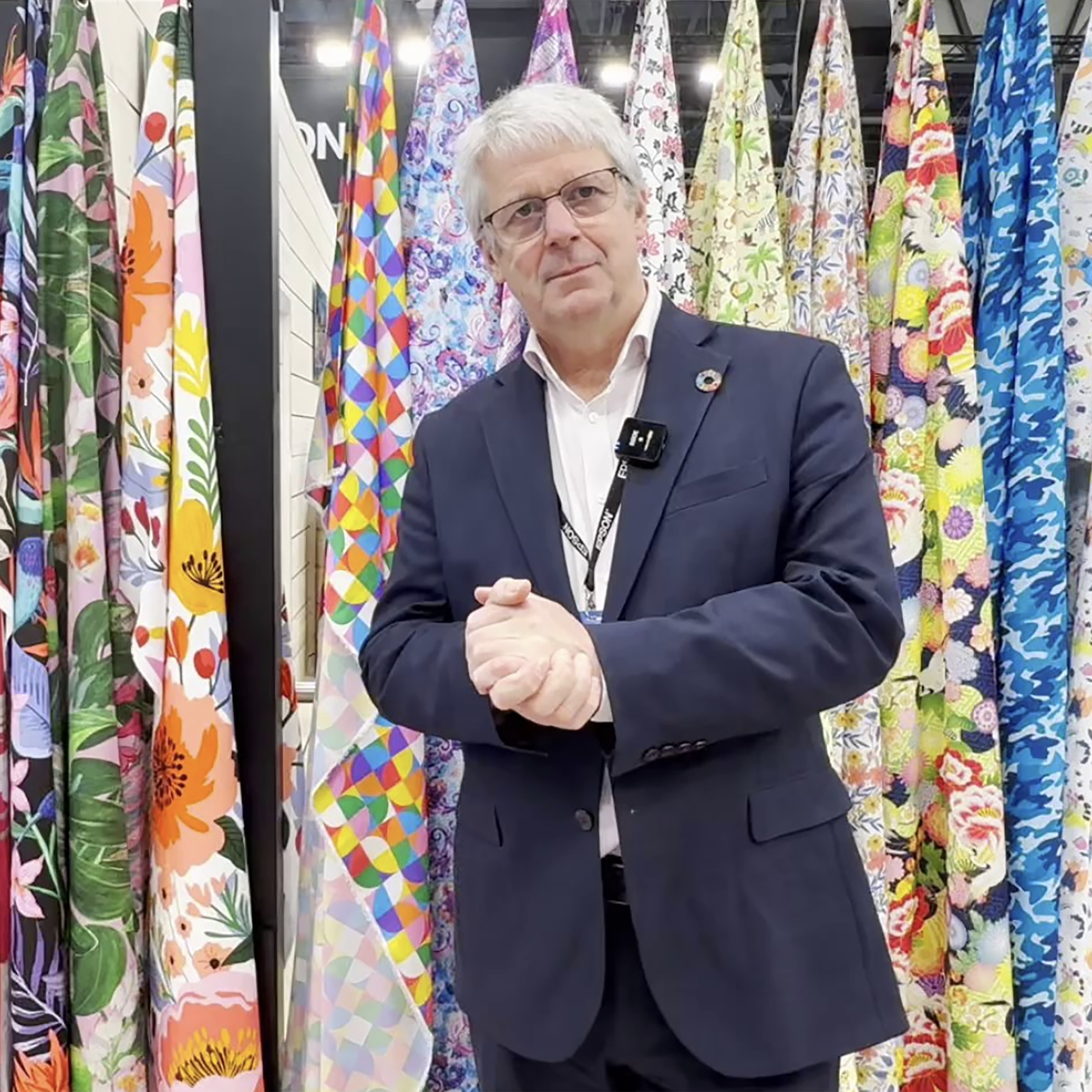
Debbie McKeegan chats with Phil McMullan from Epson about the latest textile printing technologies—from DTF and dye sublimation to direct-to-textile printing—and how flexible, connected workflows can help businesses grow.
Discover how Epson’s solutions support different applications and business sizes, simplify production, and help print service providers improve productivity while delivering consistent, high-quality results.
They explore how Epson’s DTF, dye sublimation, and Mona Lisa technologies can support businesses at every stage of their growth. The conversation also looks at making textile printing more productive, consistent, and accessible—from synthetic fabrics to natural textiles.
Watch to learn more >>

In this roundtable, NedGraphics President Frank Maeder and 10Duke CEO Neil Fenton unpack one of the least glamorous - but most business critical - topics in creative production: Software licensing.
Together, they explore why legacy hardware dongles and static license keys are holding the industry back, how COVID exposed their limitations, and why user‑centric, identity‑based licensing is now essential for global, hybrid workflows. From roaming designers in New York to production teams in remote factories, they reveal how to remove friction, reduce downtime, and keep creative tools securely in the hands of the people who need them.
If you’re in fashion, design, CAD/CAM, or any creative production environment and want to future‑proof your software delivery, this discussion is packed with insight and real‑world examples.
Watch to learn more >>

Join us in Barcelona at the Epson booth as Debbie McKeegan the FESPA Textile Ambassador talks with Duncan Ferguson, Vice President, Commercial and Industrial Printing at Epson Europe, about the future of textile printing.
We explore how digital product passports, sustainable production, and advanced solutions like the Monna Lisa 13000 and SureColor SC-F20000 are reshaping the UK and European textile markets.
Watch to learn more >>
Join us at the FESPA exhibition in Barcelona as Debbie McKeegan the FESPA Textile Ambassador speak with Micol Gamba of EFI Reggiani to explore the new ecoNEXT Plus pigment printing solution for home textiles.
We discuss how this waterless, beltless, industrial-level printer simplifies digital production, supports local manufacturing, delivers high-quality colour (including a unique violet), and provides detailed data on energy and water consumption to meet today’s sustainability and digital product passport demands.
Watch to learn more >>
Join Debbie McKeegan in Barcelona as she talks with Dr. Simon from Sun Chemical about the future of textile printing.
They discuss the launch of Zenia Sapphire pigment inks with upgraded wash fastness, the slow but crucial shift from analog to digital textile printing, and how education, skills, and supply-chain partnerships can unlock on-demand, sustainable production.
They also explore upcoming digital product passports, why chemistry and transparency matter, and what the industry must do now to prepare for 2027–2033 compliance.
Watch to learn more >>

Debbie McKeegan, FESPA Textile Ambassador, interviews Charlie Saunders, founder of Tidy Merch, a Swedish print-on-demand company that has transformed its business by shifting from hardware to smart software with Gelato Connect.
Discover how they doubled revenue, kept their team intact, and improved work-life balance by investing in integrated production software instead of more machines.
Watch to learn more >>

Debbie McKeegan, the FESPA Textile Ambassador, talks with Danna Drion from Mimaki about the real value of trade shows in today’s increasingly digital and AI‑driven world.
In this conversation, we discuss why events like FESPA remain essential for the textile print and signage community - offering something you simply can’t get online: human connection. Danna shares Mimaki’s experience of FESPA as a leading global show that consistently delivers strong ROI, high‑quality leads, and a clear view of where the industry is heading.
Watch to learn more >>

In this interview from Techtextil in Frankfurt, Debbie McKeegan, CEO of Texintel, speaks with Andreas Rass CEO of Zimmer Austria, about the latest advances in digital textile printing and the current state of the textile and carpet industries.
They introduce Zimmer’s new Coloris 72 digital textile printer platform, designed for higher accessibility, strong remote service, reduced manpower needs, and a water‑recycling blanket washing system that dramatically cuts water consumption and boosts sustainability.
Together, they discuss the growth of technical and military textiles, the resilience of the carpet sector (notably in Turkey), rising energy and polyester costs, and the increasing importance of near‑shoring, secure supply chains, and trusted ink and technology partnerships to build a more sustainable and professional textile industry.
Watch to learn more >>
At Texprocess, Frankfurt, Debbie McKeegan of TexIntel talks with Adam Dakin of Verivide about why LED lighting and color‑accurate workflows are essential for today’s textile, fashion, and home furnishings industries.
They discuss the shift away from fluorescent lighting, how tools like Ultraview light booths, VisionView, and the DigiEye imaging system ensure consistent colour from design to retail, and how virtual colour approvals can cut waste, speed up product development, and help brands meet customer expectations worldwide.
Watch to learn more >>
At Texprocess, Debbie McKeegan of Textintel interviews Zehavit Reisin of Stratasys about their innovative 3D fashion technology which prints directly onto textiles.
Zehavit explains how Stratasys, with 35+ years in 3D printing, uses acrylic-based photopolymers to create durable mechanical adhesion to fabric—strong enough to withstand 40°C machine washes. They explore real-world applications, from haute couture and concept car interiors to defence and wearable tech, all driven by on-demand, sustainable production and customer-led creativity.
The conversation highlights how this technology can personalise and extend the life of garments, support stock-free, on-demand manufacturing at scale, and empower brands to push the boundaries of fashion and textiles.
Watch to learn more >>
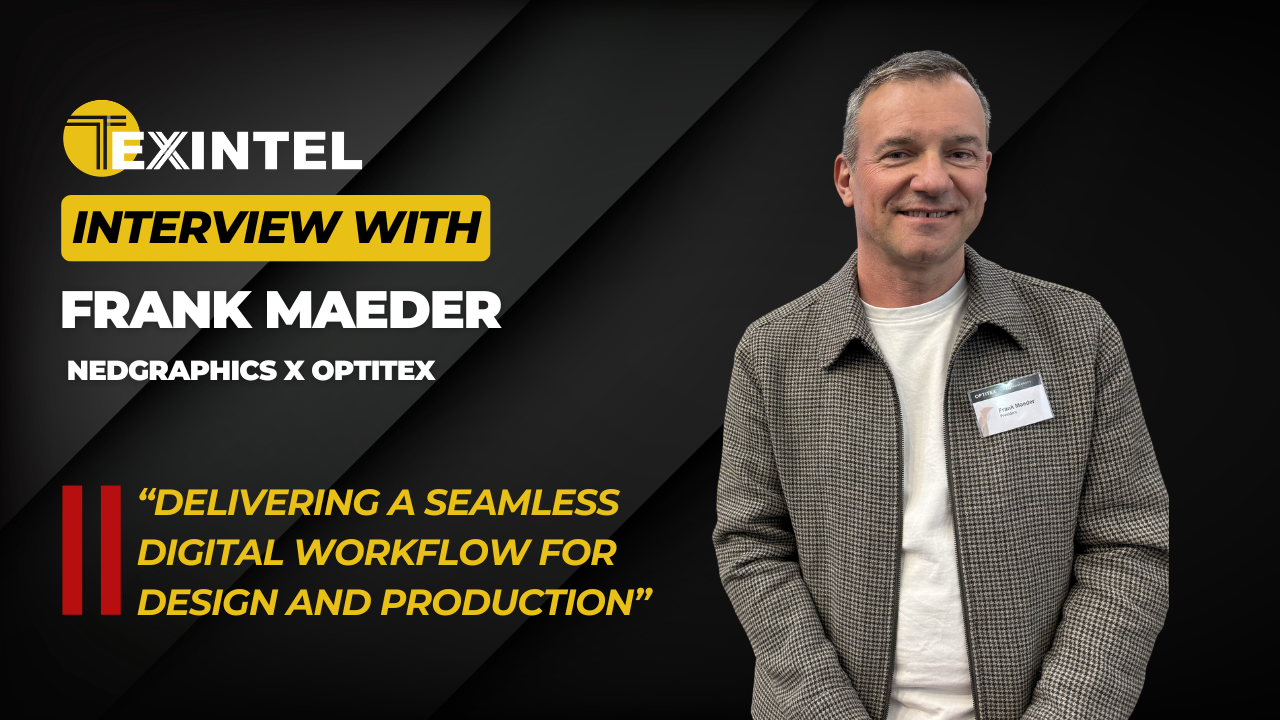
In this interview recorded at TexProcess, Frankfurt, we speak with Frank Maeder, head of the team behind NedGraphics and Optitex about how they’re connecting digital textile design and apparel design into one seamless, end-to-end digital workflow.
They explain how integrating textile design with Apparel pattern development across the workflow reduces waste, shortens development cycles, and improves collaboration between brands, manufacturers, and suppliers worldwide. By sharing fabric data and specifications digitally from the start, designers can create the right product first time, every time, boosting creativity while cutting time, cost, and physical sampling.
Watch to learn more >>
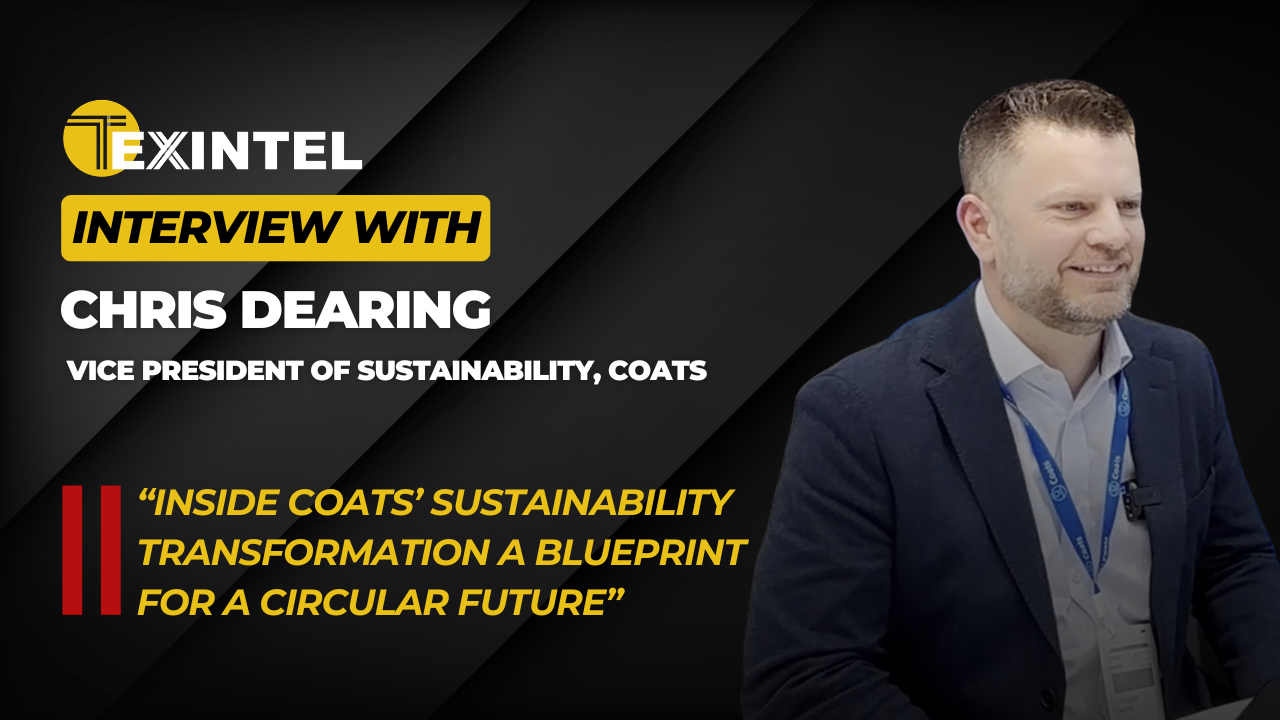
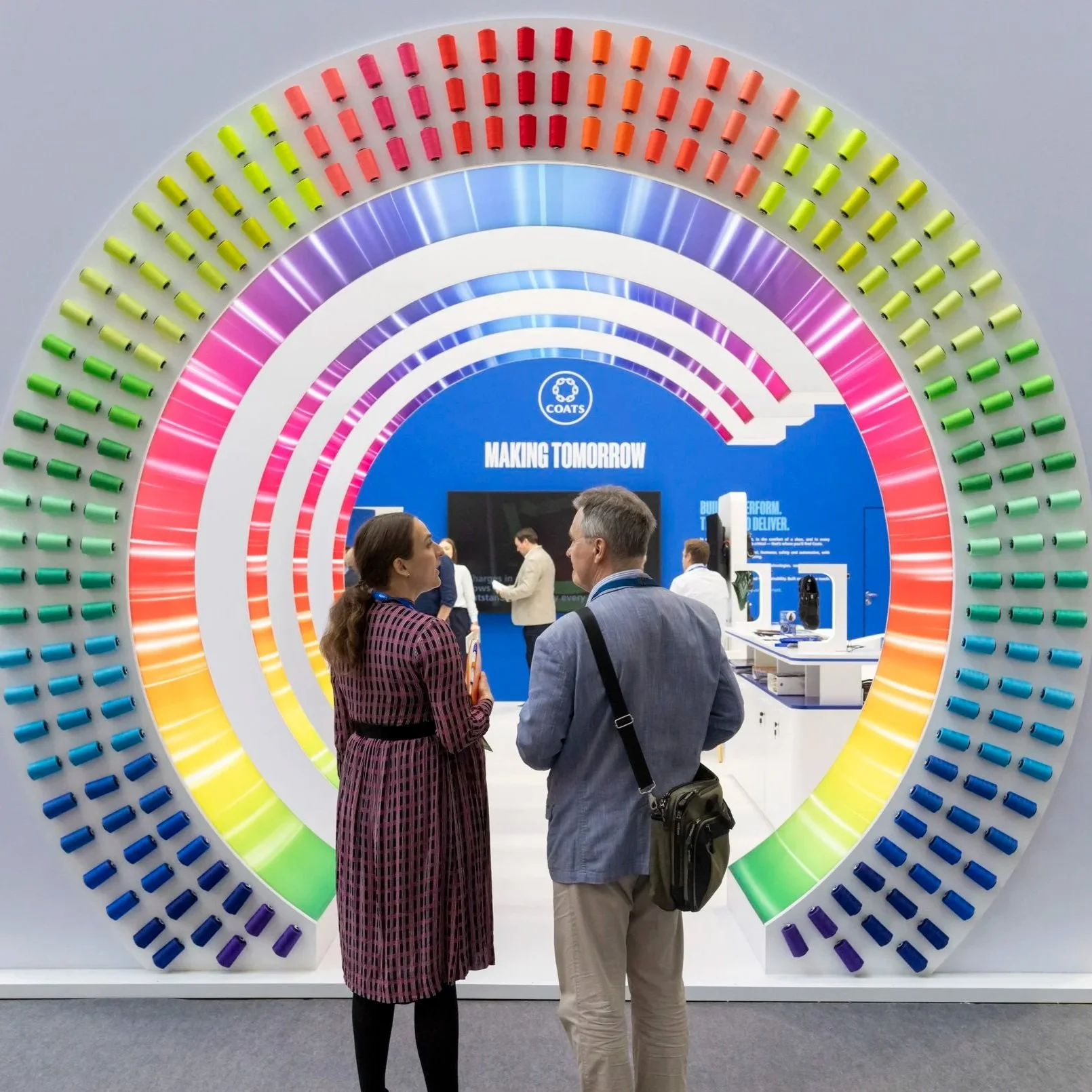
Debbie McKeegan, CEO of Texintel, interviews Chris Dearing - Vice President of Sustainability at Coats, at the Texprocess trade show in Frankfurt.
Coats, a global thread manufacturer with around 20,000 employees in over 50 countries, has made sustainability central to its strategy, structured around five pillars: energy, materials, water, waste, and people, aligned with the UN SDGs. Chris explains that Coats has SBTi‑aligned 2030 targets and a 2050 net-zero goal, has already cut scope 1 and 2 emissions by 46% from a 2019 baseline, and moved to about 62% renewable electricity with a target of 100% by 2030, including work to electrify fossil-fuel boilers.
Watch to learn more >>

At Texprocess Frankfurt, Debbie McKeegan of Texintel talks with Giovanni Pizzamiglio from Kornit Digital about the new Presto Max Plus.
Giovanni explains how Kornit is evolving from fashion into technical textiles, using a new abrasion-resistant polymer “DuraTech” to create durable, stretchable prints for sportswear, footwear, and even military camouflage.
They discuss replacing complex analog processes with single-step digital printing, precise print positioning on woven fabrics, and new possibilities for interior décor, performance wear, and advanced protective textiles.
Watch to learn more >>
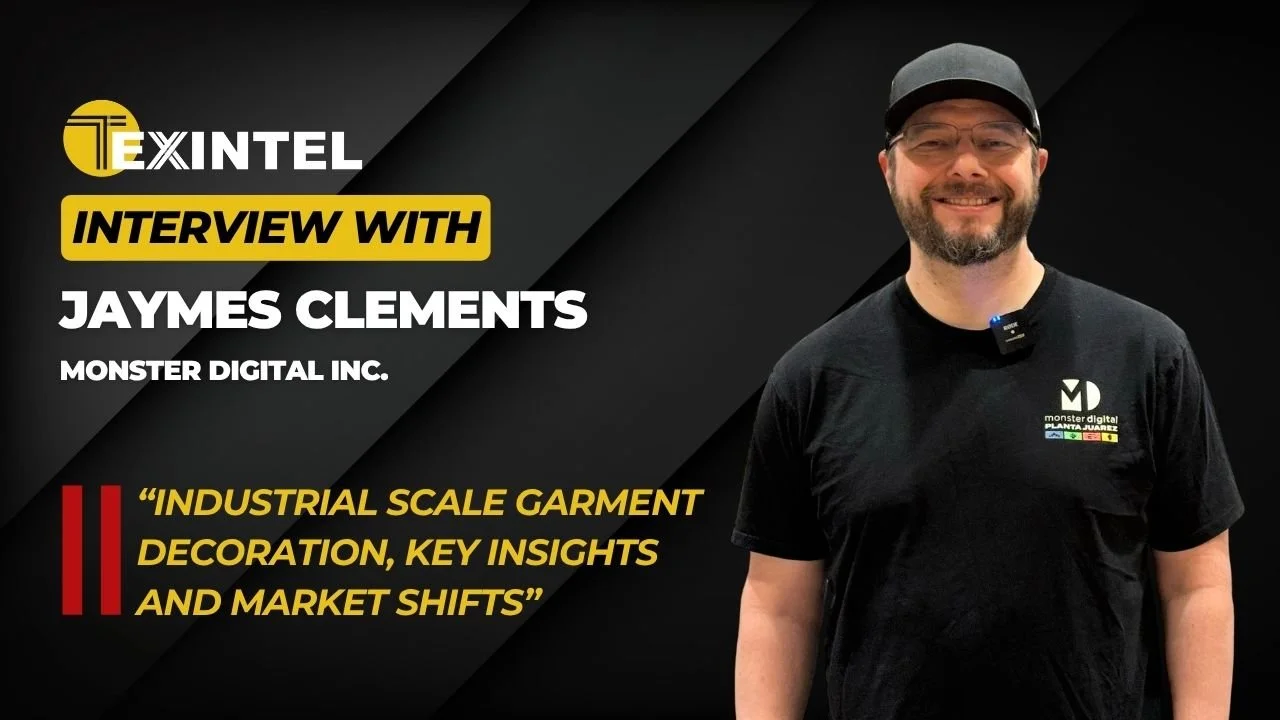
Debbie McKeegan, CEO of Texintel, interviews Jaymes Clements from Monster Digital inc. at the Kornit Konnections event in Florida.
Monster Digital, a premier contract print manufacturer, specialises in DTG (Direct-to-Garment) printing, capable of producing over 180,000 prints daily. They own over 70 DTG printers, all industrial-grade, and emphasise continuous capital investment in technology.
Clements highlights their agility in adapting to new technologies and their diverse customer base, including brands, sports teams, and corporate clients. He stresses the importance of strategic relationships over transactional ones, and the need for stability in the supply chain to maintain quality and meet customer expectations.
Watch to learn more >>
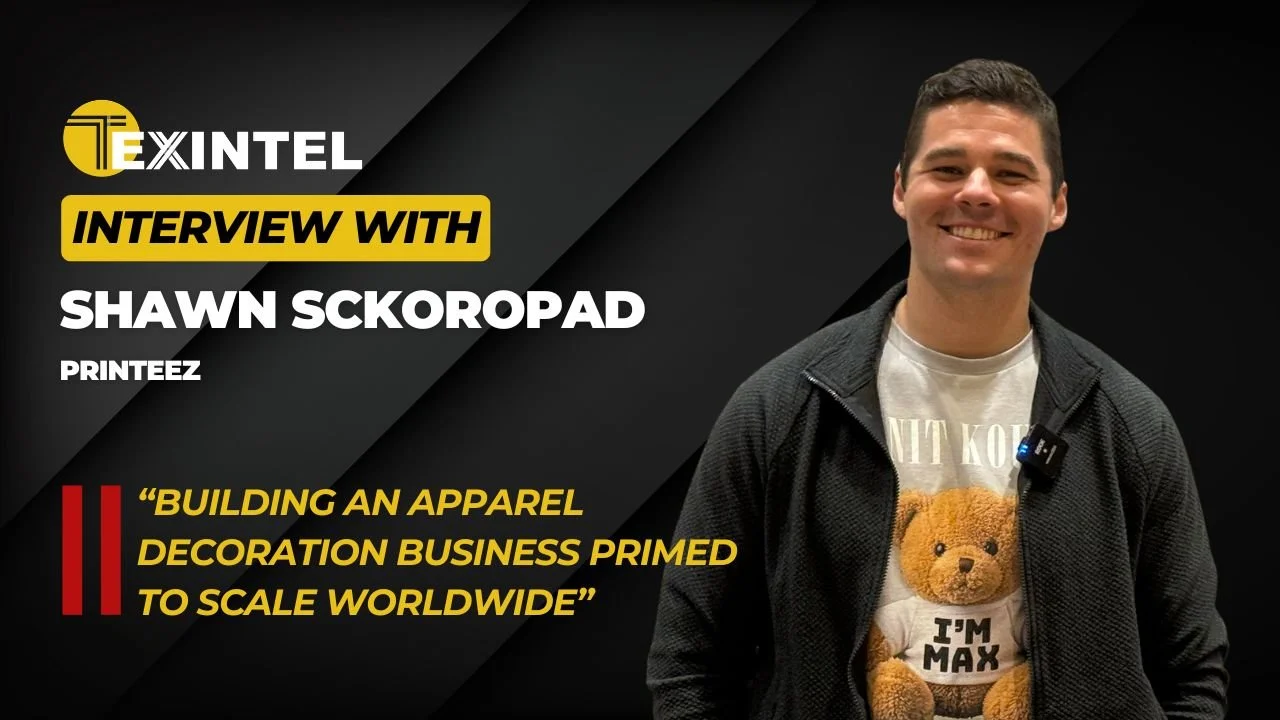
Debbie McKeegan, CEO of Texintel, interviews Shawn Sckoropad from Printeez Inc, a 10-year-old Canadian print-on-demand company.
Printeez specialises in large volume fulfilment and on-demand services, using proprietary software for seamless integration with stores. They produce up to 350,000 units in bulk per month, and 57,000 units per fortnight on-demand during peak seasons and serve 7,000 users.
Shawn highlights the shift from analog to digital, the development of their own app, and the challenges of building a user-friendly interface. Looking to the future, they aim to double down on e-commerce, expand locally, and explore partnerships in Europe, emphasising agility and focus.
Watch to learn more >>
Debbie McKeegan, CEO of Texintel, interviews Alan Gentry from T- Formation about his garment decoration company's evolving transition from analog screen printing to digital printing.
Alan's company, established in 1987, initially handled large volume orders but shifted to smaller orders post-COVID. They discovered the Kornit Apollo at Kornit Konnections in 2024, which prints 350 units an hour, significantly improving efficiency.
Alan's company now uses digital machines alongside screen technology. They also leverage Fullfil Engine for seamless fulfilment, enabling them to handle one-piece orders to thousands efficiently.
Watch to learn more >>

In this exclusive interview from Printwear & Promotion Live in Birmingham, Debbie McKeegan speaks with Rob Simpson, General Manager for DuPont Artistri Digital Printing Solutions, about the launch of DuPont’s new jettable adhesive technology for DTF (Direct-to-Film) printing.
Rob explains how this jettable adhesive replaces traditional powder in the DTF process, delivering a cleaner workflow and opening up new creative and technical possibilities for apparel decorators. DuPont has developed a solution that not only simplifies production but also enables smoother gradients, fade-outs, and more precise control of ink layers.
Watch to learn more >>

In this Texintel Live interview Debbie McKeegan (CEO of Texintel) talks with Julian Wright, Sales Director of Amaya Sales UK about how the garment decoration market is evolving, particularly around Direct-to-Garment (DTG) and Direct-to-Film (DTF) technologies.
They discuss how DTF has surged over the last 3- 4 years, where it fits alongside DTG, and why many customers are unsure when and where to invest. Julian explains how Epson’s standardised, high‑uptime systems and Amaya’s knowledge-led approach help customers choose the right technology mix, from entry-level to more industrial solutions like the Epson SureColor G9000.
The conversation highlights the importance of reliable partners, premium consumables, and future-proof solutions that deliver not just a machine, but a complete, long-term service and ecosystem for growing print businesses.
Watch to learn more >>
In this short interview, they explore how dye sublimation now goes far beyond mugs and T‑shirts, opening up new opportunities in textiles, décor, signage, promotional carpets, and floor graphics.
Duncan explains the TS200’s 8‑colour ink set, including fluorescent pink and fluorescent yellow, plus violet and orange to extend the colour gamut. These neon’s are ideal for fashion, children’s wear, event branding, and décor—especially where brands need high-impact, accurate colour and that on‑trend fluorescent look.
With a competitive entry-level price (under £6,500), a two‑year warranty, and fast, easy-to-use operation, the Mimaki TS200 -1600 offers an accessible way for print businesses to expand into new markets and respond to a broad range of customer demands from a single machine.
Watch to learn more >>
Filmed live at Printwear & Promotion in Birmingham, Debbie McKeegan, CEO of Texintel, talks with Grant Cooke, Product Manager: Textile, SureColor Printers, Sublimation, Direct To Film (DTF) & Direct To Garment (DTG) Solutions at Epson Europe B.V about:
Moving from DTG with DTF mode to true roll-to-roll DTF
The evolution from the G6000 to the G9000
64" wide printing, higher throughput, and automated maintenance
How software, shakers, and cutters now integrate for a seamless DTF workflow
If you’re in garment decoration, custom apparel, or screen print looking to go digital, this conversation shows how modern DTF can deliver speed, reliability, and scalable production.
Watch to learn more >>
In this interview, Debbie McKeegan speaks with Colin Marsh, MD at Resolute DTF about a major shift in garment decoration technology.
The launch of jetable adhesives, a new DTF ink innovation developed in collaboration with DuPont, Artistri.
Colin explains how this innovation combines ink and adhesive jetting (using no powder), delivers a soft DTG-like hand feel with high durability on cotton and polyester, and opens up new creative possibilities for printers.
They also discuss Resolute UK-based manufacturing, supply chain control, and steps toward more sustainable and circular production.
Watch to learn more >>
In this conversation, Debbie McKeegan speaks with Johan Spies of HP at FESPA Middle East in Dubai about HP’s latest Latex printing technologies.
They discuss the HP Latex A330 roll-to-roll printer and the R530 hybrid printer, highlighting their water-based inks, ability to print on both flexible and rigid materials, and how these solutions support the fast-growing Middle East market through a strong partnership with Redington.
Both speakers highlight the rapid growth and vast opportunities in the Middle East and Johan’s excitement to return next year and see how customers have grown with HP’s solutions.
Watch to learn more >>
In this conversation, Debbie McKeegan, Texintel CEO and Fespa Textile Ambassador, speaks with Viktor Lazzeri of Barbieri Electronics.
This conversation, recorded live at Fespa Middle East in Dubai, explores the rapidly growing opportunities for the print industry across the region. Barbieri Electronics highlight the strong demand for quality, innovation, and colour accuracy, and the critical role of trusted technology partners in supporting this fast-evolving, increasingly digital market.
Together, the speakers frame the Middle East as a vibrant, optimistic hub where the right print technologies can unlock significant new growth.
Watch to learn more >>
In this conversation, Debbie McKeegan, Texintel CEO and Fespa Textile Ambassador, interviews Jon Bailey of Precision Proco Group in the UK to explore how his company has grown from a local business into a global partnership. John shares insights into the technology stack that underpins their success, their journey of scaling internationally, and the increasing importance of personalisation. Together, we discuss why knowledge sharing, community, and strategic partnerships are essential in today’s connected world, and how clear guiding principles - combined with the willingness to course-correct can drive sustainable growth in fast-evolving markets like the Middle East.
Watch to learn more >>
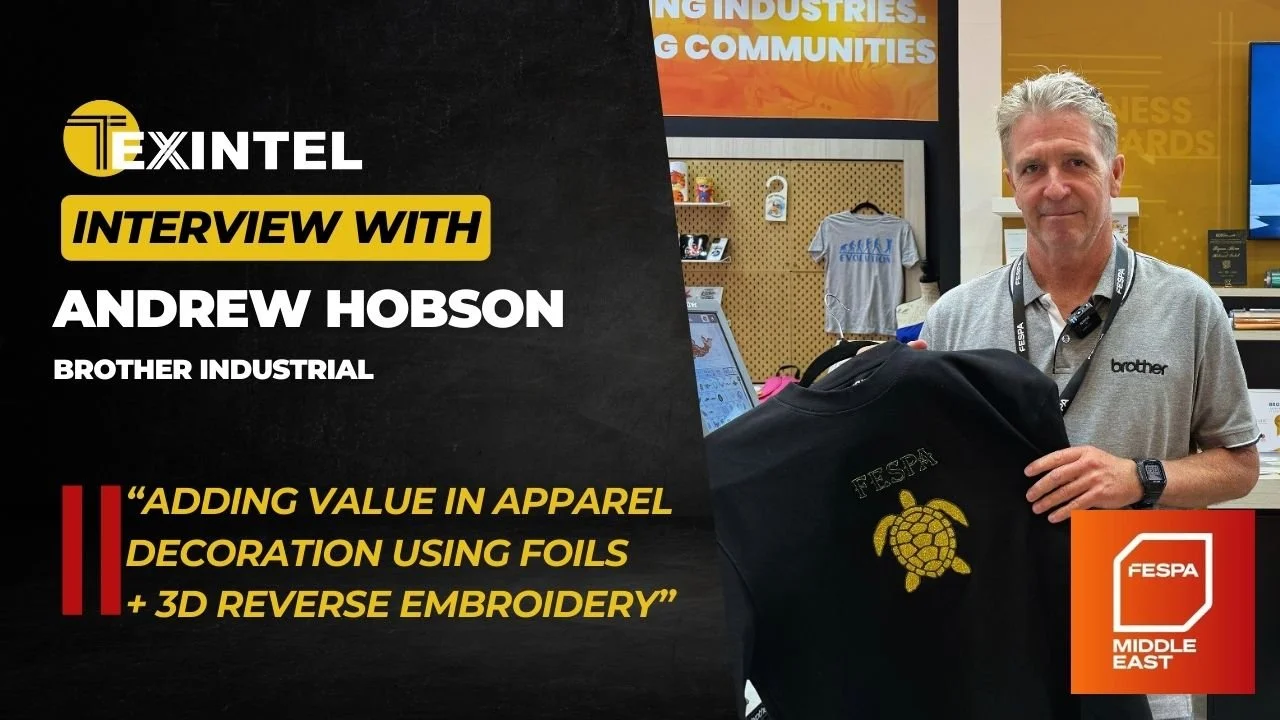
In this conversation, Debbie McKeegan, Texintel CEO and Fespa Textile Ambassador, interviews Andrew Hobson about Brother Industrial textile technology.
They discuss a t-shirt embellished using a six-needle embroidery machine, heat transfer, and cutting technology. The design includes a gold heat transfer, a tortoise shell pattern, and a reverse 3D effect on the back. This technology adds value and creates a unique, textured appearance, appealing to the Garment Decoration market in the Middle East.
Watch to learn more >>
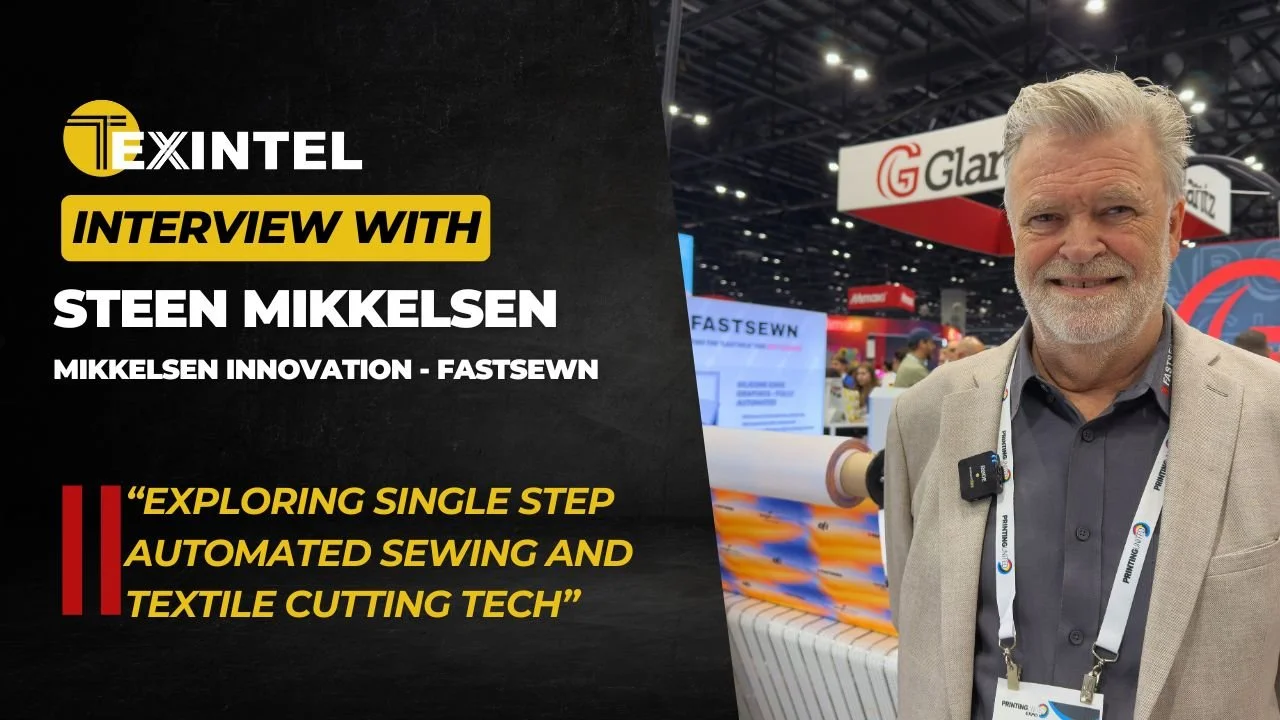
In this conversation, Steen Mikkelsen of Fastsewn discusses the challenges and innovations in sewing automation.
He highlights the complexities of sewing due to the flexible nature of textiles and the need for precise handling. Mikkelsen shares insights into his innovative solutions that aim to automate sewing processes, reduce handling time, and improve efficiency in manufacturing. The discussion also touches on the future applications of this technology across various industries and the potential for job creation as automation evolves.
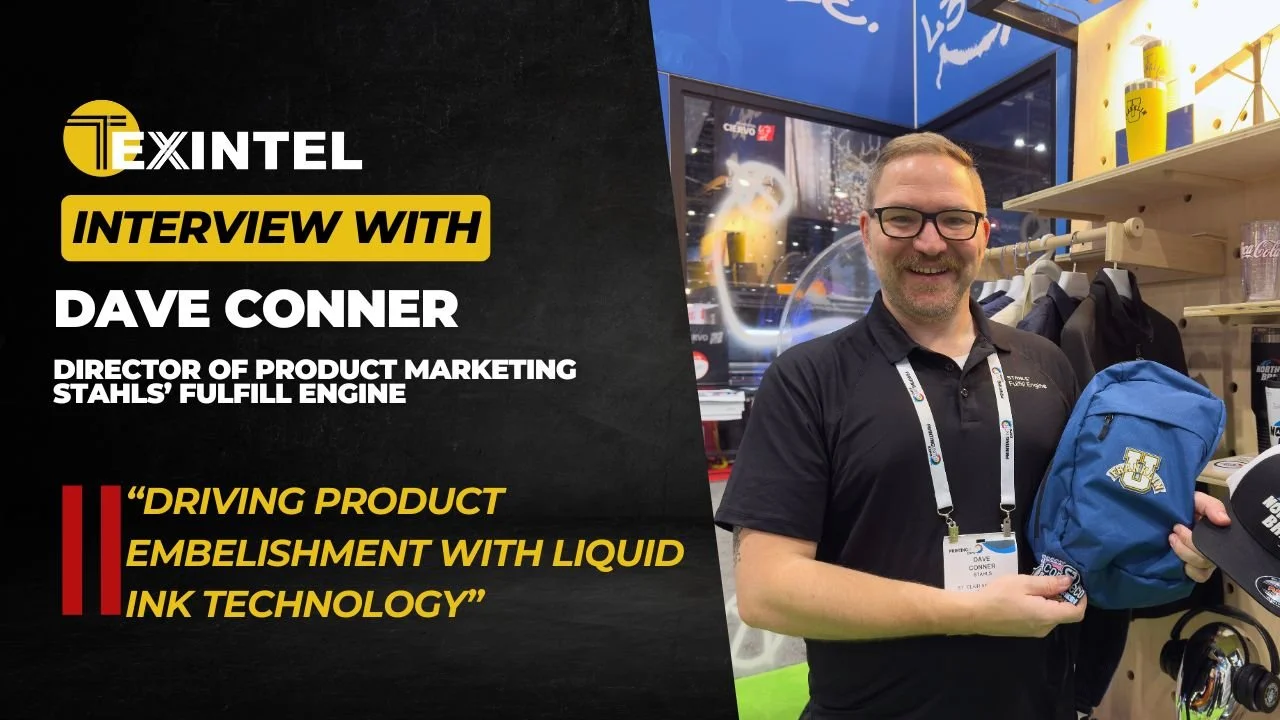
In this conversation, Dave Connor discusses the innovative Liquid Ink technology from Stahls' Fulfill Engine, which revolutionises dimensional decorating by allowing real-time design and customisation.
The technology reduces traditional pain-points such as minimum quantities and setup fees, enabling decorators to create premium, tactile products on demand. The discussion also highlights the future of personalisation in merchandise and the global opportunities for printers and garment decorators.
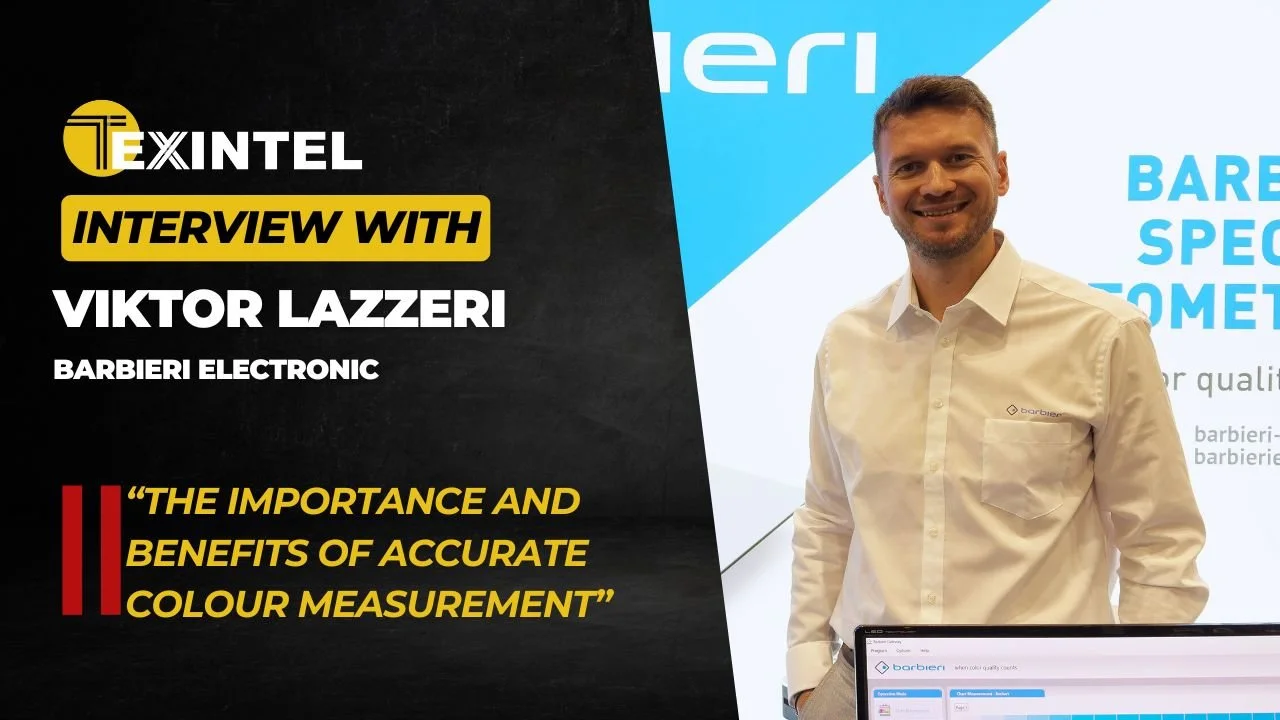
Debbie McKeegan interviews Viktor Lazzeri from Barbieri Electronic at Printing United in Orlando about the critical need for accurate colour measurement in the printing and textile industry.
Viktor explained the rising demand for colour accuracy, showcased Barbieri Electronic's latest spectrophotometers, and emphasised how precise colour measurement improves workflow efficiency, reduces waste, and ensures customer satisfaction.
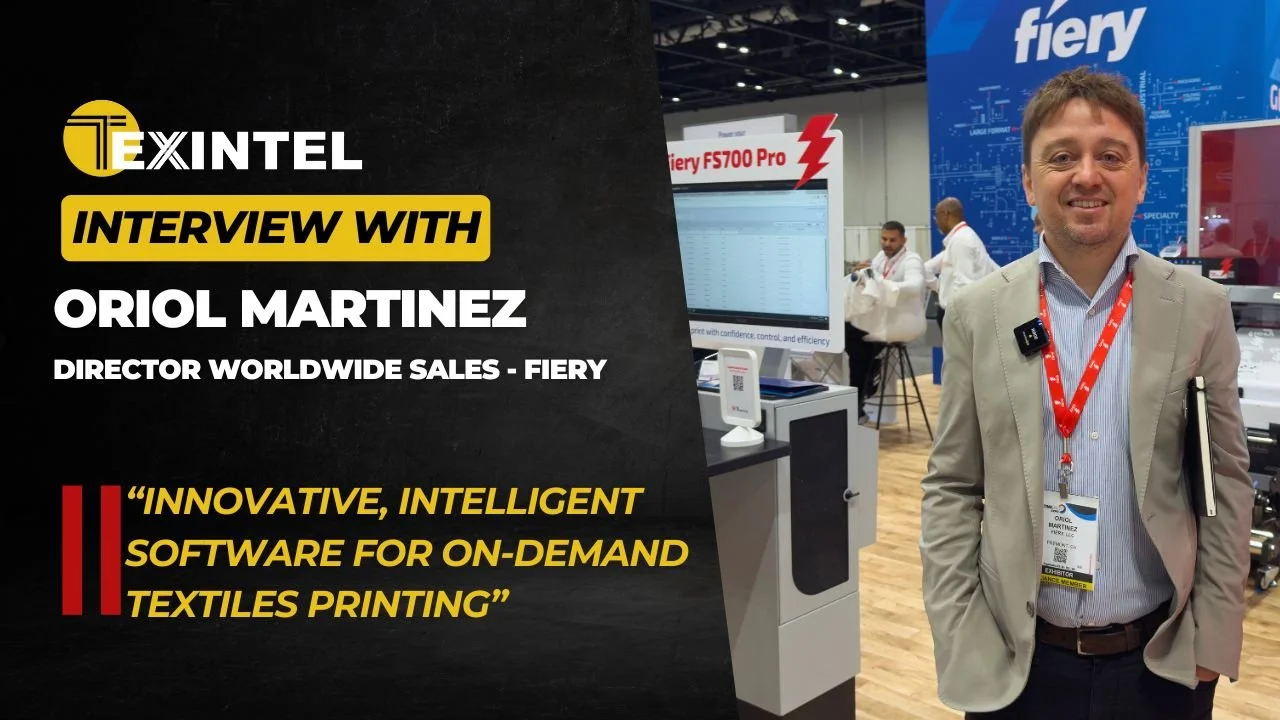
In this conversation, Oriol Martinez, the director of worldwide sales at Fiery, discusses the latest trends in the printing industry, particularly focusing on the launch of Digital Factory Version 12.
The conversation highlights the importance of colour management, automation, and the evolving needs of customers in the DTF market. The speakers emphasise the necessity for improved productivity and quality in printing, as well as the challenges posed by increased competition.

The 2027 FESPA Awards are now open for entry, and the message to businesses across textiles, apparel, interiors and beyond is simple: your work deserves recognition. Every gold winner featured here started in the same place every entrant does - with a project they believed was worth submitting.
As the only independent awards programme with 18 categories dedicated to print and signage, FESPA offers a genuinely global stage, with shortlisted entries displayed at FESPA Global Print Expo in Spring 2027.

Colour Is Too Important to Leave to Chance
Print will always be the part of the garment people see first.
But the sum of all parts — the fabric, the trims, the fasteners, the finish — is what determines whether a design actually delivers on its promise. Brands that continue to treat colour as a single creative decision, rather than a coordinated technical discipline spanning their entire supply chain, will keep paying for it in re-dips, delays, and disappointed design teams.
A Century of Textiles, and an Ever-changing World
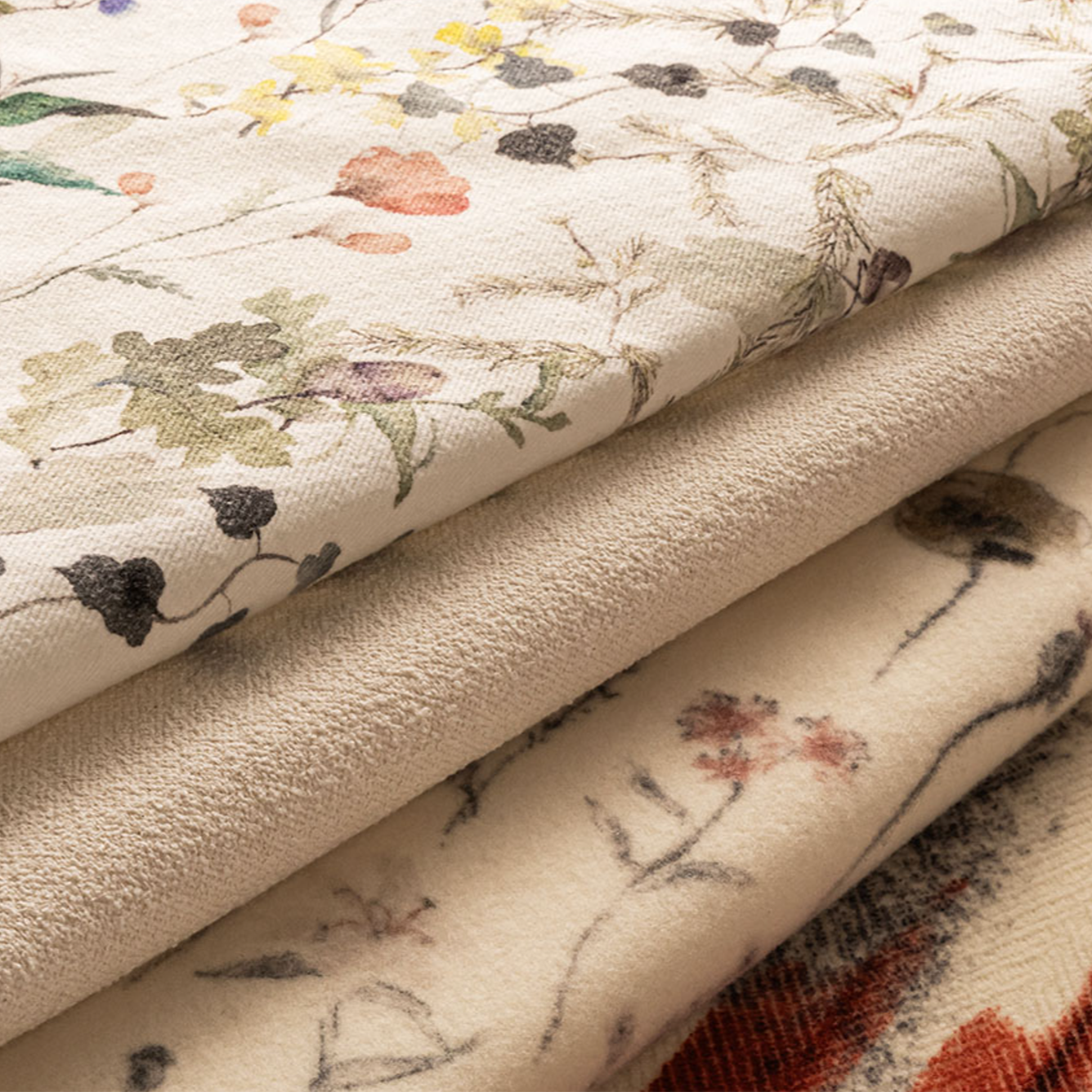
Few companies can trace their roots back more than a century and still count themselves among their industry's innovators. Texia, headquartered in Monistrol de Montserrat, Spain, is one of them.
But the story of Texia is not simply one of longevity.
It is a story of continual reinvention. As the textile industry has grown more global and competitive, Texia has repeatedly reshaped its business, investing in technology, developing its own brands, and placing sustainability at the centre of its mission. In doing so, it offers a compelling example of how a heritage manufacturer can lead rather than follow through a period of profound industry change. Image Credit: Texia
What are we craving Ultimately?
The instinct to slow down while simultaneously optimising every measurable aspect of life isn't a passing curiosity. It's a structural response to a world that feels increasingly unstable, and it's reshaping what people expect from their homes, hotels, workplaces and healthcare environments alike.
For the design and manufacturing sectors, this means rethinking both product and process.
The Structual Shift is Real and its Already Here
Volumes are moving east, where digital production is accelerating rapidly. Consumer behaviour has shifted.
Demand is now driven by personalisation, shorter buying cycles, and an expectation of near-instant responsiveness. Regulatory pressure is intensifying, with supply chain transparency now a legal and commercial fact in many markets. And margins? They are under sustained, structural pressure.
This is not a temporary disruption. It is a fundamental reordering of how textile manufacturing must operate.

The Challenge: Standing Firm as the Industry Shifts
The wallpaper landscape has changed dramatically. Digital printing has lowered the barrier to entry, spawning countless direct-to-consumer brands and pushing much of the market towards faster, cheaper production.
At the same time, manufacturing in the UK has grown steadily harder - rising minimum wage, national insurance, energy and substrate costs all bear down on margins. Surface Print have embraced all of these challenges - and stand resolutely prepared for the future.
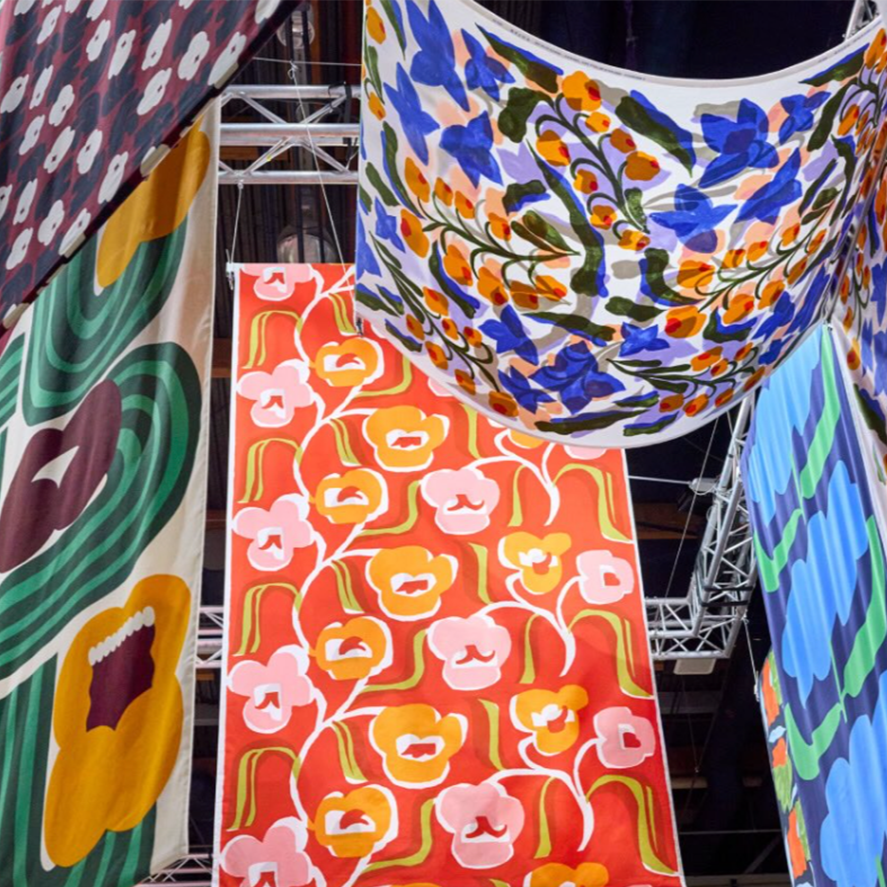
From Helsinki's printing mill to Paris's Le Marais, discover how Marimekko is scaling a design-led brand with purpose, craft, and bold innovation.
But what makes Marimekko's story compelling is not just its aesthetic legacy?

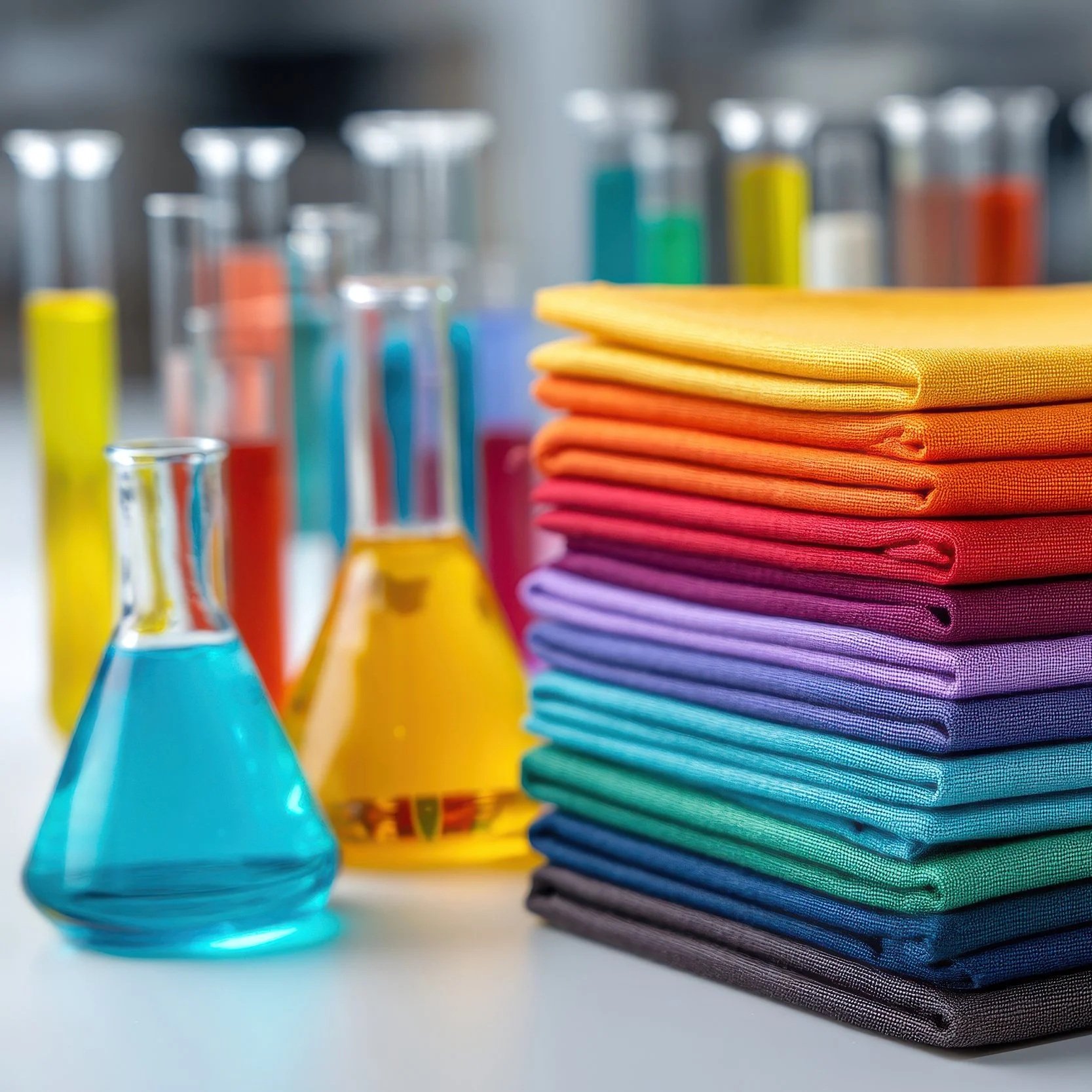
The word "toxic" carries weight. It conjures danger, harm, and things best avoided.
“Yet in the textile industry - Where between 3,000 and 10,000 chemicals move through the supply chain, a reflexive fear of the term is one of our biggest obstacles to progress.”
This article distils the key takeaways and what buyers, designers, and brands should be asking right now.
What Is the Digital Product Passport?
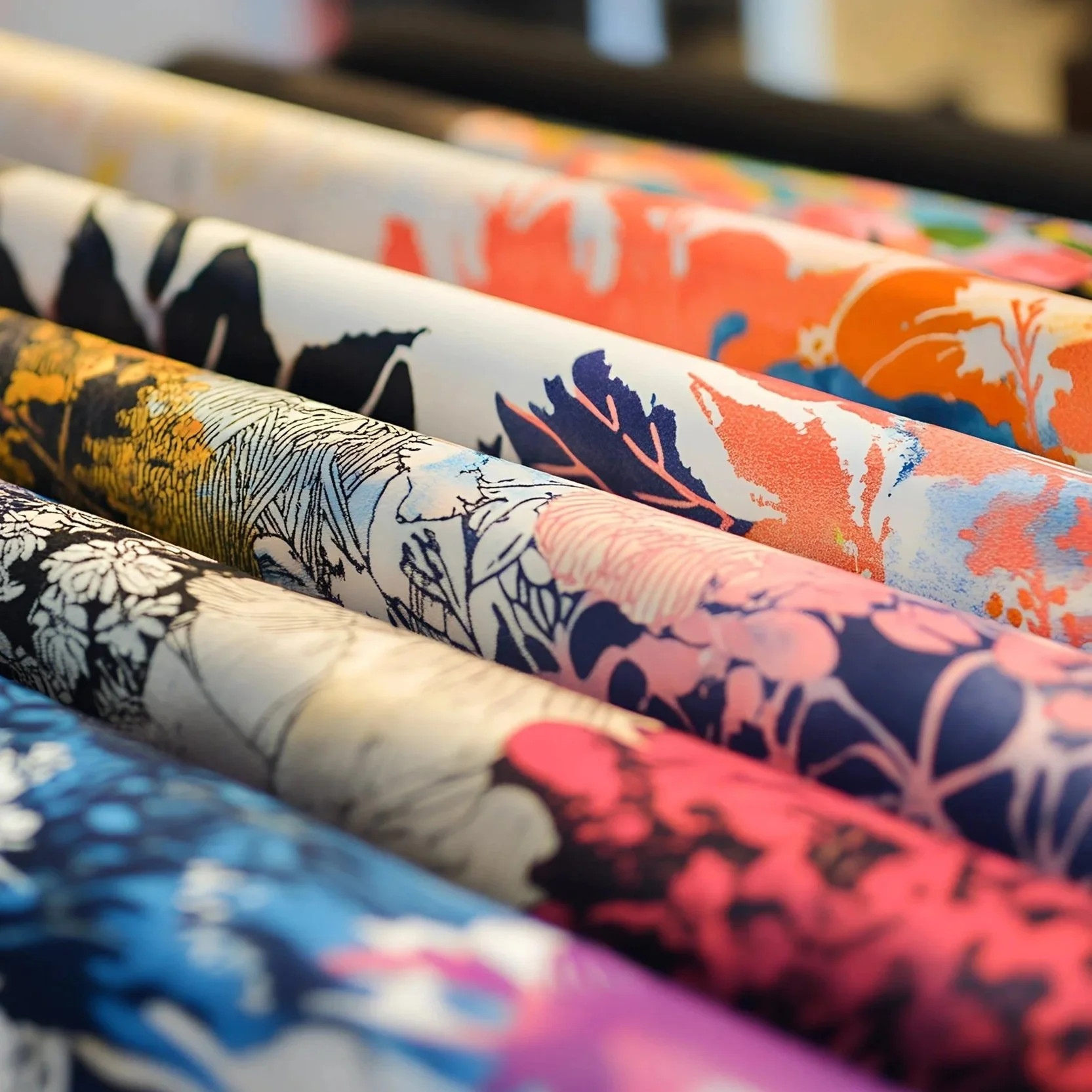
At its core, a Digital Product Passport is a digital record attached to a physical product - For a printed textile product, this means the DPP would capture data on the substrate, inks and dyes used, the printing process and technology, chemical compliance, environmental impact (including water and energy use), supply chain traceability, and end-of-life instructions.
The Market Gap that Changed Everything
Future Fashion was founded in 2019, timed deliberately to coincide with a pivotal moment in global textile technology: the commercial launch of the EFI Reggiani BOLT Single-Pass digital printing system.
The founders recognised that single-pass architecture had fundamentally changed what was industrially possible - and that Pakistan's domestic market had yet to catch up.

Print is no longer defined by the inefficiencies that once characterised it…as advances in production processes and technology have significantly improved its environmental performance.
Taran Rai, Corporate Sustainability Manager at Epson explains why?
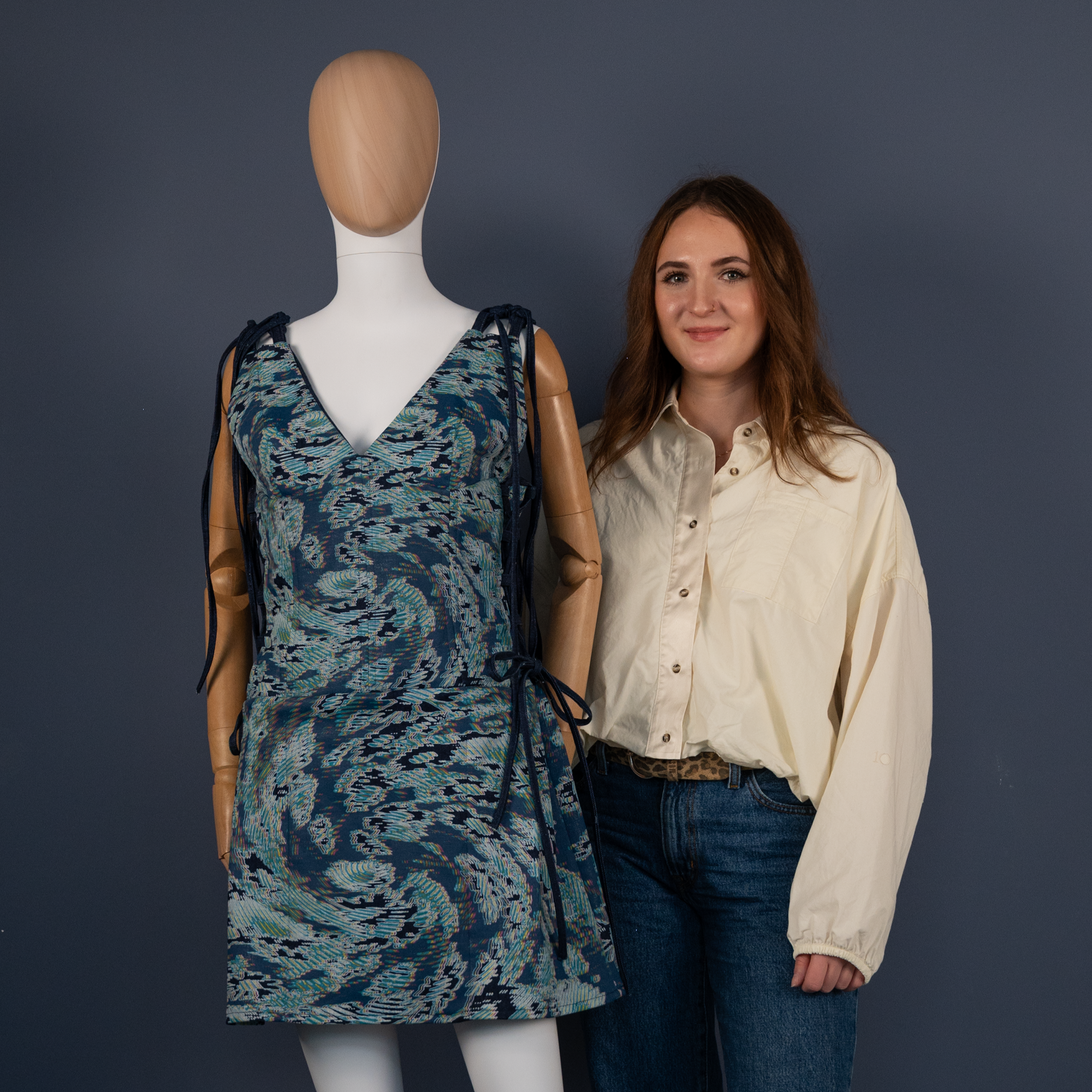
The story of what happens when young designers access digital technology is still being written.
What once was a theoretical sustainability goal seems to have shifted into an active regulatory reality.



Is the Textile Market Finally Recovering?
After a difficult few years, there are genuine reasons for optimism. Duncan was candid about the challenges: "The market for textiles has been very difficult over the last three years. I'm not going to hide the truth there. But the tide is turning.“
A profound shift is currently reshaping the sector
Changing consumer expectations demand greater design diversity, faster turnaround times, and sustainable manufacturing practices.
To thrive, interior brands must adapt their supply chains, bringing production closer to the end consumer and moving away from bulk manufacturing.
Digital textile printing offers a definitive solution to these operational bottlenecks.

Digital transformation doesn't announce itself.
It accumulates - one innovation at a time - until an entire industry looks back and realises the ground has shifted beneath its feet. That's precisely where textiles stands today.
The conversations happening now about AI, automation, sustainability, and digital product passports are not theoretical. They are shaping decisions being made on factory floors and in boardrooms right now.

“By leveraging advanced digital textile printing, Marylene Madou has successfully merged traditional craftsmanship with cutting-edge technology. Her approach offers a blueprint for how independent designers can scale their brands globally while maintaining a minimal environmental footprint.”
The textile industry is undergoing a vital transformation. As the insights from Techtextil and Texprocess reveal, the path forward relies on a combination of sustainable hardware, intelligent chemistry, and seamless digital workflows.
From Zimmer's industrial-scale energy reductions and Stratasys's on-demand 3D embellishments, to Kornit's single-step technical printing and the unified digital ecosystems of NedGraphics and Optitex, the tools for change are here. To stay competitive, brands and manufacturers must adopt these innovations, moving away from fragmented, wasteful processes towards a truly connected, circular economy.
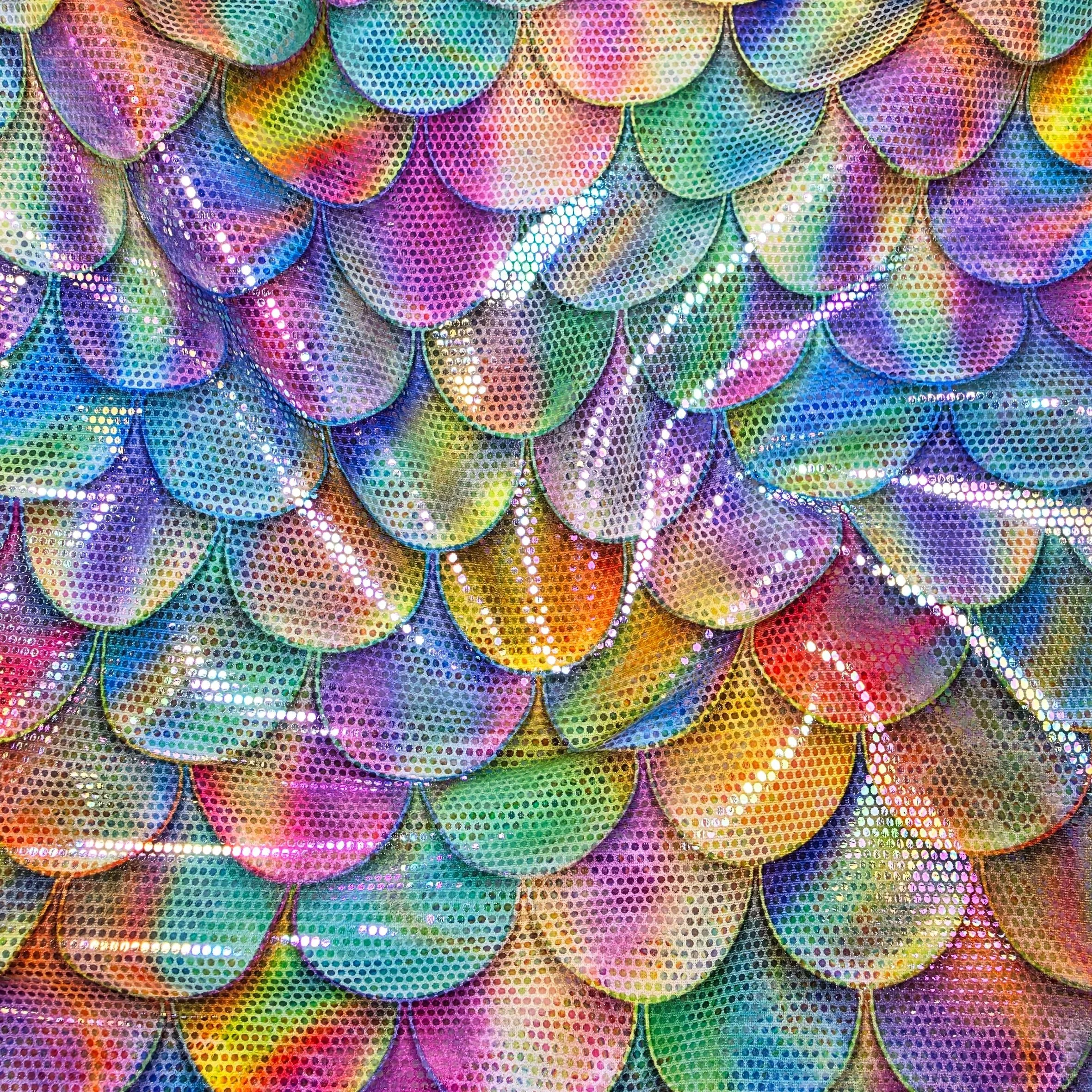
Friedmans stands as a testament to the power of combining traditional textile knowledge with forward-thinking innovation.
“Operating from their UK headquarters, Friedmans now serves a diverse array of sectors, including swimwear, dance, entertainment, sportswear, interior decor, prosthetics, and even pet apparel. With a strategic supply chain that reliably serves clients worldwide”
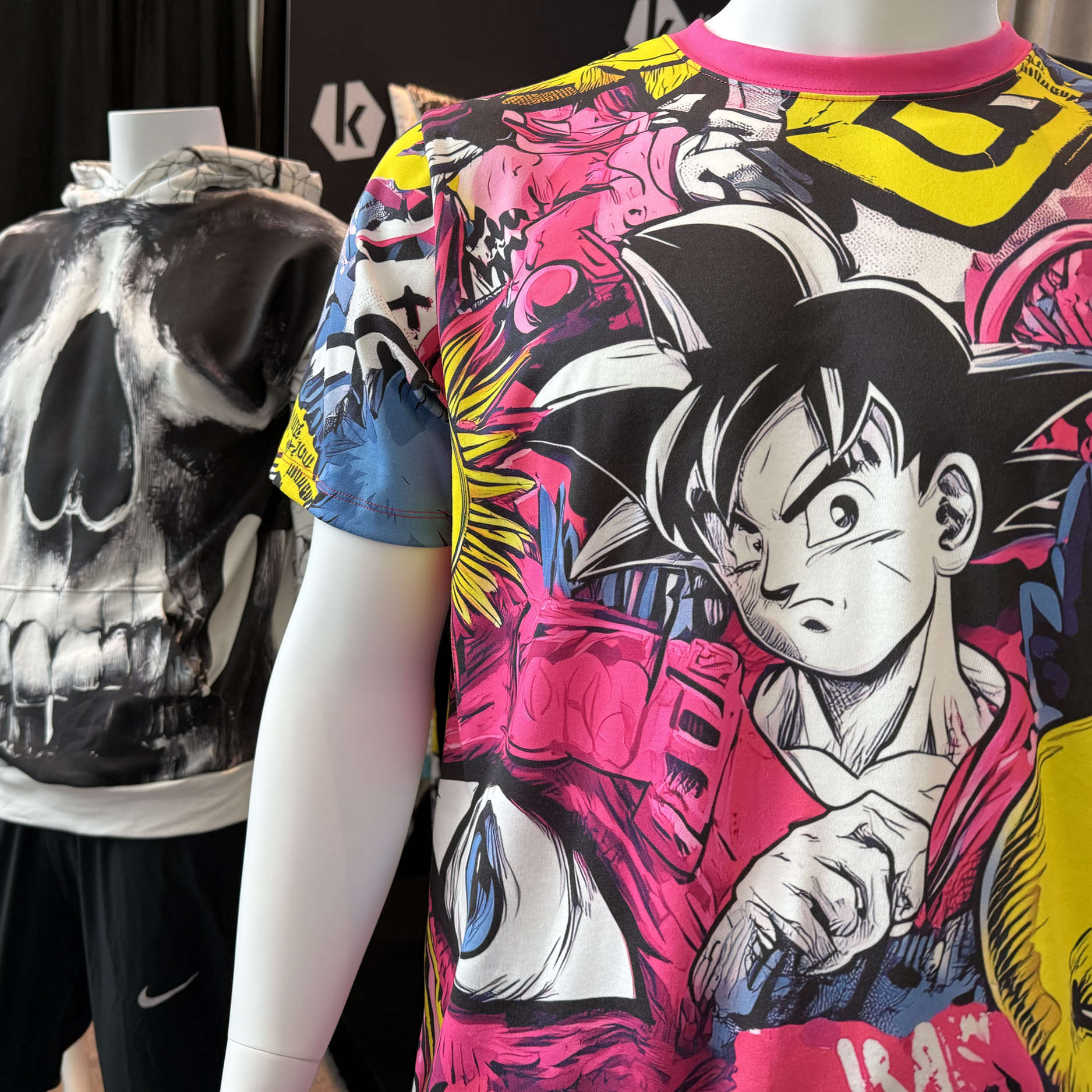
The apparel decoration industry is decisively moving away from isolated, analogue production tools toward connected digital manufacturing environments.
"Kornit’s unwavering commitment to transformative technology continues to disrupt the status quo. For business leaders and innovators ready to capture the future of apparel manufacturing, the path forward is clear”
The Urgent Need for Sustainability at Scale
The transformation at Coats provides a vital blueprint for the wider textile and apparel sector. True sustainability cannot be achieved in silos. As Dearing emphasised:
“Cross-industry collaboration is the engine of meaningful change. Brands, machinery suppliers, chemical providers, and fibre producers must act as an interconnected ecosystem”
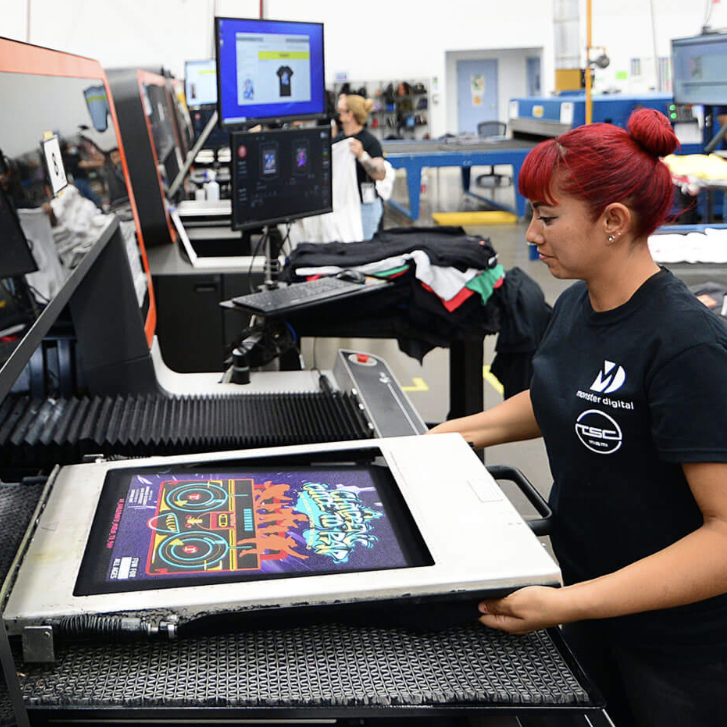
Today’s customers demand superior product quality, real-time data visibility, and lightning-fast turnaround times.
For large-scale garment decorators, managing these expectations while balancing seasonal demand fluctuations - such as the massive surges seen during Black Friday - presents a monumental challenge.
"Relying on transactional vendor relationships and outdated legacy equipment is no longer sufficient to secure long-term stability and growth.”

Shanghai – China -October 2026 – BARBIERI Electronics, a global leader in professional colour measurement solutions, has announced its participation in ALL IN PRINT CHINA 2026, taking place from 12–16 October 2026 at the Shanghai New International Expo Centre.
The company will exhibit alongside its partner, Beijing Dingli Xintong Technology Co. Ltd, at Booth N2A219, where COO and Co-Managing Director Viktor Lazzeri will meet with customers, partners and print professionals from across the industry

Konica Minolta Business Solutions (UK) Ltd has reinforced its two‑ decade partnership with Epson by expanding the range of Epson wide format print technologies now available for live demonstration at its UK Client Engagement Centre (CEC) in Dunstable.
The move reflects Konica Minolta’s commitment to supporting the UK commercial print sector with a broader, more versatile portfolio and giving customers hands‑on access to leading solutions.

Bracknell – Berkshire - October 2026 - UFABRIK has added IGEPA Hungária to its expanding European distribution network, bringing its digital textile portfolio to customers across Hungary through one of the country’s leading print and visual communications suppliers.
The agreement will see IGEPA Hungária introduce the UFABRIK range to customers from its operations in Budapest and Nyíregyháza, with local stockholding, technical support, and wide-format availability up to 5 metres.

New York – NY – October 2026 – Optitex, a global leader in fashion technology solutions, has announced a significant update to its CutPlan software, introducing Purchase Order (PO) Wise capability as part of its O/26.1 release.
The new feature allows manufacturers to plan multiple Purchase Orders for the same style independently, addressing a long-standing inefficiency within the cut planning process.

United Kingdom – September 2026 – Inkloft, a new specialist digital printing business founded by Gary Weyman and Andy Hancock, has announced its entry into the direct-to-film (DTF) market.
The company has been appointed as a distributor of DuPont™ Artistri® DTF products, including P1600 inks and Artistri Jettable Adhesive JA1100, both now available to purchase online through inkloft.co.uk.

Peterborough, UK – October 2026 – Snuggle Ltd has today reaffirmed its commitment to redefining industrial garment decoration, combining high-volume output with environmentally responsible production methods at its Peterborough facility.
The announcement highlights the company's investment in water-based pigment ink digital printing technology, a move designed to cut the environmental footprint of large-scale apparel decoration without compromising on quality.
At the core of Snuggle's operation is industrial water-based pigment ink digital printing, which replaces the chemical-heavy alternatives traditionally used across the sector.

Manchester – October 2026 – Premier Digital Textiles has today highlighted its 33130 Achill Natural Linen, a beautifully understated fabric defined by timeless texture and natural character.
The luxurious fabric reflects the company's ongoing commitment to quality materials that serve both designers and the environment
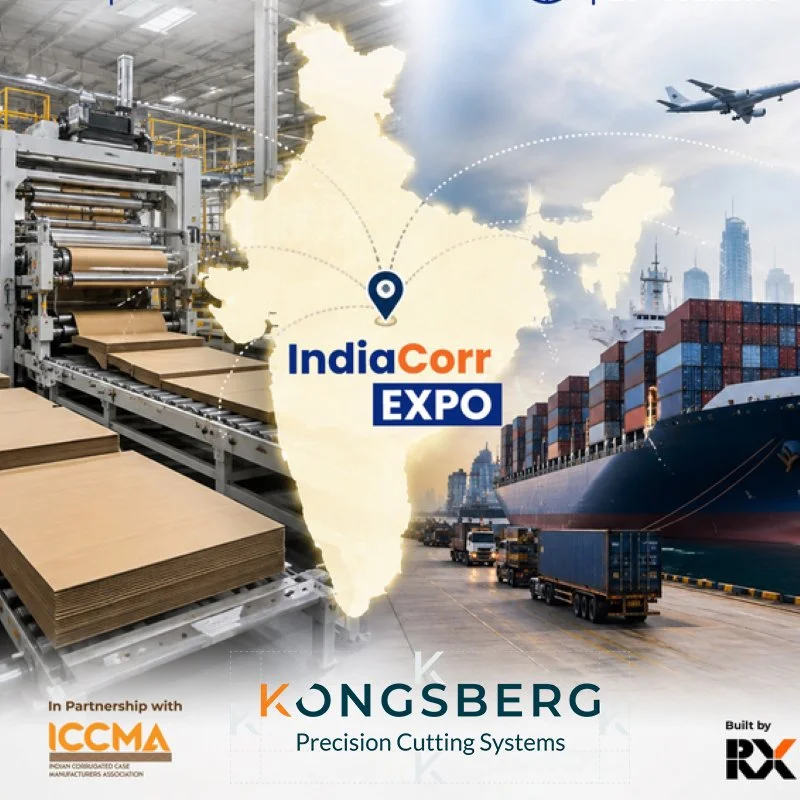
Gent – Belgium – October 2026 – Kongsberg Precision Cutting Systems has announced its participation in India CorrExpo 2026, following a successful week exhibiting at PRINTING United Expo 2026.
The company will showcase its latest advancements in digital cutting and routing technology, demonstrating how businesses across print, display, packaging and signage can achieve greater precision, productivity and scalability.
The event will take place from 14 to 16 October 2026 at the Bombay Exhibition Centre in Mumbai, where Kongsberg will be exhibiting at Booth B80, Hall 4.
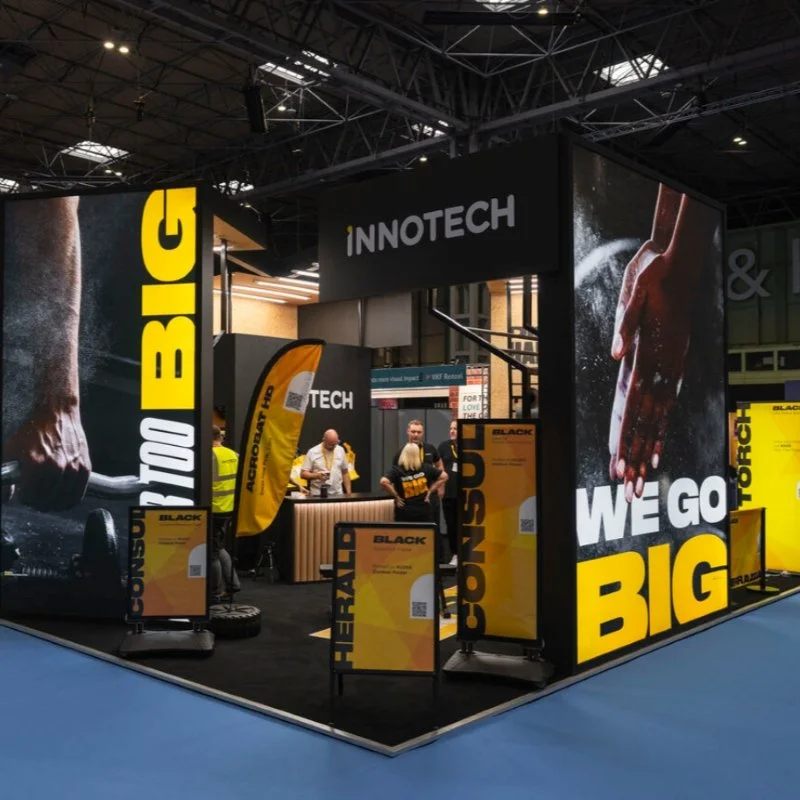
Coalville – Leicestershire – October 2026 – Innotech Digital & Display has concluded a successful first-time exhibition at The Print Show, held at the NEC over three days, unveiling its new Black Display Hardware Collection and demonstrating its materials in action through a series of industry partnerships.
The event marked a significant milestone for Innotech, offering the company its first opportunity to engage directly with the wider print community on this platform.
Visitors to the stand were able to explore product samples, view the newly launched Black Display Hardware Collection, and speak with the Innotech team about the latest developments in digital and display materials
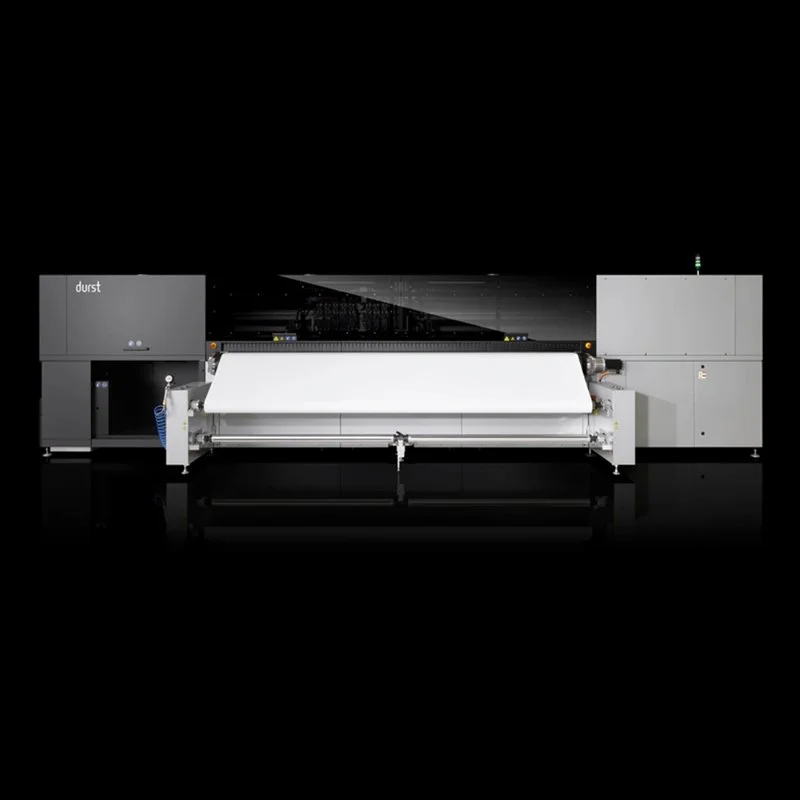
Las Vegas – Nv -October 2026 – Durst Group AG has confirmed its first US customer orders for the Durst P5 350 CORE, following the system's debut at PRINTING United Expo.
The announcement caps a milestone year for the platform, which launched earlier in 2026 at FESPA Global Print in Barcelona and went on to win an EDP Award ahead of its US introduction.
The P5 350 CORE drew significant attention from attendees throughout the Expo, with interest converting directly into sales as the first American customers placed their orders on the show floor.

Altrincham- Cheshire – UK – October 2026 – Funkifabrics, a provider of fabrics for fashion and design, today highlighted a striking collection of garments created by renowned designer [theofficialglobegirls], which prominently features its textiles.
The collection showcases the versatility and quality of Funkifabrics' materials, reinforcing the company's commitment to supporting bold, creative expression across the fashion industry.
The collaboration, shared across Funkifabrics' social media channels, has already generated significant engagement from the fashion community, with many praising the craftsmanship and visual impact of the designs.

Belgrade, Serbia – October 2026 – Brother Industrial EMEA today announced that its GTX300 digital textile printer has been awarded the prestigious Gold Seal Award at Grafima 2026, the 46th International Fair of Graphic, Paper and Creative Industries, held in Belgrade.
The machine received top honours in the category "Digital Printing Machines for Textile Materials up to 160cm Wide", as judged by the fair's expert panel.
The Gold Seal Award recognises outstanding quality, innovation and professional capability within the graphic and textile printing industries.
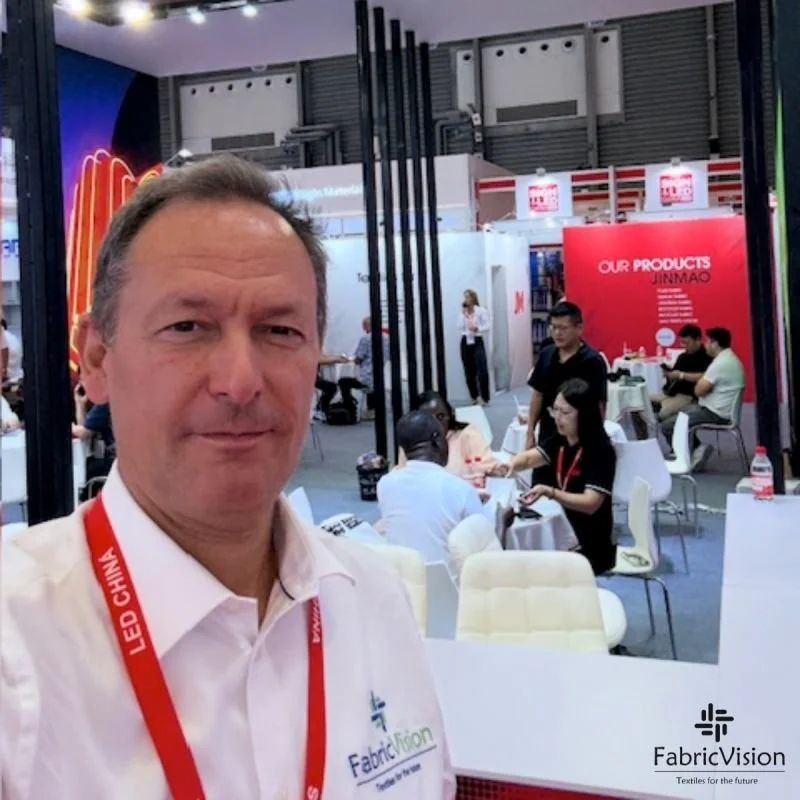
Shanghai, China – October 2026 – FabricVision, a global innovator in textile production, has marked the successful completion of its first full year of operations, announcing ambitious expansion plans across both China and Europe.
The milestone was celebrated last week during China Expo in Shanghai, where the company convened with its team at Jinmao to review achievements and set strategic priorities for the year ahead.
The company's first year has been defined by rapid growth and deepening customer relationships, according to leadership.

Rapidity, a nearly 40-year-old London print and communications specialist, needed finishing equipment capable of matching the speed and complexity of its growing client roster, which includes Arsenal, Shell, and Aston Martin.
By partnering with Vivid Laminating Technologies and investing in three Veloblades, two Matrix systems, and an Easymount unit, Rapidity strengthened its production capabilities while maintaining the meticulous quality standards that have defined the business since 1986.
Klagenfurt - Austria – October 2026– Zimmer Austria, a global leader in textile printing and coating solutions, will be at IGATEX Pakistan 2026, one of the region's premier textile machinery exhibitions.
The company will exhibit its latest digital printing, screen printing, and coating technologies from 15–18 October 2026, at Hall 2, Booth F-2-09, in Karachi, Pakistan
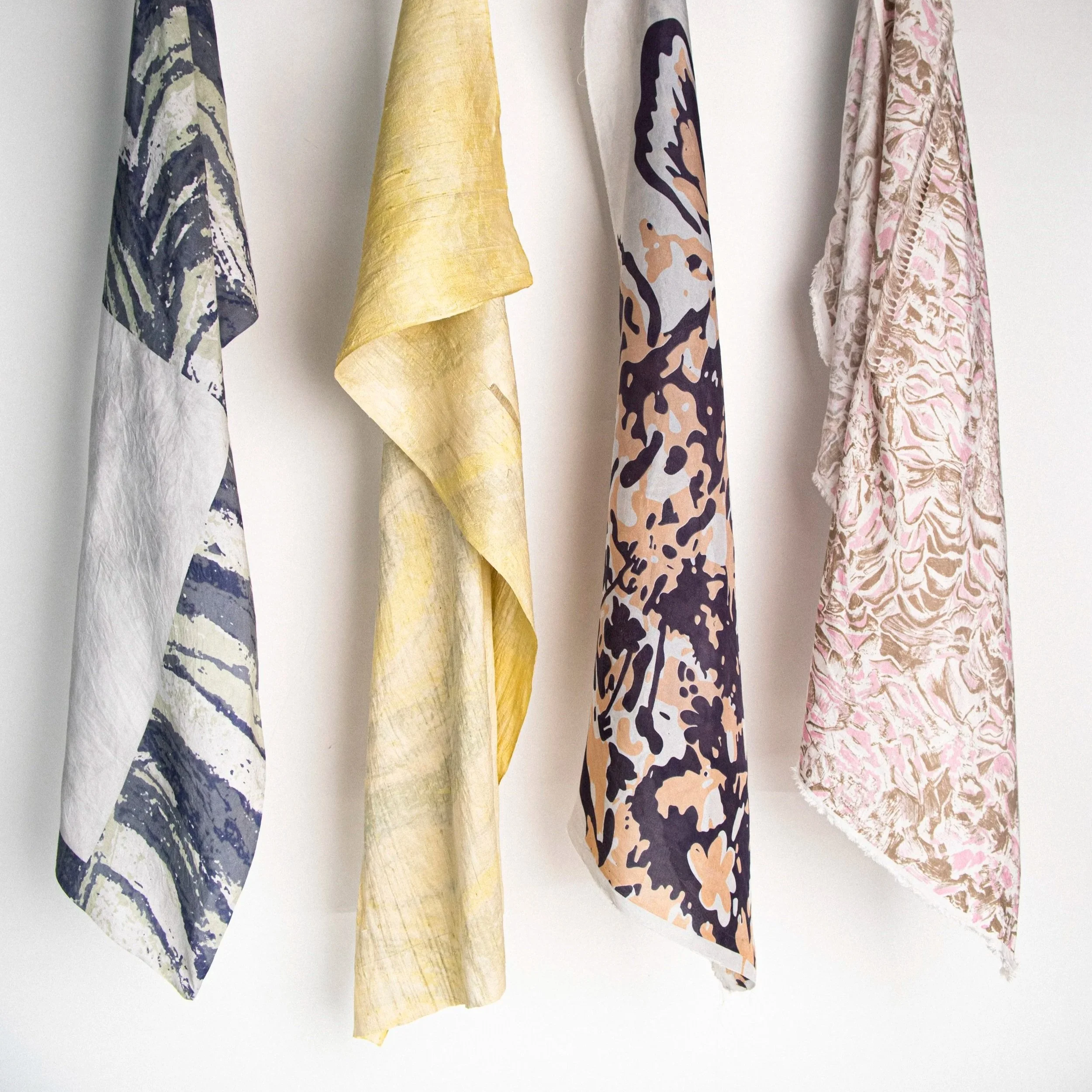
Returning for the fifth time to Manchester’s GNCCF (Great Northern Contemporary Craft Fair) are the GREEN GRADS,** 20 of the brightest of the UK’s new wave of eco-activists who have just graduated from universities all over the country, from Falmouth to Glasgow. The Fair runs from Thursday October 15 (private view) to Sunday October 18 (closes 4pm).
GREEN GRADS in the NORTH are taking over the 46 “changing cubicles” with their distinctive framework of blue cast iron, that fringe the gallery of Pool C, in the splendid Victoria Baths, Manchester. There is also a shop, curated by Laura Wigham, GREEN GRAD of 2024, with exclusive arts and crafts by GREEN GRAD makers from previous years.

Crewe, Cheshire – October 6th 2026 – Hybrid Services Ltd, the UK and Ireland distributor for Mimaki, has announced three dedicated demo days at its Crewe showroom, giving businesses a further opportunity to see the latest Mimaki machines in action.
Running from Tuesday 13th to Thursday 15th October, the drop-in sessions follow the machines' debut at The Print Show 2026 at the NEC Birmingham and are designed for those who missed the event, or want more time to explore the technology at their own pace.
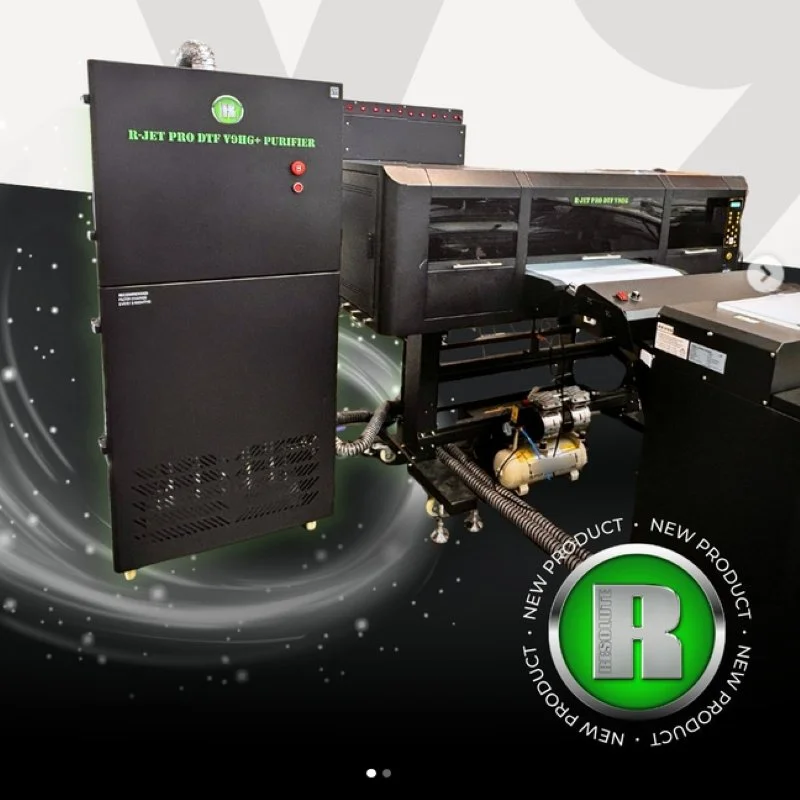
Chesterfield, UK – October 2026 – Resolute DTF, a leading provider of direct-to-film printing solutions, has concluded its participation in The Print Show, last week, with an overwhelmingly positive response from attendees.
The event gave the company an opportunity to showcase its latest innovations in DTF and UV DTF printing technology to print businesses from across the industry.
Visitors to the Resolute DTF stand were given hands-on access to the company's expanding product range, including its R-JET PRO DTF and UVi-3D UV DTF printers, alongside its portfolio of inks, films, and finishing equipment.

Capurso, Italy – October - 2026 – Agfa Inkjet Solutions today announced that Digibux Print, an Italian digital print specialist, has invested in the Jeti Bronco H3300 HS, a 3.3-metre wide-format hybrid UV LED inkjet printer.
The investment marks a significant step in Digibux Print's evolution from digital print specialist to industrial production powerhouse, as the company expands its production capabilities to meet changing customer demands.

London, UK – 25 September 2026 – Sanderson Design Group PLC (AIM: SDG), the luxury interior furnishings group, today announced a 10-year licensing agreement with Dunelm for Designers Guild, the luxury interiors brand acquired by Dunelm in April 2025.
Under the Agreement, Sanderson Design Group has been granted the sole licence to design, manufacture and sell Designers Guild wallpapers, fabrics and paint worldwide.
The Agreement grants Sanderson Design Group access to Designers Guild's extensive archive design library, alongside the opportunity to create new designs under the brand, in exchange for a royalty fee paid to Dunelm

Zoetermeer - Netherlands - October 2026 – Papergraphics has announced that its Netherlands branch is now an accredited partner for Canon printers, bringing the acclaimed GP and PRO series to Dutch customers for the first time.
The accreditation builds on Papergraphics' long-standing Canon partnership in the UK, extending the same calibre of large-format printing hardware to the Dutch market.
Neuss – Germany – October 2026 – B-FLEX Italia has announced a partnership with Epson Deutschland GmbH to showcase the future of direct-to-film printing at the Epson Production Days event in October.
The collaboration will bring B-FLEX's DTF film and hot-melt powder together with Epson's SureColor G9000 printer in live, twin-roll demonstrations designed to show how materials and machinery combine to maximise both quality and output in real production settings

Las Vegas – NV – October 2026 – Greentex, a leading supplier of sustainable textiles for apparel, home goods and sportswear, successfully concluded its participation at Printing United 2026, where the company connected with customers, partners and industry professionals to showcase its latest eco-conscious fabric solutions.
The event brought together key players across the printing and textile industries, offering Greentex the opportunity to demonstrate how sustainable materials can meet the rigorous demands of modern digital printing and textile customisation.
Attendees had the chance to see live demonstrations of Greentex's fabric offerings, including its recycled polyester and BCI cotton ranges, both designed to reduce environmental impact without compromising on performance or quality.

Birmingham – UK – October 2026 – China Print Supplies UK Ltd has concluded a successful three-day exhibition at The Sign Show, where the company showcased its latest range of printers, cutting tables, and equipment bundles to industry professionals and visitors.
Throughout the event, the China Print Supplies UK team engaged with attendees, delivered live demonstrations of its machinery, and discussed how its growing product range can help signage and print businesses stay ahead in an increasingly competitive and sustainability-conscious market.
“We were thrilled with the turnout and engagement at this year's Sign Show. Conversations with visitors reinforced the direction we're taking as a business — one that puts innovation and responsible manufacturing at the forefront," said China Print Supplies UK Ltd.

Dorking – UK – October 2026 – FESPA has announced that its 2027 edition in Munich will bring together five specialist events into a single destination, offering exhibitors an unprecedented opportunity to reach audiences spanning print, signage, merchandising, wrapping and textiles.
The consolidated event reflects the increasingly interconnected nature of the speciality print and signage industries, where brands and suppliers are seeking more efficient ways to engage with buyers across multiple disciplines.
By combining five dedicated events, FESPA 2027 will enable exhibitors to showcase their offerings to a broader and more diverse audience, all within one venue

Leicester, UK – October 2026 – De Montfort University Leicester (DMU) will open a landmark exhibition celebrating the work of fashion icon Dame Zandra Rhodes, following her decision to donate a significant part of her personal archive to the university.
Zandra Rhodes: Archive Unfolded will showcase highlights from a donation spanning six decades of Rhodes' career, from 1964 to 2025, featuring thousands of objects including licensed work, press cuttings, film, opera material and colour transparencies.
The gift follows Dame Zandra's Honorary Doctorate of the Arts from DMU in 2023, when she announced her intention to place a key part of her archive with the university's Special Collections.

London, UK – September 2026 – ARTS THREAD hosted an in-person judging event for its Global Creative Graduate Showcase at the Zaha Hadid Gallery, Barbican, bringing together industry judges to evaluate the next generation of creative talent.
The event also marked the introduction of the ARTS THREAD Vault, a new initiative set to shape how creative work is archived and accessed.
The gathering reflects ARTS THREAD's ongoing commitment to supporting emerging creatives as they transition from education into industry, while also advancing the infrastructure that underpins creative recognition and opportunity on a global scale.

SOUTH NORMANTON, UK – October 2026 – Sun Chemical has reaffirmed its commitment to sustainable innovation with the continued development of its Streamline™ aqueous ink solutions, as the graphics industry accelerates its transition towards water-based technology.
The shift comes amid rising demand for printing solutions that reduce volatile organic compound (VOC) emissions, minimise odour, and deliver vibrant, high-performance colour
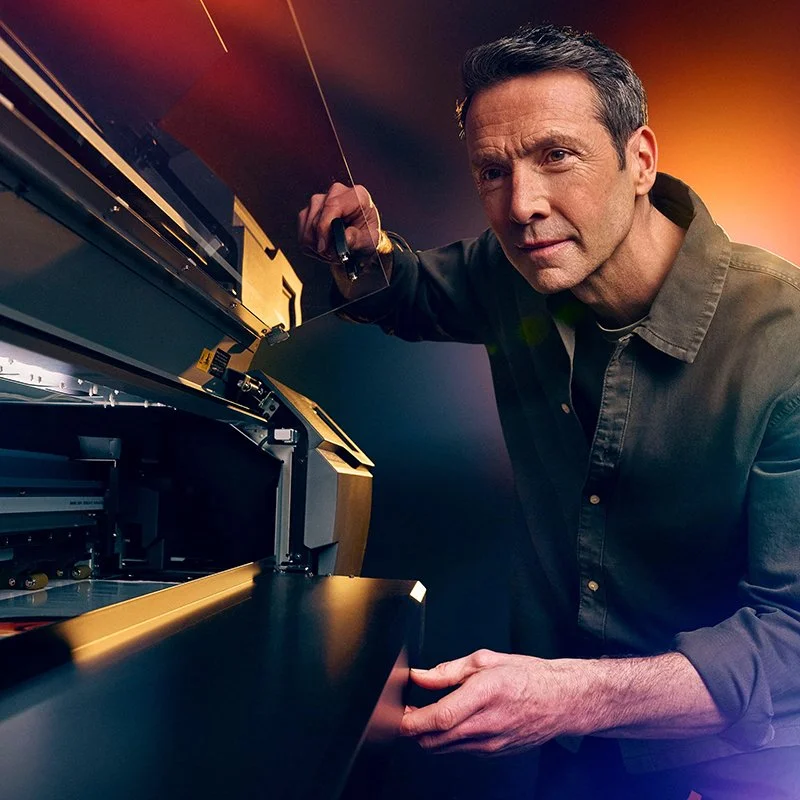
Madrid, Spain – October 2026 – Roland DG, a global leader in digital printing and visual communication technology, is looking forward to its participation in C!Print Madrid 2027, taking place from 12 to 14 January 2027.
The company will present its evolving ecosystem of printing, automation, and branding solutions under its new positioning, "Make Your Mark," reflecting a shift from machine supplier to value-creation partner for brands and professionals across Europe.

Leicester, UK – October 2026 – VeriVide Limited, a leading provider of colour assessment and quality control solutions, today announced that it will take to the stage at the AATCC International Summit in Wilmington, United States, to present on the evolving landscape of colour evaluation technology.
Stephen Tongue and Chris Hipps, representing VeriVide, will deliver a session titled "Evolution of Visual and Digital Evaluation Tools for Color Assessment, Fastness Grading, and Stain Analysis."
The presentation will examine how colour evaluation practices have developed over time, exploring the enduring role of visual assessment alongside the growing adoption of digital tools for fastness grading and stain analysis.