SHARING KNOWLEDGE AND PRACTICAL EXPERTISE? WE INTERVIEW BRUCE VAN GREUNEN OF HP AT THE PERFECT COLOURS WORKSHOP
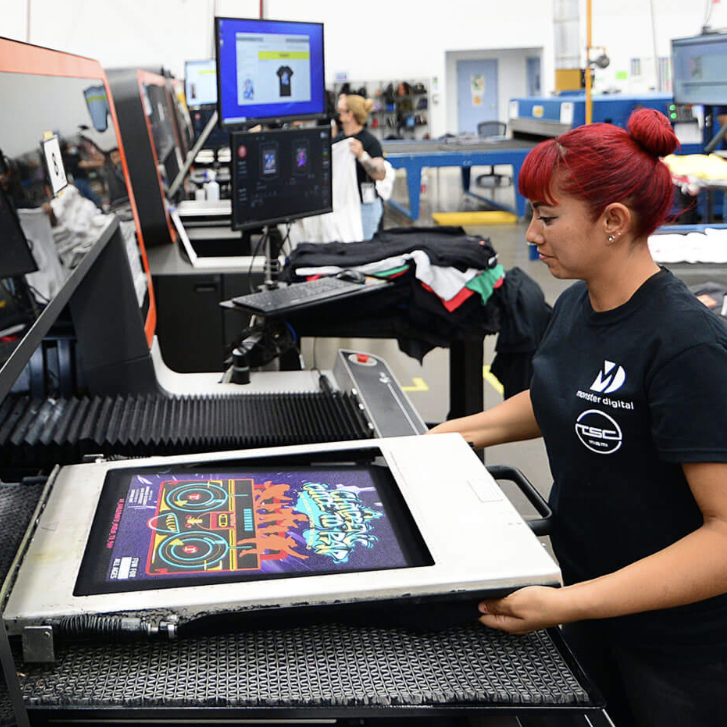
“There is nothing like the buzz of energy in room full of excited people, talking face-to-face and seeing their reactions and being able respond directly. A zoom meeting can be more of a one-way conversation as it not as easy to interact. Print is a passionate business and nothing beats being able to touch and feel the printer and the cool stuff that comes off it.” Bruce van Greunen - HP
It’s a pleasure to back in the field visiting live events. The Metaverse may very well be on the horizon, and we may have all adapted to a new hybrid life post pandemic (all of which has benefits) but for practical experiences there is no substitute for face-to-face events.
We recently attended the Perfect Colours workshop at their demonstration centre in Sheffield.
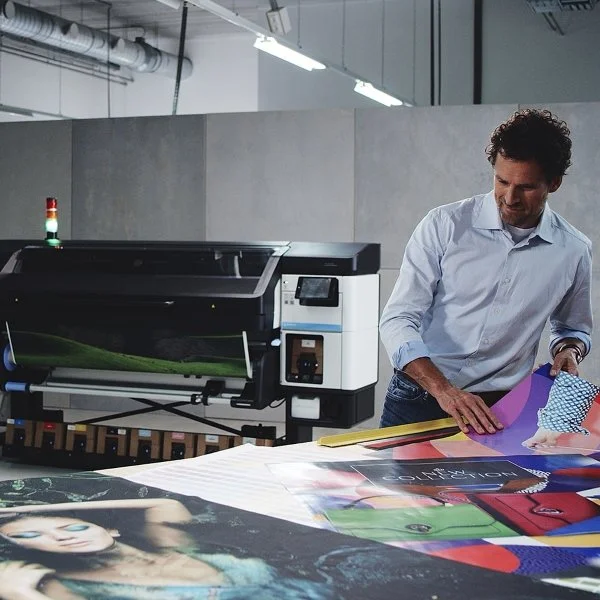
In attendance were many industry practitioners, crossing Signage, Décor and Textiles. Picture dozens of experts in a demo room filled with HP technology all talking print – all of which assuredly delivered the perfect afternoon at Perfect Colours.
We caught up with Bruce van Greunen, Pre-Sales Consultant, at HP for a short interview.
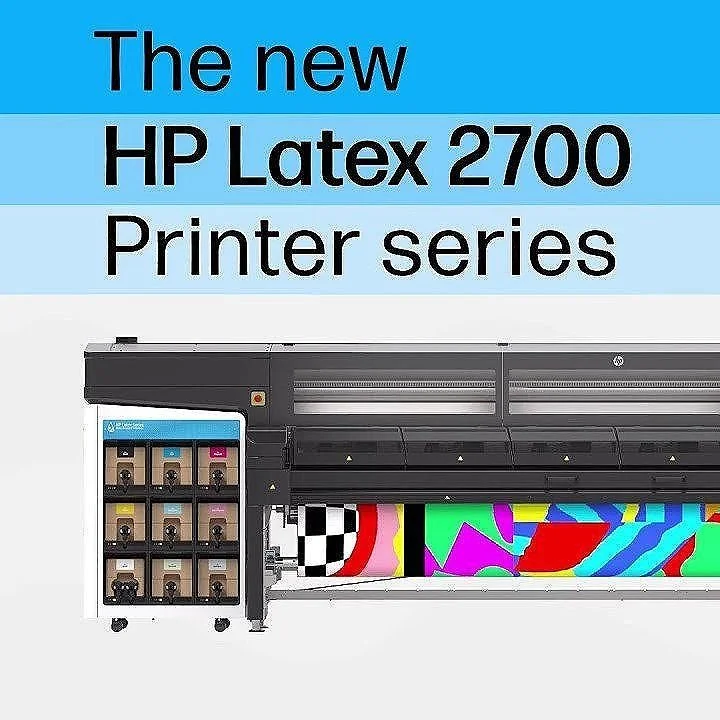
Armed with decades of practical, technical, and printing industry experience, there isn’t much that Bruce doesn’t know about our industry. It’s always a pleasure to catch up and to learn more about the HP Latex technology, and how it continues to disrupt the market and discover more about HP’s new developments.
What are the benefits of live workshops?
“After the Covid pandemic, I think many people are becoming tired of virtual events and webinars. They were extremely valuable through the lockdown period and do still have a place in today’s hybrid work environment.
HP’s ability to have a professional virtual demonstration cannot be underestimated, saving time and money for a customer or prospect, but being on a Zoom call or a webinar there are so many other distractions, the chat box or incoming emails, or the cat wanting to walk all over your keyboard?
Virtual, is not a replacement for a real face to face events, yet.
There is nothing like buzz of energy room full of excited people, talking face-to-face and seeing their reactions and being able respond directly. A zoom meeting can be more of a one-way conversation as it not as easy to interact. Print is a passionate business and nothing beats being able to touch and feel the printer and the cool stuff that comes off it.”
How does the white ink in the HP Latex 700W and 800W unlock new opportunities in the Décor sector?
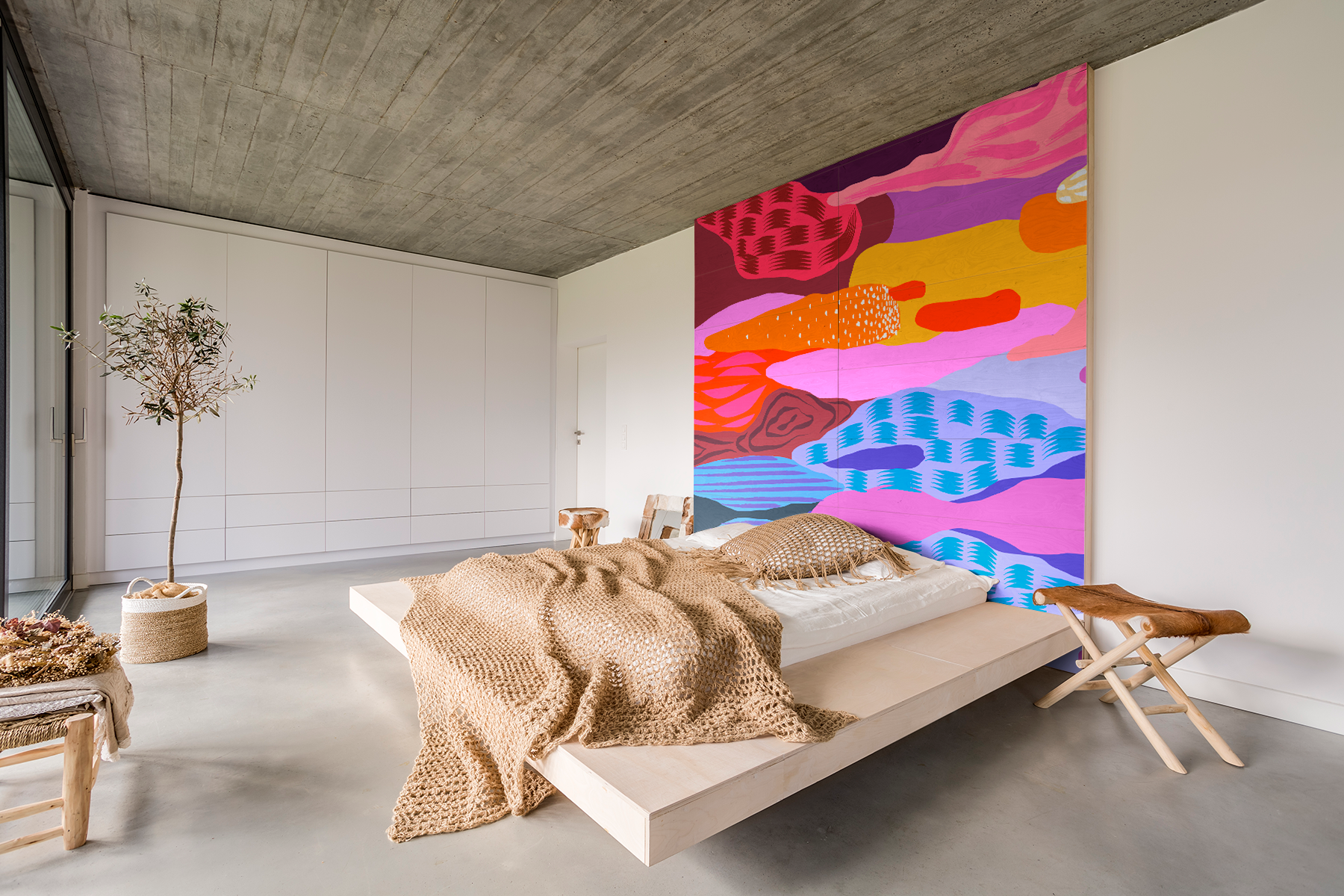
“The ability to use HP latex white ink print onto coloured or clear media give you an opportunity to try different applications and effects with the media. In the décor sector we have seen a move to more natural surfaces in textiles and wallpapers which are not always white. If you do not have the option of white ink, colours may not turn out as expected, or they may seem desaturated.
White ink gives the option to emphasise parts of a design. Printing with white ink onto acrylics or glass for kitchen splash backs or room dividers with 3- or 5-layer printing by example.
Let’s not forget that the same white ink is on the HP Latex hybrid machine, the HP R-Series allowing you to print roll to roll or direct to board up to 2.5m to unlock even more opportunities.”
What excites you most about the HP R-Series? Why is this machine so versatile?
“There are many features and benefits of the HP R-Series, but for me the main ones are the absolute versatility of the R-Series printer. Having a true hybrid printer that is a flatbed printer and also a roll-to-roll printer without any compromises - means you can print on many more medias using only one printer.
Printing a 1.2m x 2.4m aluminium composite board or a 100m roll of wall paper is simple on the R series. It benefits from the flexibility of the HP Latex inks both literally and metaphorically, in the sense that the ink has excellent conformability properties. It can be stretched and moulded perfectly SAV for furniture wrapping, or vacuum moulding.
The inks can be printed onto many different media surfaces from paper to self-adhesive to textiles, or ridged media like corrugated polypropylenes or wood and glass.
But also, very important to me is the environmental aspects of the HP Latex products, the fact that the HP Latex inks have very low VOC’s (Volatile Organic Compound) or zero HAP’s (Hazardous Air Partials), so they can be applied indoors, there is no odour from the inks and that the 4th Generation of HP latex inks are certified toy safe.
Being able to recycle the consumable items such as the print heads, and the used ink cartridges through the free of charge Planet Partners Programme is big win for the environmentally conscious print provider.”
How is the market recovering post covid – and why is investing in digital technology critical?
“Market recovery post covid has been varied, different markets recovered at different rates. Décor for instance did relatively well through the Pandemic, Wallpaper and Window blinds continued to sell as many people were doing home projects while they we stuck at home.
Post covid this segment (these businesses) has maintained or even grown. Other markets like the exhibition and event segment were much harder hit, that segment re-opened much later than the others, so their recovery has taken a little longer, but there is definitely light at the end of the tunnel for them.
Digital Technology was vital to the Decor market because it allowed the manufacturers to produce just what was needed. And they only produced what was selling. They did not have to produce huge runs, and hold unnecessary stock, that might not have sold. Also, they were able to offer bespoke jobs and adapt designs and colours to suit demand.
Digital technology along with HP Latex series allowed many print service providers to adapt and survive or even prosper through the pandemic.
Having an application like HP PrintOS was also invaluable as it enabled HP Latex users to monitor their production remotely allowing more hybrid working.”
If you missed the Perfect Colours workshop you can find further details about HP’s technology here and be sure to sign-up for any upcoming events.
The story of what happens when young designers access digital technology is still being written.
What once was a theoretical sustainability goal seems to have shifted into an active regulatory reality.
Is the Textile Market Finally Recovering?
After a difficult few years, there are genuine reasons for optimism. Duncan was candid about the challenges: "The market for textiles has been very difficult over the last three years. I'm not going to hide the truth there. But the tide is turning.“
A profound shift is currently reshaping the sector
Changing consumer expectations demand greater design diversity, faster turnaround times, and sustainable manufacturing practices.
To thrive, interior brands must adapt their supply chains, bringing production closer to the end consumer and moving away from bulk manufacturing.
Digital textile printing offers a definitive solution to these operational bottlenecks.
Digital transformation doesn't announce itself.
It accumulates - one innovation at a time - until an entire industry looks back and realises the ground has shifted beneath its feet. That's precisely where textiles stands today.
The conversations happening now about AI, automation, sustainability, and digital product passports are not theoretical. They are shaping decisions being made on factory floors and in boardrooms right now.
“By leveraging advanced digital textile printing, Marylene Madou has successfully merged traditional craftsmanship with cutting-edge technology. Her approach offers a blueprint for how independent designers can scale their brands globally while maintaining a minimal environmental footprint.”
From Helsinki's printing mill to Paris's Le Marais, discover how Marimekko is scaling a design-led brand with purpose, craft, and bold innovation.
But what makes Marimekko's story compelling is not just its aesthetic legacy?
The textile industry is undergoing a vital transformation. As the insights from Techtextil and Texprocess reveal, the path forward relies on a combination of sustainable hardware, intelligent chemistry, and seamless digital workflows.
From Zimmer's industrial-scale energy reductions and Stratasys's on-demand 3D embellishments, to Kornit's single-step technical printing and the unified digital ecosystems of NedGraphics and Optitex, the tools for change are here. To stay competitive, brands and manufacturers must adopt these innovations, moving away from fragmented, wasteful processes towards a truly connected, circular economy.
Friedmans stands as a testament to the power of combining traditional textile knowledge with forward-thinking innovation.
“Operating from their UK headquarters, Friedmans now serves a diverse array of sectors, including swimwear, dance, entertainment, sportswear, interior decor, prosthetics, and even pet apparel. With a strategic supply chain that reliably serves clients worldwide”
The apparel decoration industry is decisively moving away from isolated, analogue production tools toward connected digital manufacturing environments.
"Kornit’s unwavering commitment to transformative technology continues to disrupt the status quo. For business leaders and innovators ready to capture the future of apparel manufacturing, the path forward is clear”
The Urgent Need for Sustainability at Scale
The transformation at Coats provides a vital blueprint for the wider textile and apparel sector. True sustainability cannot be achieved in silos. As Dearing emphasised:
“Cross-industry collaboration is the engine of meaningful change. Brands, machinery suppliers, chemical providers, and fibre producers must act as an interconnected ecosystem”
Today’s customers demand superior product quality, real-time data visibility, and lightning-fast turnaround times.
For large-scale garment decorators, managing these expectations while balancing seasonal demand fluctuations - such as the massive surges seen during Black Friday - presents a monumental challenge.
"Relying on transactional vendor relationships and outdated legacy equipment is no longer sufficient to secure long-term stability and growth.”
Printing method is never a secondary detail. It shapes the entire life cycle of a product, from concept to customer. In today’s fashion industry, where margins are tighter and speed matters more than ever, technical knowledge has become a competitive advantage.
“The future of textile design belongs to professionals who can combine creativity with execution, aesthetics with practicality, and vision with production reality”.
Are we witnessing the reinvention of Merch driven by adaptive, digital technologies?
The commercial opportunity presented by printed, personalised merchandise is already a lucrative revenue stream; it is the core driver of growth in a multi-billion-pound industry. And the mandate for print businesses is clear: automate, adapt, and offer undeniable added value, or choose to gradually lose market share.
Powderless DTF is an important area of innovation. It deserves research, investment, and thoughtful development.
“But at its current stage, it often feels like the industry is attempting to commercialize the concept ahead of the underlying chemistry and system readiness”.
All Apparel Manufacturers face an Urgent Mandate: “Automate or be Left Behind”.
Industry leaders like Super Nova Sports and Ryozo International were struggling with severe pre-press bottlenecks and unsustainable fabric waste. By integrating AI Sublimation Software into their workflows, these forward-thinking businesses eliminated manual variable data entry, boosted fabric efficiency to over 80%, and reduced delivery times by more than half, establishing a highly profitable, agile, and environmentally responsible production model.
The Future of Manufacturing belongs to those who Embrace Connected Digital Ecosystems
“Whether you produce garments, car interiors, or home furnishings, the transition from creative concept to production-ready product often remains fragmented. Design teams work tirelessly to develop compelling materials, yet technical teams struggle to interpret these visions without losing data along the way.”
The European digital wallcovering marketplace is expanding at an impressive rate.
“For print professionals and interior designers, this transition presents a distinct set of challenges. Achieving flawless colour consistency, managing complex substrates, and meeting stringent environmental standards are no longer optional extras; they are fundamental requirements for commercial success.”
If you're looking to optimize your website for AI search, hang onto your cowboy hat. It's the Wild West out there. Former (and current) SEO companies see the handwriting on the wall as more search moves from traditional SEO to AEO (answer engine optimisation). Opportunists are popping out of the woodwork.
(There are good options out there, but vet them carefully.)
A swimsuit might start life as a sketch. By the time it reaches the shop floor, dozens of hands have touched it - designers, dye houses, printers, trim manufacturers, quality controllers. Each one interprets colour in their own way, under their own conditions, with their own tools. The result is often a product that looks nothing like the original vision.
Nexo Interiores is a 100% Spanish interior design company with the aim of making decoration, in addition to an art, a sustainable trend to take care of the planet while we dress it with the most original and special designs.
The company offers practical, simple to install and quality solutions to decorate homes and businesses in an elegant way, with subtlety and authenticity. For this, Nexo uses HP Latex 1500 technology to work on the digital prints of its projects with the new HP Latex inks, composed of 65% water, which means that the drying of these inks does not require special ventilation.