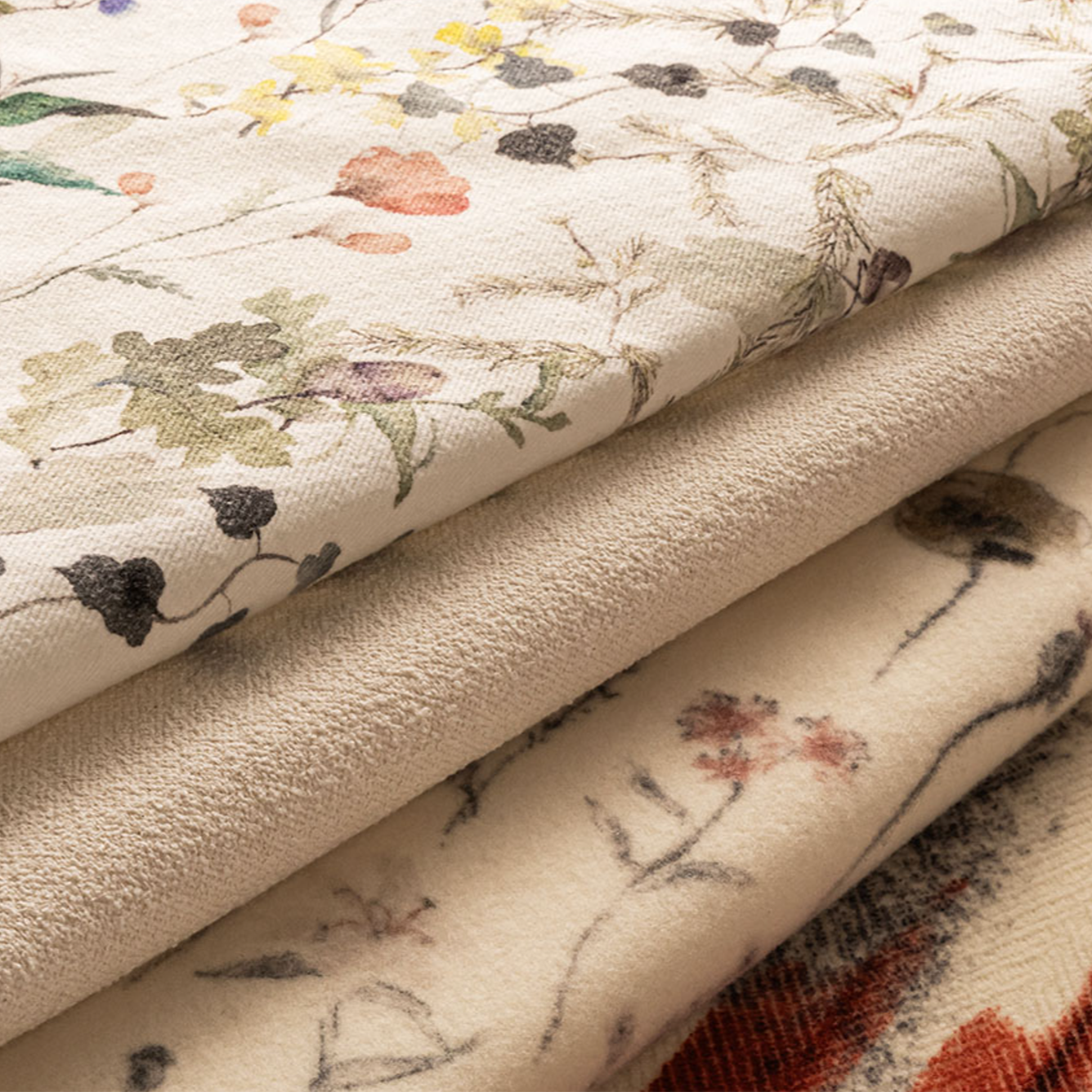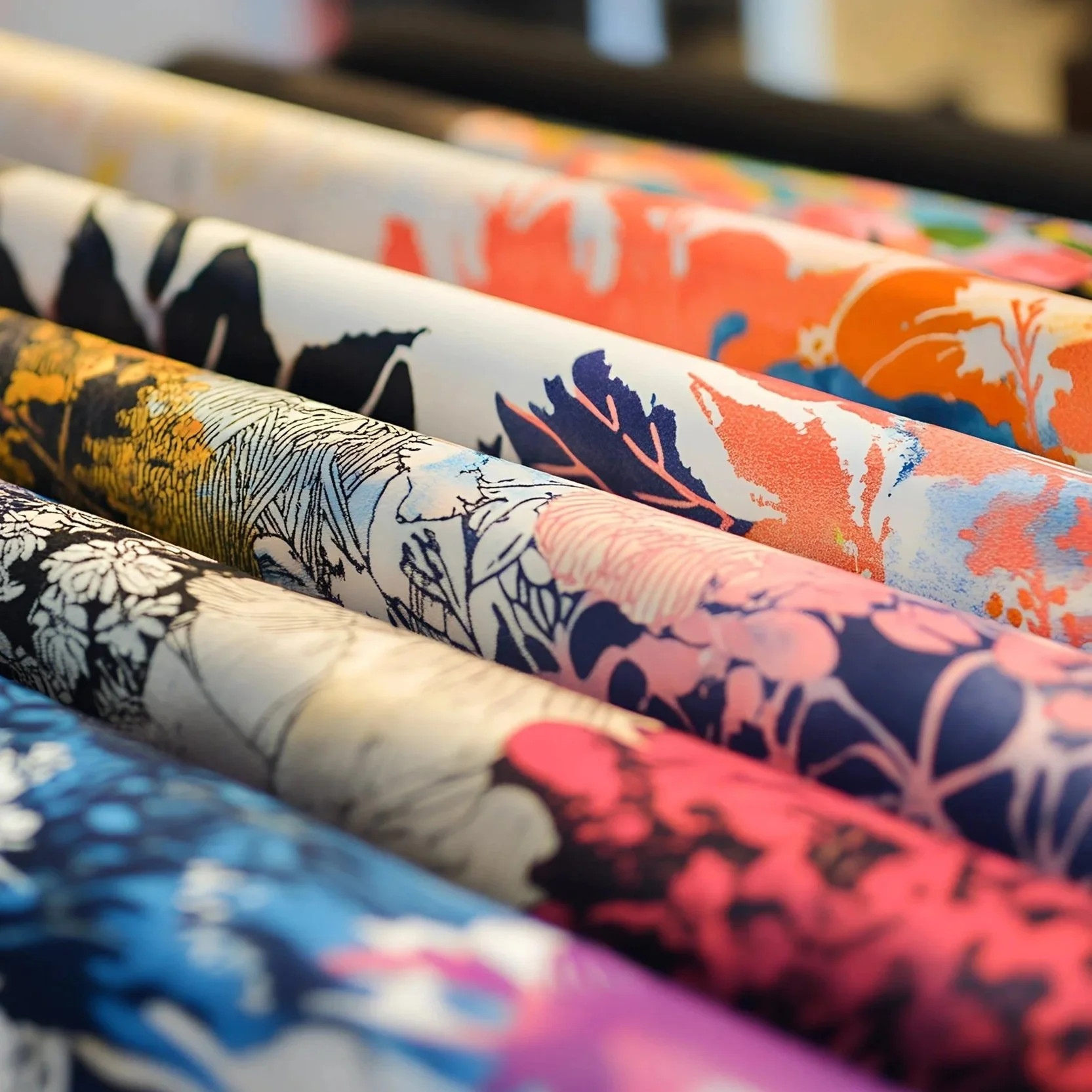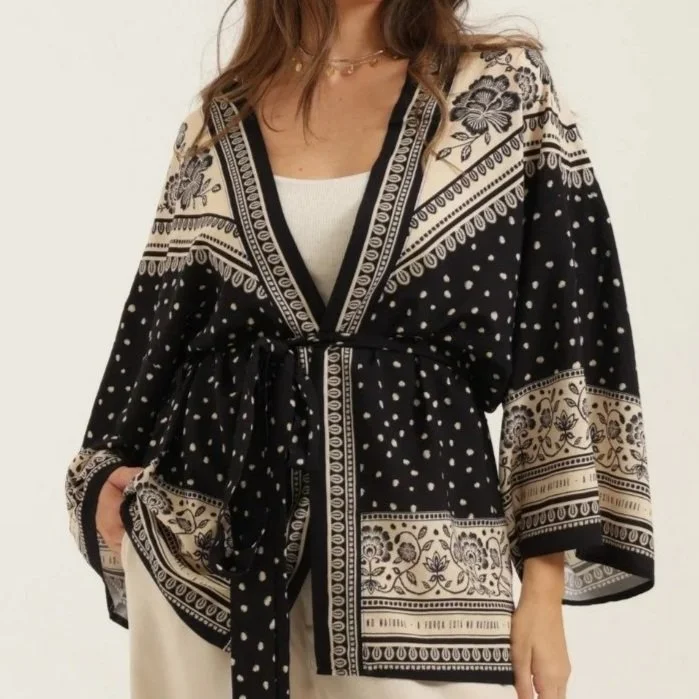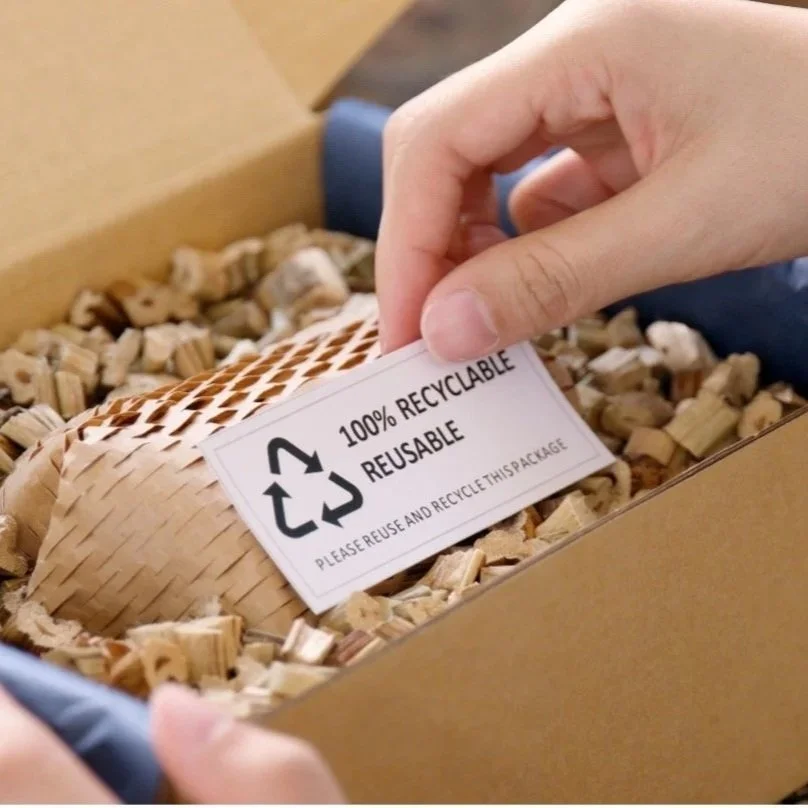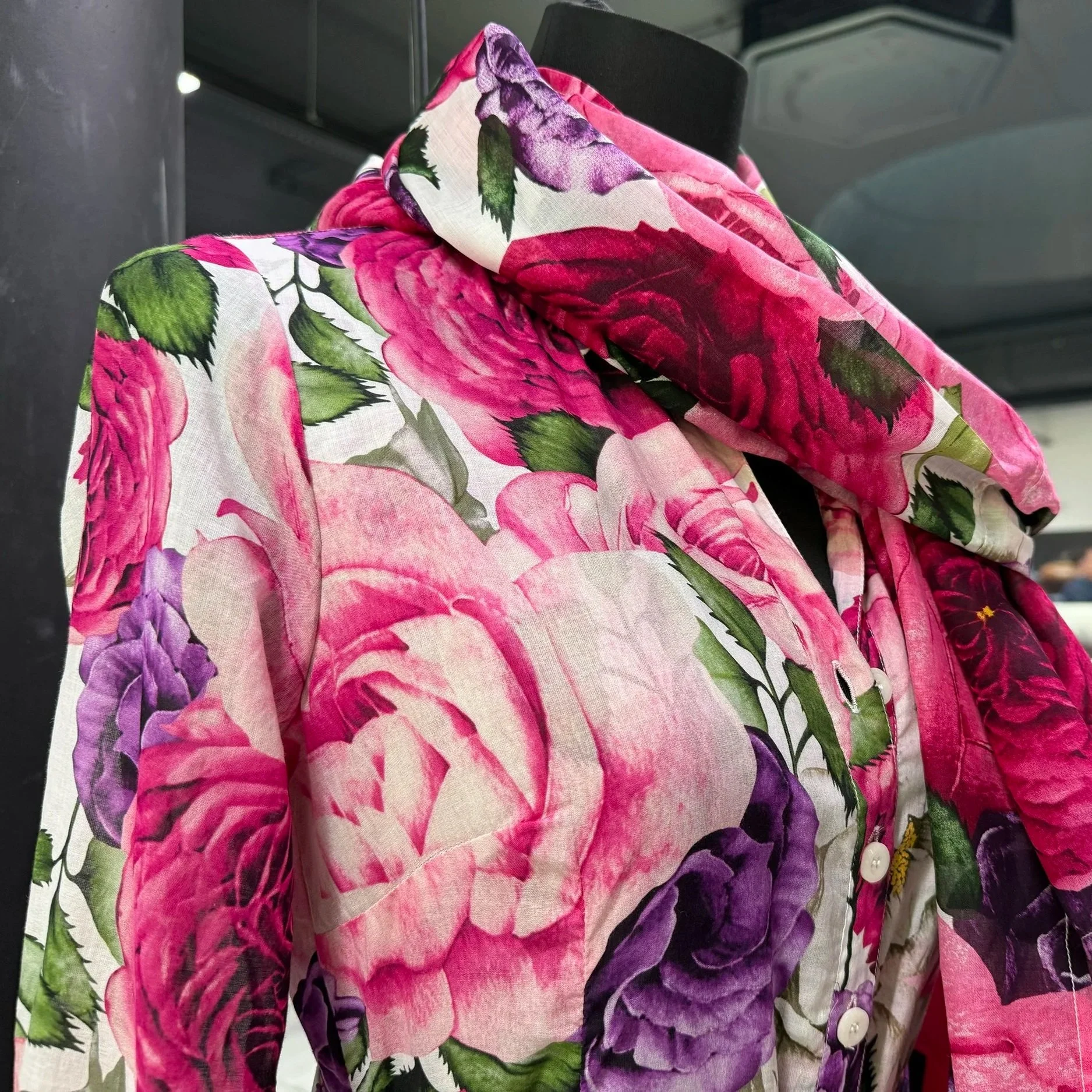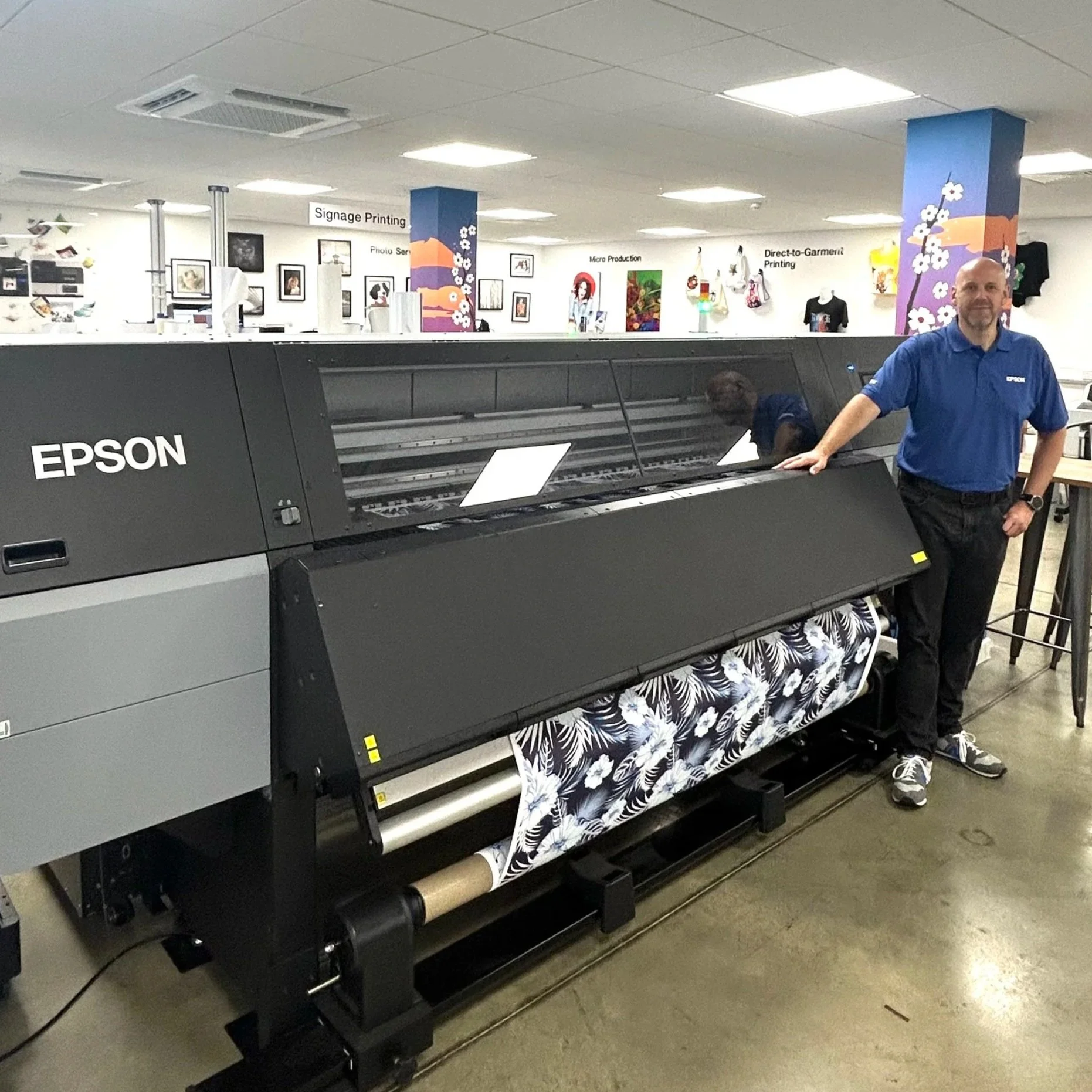
A GUIDE TO ECO-FRIENDLY, SUSTAINABLE FABRIC AND TEXTILE PRINTING - PRINT CUSTOMERS ARE INCREASINGLY REQUESTING GREENER MATERIALS

“Large format digital printing is widespread and used for showroom and retail displays, exhibition graphics, flags and banners as well as flooring projects. The print quality of the latest range of large format printers can produce remarkable imagery, with clear lines, high resolution and vivid colours. Yet sustainable textile printing can only exist in tandem with supply chain transparency, and with effective collaboration, the large format fabric sector can make big strides in becoming an eco-friendly solution”.
GUEST BLOG FEATURE WRITTEN BY: Ella Faulkner Of Soyang Europe
Print customers are increasingly requesting and specifying greener materials, helping their supply chains become more sustainable.
Large format printing is no exception and the industry has responded by providing machines that use less electricity, processes that use less water, curing that utilises less heating and focussing on developing newer, greener substrates and materials.
When and Where to Consider Eco-Friendly Fabric and Textile Material?
Large format digital printing is widespread and used for showroom and retail displays, exhibition graphics, flags and banners as well as flooring projects. The print quality of the latest range of large format printers can produce remarkable imagery, with clear lines, high resolution and vivid colours. Yet sustainable textile printing can only exist in tandem with supply chain transparency, and with effective collaboration, the large format fabric sector can make big strides in becoming an eco-friendly solution.
Public sector spaces are under ever-increasing pressure to offer a sustainable environment filled with sustainable products. So too are educational, and health facilities. But the biggest market is found in retail where showing off green credentials is demanded by customers.
What Type of Textile Printing is Greenest?
Latex – By far the most eco-friendly printing method is latex. Often fully recyclable, it is a technology that has greatly advanced in the last few years. Latex ink works well with any fabric both synthetic and natural. There is no need for additional waste processes like transfer papers.
UV – Eco printing on fabric using large format UV technology means that the ink is sublimated to the substrate using an inline fuser. It can adhere to almost any surface including a wide range of fabric and textiles, both synthetic and natural.
Dye sublimation – This method remains a popular form of printing because it can reproduce photo-like quality to a wide range of fabrics where the ink is printed onto screen paper before being pressed into the fabric or textile to transfer the image.
From textile flooring to retail exhibition displays, this type of printing absorbs water-based inks ensuring the inks penetrate the fabric weave. However it still produces waste in the form of excess ink and transfer papers.
Reducing Waste in Textile Printing
More than ever the digital printing technology is able to complete on the promise of a greener future and cleaner environment. Print consumers are more conscious of their carbon footprint and are specifying more sustainable products from suppliers. And these processes are being continually developed to improve and replace older, unsustainable manufacturing practices.
For instance using laser cutting technology minimises excess material waste.
Using a large format cutter can cut and seal all types of fabric at the same time, reducing the need for overlapped edges and additional machinery for sealing the finished product. It also promotes longer life expectancy for a product where fraying and unstitching are expected tradeoffs for flexibility. Additionally laser cutting ensures accuracy first time, every time. Furthermore, as we head towards more responsible manufacturing, recycling can offer extended life for textiles fibres.
All the choices made in the design process will impact the future life of the large format print and repurposing offcuts can also help improve and fulfil those same recycling initiatives.
It’s also interesting to know that textile manufacturing across multiple industries that used analog technology once consumed immense amounts of resources and generated (now viable) waste. This included water, energy, waste material like inks and dyes and chemical solutions, which are toxic to the environment.
Eco-Friendly Benefits of Latex and UV Printing
In digital printing, the more advanced the technology, the cleaner and greener the process tends to be.
And latex, more than any other method, is considered the most sustainable. Closely followed by UV printing which has taken huge technical strides in energy efficiency, and with it a whole new light can be shone on the eco-friendly capabilities of modern fabric and textile printing.
Less waste –
When printing directly onto the garment there are no secondary processes required. So while transfer printing uses a substantial amount of ink, much of which will be wasted during transfer, latex and UV only uses the amount of ink required to print.
So, when less equipment is required during the set up of the print process (there are no screens or plates needed to create and transfer designs onto) then no bulky waste products are produced.
All of which will eventually need to be disposed of as waste once each print run is completed.
Water conservation –
It is well known that a huge amount of water is required to produce fabrics and textiles, but it is also the case that it takes a lot of water to produce printed fabrics too. This is the same with the cleanup process involved in screen printing too.
With more modern machinery and advanced ink sublimation technology, it can save millions of tonnes of water being either wasted or polluted and colour-fast pigments are now used to impregnate the textile fibres.
Using heat or UV eliminates the need for either pre-wash treatments or post production processes involving water like steaming or washing.
Energy efficient –
Digital submission of large format designs enable prints to be submitted directly to the printer.
No transfer papers means less physical waste, only the ink required to print and it is quicker.
Add in the adoption of low energy using UV lamps and the process of screen transfer can look positively analog.
Moving Forward with Eco-friendly Textile Printing
Modern improvements to digital printing have allowed eco-friendly textile printing to be done in a manner benefiting the environment. It allows environmentally aware consumers the luxury of choice when it comes to their textile and fabric print needs.
Digital printing technologies are constantly moving forward. In large format fabric/textile printing positive steps are being made to replace traditional, but ultimately unsustainable printing methods.
Choosing sustainable textiles is now corporate policy for many retailers and brands both seeking to improve their environmental credentials and impact both locally and globally.

Germany, France and the Netherlands are advocating coordinated European action against ultra-fast fashion.
The three Member States raised the topic at today’s EU Environment Council in Luxembourg, and called on the European Commission to make existing and planned EU provisions more effective against short-lived, low quality textiles.
Their call was supported by other Member States, including Slovenia and Denmark.
LONDON, June 11: Textile Exchange has published its new polyester Life Cycle Assessment (LCA) study, providing robust, accurate, and credible data to strengthen the fashion, textile, and apparel industry’s understanding of the impacts of different types of polyester production.
The study is the second in a series of LCA studies led by Textile Exchange and addresses key gaps and limitations in the LCA data currently available for polyester.
Widnes, Cheshire - 5 June 2026 – On World Environment Day, Roberts Group International has announced a pioneering partnership with St Helens Council, Seamster & Shepherd, and Hope Academy.
The initiative, titled Hope for the Earth: From Reclaimed Textiles to Sustainable Student Fashion Show, empowers students to transform reclaimed textiles into original fashion pieces ahead of a summer showcase event in July.
The collaborative project addresses the urgent need for circularity in the fashion industry by bringing the sustainability message directly into the classroom.
Shenzhen, June 2026 – To address the urgent need for sustainable practices and digital transformation within the global fashion industry, the Intertextile Shenzhen Apparel Fabrics and Yarn Expo Shenzhen will return from 9 to 11 June 2026.
Held at the Shenzhen Convention and Exhibition Center, the event will host over 600 international exhibitors across 45,000 square metres.
The innovative washing process SMART WASH represents a modern, high-performance, and environmentally conscious approach to textile care.
The targeted combination of the products BEIPLEX GREEN, BEICLEAN ECO, BEIPUR ANP, BEIBLEACH WP 35, and BEIACID CIT creates a holistic, sustainable washing and bleaching concept.
Stuttgart, Germany – May 2026 - Global Organic Textile Standard (GOTS) certification continued to grow in 2025, with nearly 18,000 certified facilities worldwide, despite ongoing geopolitical uncertainty and rapidly evolving regulatory requirements across global textile supply chains.
New figures released today in the 2025 Annual Report for Global Standard, the nonprofit that owns and operates GOTS, show that uptake of robust, independently governed sustainability standards remains a priority for companies seeking to manage risk, substantiate claims and meet rising expectations on transparency and due diligence.
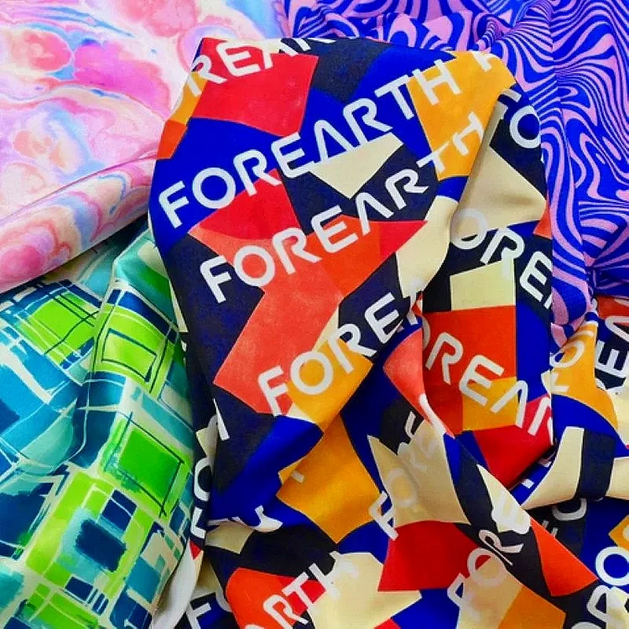
Kyocera Document Solutions has highlighted its FOREARTH, a pioneering water-free textile production concept designed to drastically reduce energy consumption and greenhouse gas emissions.
By addressing the critical need for sustainable manufacturing, this innovation sets a new standard for the textile industry, minimising environmental impact while streamlining the entire printing process.
ECCO, in partnership with Spinnova, announces the launch of the limited edition ECCO BIOM® 720, a first-of-its-kind shoe utilising an often overlooked leather by-product, transformed into a protein-based fibre.
The fibres are produced using patented technology that advances material innovation while reducing waste and supporting full resource use across the leather and textile industry.
Newark - Delaware - May 2026 – The global digital textile printing market is set for a substantial transformation, having crossed a valuation of USD 6.1 billion in 2025.
According to recent market forecasts by FMI, the sector is projected to surpass USD 6.6 billion in 2026, expanding at a compound annual growth rate of 7.7 per cent.
Driven by the urgent need for sustainable production and fast fashion customisation, the market is on track to reach a total valuation of USD 13.9 billion by 2036.
Cagliari - Italy – May 2026 – To address the escalating crisis of water scarcity in the Mediterranean basin, the Interreg NEXT MED Programme has officially announced the launch of the SWAMED project.
This international initiative introduces smarter irrigation systems and modern agricultural technology to farming communities across the region. By deploying innovative, data-driven solutions, the project seeks to safeguard the future of agriculture in areas where every drop of water is critical for survival and economic stability.
The SWAMED project is spearheaded by the Università degli Studi della Campania "Luigi Vanvitelli" in Italy, operating in close collaboration with a strategic coalition of partners from Tunisia, Egypt, Greece, and Türkiye.
Washington DC - 24 April 2026 – The Bezos Earth Fund has announced a $34 million commitment to advance breakthrough sustainable materials for the global fashion and textile industry.
Working with leading scientists across the United States, these new grants aim to reinvent the fabrics used in everyday clothing, focusing on next-generation materials that replicate the feel of rayon, silk, and cotton while drastically improving upon the environmental impact of conventional manufacturing.
ISTANBUL, Türkiye – April 2026 – In a critical step towards securing a sustainable and ethical future for the global textile industry, Textile Exchange and the Organic Cotton Accelerator have officially announced the comprehensive agenda for the upcoming Organic Cotton Summit.
This vital industry event is scheduled to take place from the 2nd to the 4th of June 2026 at the Istanbul Marriott Hotel Sisli in Türkiye.
By bringing together global stakeholders, the summit aims to urgently address the pressing challenges facing agricultural supply chains and to build organic cotton systems that are resilient, fair, and economically viable for all participants.
Manchester, UK – April 2026 – John Hogg Technical Solutions has announced a strategic minority equity investment in SwitchDye Limited, a University of Leeds spin-out.
This vital partnership aims to rapidly scale SwitchDye's pioneering CO2-responsive, drop-in dyeing system, answering the urgent industry need to significantly reduce chemical intensity, energy use, and water consumption in the dyeing of polyester and other synthetic fibres.
April 2026 - As sustainability expectations rise across the fashion industry, Lectra has announced the publication of a new document aimed at helping brands reduce their environmental impact while remaining competitive.
The newly released insights detail how fashion brands can overcome the four main barriers to sustainable product development, providing the necessary data clarity to make better, environmentally conscious decisions.
London - April 2026 – In a decisive response to the escalating global need for urgent climate action, Ricoh today announced a comprehensive revision of its environmental, social, and governance targets.
Launched as a cornerstone of its fiscal 2026 mid-term strategy, the company is significantly accelerating its efforts to realise a decarbonised society.
By raising its greenhouse gas emissions reduction goals and renewable energy adoption targets, Ricoh is firmly linking sustainable innovation with its global business operations to lead the industry toward a greener future.
The organisation has elevated its fiscal 2030 target for reducing Scope 1 and 2 greenhouse gas emissions from 63 percent to 75 percent, compared with fiscal 2015 levels.
Zhanjiang, China - 26 March 2026 – BASF today announced the official inauguration of its state-of-the-art Verbund production site in Zhanjiang, Guangdong Province.
Covering four square kilometres, this €8.7 billion facility represents a paradigm shift in sustainable chemical manufacturing.
Fully powered by renewable electricity, the site reinforces BASF’s market position in China whilst addressing the urgent global need for decarbonised industrial processes.
Employing over 2,000 people, the Zhanjiang site produces a highly diversified portfolio of basic chemicals, intermediates, and speciality chemicals.
Stockholm – Sweden – March 2026 – The H&M Foundation has announced the launch of a practical, open-source workshop toolkit designed to help organisations across the textile industry apply its innovative System Map.
Introduced earlier in 2024, the System Map is a visual framework that reimagines the fashion industry as an interconnected ecosystem.
Now, this comprehensive toolkit empowers brands, suppliers, policymakers, and investors to turn systemic insights into actionable strategies, identifying crucial leverage points to halve greenhouse gas emissions every decade until 2050 while enabling a just transition.
March 21st 2026 – To mark the International Day of Forests, Lenzing Group has announced its continued and unwavering dedication to global forest conservation and ecological resilience.
As the world faces unprecedented environmental challenges, the company is taking decisive action to ensure that the preservation of healthy forests remains firmly embedded in its sourcing strategy and product innovations.
San Francisco – March 2026– The Apparel Impact Institute (Aii) has today announced the launch of its innovative Energy and Carbon Benchmark.
This vital new tool is designed to provide fashion brands and their global suppliers with a unified reference point for measuring energy consumption and greenhouse gas (GHG) emissions across textile manufacturing facilities worldwide.
London – March 2026 – The Better Cotton Initiative (BCI) has announced a new collaboration with global non-profit the Soil Health Institute (SHI) and national ag-tech provider Growers Guide to support cotton producers across the United States in strengthening their soil conservation practices.
The partnership will fund intensive on-farm data collection to equip producers with actionable, data-driven insights aimed at improving soil health and reducing chemical inputs.
Amsterdam - March 2026 - Sappi Europe, a leading provider of sustainable paper and packaging solutions, represented the company at this year's AWA Global Release Liner Summit in Amsterdam.
Under the theme of "Innovation and Sustainability," Sappi's Director of Sustainability Sarah Price and Manager of Technology & Development Wolfgang Hoffmann led a well-received session titled "Navigating Sustainability: Accelerating Together."
Nottingham, UK - 6 March 2026 – Worn Again Technologies has announced the start-up of its Textile-to-Fibre Accelerator plant in Winterthur, Switzerland, marking a major step towards commercialising its chemical recycling technology.
The facility provides real-world validation of a process designed to recover and regenerate polyester and cellulose from end-of-life textiles, proving the technical and economic feasibility of polycotton recycling at scale.
Oban – Scotland – February 2026 - OCEANIUM has highlighted OCEAN INK®, the world's first fully biodegradable, water-based ink derived from sustainably farmed seaweed.
This groundbreaking innovation is poised to transform the luxury textile, printing, and packaging industries by offering an eco-friendly alternative to conventional harmful inks.
As industries worldwide face mounting pressure to adopt sustainable practices, OCEAN INK® addresses a critical gap in the market.
BIRMINGHAM, UK – February 2026– Hollywood Monster, a prominent leader in large format print and signage, has reaffirmed its commitment to environmental stewardship by aligning its core service offerings with rigorous Environmental, Social, and Governance (ESG) criteria.
The initiative is designed to ensure that bold visual branding supports, rather than hinders, corporate sustainability goals, offering a definitive solution for businesses navigating complex compliance landscapes.
February 2026 – Printful, a leading on-demand printing and fulfilment company, has released comprehensive insights detailing how the shift towards on-demand manufacturing is critical in addressing the fashion industry's contribution to global textile waste.
The company highlights that traditional manufacturing models, which rely on volume-based assumptions, are the primary drivers of the millions of tons of garments sent to landfills annually.
The traditional fashion supply chain is often optimised for speed and volume at the expense of environmental responsibility.
Lenzing / Stockholm, February , 2026 – The Lenzing Group is taking another strategic milestone by acquiring a controlling majority in the Swedish innovation company TreeToTextile AB.
This step strengthens Lenzing’s position as a leading provider of sustainable, wood‑based specialty fibers and expands its innovation pipeline with a highly scalable, patent‑protected technology platform.
The transaction is executed through the issuance of new shares
Eerbeek, February , 2026 – Paper mill Coldenhove in Eerbeek has made a significant investment in sustainability with the purchase of an electric boiler (E-Boiler).
This innovative electric boiler was installed alongside the existing steam boiler, giving Coldenhove a hybrid system for steam generation.
Dusseldorf : January 2026 – CHT Group has announced its pride in being part of a major milestone set by the Science Based Targets initiative (SBTi), which has now validated science-based targets for 10,000 companies globally.
This achievement underscores a significant shift towards climate-aligned business practices, sending a strong signal that science-backed climate action is gaining critical momentum at a time when the urgency to address the climate crisis is paramount.
LONDON, January 26, 2026 – Canon has been awarded the prestigious EcoVadis Platinum status for the second year in a row, cementing its position within the top 1% of companies evaluated globally for sustainability performance.
This recognition underscores the organisation's unwavering commitment to ethical operations and environmental stewardship.
Davos - 21 January 2026 – Environmental not-for-profit Canopy has today unveiled a landmark $2 billion financing initiative designed to accelerate the production of Next Generation materials.
This significant capital injection focuses on scaling alternative fibres to replace wood pulp in textiles and paper packaging, with an initial rollout targeting the burgeoning market in India.
The move signals a critical shift towards sustainable supply chains, offering a robust solution to the fashion industry's reliance on ancient and endangered forests