DIGITAL INK – PRINTED PIGMENT AND REACTIVE APPLICATIONS AND PRINT TECHNOLOGY - WE EXPLORE THE LATEST DEVELOPMENTS
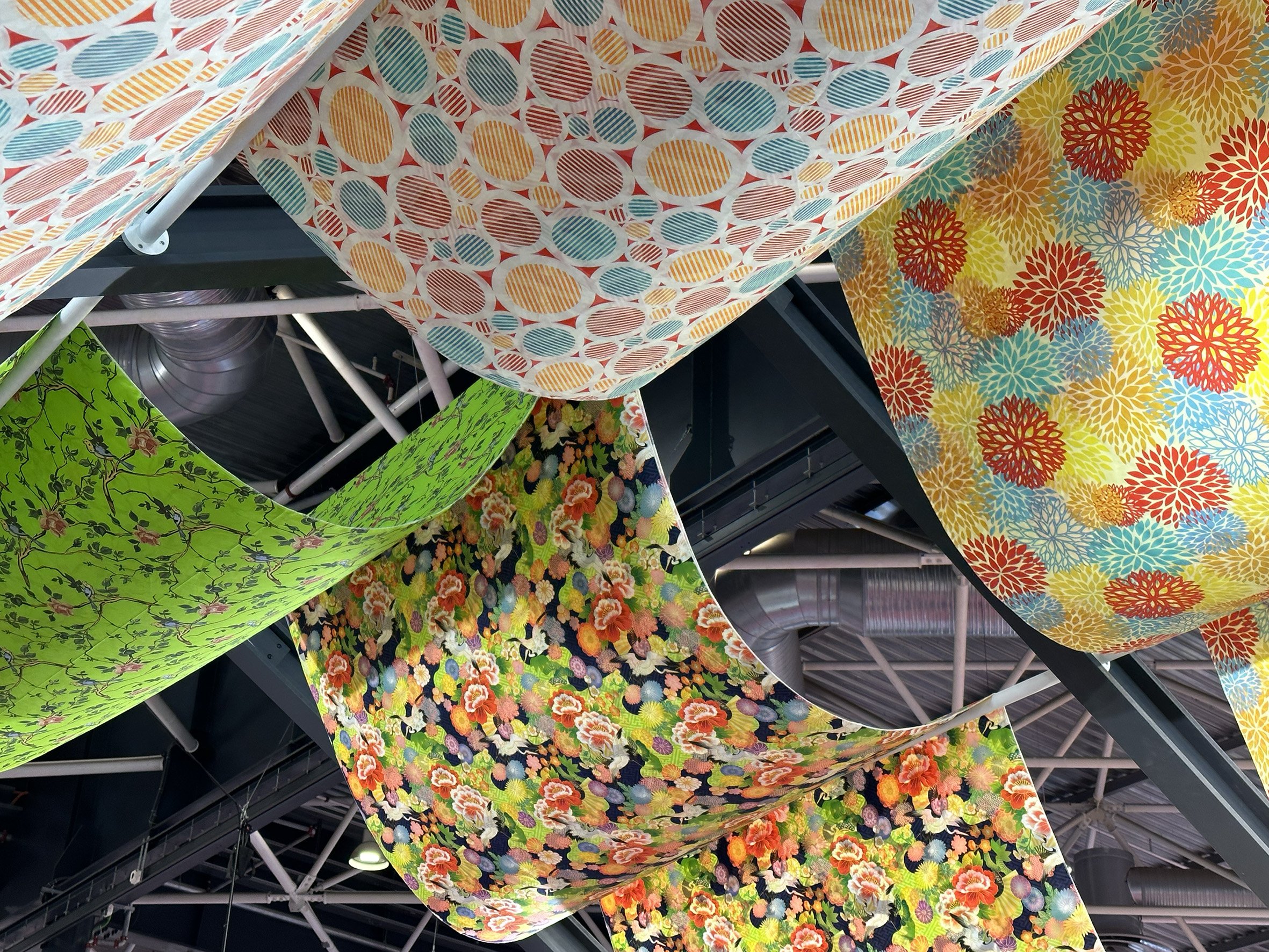
“While reactive inks are only printed on natural fibers, such as cotton and silk - Pigment inks, have the ability to be printed on natural and synthetic fibers, allowing all types of fabrics including polyester blends to be printed without difficulty. Additionally Pigment inkjet printing is the subject of widespread technological development both of systems, inks and components.” Technical Editor - Texintel
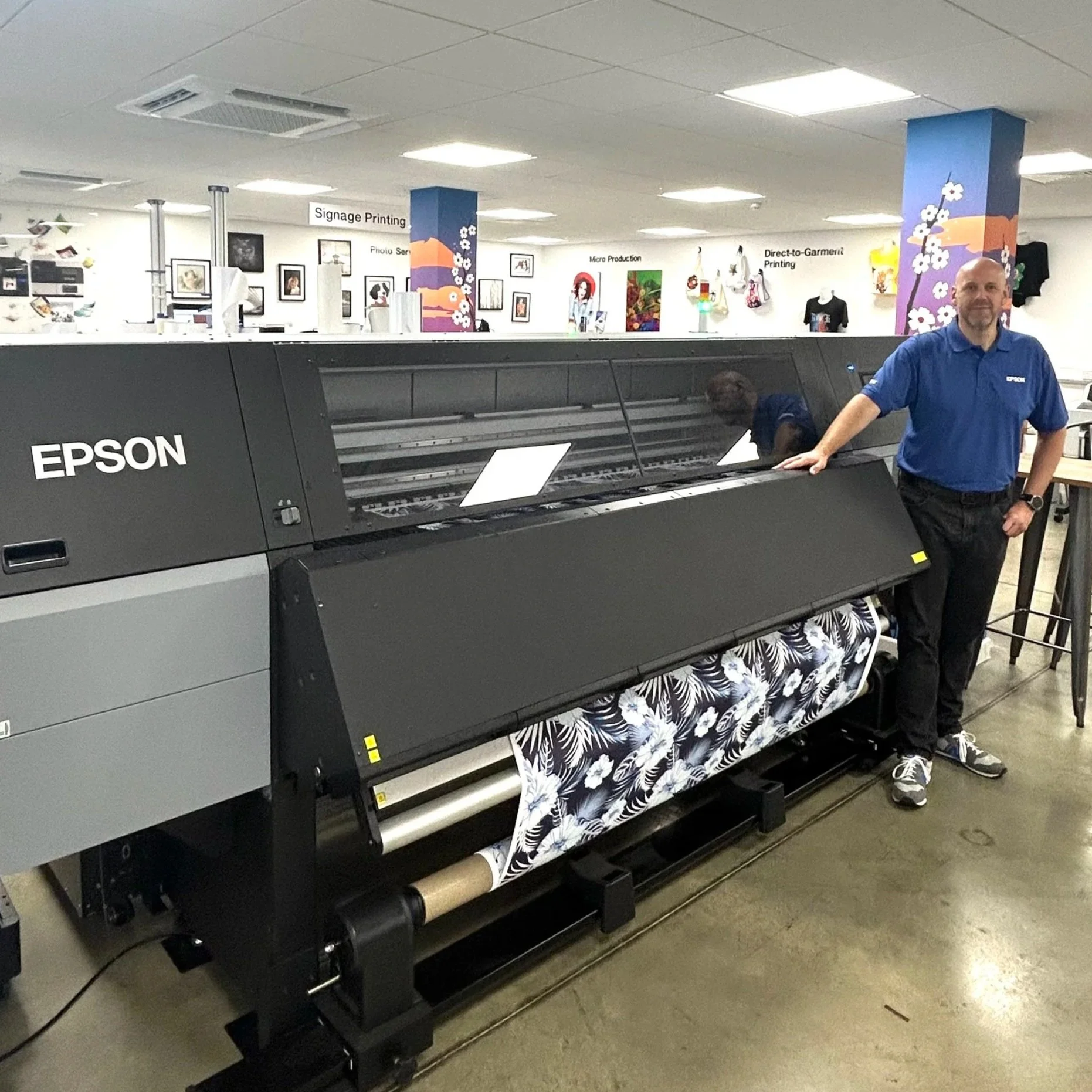
IMAGE CREDIT: EPSON
In a Global Market for Dyes and Pigments, valued at over USD 36 billion in 2022 and predicted to grow to over USD 57 billion by 2030, textiles are forecast to use a massive 64% share of all dyes and pigments produced. (Grand View Research)
What does that really mean? In a market where Reactive Dyes will take over 55% of that total, these are mainly concentrated in the dyeing of fabrics. Historically Pigments are the dominant ink set in the printing of textiles.
Reactive inks for printing are more sensitive to impurities and environmental conditions such as PH and temperature. Their performance is affected by salt and alkaline residues, and they require a sophisticated and controlled environment for accurate colour reproduction to take place. Moreover, reactive inks are not suitable for all types of fabrics, and the colour range can be limited.
As a result, Pigments have historically been paramount in Textile Printing, where the relatively simple process and ink compositions lend themselves to widespread adoption in emerging manufacturing economies.
It is only recently, that the predominance of pigment use in analogue printing of textiles has started to be replicated in digital textile printing.
This is partly driven by the expansion of digital printing which uses pigment as a favoured option giving not only gives ease of process, with excellent fastnesses, but also elegantly meeting the sustainability challenge by using less power and water than the reactive processes.
At the heart of this growth is the inexorable progress of ink composition and printhead performance which have conquered the early advantage that reactive inks enjoyed over pigments.
In simple terms Pigment Ink printing used relatively large particle sizes embedded in fairly complex binder formulations that restricted the speed and serviceability of digital print machinery. Every pigment ink recipe needs an array of cross-linking agents to fasten the pigment to the fabric, and keeping the ink in a stable solution was a recurring problem which affected the viscosity of the ink.
However, with the development of novel pigment ink formulations by companies such as Kornit Digital and Dupont Artistri, the homogeneity, stability and volume velocity issues attached to early pigments have been overcome.
Kornit’s patented NeoPigment™ ink which delivers a one-step pigment printing process, with no need for pre or post treatment has been developed in-house by chemistry experts specifically for use in digital fabric printers and provides an unprecedented colour gamut, the ability to print any design, in any number of colours, on any fabric base.
At Dupont,the new Artistri® P5500 ink set delivers improved wash fastness with both press or oven curing and with faster curing times. This high gamut volume aqueous-based inks package is designed to work in printers with low-viscosity piezo-electric printheads and is suitable for all DTG applications, including DTF printing.
Yet, the largest leap forward has been in the development of printheads, here Xaar, Epson and Ricoh are driving the adoption of inkjet.
Xaar’s Ultra High Viscosity Technology the Aquinox is capable of jetting fluid viscosities of up to 100cP. By enabling a wider colour gamut and fluids with larger particles and more pigment for higher opacity, colours are more vibrant and whites and blacks.
Meanwhile the new Epson I3200(8)-S1HD and S800-S1 printheads are compatible with a wide variety of inks used for industrial applications. In addition to aqueous, UV-cured, and eco-solvent inks, they support oil-based, solvent, and other types of inks for digital printing applications in production printing.
The I3200(8)-S1HD can handle up to eight colours of ink and deliver resolutions up to 1200 dpi, enabling the rendering of high-resolution images in a variety of situations. The S800-S1 is equipped with only one chip. Its compact design helps to improve productivity in printing environments where space is limited.
At Ricoh three newly developed industrial-grade inkjet printheads, RICOH MH5422, RICOH MH5442, and RICOH MH5422 Type A, provide high image quality and productivity by utilizing Ricoh's high-precision technology. They feature a wide range of ink compatibility and improved durability through enhanced nozzle surface abrasion resistance. Ricoh has also improved system compatibility by applying separate cables and high-precision surface alignment features.
With these and other developments Digital Pigment printing of textiles is on an upward trajectory. Printing with pigment inks is more cost effective and cheaper than reactive inks and has had a large impact on the printing industry.
While reactive inks are only printed on natural fibers, such as cotton and silk - Pigment inks, have the ability to be printed on natural and synthetic fibers, allowing all types of fabrics including polyester blends to be printed without difficulty. Additionally Pigment inkjet printing is the subject of widespread technological development both of systems, inks and components.
One-step processing is the holy grail of digital printing and recent developments from Kornit Digital and D.gen show the way forward.
In Summary: The reactive system with its excellent colours and fastnesses is energy and water intensive - digital pigment printing where the standard and speed plus the advantage of its water and energy efficient processing make it ideal for the print on demand economic model.