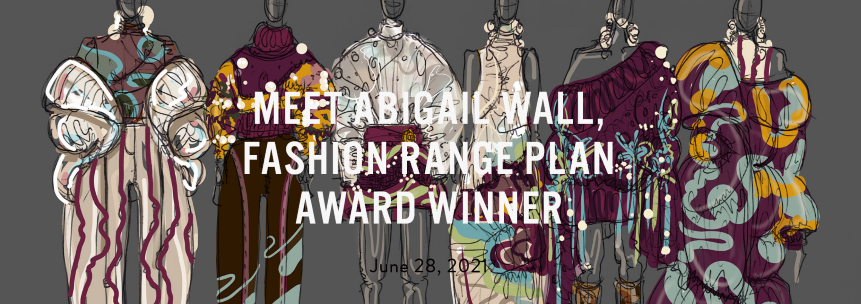
Meet Abigail Wall─The Graduate Fashion Week Fashion Range Plan Award Winner From Arts University Bournemouth
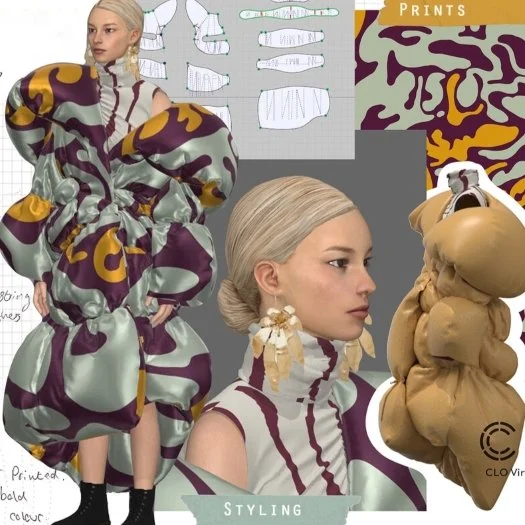
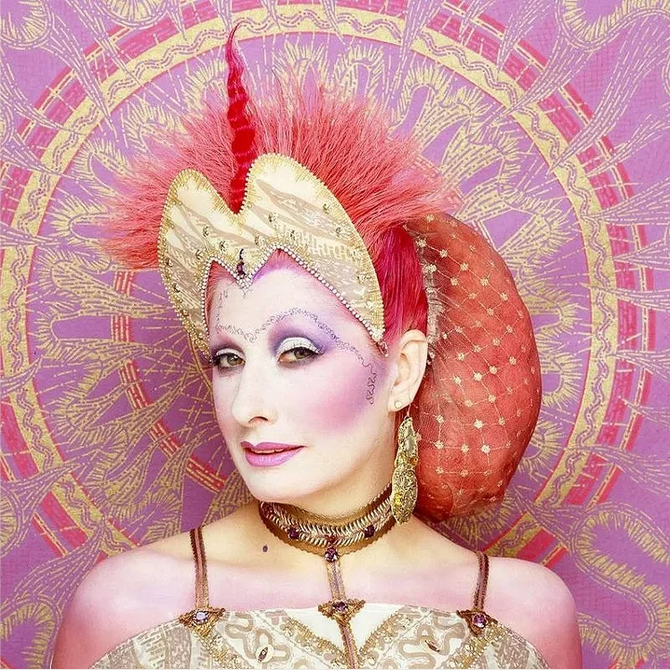
Image Courtesy of Abigail Wall
Abigail’s work impressed industry judges including Fiona Lambert, MD at Jaeger. Abigail’s work is architecturally inspired.
“My love for art lead me to look at sculpture and architecture, and so my starting point was Palais Bulles (The bubble house) in the south of France by architect Antti Lovag, an extraordinary piece of architecture where all walls and windows are harmonious curves,” she says.
Read more about her work below!
What Is The Most Valuable Thing You Have Learnt At University?
There is an endless list of all the amazing things I have learnt at university, but I would say learning the digital pattern cutting software CLO, has been the most valuable to me personally. The software specialises in virtual prototyping directly onto an avatar, making fit adjustments, print placement and many more stages of making much more efficient. It is also one step closer to a sustainable mindset, by reducing toiles and pattern paper by a significant amount. It has allowed me to maximise innovative pattern cutting, curating shapes I would have never thought of from using pen to paper.
There is endless creativity which is what has allowed me to really push my final collection. I learnt the software at the end of my first year, pre covid, and to say it has saved my collection is the best way I could put it. I was devasted to find out we could not make our full collection and had to work from home for most of the week, as I am used to a full week of being in the studio running around getting toiles made.
Being limited into only two studio days a week for my final year meant we could not access valuable resources and I don't own an industrial sewing machine so I couldn't make well-made toiles at home. And then we went into full lockdown for the second time. However, because of this digital software, I could carry on designing, making, pattern cutting, fabric selection, print placement, all from my desk at home, and I felt motivated again and could see my collection coming together. The world is becoming much more digital which is so exciting and to be able to learn this software has made me realise how much I enjoy the technical side of fashion and has prepped me for my future career in this sector.
What Was The Starting Point Of Inspiration For Your Final Project?
Before I studied fashion at university, I studied fine art for five years prior, so it was important for me to have these roots throughout my fashion collections. My love for art lead me to look at sculpture and architecture, and so my starting point was Palais Bulles (The bubble house) in the south of France by architect Antti Lovag, an extraordinary piece of architecture where all walls and windows are harmonious curves. The silhouettes for all my garments are taken directly from the negative space and corridors of the house, as well as ariel views of it, creating bulbous sleeves, oversized silhouettes, synthesised with body contouring pieces. The colour of the collection mirrors the mid-century/ space-age interior design, of deep burgundy and mustard, balanced with fresh tones from the exterior of the house, such as baby blue and dusky pink.
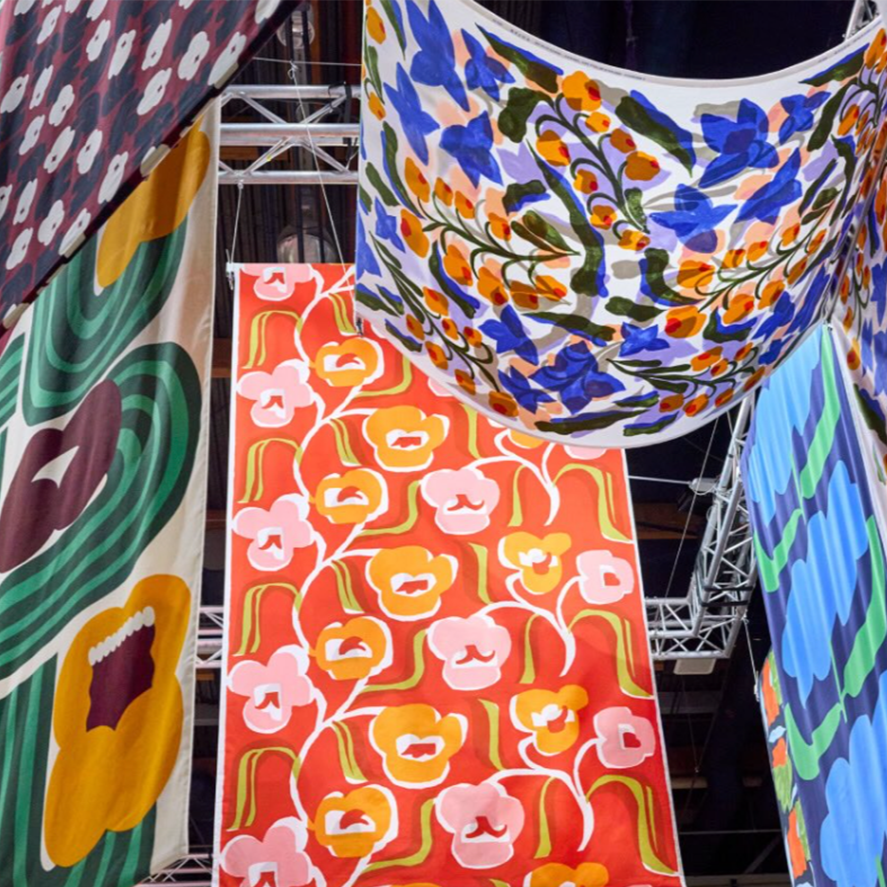
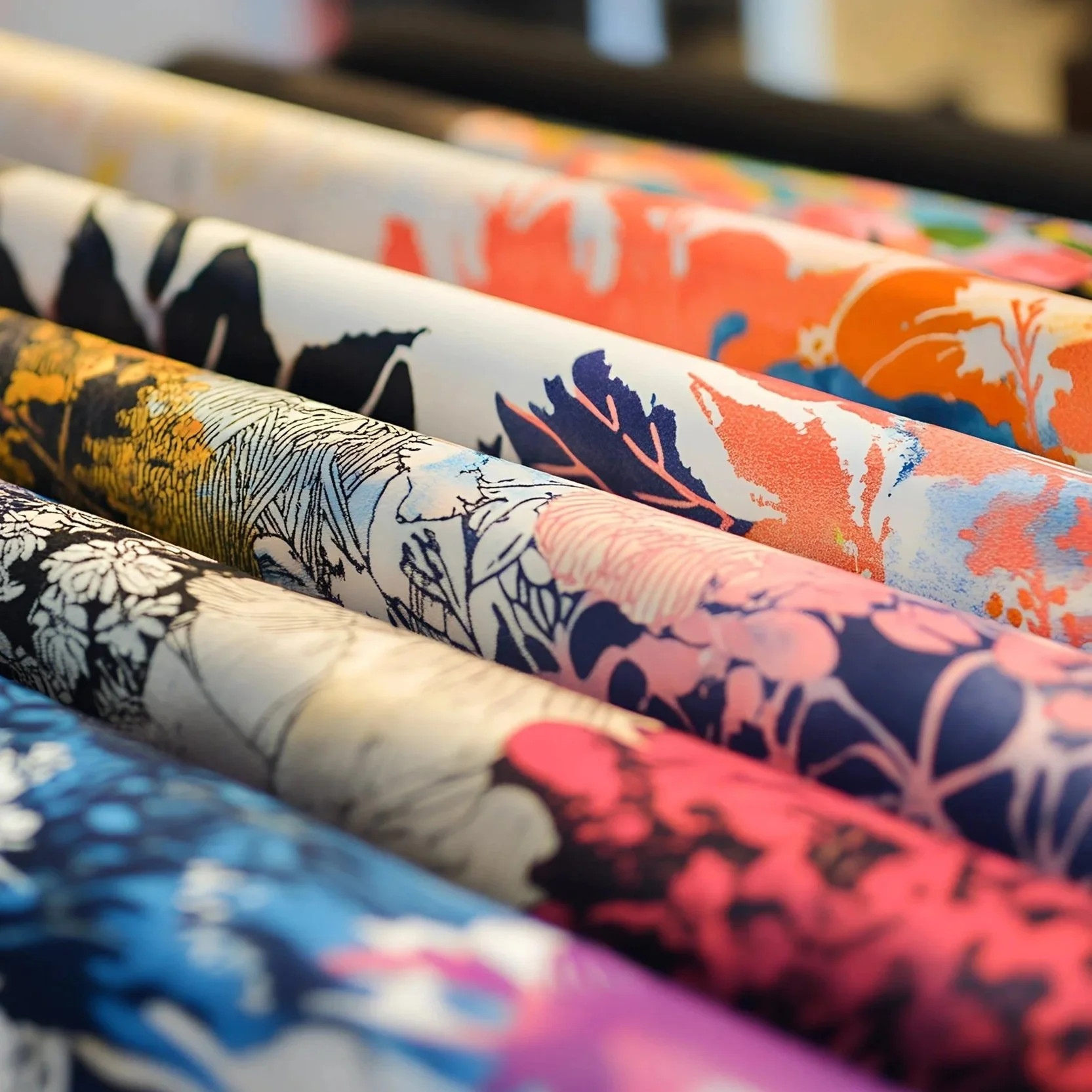
My colour changed a lot throughout the year, but I am happy with the final balance of tone through graphic prints and embellished knit. I wanted my prints to mirror the space-age interior and the 60's plastics, so chose more colour block prints by painting the house in my palette and keeping it two only a few tones. This was out of my comfort zone as my fine art roots are in realism and portraiture, so it took a lot of trials to be happy with the result, which ended up being a digital drawing.
Pearls became an integral part of my collection when designing, as they mirrored the porthole windows of the house. Multiple garments focus on the pearl itself, such as an ovoid blouse and puffer jacket, as well as being the key embellishment throughout, suspended in yarn, crocheted in seams and much more. I also mirrored this through a pearlescent binder screen printed into scrap leather and iridescent fabrics.
What Form Does Your Final Project Take?
The collection 'Palais Bulles' will appear both virtually and in real. With limited access to the studio (due to covid 19) the full six outfits might not be feasible in the time frame so by using digital pattern cutting software CLO, I can have a virtual catwalk of my collection and place my outfits in any setting I desire. The two outfits I make will be my most innovative pieces, such as the bubble coat and embellished chunky knit dress.
My collection focuses on wearable Avant-guard pieces, such as oversized printed puffer coats, embellished chunky knit pieces, paired down with tailored elements such as ovoid trousers. My show-stopper moment is an oversized printed bubble puffer in printed nylon designed by myself, paired with a tailored leather trouser and spiral top. I wanted my collection to have synonymous pieces within it, for example, my bubble puffer also has a smaller version of it called 'the pearl puffer,' - there is something for everyone to wear.
The six outfits will be transposable between one another - meaning pieces can be swapped about to create an entirely new look. It was essential to me that not I only did I design show-stopping moments, but also designed pieces that can stay in the wardrobe for many seasons, as throwaway fashion is a huge contributor to waste.
Collaboration is a huge part of AUB, and I am thankful to live with very talented makeup artists and photographers who I will use to create multiple editorial looks. I am really interested to see how people interpret my collection and style it differently, so I am always reaching out to other students for them to use my clothes within their projects.
What Materials Have You Used And How Did You Source Them?
I wanted to use a lot of juxtaposing textures such as leather and crochet, pearls and knit, to create a tactile collection. I also wanted to nod to the handcrafted side of fashion - its roots if you will, to balance out the heavy digital side of my collection. When shopping for yarns, I looked for a high-quality organic yarn where possible in a 4ply, to emphasise the oversized quality to all my pieces. Luckily, we had knit machines delivered to our home address during lockdown, so I was able to experiment with different yarns and embedded pearls within my samples.
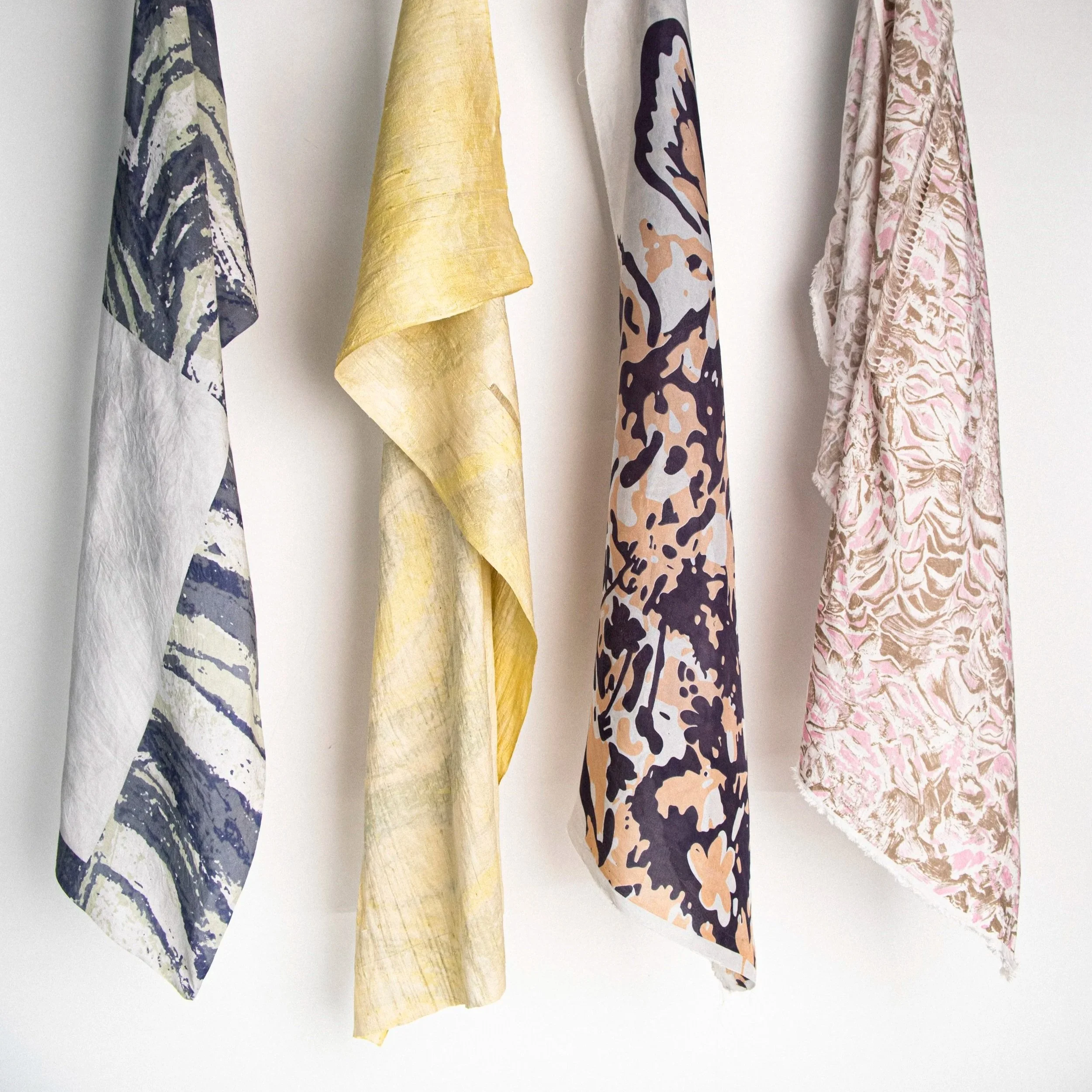
By using leather scraps from the studio, I was able to crochet my own knitting onto it, to create a jumper and leather mini skirt. I really wanted to source second-hand fabrics where I could, and so, originally went around my local charity shops picking up table cloths in my initial colour palette and patterned curtains for inspiration. This second-hand root led me down using repurposed pearls, for all of my embellishment, sourced from antique markets Print is an important element to my collection as well, so by using the sublimation printer at our university, I could sample onto many different organic fabrics such as bamboo jersey for my spiral cut dress and bamboo silk for blouses.
I have also sampled onto lining for my printed bubble puffer but would like to find a more sustainable alternative such as ECONYL nylon, made from regenerated fibres. By using CLO, I was able to play with the scale of print and experiment with different fabrics and weights and a lot of happy accidents came out of these! I had digitally drawn a part of the house and made it two-toned, and did not originally warm to it, but put it onto my puffer as a large-scale print and all of a sudden it came together - and through development, I created a final print inspired by all my drawings.
How Has It Evolved From Your Initial Ideas And What Have You Learnt Along The Way?
I have been developing this collection since summer 2020, and originally I created a very muted colour palette and struggled to piece together prints and a target market. My natural style has always been more feminine so originally, I wanted to use natural dyes such as flowers for my collection and ended up doing nearly the opposite - looking at synthetic 60's colour. This process of things evolving and changing into something new is one of the very first things our tutors prepped us on before entering third year and I can see why now - do not become too attached to a specific idea as it is likely to change the following week!
And that is the beauty of design, it is constantly adapting which I think is exciting, to not know the final outcome until the last second. I have lost count on the number of line-ups I have drawn for my collection now; I think it is at least six completely different variations, but I love seeing the development and how far I have come from the first sketch. It is so important to design with no final outcome in mind, that is the most natural way for me to curate the most innovative pieces. The beauty of CLO is that you can sew any random shape together and with the click of a button, enlarge it by 200% and have something completely different. This is how all my designs started and evolved, but it was also important to make them in fabric to realise them. My spiral dress for example originally was a pair of trousers that gathered around the leg but didn't work in person, so I cut the side seams and placed them onto a mannequin, to drape as a dress.
What Are The Messages And Themes Behind Your Project That You Want People To Take Away? Do Explore Any Topics Like Diversity, Sustainability Or Politics In Your Work?
My project is more playful than anything and chose not to focus on anything particularly political, to almost take a break from what is going on in the world and have the focus on art, design and architecture - putting it in the spotlight it deserves. That said, a sustainable mindset is something I always design with, and have learnt more about throughout my time at university.
Seasonless fashion is becoming more and more popular, and this was a topic I explored further within my dissertation, by speaking to creative digital pattern cutter for Vivienne Westwood, Julia Eberhardt. We discussed how the future of fashion will abolish trends, becoming much more individual, and will no longer follow the traditional two fashion shows a year. I designed my collection with this mindset, having pieces that do not follow any particular trends, they follow my individual style, and if I were in the industry, this would be the only collection I make for the year.