NEXT STOP CHELSEA - LONDON DESIGN WEEK FOR EPSON TEXTILE CHALLENGE AWARD WINNER AND GREEN GRAD


London Design Week
March 11-15
10am-6pm
Admission free
Ist floor, Design Centre East
Design Centre Chelsea Harbour, Lots Road, London SW10 0XE
(Adjacent to lecture theatre).
Our UK graduates
nurture nature
reduce, reuse, recycle
design to last
invent materials
cut waste
restore and repair
close loops
capture carbon
save energy
fight pollution
conserve resources
rescue species
www.greengrads.co.uk
@greengradsuk
Frieda Bischoff and Vassi Deij
Self-declared “waste-warriors,” Frieda and Vassi have set up Renee Materials to sell on-line production leftovers – aka “waste” - to creatives and makers who need supplies. On offer are paper, wood, textiles, metal, stone, glass, paint and more. Frieda reports that to date Renee Materials have saved almost 10 tonnes of materials from ending up in the skip. In addition to their digital service, Renee Materials now have a Circular Materials Hub in Hackney Wick at 1 Trowbridge Road, E9 5LD.
MA Design for Social Innovation and Sustainable Futures, London College of Communication, UAL
@renee_materials
www.reneematerials.co.uk
Henry Davison
Frond, a leather-like material made from kelp (seaweed), is used for the seat and back of this chair. Large and brown, Kelp is a plentiful species of algae that live in cool, relatively-shallow waters along UK shores. It absorbs more CO2 than trees per acre. Leather production can be environmentally damaging. Henry has stopped kelp rotting and turned it into a super-sustainable durable leather-substitute. “Cut kelp off a rock and it simply grows again.” Henry’s award-winning multi-disciplinary Kylœ studio in the North of England is delivering hans-on sustainable and circular design.
BA Product and Furniture Design, Northumbria University
@kyloe.design
www.kyloedesign.co.uk
Jacob Marks
Jacob, a young designer-maker with a studio in Peckham, laments the poor state of British woodlands – “only 7% are in ‘good ecological condition’ and we are importing timber because we grow so little.” Accordingly, Jacob’s The Isles Collection inspires and initiates change, combining a variety of British timbers in a beautiful patchwork of modern marquetry for tables, benches, cabinets and shelves, available to commission. From white oak and ash to lesser known alder and wild service, this furniture celebrates the vast – but threatened - variety of our native timbers. Pieces come with full provenance, to show not only the link between product and place but also how local sourcing reduces carbon miles.
BA Product & Furniture Design, Kingston University
Jean White
Future Fossils are the ceramics Jean makes to raise awareness of threatened Red List British bird species. “As a keen birdwatcher, I have seen the decline in bird numbers first-hand, since I was a child in the 1960s.” Trained as an illustrator, Jean uses her observational and drawing skills to carve her images into clay, then making plaster moulds and finally slip casting each piece in either porcelain or Parian clay.
MA Design: Craft, Manchester Metropolitan University
@jeanwhiteceramics
Sara Howard
Ceramics can be durable and last generations, but are typically made from finite natural resources, the extraction of which may damage the environment and communities. Circular Ceramics was Sara’s graduate project proposing the use of waste for making ceramics, as explained in a self-published book. Sara, who won our first GREEN GRADS Earth Award in 2021, has now upscaled her concept, during a residency with global brand Kevala Ceramics in Bali. The result is elegant handmade tableware made from Bali’s waste, such as glass from rivers; marble and granite factory slurries; and clay/glaze residues from water treatment systems. Circular Ceramics tableware is now selling in Indonesia and can be ordered wholesale in the UK.
BA Ceramics Design, Central Saint Martins, UAL
@sara__howard
www.kevalaceramics.com
LONDON DESIGN WEEK - March 2024
GREEN GRADS: THE STORY CONTINUES:
GREEN GRADS is a platform for recent UK graduates with ideas to heal the planet – innovators, makers, activists.
A carbon-eating paint, a marvellously-marbled material from waste denim, and a seaweed leather lookalike – these are just some of the bold ideas arriving for London Design Week at Design Centre, Chelsea Harbour. Their inventors are part of a cohort of 15 Green Grads who will be in residence on the first floor of Design Centre East to tell the stories of their innovatory eco-projects.
Green Grads is platform for recent UK graduates – “innovators, makers and activists with ideas to heal the planet,” says founder/curator Barbara Chandler, known for her long-running pages in the London Evening Standard.
“Our enterprise, now in its third year, is an inarguable double whammy. We support new talent and the environment at one and the same time. We do big shows and small events. “We nurture and promote. And we have 150 Green Grads have listed on our website so far.”
Green Grads has sponsorship from a clutch of innovatory British brands. “And we are especially grateful to Claire German and Design Centre, Chelsea Harbour who are our generous headline sponsor, additionally welcoming us for the second time running into their prestigious space,”says Barbara Chandler, founder/curator of Green Grads.
@greengradsuk
Showing at Chelsea are:
Becky Brentnall
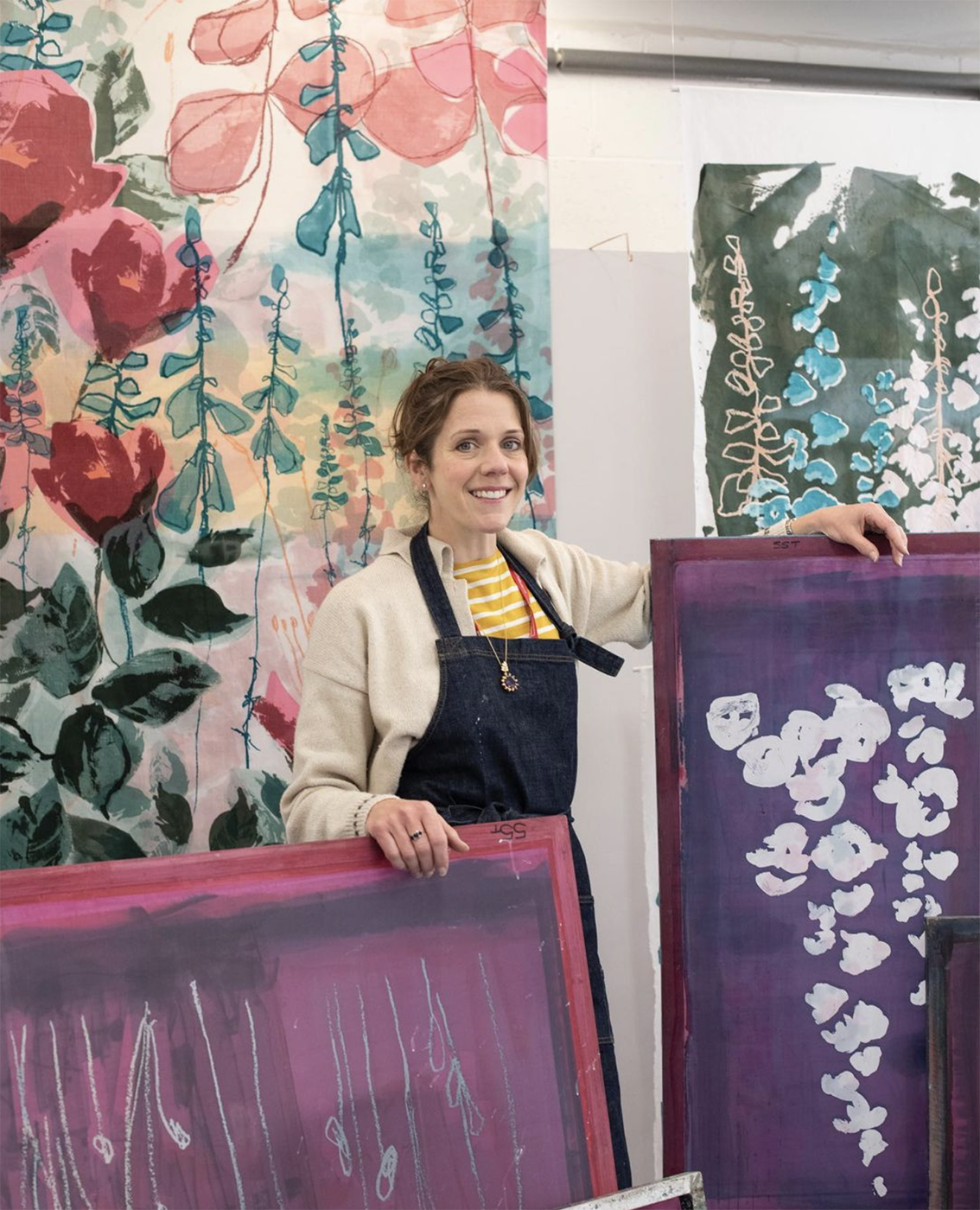
Becky’s childhood garden imbued in her a lifelong passion for nature – particularly seasonal UK flowers.
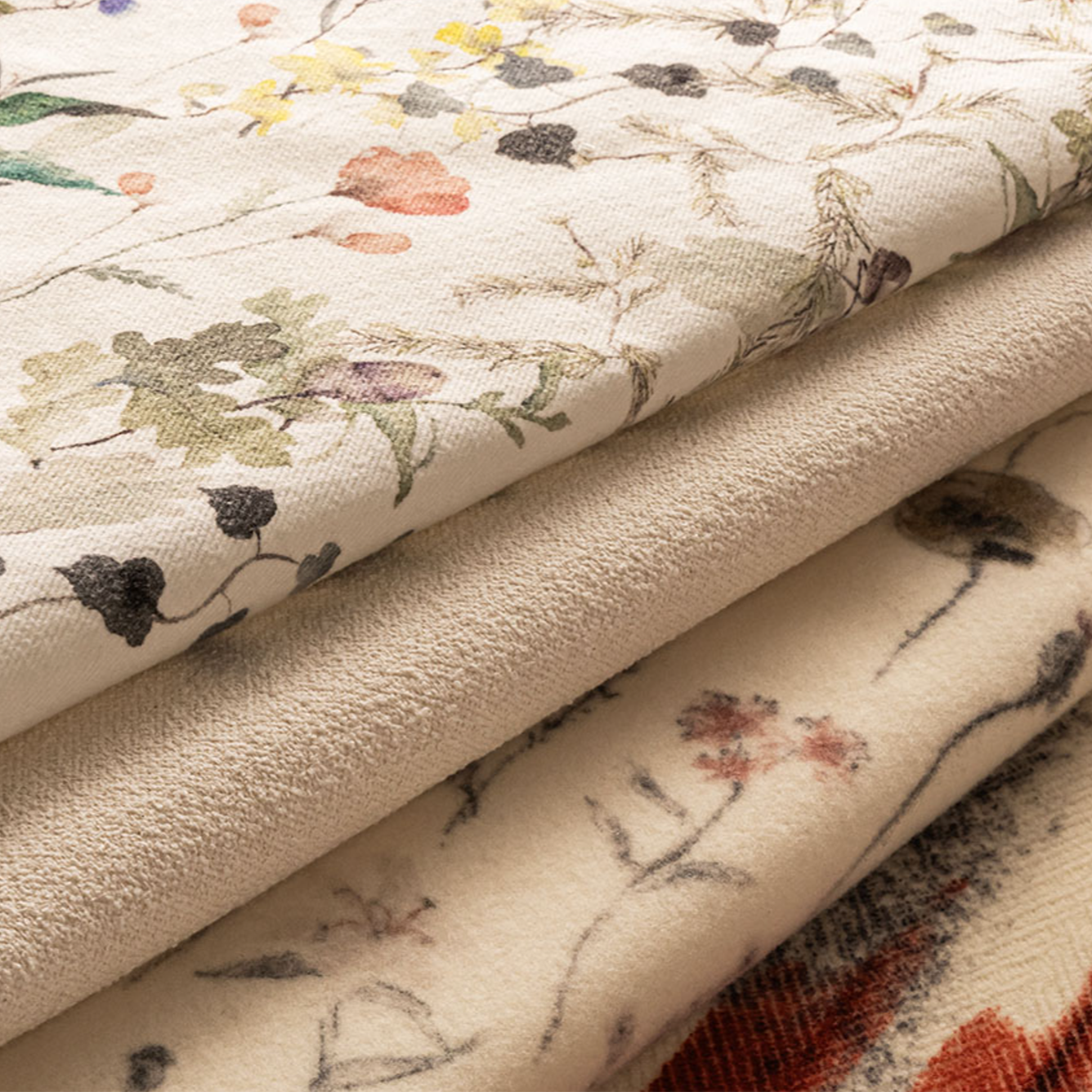
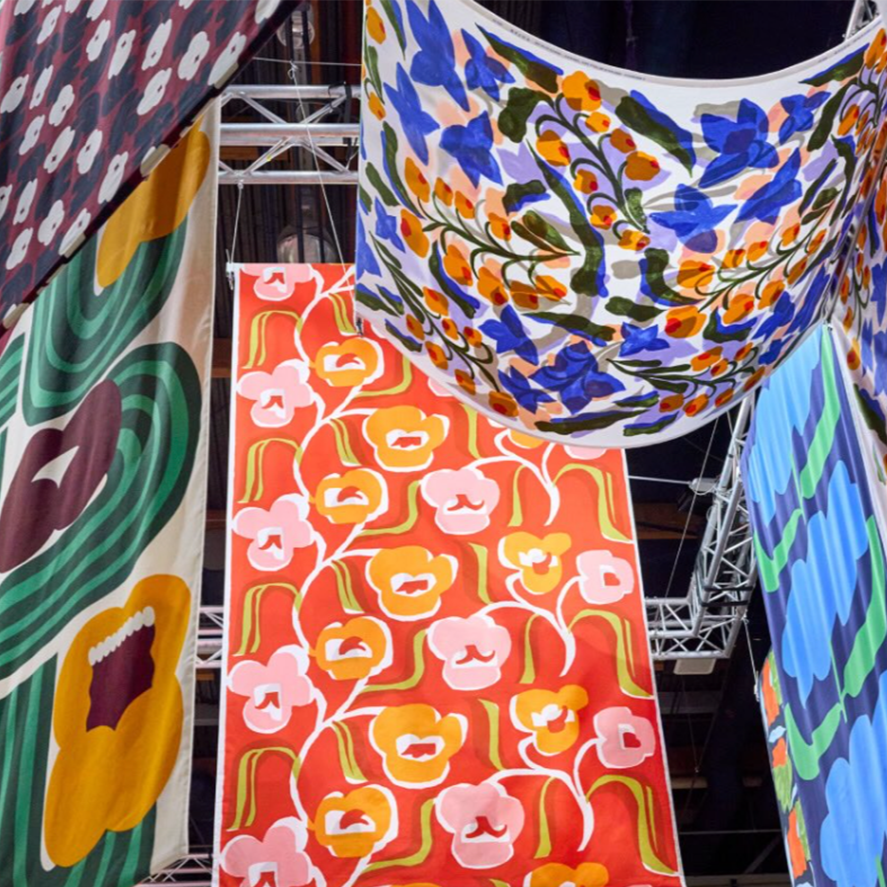
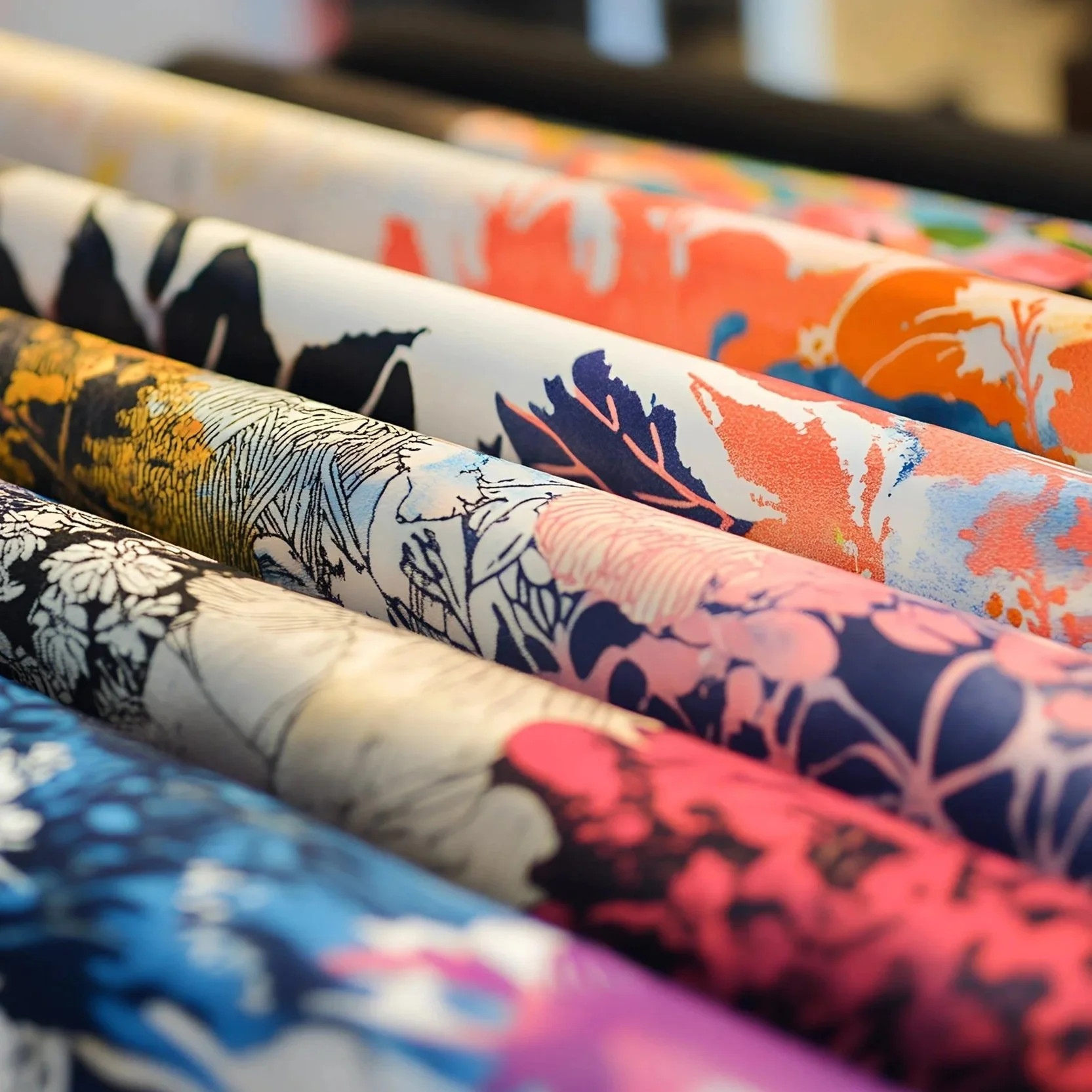
Now, endless drawings and paintings have become dramatic large-scale textiles, up to four metres in length, hand-painted and screen-printed onto natural fabrics using Manutex, a seaweed-based thickener. Before going back to university, Becky trained/worked as a landscape architect and florist “My pieces celebrate and promote the beauty of nature; bringing it inside on a large-scale to enrich home and business interiors."
Becky is the winner of the GREEN GRADS Epson Textile Challenge 2023.
BA Surface Pattern and Textile Design, Staffordshire University
@becky_designs.uk
Christoph Kurzmann
Christoph’s practice “upscales upcycling”. He works with architects, interior designers, brands and organisations to turn batches of out-dated commercial furniture (about to be discarded) into attractive contemporary designs that can be delivered in quantity. As a diversion, on show here are the amusing Floora Sitting, Walking and Yoga plant pot stands Christoph has made from waste off-cuts from wood specialists Solid Floor @solidfloor.
BA Rycotewood Furniture Centre, Oxford Brookes University
@christophstudio
www.christophstudio.com
Dhruv Shah
Decentralised Mycelium Housing features mycelium blocks (see sample) and enables low-skilled people in poorer countries to build themselves a house. Instructions are published open source on the internet for making auxetic lattice jute moulds for 50cm x 50cm blocks out of wheat/rice straw and oyster/reishi mushroom spawn (mycelium). Laid on top of each other, the blocks are stabilised with scaffolding until the mycelium fully grows and binds the house together.
MA Industrial Design, Central Saint Martins, UAL
www.myceliumhousing.com
Emma Money
Cyanoskin is a new kind of “green wall” - an innovative “living” exterior paint for mid- and high-rise buildings, available in a range of natural shades. Once applied, the photosynthetic paint grows and thickens, creating a living layer that acts as a carbon sink. This start-up is already winning commercial recognition with awards and major funding. Its team is interdisciplinary designer and material scientist Emma and entrepreneur Antoinette Nothomb, working with biochemist Brishti Miller and Cambridge engineer Hayley Huang. They are also exploring ways additionally to foster the growth of moss, for a greater “sensory experience.”
MA Information Experience Design, Royal College of Art
@cyanoskin
Esme MacGregor
Esme’s beautiful plaque shows different shades of The Grogged Collection. Industrial “grog” used in ceramic production is conventionally made from finite and energy-intensive resources, such as sand. But Esme is replacing this with waste ceramics. She can achieve a huge variety of colour and textures, depending on the size, density and colour of the aggregate. And every piece is unique.
BA Product and Furniture Design, Kingston University
@esme.macgregor
Ela Niznik
Ela’s work combines her two great passions, clay and nature. She is inspired by the seasonal changes in her own very special “cuttings” garden. Here she records cycles of growth and evolving organic structures, from buds, shoots, blooms and leaves to seed pods. Forms, which may start off very small, are scanned, then enlarged, manipulated and digitally 3D-printed, before the making of plaster moulds. Slip-cast pieces are then assembled into unique hybrid sculptures, with concealed “wells” to display the cut plants that she herself has grown.
MA Ceramics, Staffordshire University
@elaniznik
Josh Myers
Textile waste is a sustainability disaster. Of discarded textiles, 73% is either burned or sent to landfill. Only 12% of what is collected is mechanically recycled and only 1% is used for new products. Josh’s new material Denimolite is made from all types of waste denim, including blended “fast fashion” denim, notoriously difficult to recycle. Shredded waste is compression-moulded with a sustainable bio-resin. As robust as ABS or cast iron, and with an attractive marble-like finish, Denimolite has many applications for architecture and interior design - for countertops, furniture, handles, kitchenware, cutlery and jewellery.
BSc Engineering Product Design, London South Bank University
@denimolite
Rosy Napper
Rosy has invented ReCinder, a new material which is 100% recycled from discarded broken ceramics and waste ash diverted from landfill. This is a greener, waste-based alternative to industrially-processed clay. Robust and translucent, ReCinder comes in tiles of various sizes for walls, or soldered together into lighting and furniture, handmade by Rosy in her Woolwich studio and available to commission. ReCinder only requires one firing and is self-glazing, eliminating conventional mined ingredients. Rosy is also making ReCinder tableware for The Home of Sustainable Things in Islington, N1 (www.thehost.store).
BA Ceramic Design, Central Saint Martins, UAL
@rosynapper_studio
Simon Roberts
Simon is a practising Product Design teacher who completed his MA in his spare time. He devised StickBrick as a classroom exercise for design and technology students to raise awareness of waste and sustainability. He collected around 20,000 chopsticks from a local restaurant, which were cleaned, sterilised and engineered into stable uniform blocks – strong enough for even a small table, which took 10,000 chopsticks. Says Simon: “Such projects can link schools with communities, and foster craft-based learning.” And - beyond the classroom - there are wider and important implications for the creative use of waste. Simon also offers a repair/restoration service for cricket bats.
MA Product & Furniture Design, Kingston School of Art
@sr_makes
William Harris
William Harris is an accomplished glass artist, having graduated from the California College of the Arts with a five year BFA in Glassmaking. He combs London for empty bottles, finding them on the street, in rubbish bins, or at his local pubs and restaurants. Painstakingly, he builds fabulous chandeliers from this waste, cutting, shaping and painting elements laboriously one at a time. Singing the Blues is a blossoming work in progress, to be assembled from multiple hydrangeas, foxgloves, wisteria and morning glory into an ethereal chandelier. William, scouted by Trendease International at the GREEN GRADS’ show last September, is making two glorious chandeliers for Creatives Wings’ array of new talent at Kingsgate Castle in Kent.
MA Design Products, Royal College of Art
@invisibleinque2485
www.creatives-wings.com