

In this podcast we meet Adam Root, founder of Matter Industries and his innovation Regen™ , a capture technology to remove microfibres from the textile manufacturing process for the benefit of human and environmental health.
We also meet Lewis Shuler of Paradise Textiles who are collaborating on research and the application of Matter’s technology for textile manufacturing.
The retrofittable technology reduces microfibre emissions and operating costs for textile factories, offering a scalable solution for the industry. Backed by Regeneration.VC - the Leonardo DiCaprio supported climate tech fund – with the announcement made at its Annual Meeting during New York Climate Week.
The first installation is planned at Paradise Textiles’ sustainable textile facility in Egypt by Q4 2025.” Listen to learn more >>

KEY TAKEAWAYS:
Microfibers contribute significantly to ocean plastic pollution.
The textile industry faces systemic issues with synthetic fibers.
Innovative filtration technology can capture microplastics effectively.
Collaboration between companies can lead to impactful solutions.
Understanding the journey of a startup is crucial for aspiring entrepreneurs.
Health risks associated with microfibers include ingestion and accumulation in the body.
Sustainable practices in manufacturing are essential for reducing environmental impact.
The concept of cradle to cradle is vital for material innovation.
Investment from notable figures can validate and support innovative ideas.
The future of textile manufacturing must prioritise environmental responsibility. Minimum effort, maximum results is key to innovation.
Collaboration is essential for addressing microfiber pollution.
Data-driven approaches lead to effective solutions.
Sustainable practices must be economically viable.
New technologies are needed to tackle textile industry challenges.
Building future-proof facilities is crucial for sustainability.
Transparency and sharing insights can drive industry change.
Sustainability should be integrated into all textiles.
The textile industry has a significant environmental impact.
Future innovations will focus on cleaning up dirty industries.
Chapters
00:00 Introduction to Matter Industries and Microfiber Technology
03:01 The Journey of Adam Root and Matter Industries
06:03 Understanding the Impact of Synthetic Fibers
08:57 The Health and Environmental Risks of Microfibers
11:58 Collaboration with Paradise Textiles
15:02 Innovative Solutions: Regen Technology Explained
18:10 Next Steps in Textile Manufacturing and Microfiber Capture
19:48 Innovative Approaches to Microfiber Pollution
24:03 Data-Driven Solutions in Textile Manufacturing
27:08 Building Sustainable Facilities for the Future
30:32 The Economic Viability of Sustainable Practices
33:09 Collaborative Efforts for Industry-Wide Change
35:20 Future Prospects and Innovations in Water Treatment


In this episode, host Debbie McKeegan is joined by textile designers, educators and researchers Rebecca Hoyes and Jo Pierce co-authors of Reimagining Printed Textiles. Together, they explore how colour, pattern and materials can be rethought as the textile industry faces growing environmental challenges.
The conversation looks at emerging natural and bio-based colour sources, including microbial fermentation and dyes made from waste streams. Rebecca and Joe also discuss how patterns can tell stories about a material’s origins, how digital tools can complement craft, and how designers can reduce waste through practical choices such as reworking printed fabrics and using less ink.
Looking ahead, they consider what it will take to build a more nature-positive future for textiles - from scaling promising innovations to sharing knowledge across design, science and industry.
Their message to professionals, designers and students is to stay curious, question established practices and see the whole life-cycle of the materials they create with.
Listen to learn more >>

In this episode, Debbie McKeegan is joined by Frank Maeder of NedGraphics and Optitex to explore how digital tools are reshaping textile and apparel workflows. They discuss the industry’s push to move faster, reduce waste, and connect teams across design and production—wherever they are in the world.
Frank shares highlights from NedGraphics’ latest release, including OptiNet Cloud, a platform for managing and sharing digital assets and collaborating across teams. The conversation also covers enhancements to rotary printing, tufting simulation, and pattern resizing, as well as an integration that brings more detailed digital yarns into the design workflow.
The episode looks ahead at a more connected creative ecosystem, where cloud collaboration and shared development across NedGraphics and Optitex can help reduce friction between ideas and production. Debbie and Frank also discuss how AI is supporting product development internally—and how continuous improvements can give designers more time to focus on their work.
Listen to learn more >>
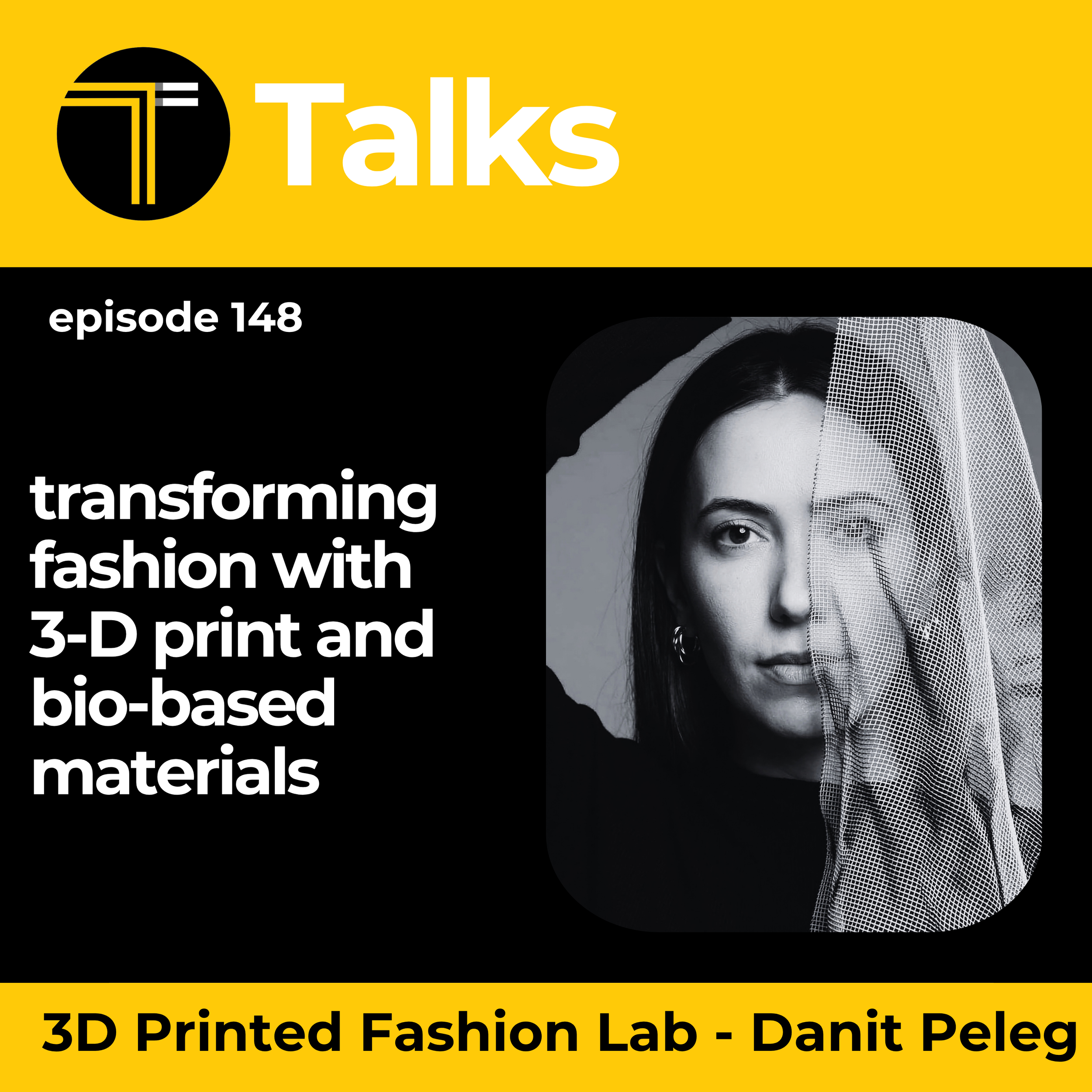
Join host Debbie McKeegan for an inspiring conversation with Danit Peleg, founder of 3D Fashion Lab and a trailblazer in 3D-printed fashion.
Danit reflects on her journey from experimenting with desktop printers to creating soft, wearable textiles—and explores how AI is helping designers turn ideas into garments more quickly. Discover how bio-based materials, custom-fit designs, and on-demand local production could reshape the way fashion is made and consumed, while reducing waste and opening up new creative possibilities for designers and customers alike.
Listen to learn more >>

In this podcast episode, James Watson, Managing Director of Surface Print, discussed the evolution of his fourth-generation family business in Lancashire.
Surface Print combines traditional craftsmanship with digital innovation- investing £2 million in a hybrid rotary screen Gravure machine and £600,000 in new HP digital printers.
The company achieved ISO 14001 accreditation, introduced solar panels, and plans to install a new boiler and water recirculation system. Watson emphasised the importance of balancing traditional techniques with modern technologies to maintain quality and sustainability. The company also leverages AI for efficiency and marketing, while maintaining a family-oriented work culture.
Listen to learn more >>
From Dongles to Digital: Future‑Proof Licensing for Global Creative Teams
Host Debbie McKeegan talks with NedGraphics President Frank Maeder and 10Duke CEO Neil Fenton about the shift from hardware dongles to secure, user‑centric cloud licensing.
They discuss how this transition reduces friction for designers, supports hybrid and global workflows, strengthens security and resilience, and even contributes to sustainability by eliminating physical keys and their shipping footprint.
If you’re in fashion, design, CAD/CAM, or any creative production environment and want to future‑proof your software delivery, this discussion is packed with insight and real‑world examples.
Listen to learn more >>
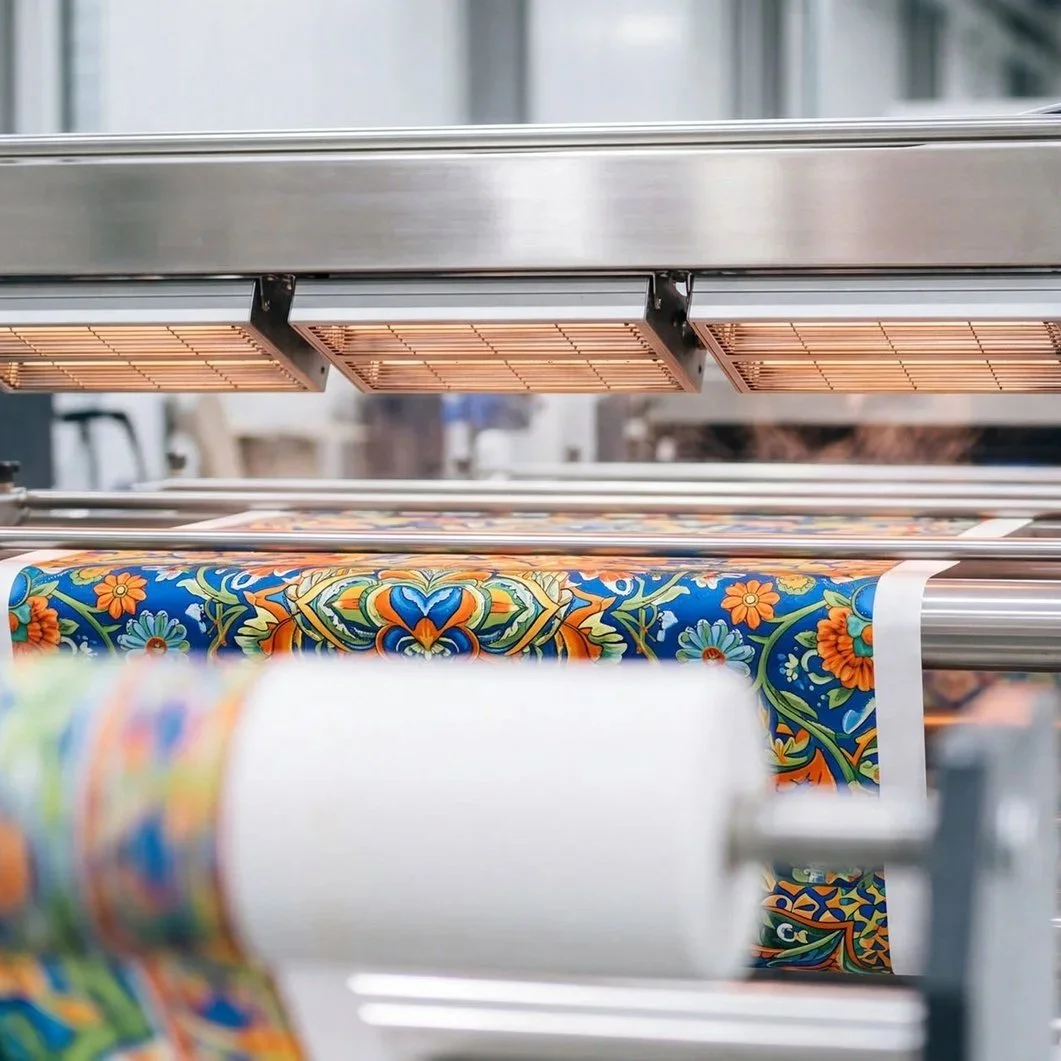
The Path Foward: Connect Every Link:
Design, colour, workflow, production, data. Each link now depends on the one before it, and the printers who will lead the market are those who strengthen the whole chain, not just the machinery at its centre.
So, this autumn, ask the bigger question on your own shop floor.
Not "Which printer?" but "How well does my business connect demand, design and production?"
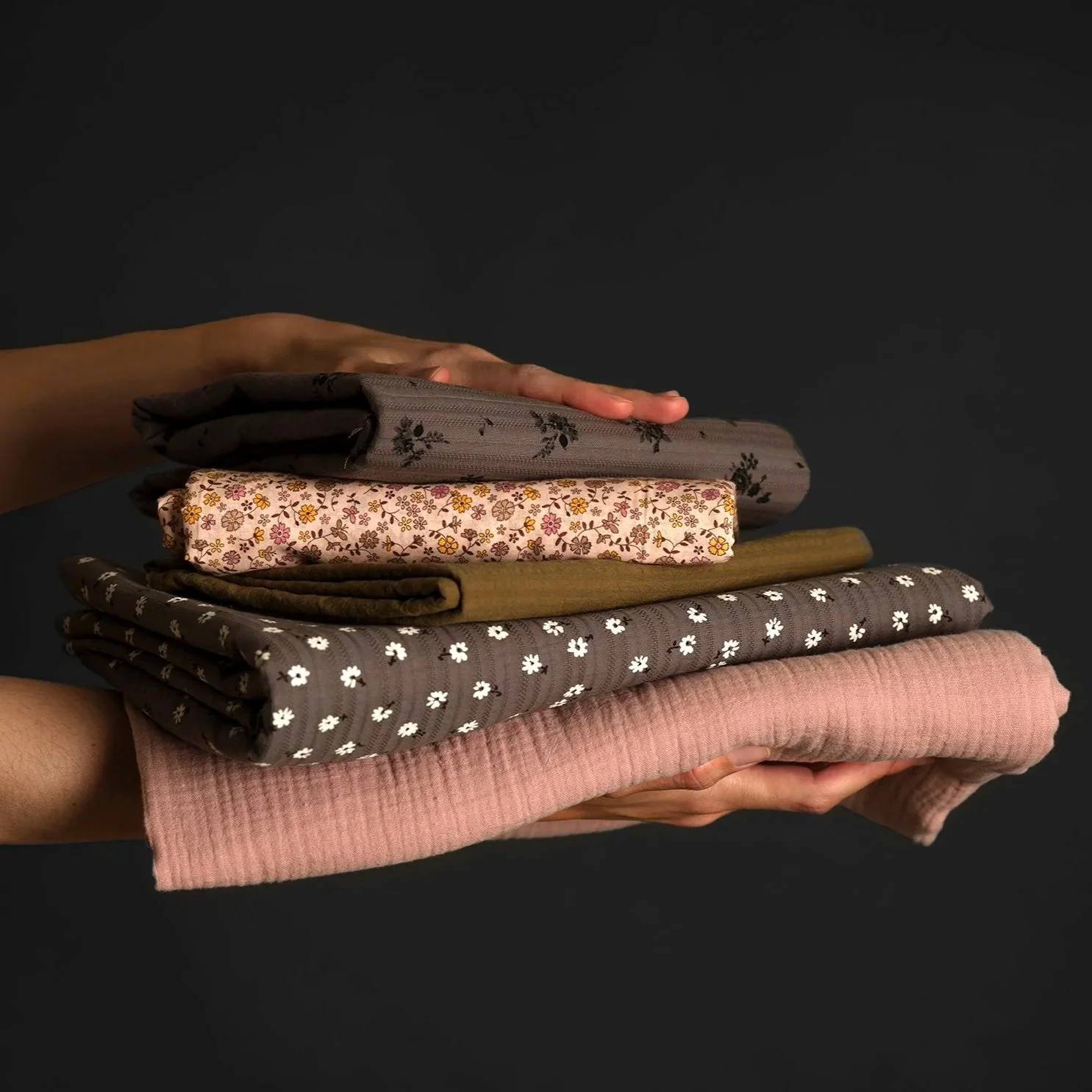
Rebés's story isn't one of nostalgia - It's a working blueprint for how heritage manufacturers can stay indispensable in a market that rewards speed, certification, and specificity in equal measure. Four million metres of stock mean nothing without the digital printing capability to turn it into something distinctive.
A 150-year name means nothing without the R&D discipline to win a tender for antistatic, carbon-fibre-infused uniform fabric on the first attempt.
Image Credit: Tejidos Rebé

What if the next dress you wore never touched the factory floor?
This is no longer a fringe experiment. It is a maturing production model, backed by genuine material science, real circularity, and an AI-assisted workflow that is becoming more accessible by the month.
Her advice to designers and brands alike is refreshingly practical: start small, get hands-on with an accessible 3D printer, and build fluency before the technology becomes table stakes. The businesses that treat this moment with curiosity, rather than scepticism, will be the ones shaping fashion's next decade rather than reacting to it.

The 2027 FESPA Awards are now open for entry, and the message to businesses across textiles, apparel, interiors and beyond is simple: your work deserves recognition. Every gold winner featured here started in the same place every entrant does - with a project they believed was worth submitting.
As the only independent awards programme with 18 categories dedicated to print and signage, FESPA offers a genuinely global stage, with shortlisted entries displayed at FESPA Global Print Expo in Spring 2027.

Colour Is Too Important to Leave to Chance
Print will always be the part of the garment people see first.
But the sum of all parts — the fabric, the trims, the fasteners, the finish — is what determines whether a design actually delivers on its promise. Brands that continue to treat colour as a single creative decision, rather than a coordinated technical discipline spanning their entire supply chain, will keep paying for it in re-dips, delays, and disappointed design teams.

Speciality print leaders from five Southern European countries will meet in Porto next month for the eleventh FESPA Southern European Congress, taking place on 11–12 November at HF Ipanema Porto, Portugal.
The two-day event, which is organised by five FESPA member associations – FESPA France, FESPA Italia, FESPA España, APIGRAF (Portugal) and the FESPA Hellas Association (Greece) – gives members of the community in Southern Europe the opportunity to benchmark their own strategies against peers facing similar conditions, as well as compare notes with neighbouring markets on customer expectations, workforce shortages, investment and new technology.
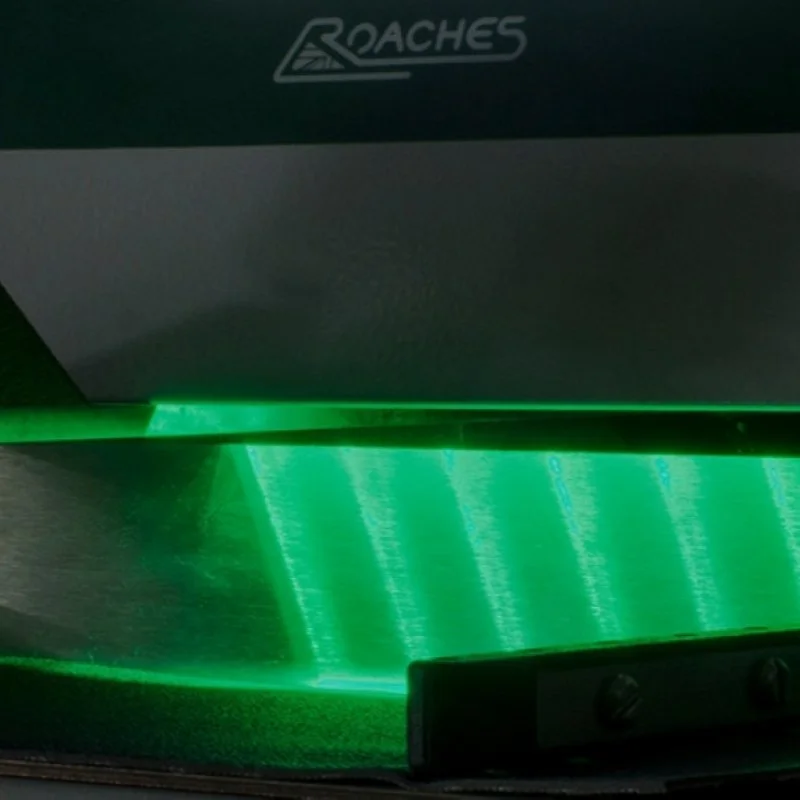
Batley, West Yorkshire – October 2026 – Roaches International, a member of the British Textile Machinery Association (BTMA), has dispatched its largest integrated order for textile laboratory equipment to date.
A total of 19 testing machines weighing more than two tonnes have been delivered for a new laboratory being established by Indonesia's Alia Digital Printex, underscoring the British manufacturer's capability to supply complete testing facilities rather than individual instruments alone.

Mortsel, Belgium – October 29th 2026 – Agfa Inkjet Solutions has announced Experience Day 2026, a hands-on event dedicated to demonstrating how advanced inkjet printing and precision finishing can work together within a single, integrated workflow.
The event will take place on Thursday, 26 November 2026, from 09:00 to 15:00 at Agfa Headquarters in Mortsel, Belgium.
Developed in partnership with Kongsberg Precision Cutting Systems, Experience Day 2026 will give print service providers a first-hand look at how combining print and finishing technologies can boost productivity, broaden application possibilities, and open up new business opportunities across sectors including signage, display, packaging, and corrugated production.

Balrothery, Ireland – October 2026 – Retink Graphics has added a second Epson SureColor R5000L latex printer to its Balrothery production floor, supplied by digitalprint.ie.
The investment follows strong returns from the company's first R5000L, which the team says paid for itself before they decided to expand.

Tübingen, Baden-Württemberg – October 2026 - The CHT Group has announced the expansion of its dyes portfolio with two new additions: BEMACID Brilliant Blue F-WN for polyamide and wool, and BEZAKTIV Solar Yellow ONE for flexible dyeing processes.
The launch reinforces CHT Group's commitment to delivering high-performance, sustainable colorant solutions for the global textile industry.
Both new dyes address growing demand among textile manufacturers for products that combine color brilliance, process reliability, and responsible formulation.