

In this episode, Debbie McKeegan is joined by Frank Maeder of NedGraphics and Optitex to explore how digital tools are reshaping textile and apparel workflows. They discuss the industry’s push to move faster, reduce waste, and connect teams across design and production—wherever they are in the world.
Frank shares highlights from NedGraphics’ latest release, including OptiNet Cloud, a platform for managing and sharing digital assets and collaborating across teams. The conversation also covers enhancements to rotary printing, tufting simulation, and pattern resizing, as well as an integration that brings more detailed digital yarns into the design workflow.
The episode looks ahead at a more connected creative ecosystem, where cloud collaboration and shared development across NedGraphics and Optitex can help reduce friction between ideas and production. Debbie and Frank also discuss how AI is supporting product development internally—and how continuous improvements can give designers more time to focus on their work.
Listen to learn more >>


KEY TOPICS:
NedGraphics and Optitex are sharing more R&D resources, especially for cloud and AI capabilities, allowing improvements to benefit customers across both platforms.
OptiNet Cloud brings collaboration and asset management together, with secure sharing, file previews, annotations, and desktop sync to help teams keep work up to date.
Connected digital workflows can reduce friction across global supply chains by linking textile design, garment development, and production teams—and helping cut delays, waste, and repeated samples.
The release includes practical workflow improvements, including expanded rotary-printing tools, enhanced tufting simulation, and more accurate design resizing.
Digital yarn integration and internal AI use support faster, more accurate development—with the potential to improve simulations, reduce reliance on physical samples, and help developers focus on new features.

Chapters
00:00 Introduction to Ned Graphics' Latest Release
01:22 Industry Context and Investment in Innovation
02:03 Focus on AI, 3D Simulation, and Cloud Connectivity
10:03 Introduction to OptiNet Cloud and Asset Management
13:25 Simplifying Workflow with Cloud Integration
14:42 Expanded Rotary Printing Capabilities
15:10 Digital and Analog Printing Workflow Integration
17:48 Collaboration with Yarn Digitalization Partner Jamel
21:00 Enhancements in Textile Simulation and Resizing
27:57 Reducing Communication Friction in Design and Production
34:48 Company Achievements and Future Innovation
37:53 The Role of AI in Accelerating Development
39:12 The Vision for a Seamless Digital Supply Chain


In this episode, Debbie McKeegan is joined by Frank Maeder of NedGraphics and Optitex to explore how digital tools are reshaping textile and apparel workflows. They discuss the industry’s push to move faster, reduce waste, and connect teams across design and production—wherever they are in the world.
Frank shares highlights from NedGraphics’ latest release, including OptiNet Cloud, a platform for managing and sharing digital assets and collaborating across teams. The conversation also covers enhancements to rotary printing, tufting simulation, and pattern resizing, as well as an integration that brings more detailed digital yarns into the design workflow.
The episode looks ahead at a more connected creative ecosystem, where cloud collaboration and shared development across NedGraphics and Optitex can help reduce friction between ideas and production. Debbie and Frank also discuss how AI is supporting product development internally—and how continuous improvements can give designers more time to focus on their work.
Listen to learn more >>
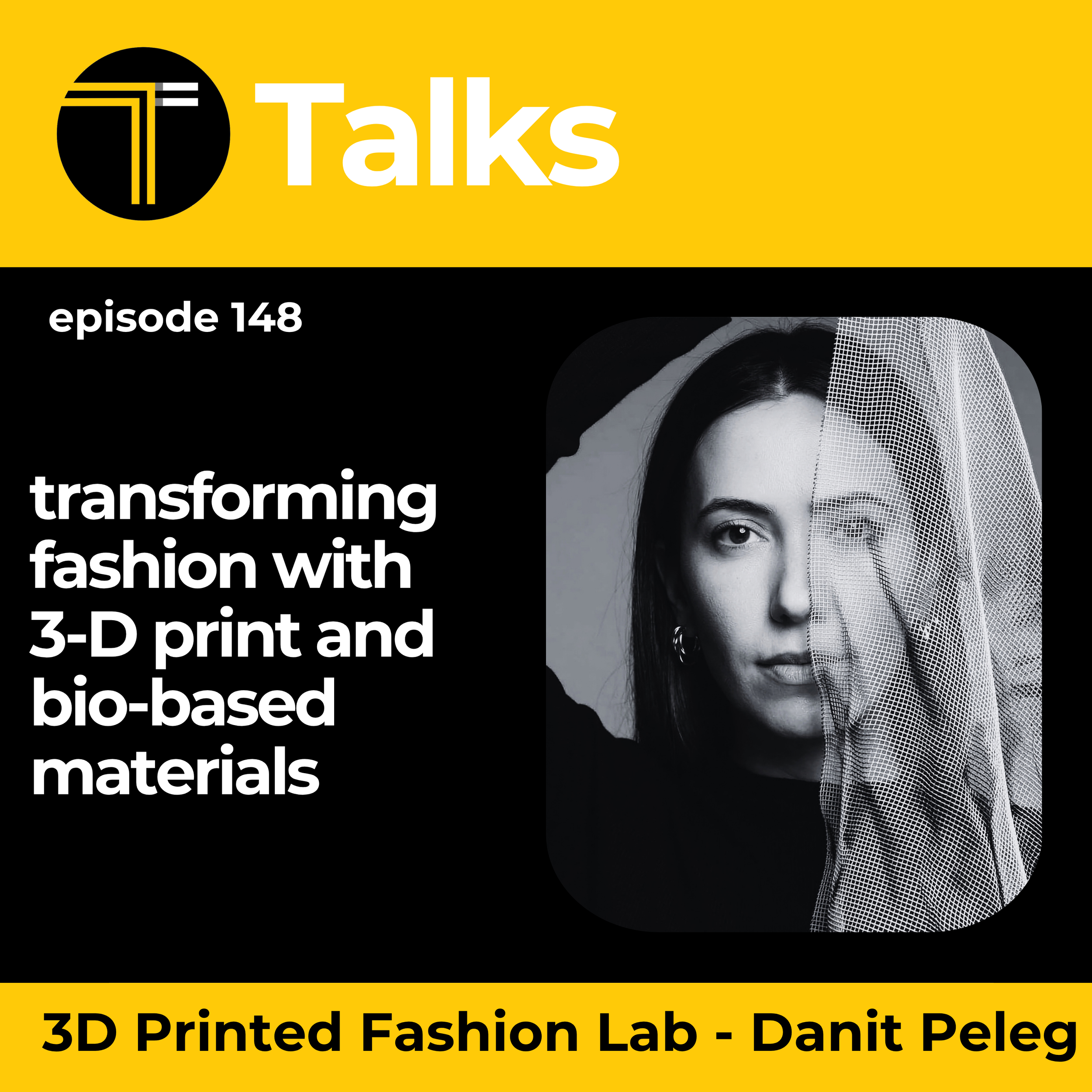
Join host Debbie McKeegan for an inspiring conversation with Danit Peleg, founder of 3D Fashion Lab and a trailblazer in 3D-printed fashion.
Danit reflects on her journey from experimenting with desktop printers to creating soft, wearable textiles—and explores how AI is helping designers turn ideas into garments more quickly. Discover how bio-based materials, custom-fit designs, and on-demand local production could reshape the way fashion is made and consumed, while reducing waste and opening up new creative possibilities for designers and customers alike.
Listen to learn more >>

In this podcast episode, James Watson, Managing Director of Surface Print, discussed the evolution of his fourth-generation family business in Lancashire.
Surface Print combines traditional craftsmanship with digital innovation- investing £2 million in a hybrid rotary screen Gravure machine and £600,000 in new HP digital printers.
The company achieved ISO 14001 accreditation, introduced solar panels, and plans to install a new boiler and water recirculation system. Watson emphasised the importance of balancing traditional techniques with modern technologies to maintain quality and sustainability. The company also leverages AI for efficiency and marketing, while maintaining a family-oriented work culture.
Listen to learn more >>
From Dongles to Digital: Future‑Proof Licensing for Global Creative Teams
Host Debbie McKeegan talks with NedGraphics President Frank Maeder and 10Duke CEO Neil Fenton about the shift from hardware dongles to secure, user‑centric cloud licensing.
They discuss how this transition reduces friction for designers, supports hybrid and global workflows, strengthens security and resilience, and even contributes to sustainability by eliminating physical keys and their shipping footprint.
If you’re in fashion, design, CAD/CAM, or any creative production environment and want to future‑proof your software delivery, this discussion is packed with insight and real‑world examples.
Listen to learn more >>
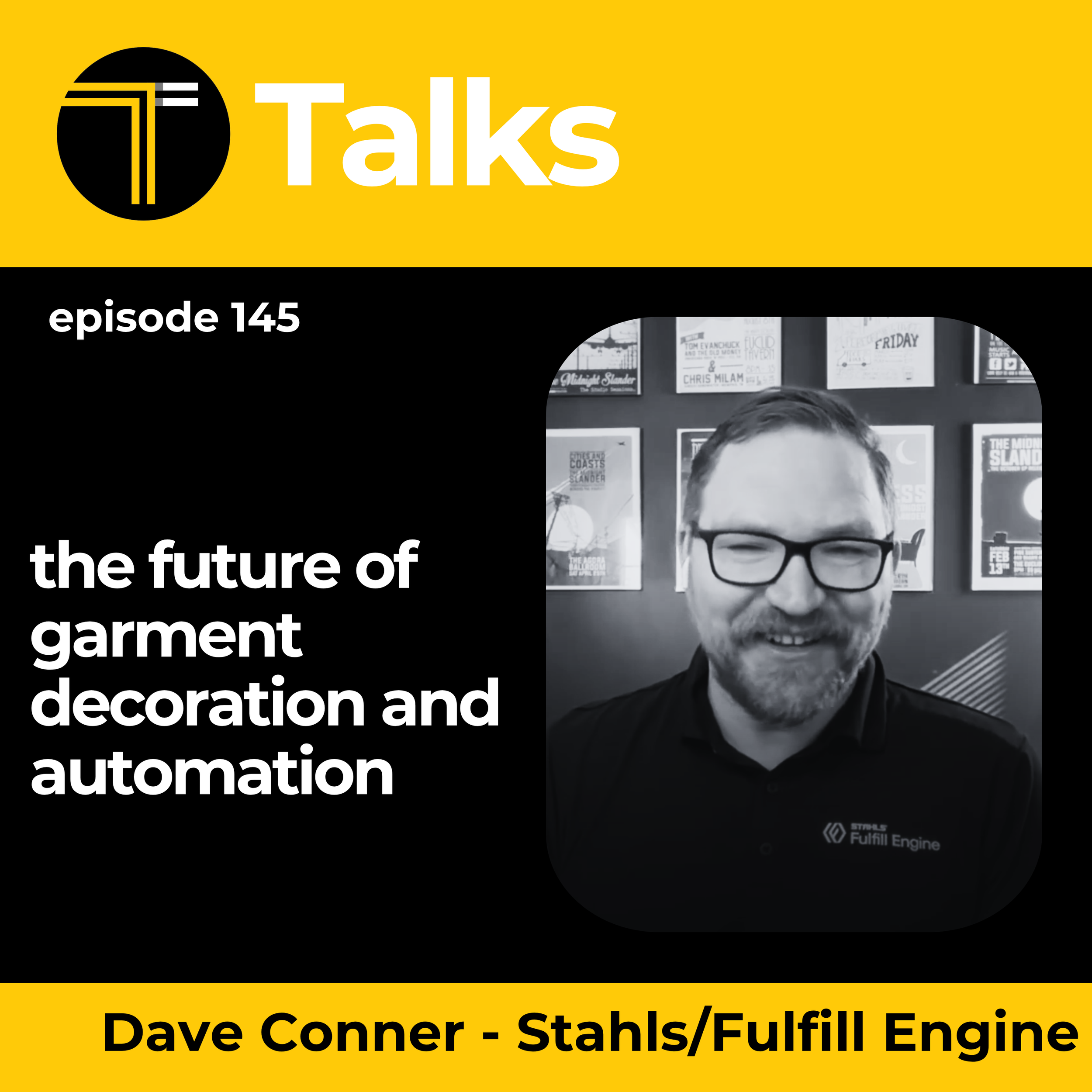
In this insightful interview, Dave Conner, Director of Product Marketing at Stahls and Fulfill Engine, shares his journey into the textile industry.
The commercial opportunity presented by printed, personalised merchandise is already a lucrative revenue stream; it is the core driver of growth in a multi-billion-pound industry. And the mandate for print businesses is clear: automate, adapt, and offer undeniable added value, or choose to gradually lose market share.
This is not merely a shift in consumer demand; it is the fundamental evolution of the printed surface. By leveraging adaptive manufacturing, 3D added value, and sustainable surface effects, digital printers can secure their future by offering unique print applications across apparel, interior décor, accessories, and bespoke objects.
Discover how automation, materials, and community collaboration are shaping the future of on-demand garment decoration and fulfilment.
Listen to learn more >>
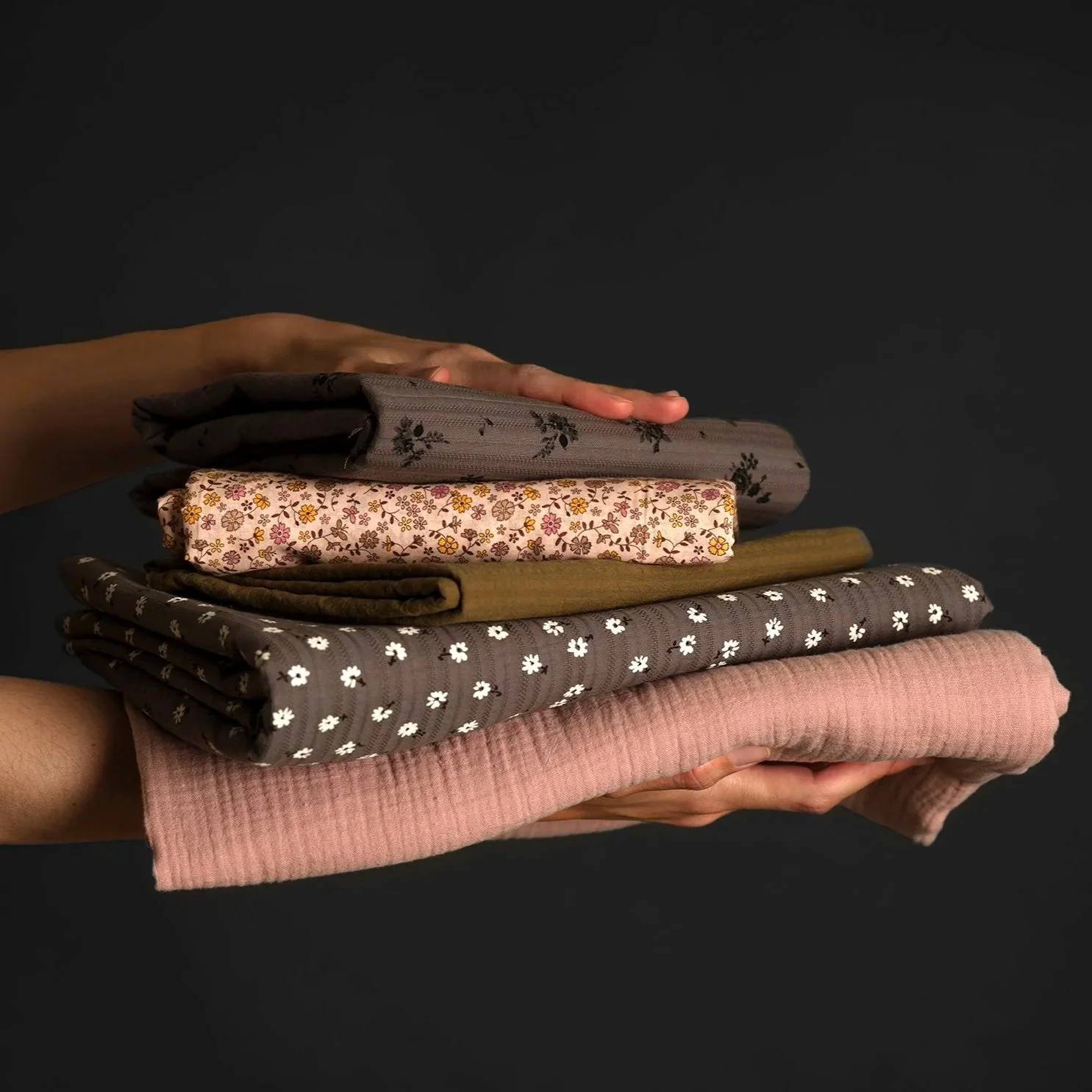
Rebés's story isn't one of nostalgia - It's a working blueprint for how heritage manufacturers can stay indispensable in a market that rewards speed, certification, and specificity in equal measure. Four million metres of stock mean nothing without the digital printing capability to turn it into something distinctive.
A 150-year name means nothing without the R&D discipline to win a tender for antistatic, carbon-fibre-infused uniform fabric on the first attempt.
Image Credit: Tejidos Rebé

What if the next dress you wore never touched the factory floor?
This is no longer a fringe experiment. It is a maturing production model, backed by genuine material science, real circularity, and an AI-assisted workflow that is becoming more accessible by the month.
Her advice to designers and brands alike is refreshingly practical: start small, get hands-on with an accessible 3D printer, and build fluency before the technology becomes table stakes. The businesses that treat this moment with curiosity, rather than scepticism, will be the ones shaping fashion's next decade rather than reacting to it.

The 2027 FESPA Awards are now open for entry, and the message to businesses across textiles, apparel, interiors and beyond is simple: your work deserves recognition. Every gold winner featured here started in the same place every entrant does - with a project they believed was worth submitting.
As the only independent awards programme with 18 categories dedicated to print and signage, FESPA offers a genuinely global stage, with shortlisted entries displayed at FESPA Global Print Expo in Spring 2027.

Colour Is Too Important to Leave to Chance
Print will always be the part of the garment people see first.
But the sum of all parts — the fabric, the trims, the fasteners, the finish — is what determines whether a design actually delivers on its promise. Brands that continue to treat colour as a single creative decision, rather than a coordinated technical discipline spanning their entire supply chain, will keep paying for it in re-dips, delays, and disappointed design teams.
A Century of Textiles, and an Ever-changing World
Few companies can trace their roots back more than a century and still count themselves among their industry's innovators. Texia, headquartered in Monistrol de Montserrat, Spain, is one of them.
But the story of Texia is not simply one of longevity.
It is a story of continual reinvention. As the textile industry has grown more global and competitive, Texia has repeatedly reshaped its business, investing in technology, developing its own brands, and placing sustainability at the centre of its mission. In doing so, it offers a compelling example of how a heritage manufacturer can lead rather than follow through a period of profound industry change. Image Credit: Texia

Milan, Italy – October 2026– Epson will present its latest advancements in signage, UV printing and textile customisation at VISCOM 2026, taking place at Allianz MiCo Milan on 28-29 October.
Visitors can find Epson at Gate 3, Stand G14, where the company's specialists will demonstrate how its newest technologies are helping businesses expand into high-value applications through superior print quality and precise colour management.
As visual communication and personalisation markets continue to evolve at pace, Epson is positioning itself at the forefront of that change.

Leicester, UK – October 2026 – VeriVide is an official RAL Distributor in the United Kingdom, giving UK designers, specifiers and manufacturers direct access to the complete range of RAL colour standard products.
The appointment reinforces VeriVide's commitment to supporting the architecture, interior design, and industrial design sectors with reliable, globally recognised tools for accurate colour communication.

South Normanton – UK – October 2026 – Sun Chemical, a global leader in printing inks, coatings, and pigments, today reinforced the importance of looking beyond colour when selecting dyes for printing inks, urging formulators and manufacturers to weigh performance data alongside colour accuracy to achieve reliable, long-lasting results.
While colour remains a defining factor in dye selection, Sun Chemical emphasises that performance properties are equally critical to a dye's overall suitability for an application.
These include lightfastness, which is shaped by dye concentration, binder composition, substrate, and testing conditions; resistance properties, such as bleed resistance and over-lacquering resistance; and migration behaviour, which can vary depending on the substrate, coating, and storage conditions.
United Kingdom – October 2026 – Textile Skills Centre has announced a new Design to Print Competition in partnership with Prinfab, the UK's leading digital fabric printer.
The competition invites UK schoolchildren aged 5 to 18 to submit original textile designs or artwork for the chance to see their work professionally printed onto fabric.
The initiative aims to give young designers a tangible, industry-standard outcome for their creative work, while introducing them to the practical realities of textile design and digital printing.

Telford, UK – October 2026 – Ricoh UK has announced the return of Print Evolution Live, its flagship industry event, for a fourth consecutive year.
Taking place on 10-11 November 2026 at Ricoh's Telford site, the event will once again bring together leaders from across the print sector to explore the strategic shifts shaping the industry's future.