

In this podcast episode, James Watson, Managing Director of Surface Print, discussed the evolution of his fourth-generation family business in Lancashire.
Surface Print combines traditional craftsmanship with digital innovation- investing £2 million in a hybrid rotary screen Gravure machine and £600,000 in new HP digital printers.
The company achieved ISO 14001 accreditation, introduced solar panels, and plans to install a new boiler and water recirculation system. Watson emphasised the importance of balancing traditional techniques with modern technologies to maintain quality and sustainability. The company also leverages AI for efficiency and marketing, while maintaining a family-oriented work culture.
Listen to learn more >>

KEY TOPICS:
Fourth-generation family wallpaper business with deep heritage
The Watson family has been in wallpaper since the 1880s, with Surface Print Ltd founded in 1990 by James’s father.
James and Abigail now run a ~70-person factory that operates very much as an extended family.
Unique position: all major traditional mechanical processes plus digital
Surface Print has deliberately invested in traditional analog technologies, including a £2m hybrid rotary screen/gravure Guvier machine built locally.
They can offer surface, flexo, gravure, screen, and digital, and advise brands on the best process for each design, prioritising effect over production cost.
Surface printing as an irreplaceable craft
Surface print (dating back to 1838) remains visually and tactically unique: highly opaque inks, a hand-painted, imperfect, “own handwriting” look that digital can’t yet match.
High-end clients value this artisan character and story as a brand differentiator.
Balanced embrace of digital, AI, and sustainability
Recent investment of £600k in three new HP large-format machines (white ink, 4th‑gen inks, more speed and efficiency), alongside gradual migration of jobs from older kit.
AI is already used in admin, data analysis, and note-taking, and expected to grow organically across systems and operations, but seen as a tool, not a design originator.
On sustainability: ISO 14001, solar panels now generating about 25% of annual electricity, a new industrial boiler imminent, and water recirculation/rainwater harvesting planned.
Market trends: brand-led differentiation and premium craftsmanship
Trends in luxury wallcoverings are brand and handwriting led, not one-size-fits-all “Tropical” cycles anymore.
Digital has enabled many more small and direct-to-consumer brands, while established houses increasingly use complex, high-value substrates (grasscloth, linen, cork) to elevate design and margins.
Looking ahead, digital and AI will drive efficiency and speed, but analog surface printing will remain central for its romance, heritage, and artistic value.
Chapters
00:00 The Legacy of Surface Print
05:00 Balancing Tradition and Innovation
10:04 Understanding Surface Printing Techniques
15:01 The Role of Technology in Wallpaper Production
20:00 Sustainability in Wallpaper Manufacturing
24:48 Trends in Luxury Wall Coverings
29:51 Leadership in a Family Business
35:12 The Future of Wallpaper Technology


In this episode, host Debbie McKeegan is joined by textile designers, educators and researchers Rebecca Hoyes and Jo Pierce co-authors of Reimagining Printed Textiles. Together, they explore how colour, pattern and materials can be rethought as the textile industry faces growing environmental challenges.
The conversation looks at emerging natural and bio-based colour sources, including microbial fermentation and dyes made from waste streams. Rebecca and Joe also discuss how patterns can tell stories about a material’s origins, how digital tools can complement craft, and how designers can reduce waste through practical choices such as reworking printed fabrics and using less ink.
Looking ahead, they consider what it will take to build a more nature-positive future for textiles - from scaling promising innovations to sharing knowledge across design, science and industry.
Their message to professionals, designers and students is to stay curious, question established practices and see the whole life-cycle of the materials they create with.
Listen to learn more >>

In this episode, Debbie McKeegan is joined by Frank Maeder of NedGraphics and Optitex to explore how digital tools are reshaping textile and apparel workflows. They discuss the industry’s push to move faster, reduce waste, and connect teams across design and production—wherever they are in the world.
Frank shares highlights from NedGraphics’ latest release, including OptiNet Cloud, a platform for managing and sharing digital assets and collaborating across teams. The conversation also covers enhancements to rotary printing, tufting simulation, and pattern resizing, as well as an integration that brings more detailed digital yarns into the design workflow.
The episode looks ahead at a more connected creative ecosystem, where cloud collaboration and shared development across NedGraphics and Optitex can help reduce friction between ideas and production. Debbie and Frank also discuss how AI is supporting product development internally—and how continuous improvements can give designers more time to focus on their work.
Listen to learn more >>
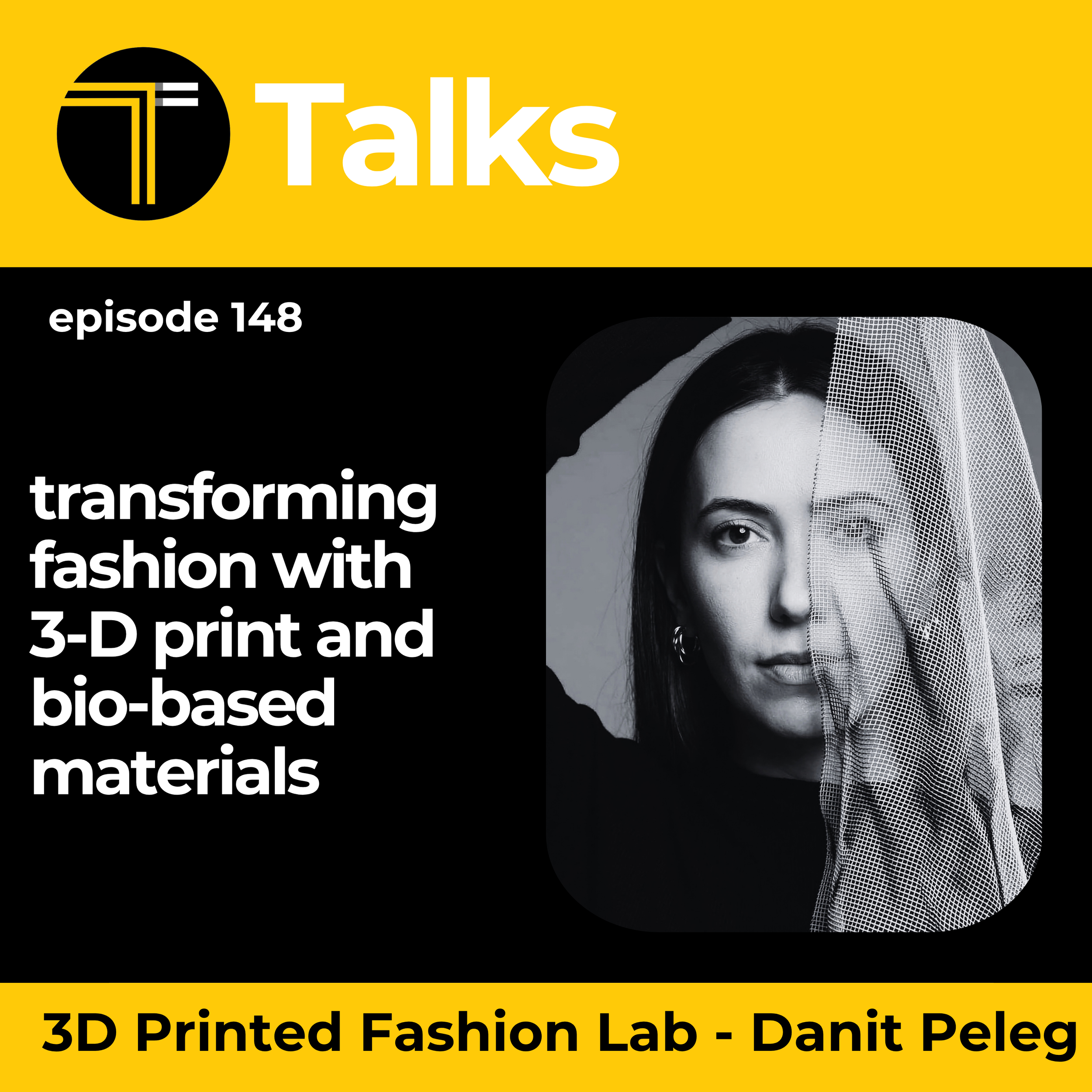
Join host Debbie McKeegan for an inspiring conversation with Danit Peleg, founder of 3D Fashion Lab and a trailblazer in 3D-printed fashion.
Danit reflects on her journey from experimenting with desktop printers to creating soft, wearable textiles—and explores how AI is helping designers turn ideas into garments more quickly. Discover how bio-based materials, custom-fit designs, and on-demand local production could reshape the way fashion is made and consumed, while reducing waste and opening up new creative possibilities for designers and customers alike.
Listen to learn more >>

In this podcast episode, James Watson, Managing Director of Surface Print, discussed the evolution of his fourth-generation family business in Lancashire.
Surface Print combines traditional craftsmanship with digital innovation- investing £2 million in a hybrid rotary screen Gravure machine and £600,000 in new HP digital printers.
The company achieved ISO 14001 accreditation, introduced solar panels, and plans to install a new boiler and water recirculation system. Watson emphasised the importance of balancing traditional techniques with modern technologies to maintain quality and sustainability. The company also leverages AI for efficiency and marketing, while maintaining a family-oriented work culture.
Listen to learn more >>
From Dongles to Digital: Future‑Proof Licensing for Global Creative Teams
Host Debbie McKeegan talks with NedGraphics President Frank Maeder and 10Duke CEO Neil Fenton about the shift from hardware dongles to secure, user‑centric cloud licensing.
They discuss how this transition reduces friction for designers, supports hybrid and global workflows, strengthens security and resilience, and even contributes to sustainability by eliminating physical keys and their shipping footprint.
If you’re in fashion, design, CAD/CAM, or any creative production environment and want to future‑proof your software delivery, this discussion is packed with insight and real‑world examples.
Listen to learn more >>

Does creativity live in your head or your hand?
The honest answer, as this new generation of AI-powered tools makes clear, is both, now working in closer partnership than ever before.
The head conceives, directs, and judges; the hand, whether holding a pencil or typing a prompt, still shapes the final outcome. For studios and professionals across the print and textile ecosystem, the opportunity now is to master this partnership before it becomes the industry standard rather than the competitive edge.

Is the future of fashion manufacturing local?
Manchester Made didn't offer easy answers, and it shouldn't have - the challenges facing domestic manufacturing are structural, not sentimental. But it did offer a clear set of principles that every designer, supplier, printer and manufacturer serving the fashion ecosystem should take seriously.

There's a persistent myth in parts of the industry that sustainability compliance is something that happens upstream - a supplier issue, a sourcing issue, a problem for someone else's department.
The webinar dismantled that assumption convincingly. Marketing teams sit squarely in the firing line.
Every claim on a hangtag, website, product name or Instagram caption now falls under regulatory scrutiny. A brand name suggesting an "eco collection," a product description claiming "sustainable materials," a carousel post about carbon neutrality - all of it counts as a communication subject to the same rules as formal labelling. This is a cross-functional compliance challenge that touches data teams, supplier relationships, legal counsel and brand communications simultaneously.
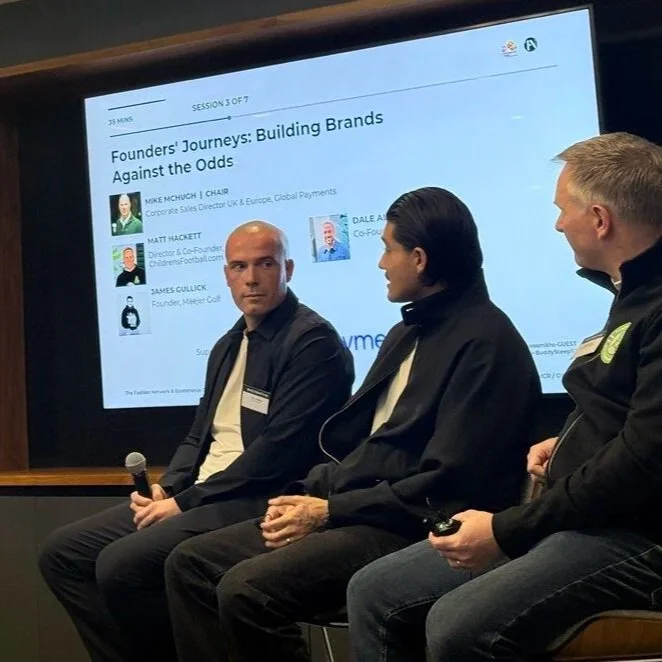
The Ecommerce Leadership Summit North brought together retail and ecommerce leaders in Manchester to discuss the challenges, opportunities and commercial decisions shaping the industry.
Across the day's sessions, speakers explored the future of retail profitability, the growing importance of verifiable product data in AI-driven commerce, the realities of building and scaling brands, and how businesses can protect their margins without compromising customer value. From the discussions on stage to the experiences shared by founders, here are the key insights from this year's summit.
The State of Retail 2027: What Will Separate the Winners from Everyone Else?

This is not simply a matter of faster machines.
It is a question of whether your production model - technology stack, workflow discipline, and quality control - is genuinely built for the realities of club and event merchandise.
Those realities are unforgiving: brand-perfect colour, flawless personalisation, licensing compliance, and turnaround measured in hours rather than weeks.

Accrington – Lancashire – November 2026 – Soyang Europe has announced a new combination of printing technology and textile engineering, bringing exceptional colour vibrancy and stunning backlit results to the wide-format display market. The pairing of the LIYU Platinum PCT UV Roll-to-Roll Printer with Soyang's ST-601 RCY Backlit textile is designed to help brands and display specifiers create eye-catching graphics without compromising on sustainability.
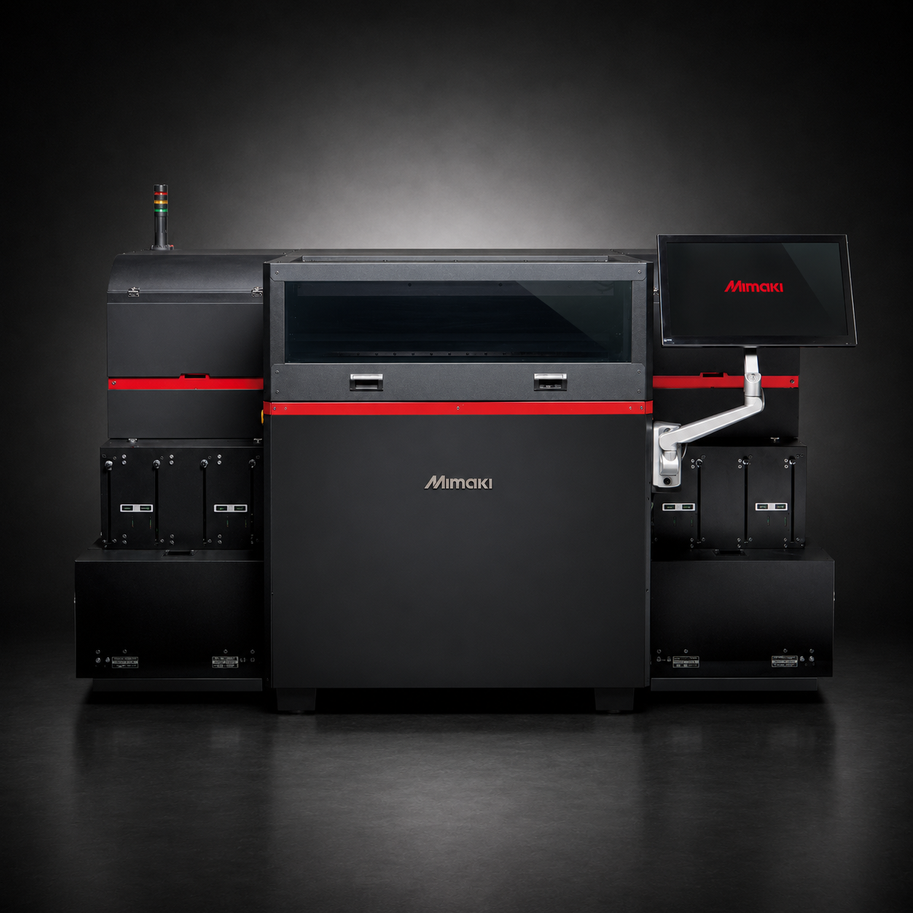
November 2026 - Mimaki has announced the world premiere of its new 3DUJ-553MkII full-colour 3D printer at Formnext 2026 (Hall 2.1, Booth F129, 17–20 November, Frankfurt, Germany). Designed to produce more vivid and more realistic models and prototypes at a lower production cost, the new printer combines richer colour reproduction, from delicate to deep tones, lifelike material effects and improved production efficiency, creating new opportunities for product designers and model makers across the product development process.

Dusseldorf – Germany – November 2026 – Barbieri has announced its participation in the Industrial Print Integration Conference 2026, taking place from 24–25 November 2026 at the Crowne Plaza Düsseldorf/Neuss in Germany. The company's COO and Co-Managing Director, Viktor Lazzeri, will take the stage to deliver a presentation titled "Robotic Spectral Colour Quality Control: Integrating Autonomous Colour Measurement into Industrial Printing Workflows."
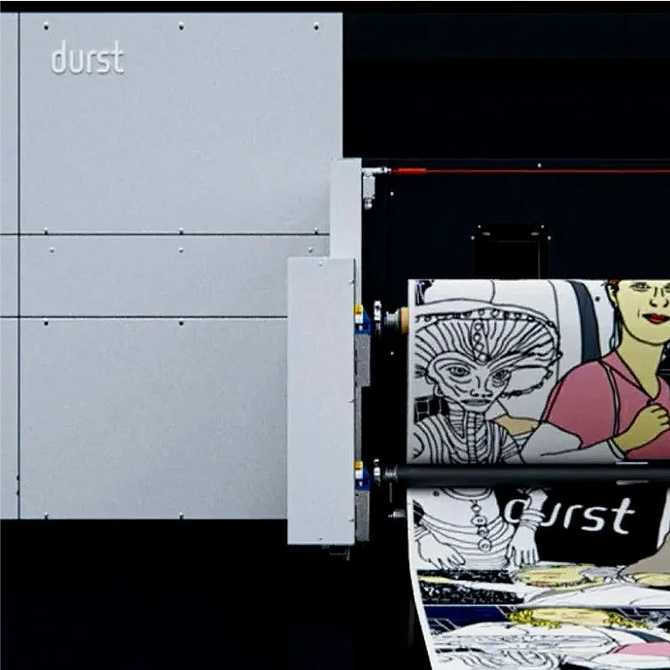
Athens, Greece – November 2026 – Multiplo, part of the EVIN Intzoglou group, has announced a significant investment in the Durst P5 350 TEX iSUB digital printer, marking the first installation of this model in Greece. The move strengthens the company's production capabilities in large-format digital textile printing and reflects its ongoing commitment to quality, innovation and sustainability.

San Francisco, CA – November 2026 – Microsoft’s Ignite 2026, is its flagship technical conference for IT professionals, developers, business leaders and partners, taking place from 17–20 November at Moscone Center in San Francisco, with a digital attendance option available worldwide. The event will bring together the global Microsoft community to explore the latest advancements in artificial intelligence, cloud computing, security and enterprise technology.