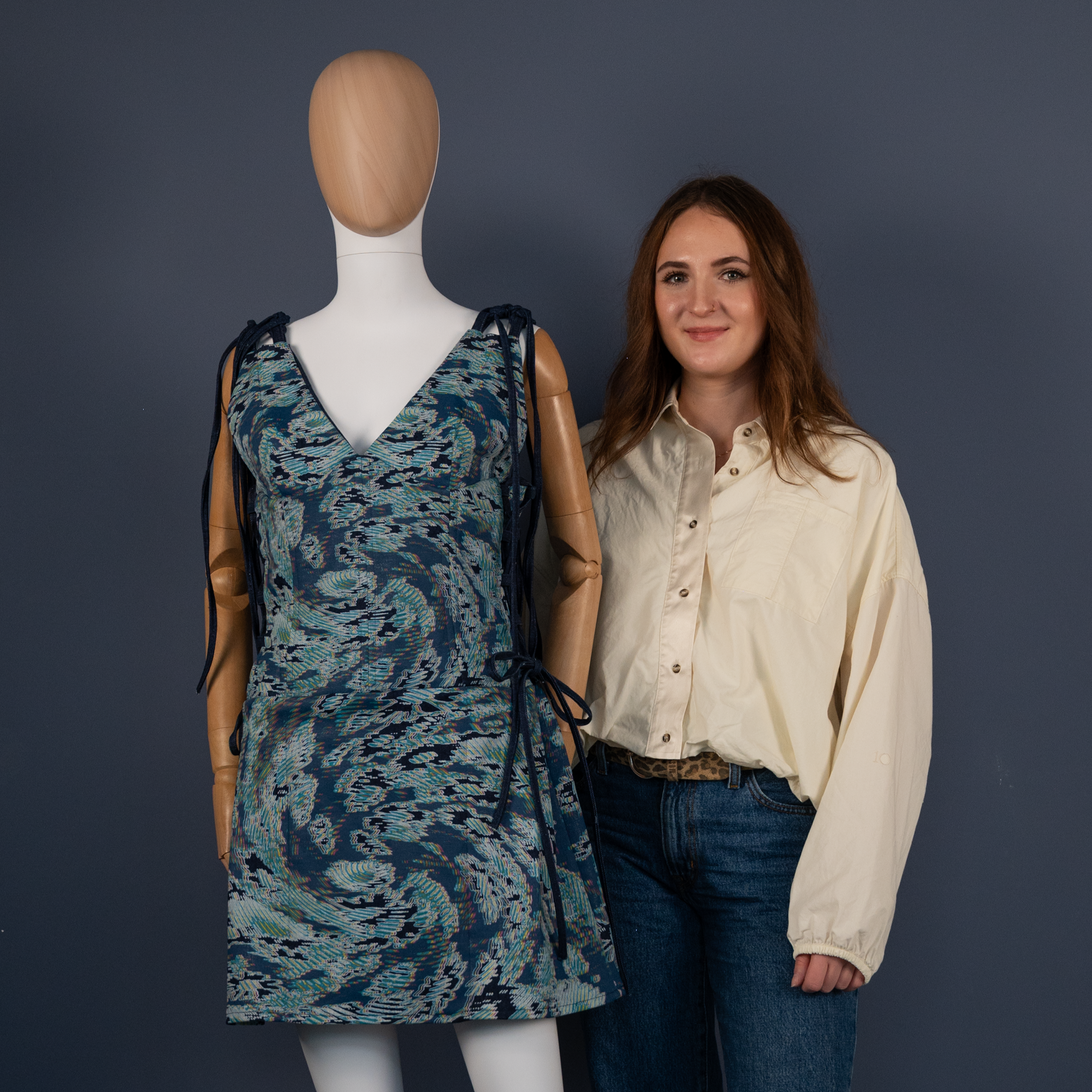
TEXINTEL TALKS - EPISODE 144- Bioengineered Materials and Tech for Textiles Inks and Chemistry with AMSilk
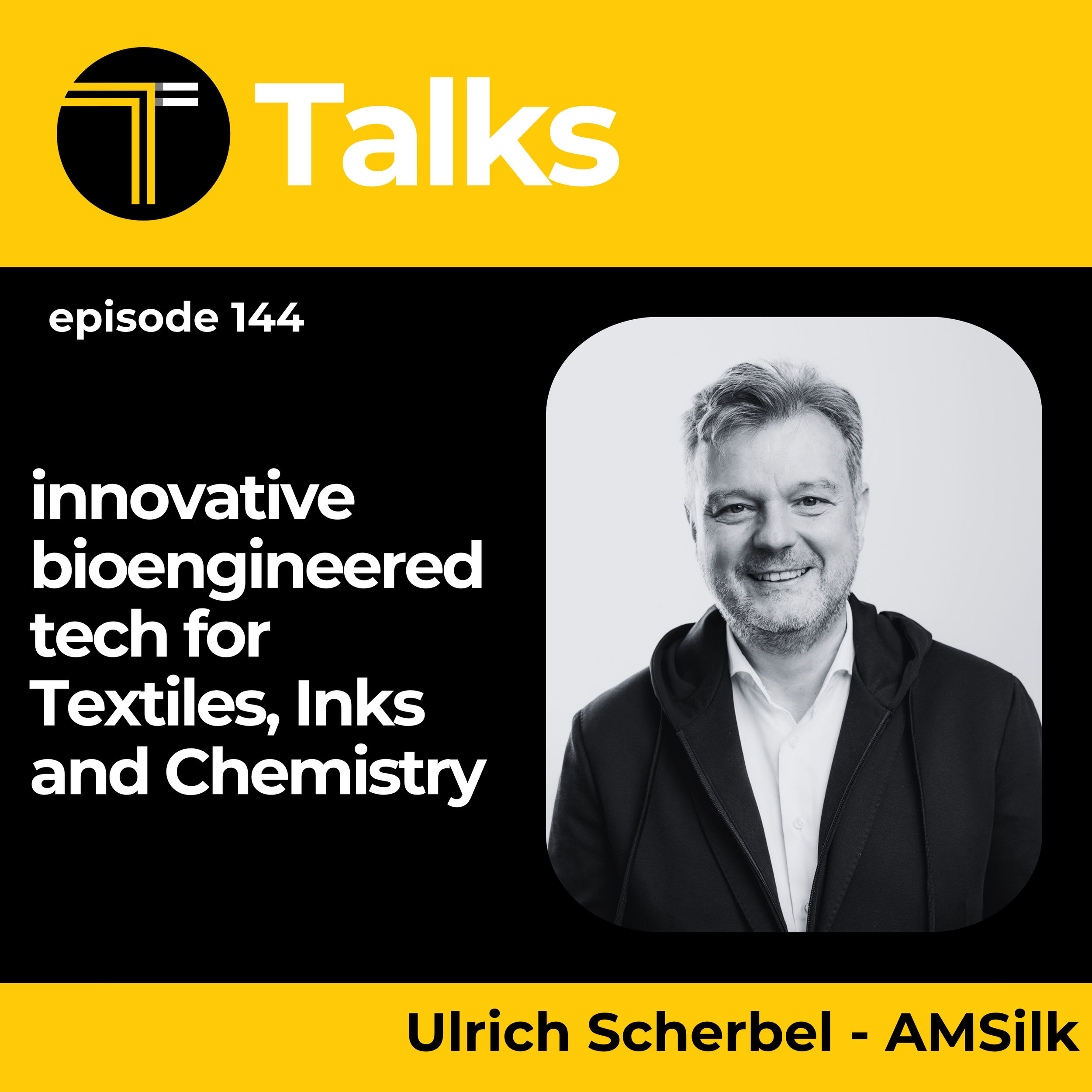
In this podcast episode, Ulrich Scherbel, CEO of AMSilk, discusses the innovative production of bioengineered spider silk protein and its applications in the textile industry, going far beyond fibre and with the power to radically transform inks and chemistry.
He explains the challenges of scaling up production, the importance of sustainability, and how AMSilk's technology can significantly reduce carbon emissions. The conversation also touches on the role of AI in protein bioengineering and the future vision for transforming the textile supply chain through collaboration and innovation.
Listen to learn more >>
KEY TAKEAWAYS:
Bioengineered spider-silk proteins as a scalable material platform
AMSilk creates spider-silk–like proteins via precision fermentation, originally using E. coli bacteria fed with plant-based sugars in large industrial fermenters (up to 150,000 L).
The result is a versatile protein powder that can be formulated into fibers, coatings, hydrogels, and ingredients for other industries.
Performance: high strength and tunable properties
Spider silk is described as up to 2.5x stronger than steel while also elastic.
Using AI-driven protein engineering, AMSilk can digitally model and then tune the protein structure (size, functional groups, etc.) to suit multiple applications: textiles, automotive, sportswear, laundry care, dish washing, cosmetics and more.
Sustainability advantages over traditional fibers and chemicals
Compared with luxury natural protein fibers like cashmere, AMSilk’s fibers show about 80% lower CO₂ emissions, plus significantly reduced land and water use (up to ~70% less water).
The material is biodegradable (9–12 months in soil or water), vegan, and already used even to coat medical implants, where the body tolerates it well because it “recognises” the protein.
Strategic scaling via partnerships and market focus
Rather than build all capacity in-house, AMSilk partners with established industrial fermenters (e.g., Evonik and others in Europe and Asia) to scale quickly and economically.
They’ve started in European luxury textiles (high value, lower volume) to prove performance and economics, with a roadmap to move into premium and larger-volume markets (potentially up to 1 million tons in textiles alone).
Long-term vision: circular, low-carbon material ecosystems
AMSilk aims to move beyond plant-based feedstock to CO₂-based feedstock, working with partners that capture carbon from air and convert it into chemicals their bacteria can digest—targeting net-negative emissions in the long run.
The entire strategy relies on cross-industry collaboration (CO₂ capture, fermentation, formulation, end brands) to replace petrochemical-based materials and chemicals at scale over roughly a 10-year horizon.
Chapters
00:00 Introduction to Amsilk and Biomaterials
06:06 Scaling Up: Partnerships and Industrial Applications
11:51 Fermentation Process and Product Development
17:58 Comparing Traditional Materials with Amsilk's Innovations
23:51 Future Vision and Collaboration in the Industry