REIN Hubs Launches a New Generation of Circular Fashion Innovators Across Latin America
Bogotá, Colombia - June 2026: Across Latin America, a new generation of entrepreneurs are rethinking the future of fashion, design, packaging, and materials.
From textile waste recovery and upcycled product design to recycled plastics, reusable logistics solutions, and biodegradable packaging, these innovators are addressing some of the fashion industry’s most urgent challenges: overproduction, waste, material inefficiency, and the environmental impact of supply chains.
At the center of this movement is REIN Hubs (Resilience, Entrepreneurship, Innovation & Nature), a multi-country platform redefining how nature-based entrepreneurship, innovation ecosystems, and sustainable economic development are built across the region.
Operating across Colombia, Guatemala, Costa Rica, Peru, and El Salvador, REIN Hubs has emerged as one of Latin America’s most dynamic and impactful entrepreneurship platforms, supporting innovators developing solutions across food systems, circular economy, biotechnology, regenerative agriculture, biodiversity, waste transformation, resilient infrastructure and sustainable fashion solutions.
Fashion Entrepreneurs Driving Regional Innovation
Among this years entrepreneurs supported through the REIN ecosystem include:
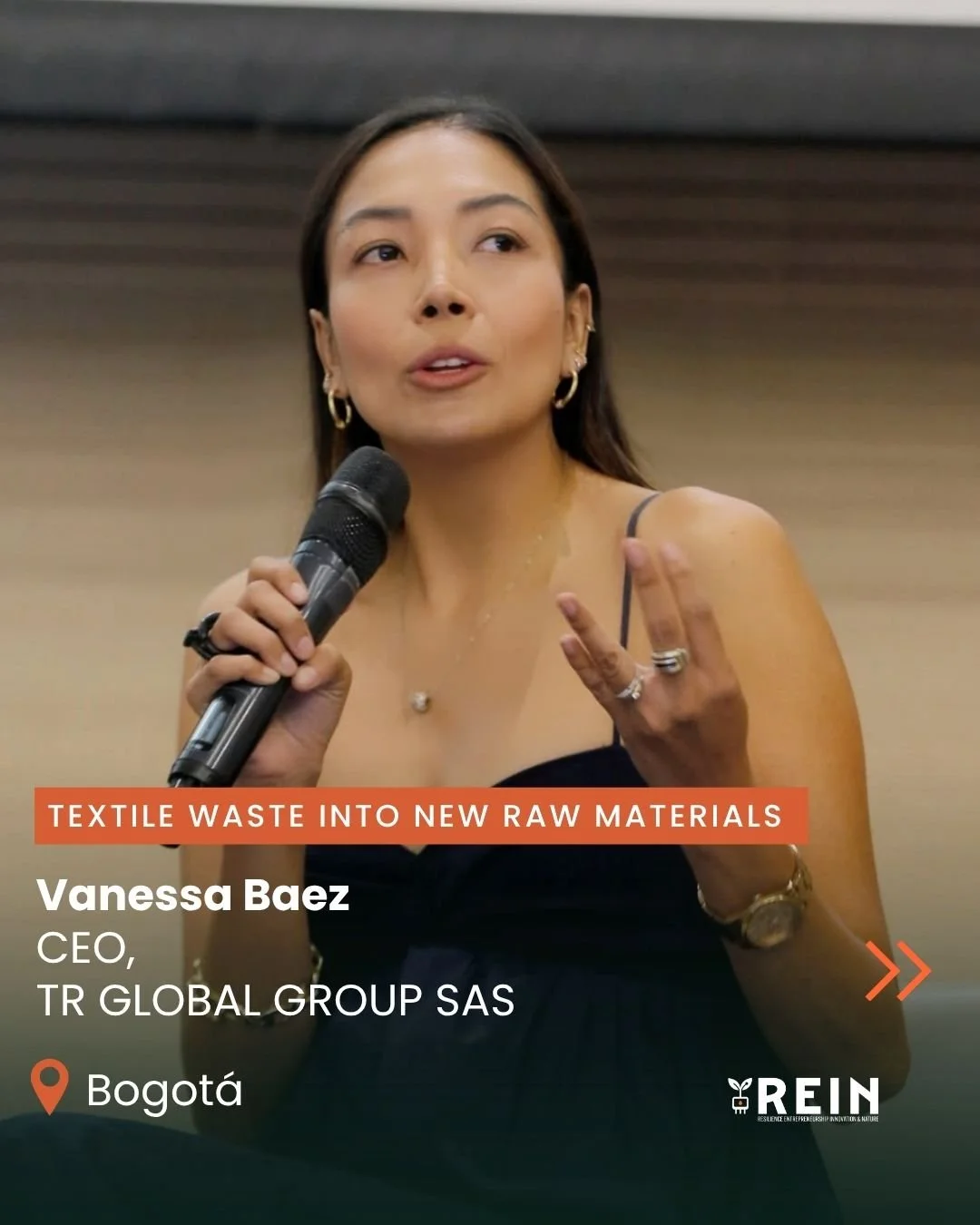
· Vanessa Baez, CEO of TR GLOBAL GROUP SAS, a Colombian company developing SLOW, a service focused on the management and transformation of post consumer and post industrial textile waste. The company collects, sorts, and gives a second life to discarded fabrics, garments, and production surplus that would otherwise end up in landfill. By converting textile waste into new raw materials for fashion, furniture design, and other productive value chains, TR GLOBAL GROUP SAS is helping create a more circular textile economy.
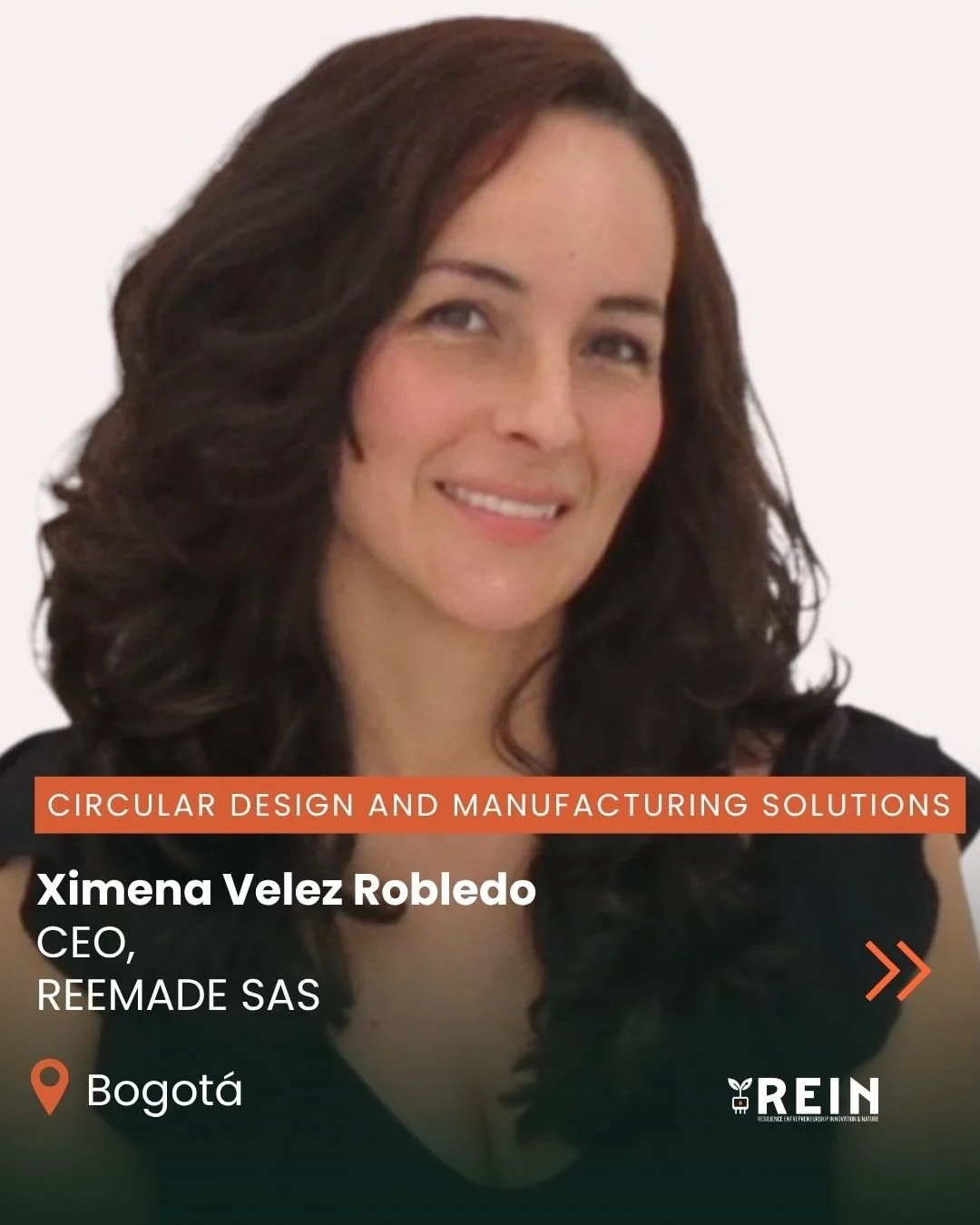
· Ximena Velez Robledo, CEO of REEMADE SAS, a circular design and manufacturing studio based in Bogotá. REEMADE upcycles hard to recycle and orphan materials, including textiles, truck tarps, tires, and discarded industrial materials, transforming them into new products through design, customization, and remanufacturing. The company works with both B2B and consumer facing models, offering customizable products, bespoke design solutions, and remanufacturing services for company materials such as uniforms. Its exploration of biomaterial panels using inputs such as cacao and cannabis also positions the company at the intersection of circular fashion, material innovation, and sustainable design.
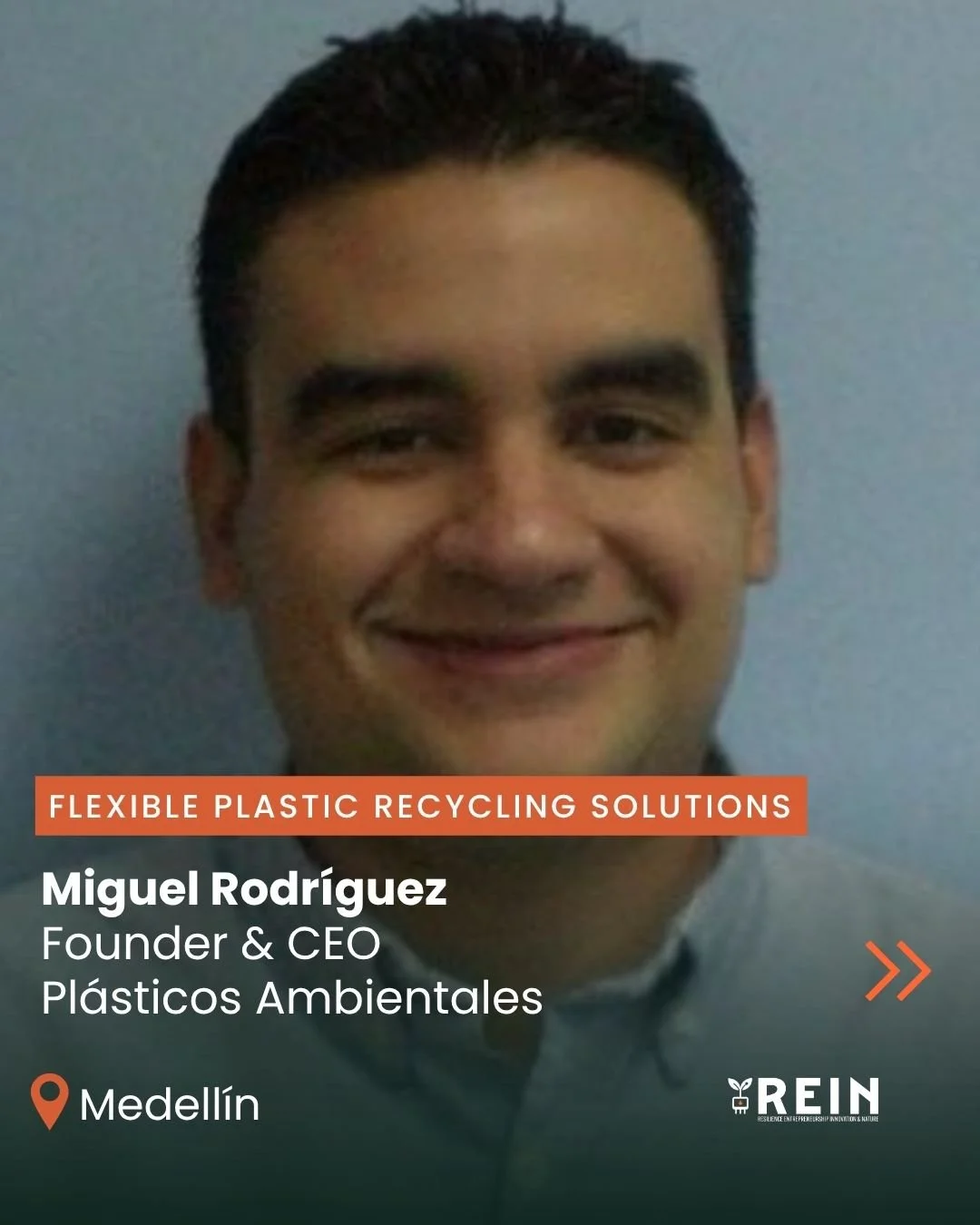
· Another example is Miguel Rodríguez, Founder & CEO of Plásticos Ambientales, is developing circular solutions for flexible plastics, one of the most difficult waste streams to recycle. His company transforms flexible plastic waste into fully recycled packaging and plastic products, including bags, tubing, and shrink film. For fashion brands and retailers seeking to reduce the impact of packaging and operational materials, solutions like these offer a pathway toward circular manufacturing and more responsible material use.
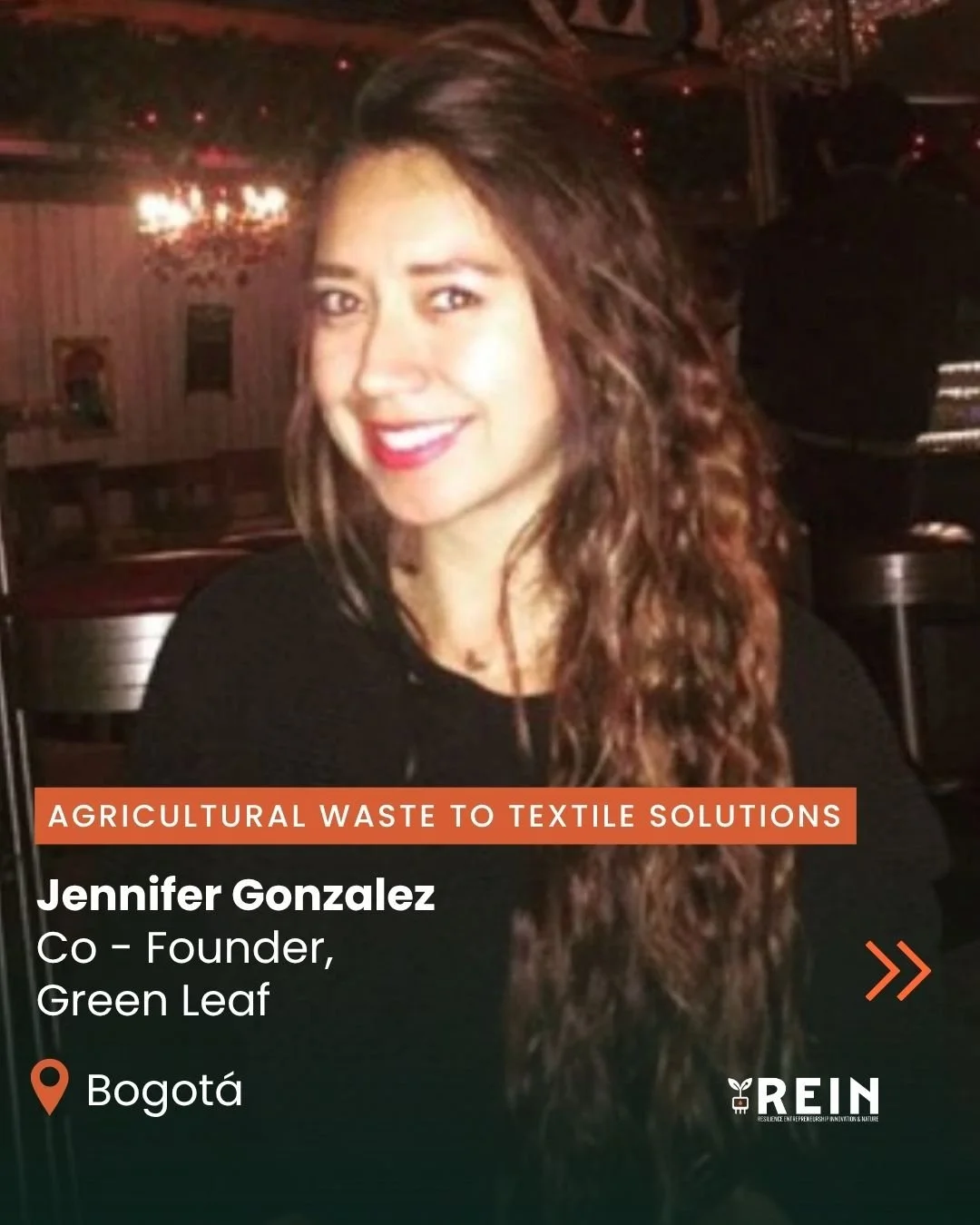
· Jennifer Gonzalez, Co - Founder of Green Leaf, is advancing sustainable fashion through natural fiber innovation. Founded in 2021, Green Leaf transforms pineapple crop waste from Santander, Colombia into plant based fibers that can be used across textile, fashion, construction, and design industries. By working directly with local producers and rural women skilled in spinning and handicrafts, the company reduces agricultural waste, supports rural agro industrial development, and creates new value from materials that would traditionally be burned after harvest.
Other entrepreneurs in the ecosystem are advancing alternative packaging and biodegradable material solutions.
Together, these entrepreneurs demonstrate how fashion sustainability is no longer limited to clothing design alone.
It requires innovation across the entire system: how materials are sourced, how waste is recovered, how products are packaged, how goods move through supply chains, and how discarded resources can be transformed into new economic value.
Kerry Bannigan, President of the Board, PVBLIC Foundation shares: “Latin America is home to a generation of fashion entrepreneurs proving that sustainability and economic growth are one and the same force. At PVBLIC, we work to connect these leaders with the resources, partnerships, and platforms they need to rebuild supply chains, recover waste, and create green jobs while positioning the region as a global destination for circular and regenerative innovation.”
A New Model for Entrepreneurship and Innovation
Led by PVBLIC Foundation andCleantechHUB, REIN operates as a sovereign-aligned, public-private-academic platform designed to strengthen national innovation ecosystems while accelerating nature-positive business solutions.
Rather than functioning solely as a traditional accelerator, REIN was designed as a long-term infrastructure for entrepreneurship and innovation, connecting universities, governments, corporations, investors, and founders through locally embedded hubs.
The model supports entrepreneurs across the full venture lifecycle, from ideation and incubation through acceleration and investment readiness, while strengthening regional collaboration and economic resilience.
At its core, REIN reflects a growing global shift: nature-based innovation is becoming a major driver of economic transformation, investment opportunity, and regional competitiveness.
Since 2019, the initiative and its ecosystem partners have supported:
● 1,200+ entrepreneurs
● 222 startups successfully incubated
● 100 ventures accelerated
● USD 23+ million in capital raised
● 1,500+ green jobs created
● 5+ million tons of CO₂ mitigated
● 6,000+ ecosystem actors engaged
● 3,000+ applications received
These results position REIN as one of the region’s most robust and scalable innovation pipelines.
About PVBLIC Foundation
PVBLIC Foundation, led by Sergio Fernández de Córdova and Kerry Bannigan, is a global institution transforming how societies build the systems that enable resilient and future-ready development.
Operating at the intersection of diplomacy, development, and innovation, PVBLIC connects governments, the United Nations, global family offices, and the private sector to design and implement scalable development frameworks.
Through its four pillars of Nature, Technology, Capital, and Multilateralism, PVBLIC advances environmental resilience, mobilises catalytic capital, facilitates technology transfer, and convenes high-level partnerships that drive measurable global impact.
The Foundation has managed programmes and partnerships reaching more than one billion people in 125 countries.
PVBLIC-supported programs and partnerships have reached more than one billion people across 125 countries.