

In this podcast, Debbie McKeegan hosts a roundtable discussion with Guy Alroy of Early.Vision, Oliver Mustoe Playfair of Prinfab and Phil McMullin of Epson UK.
Their discussion explores the paradigm shift in the fashion industry from fast fashion to personalised fashion, highlighting the challenges, solutions, and benefits for the manufacturing community.
Looking at all aspects of production to share their knowledge and expertise on how automation software in tandem with smart technology offers a solid solution for optimised apparel manufacture.
Experts from Printfab, Epson, and Early Vision share insights on the role of technology, sustainability, and the future of apparel production.
Listen to learn more >>

KEY TAKEAWAYS:
The apparel industry is moving towards personalized fashion due to environmental concerns.
Fast fashion contributes significantly to global emissions, necessitating a shift in production methods.
Digital printing technology enables short runs and on-demand production.
Consumer demand for personalization is growing, driven by market trends.
COVID-19 accelerated the trend towards personalized products as people sought unique items.
Automation and workflow solutions are essential for efficient production processes.
Color management is crucial for maintaining consistency in printed products.
E-commerce integration is vital for managing diverse customer orders effectively.
Standards in data formats are needed to streamline on-demand manufacturing.
Robotics may play a significant role in the future of garment production.
Chapters:
00:00 Introduction to Personalized Fashion
02:19 The Shift from Fast Fashion to Personalization
08:24 The Role of Digital Technology in Fashion
11:25 Streamlining Production and Workflow
21:19 Color Management and Consistency in Printing
29:19 E-commerce Integration and Challenges
38:26 Future Trends in the Apparel Industry


In this episode, host Debbie McKeegan is joined by textile designers, educators and researchers Rebecca Hoyes and Jo Pierce co-authors of Reimagining Printed Textiles. Together, they explore how colour, pattern and materials can be rethought as the textile industry faces growing environmental challenges.
The conversation looks at emerging natural and bio-based colour sources, including microbial fermentation and dyes made from waste streams. Rebecca and Joe also discuss how patterns can tell stories about a material’s origins, how digital tools can complement craft, and how designers can reduce waste through practical choices such as reworking printed fabrics and using less ink.
Looking ahead, they consider what it will take to build a more nature-positive future for textiles - from scaling promising innovations to sharing knowledge across design, science and industry.
Their message to professionals, designers and students is to stay curious, question established practices and see the whole life-cycle of the materials they create with.
Listen to learn more >>

In this episode, Debbie McKeegan is joined by Frank Maeder of NedGraphics and Optitex to explore how digital tools are reshaping textile and apparel workflows. They discuss the industry’s push to move faster, reduce waste, and connect teams across design and production—wherever they are in the world.
Frank shares highlights from NedGraphics’ latest release, including OptiNet Cloud, a platform for managing and sharing digital assets and collaborating across teams. The conversation also covers enhancements to rotary printing, tufting simulation, and pattern resizing, as well as an integration that brings more detailed digital yarns into the design workflow.
The episode looks ahead at a more connected creative ecosystem, where cloud collaboration and shared development across NedGraphics and Optitex can help reduce friction between ideas and production. Debbie and Frank also discuss how AI is supporting product development internally—and how continuous improvements can give designers more time to focus on their work.
Listen to learn more >>
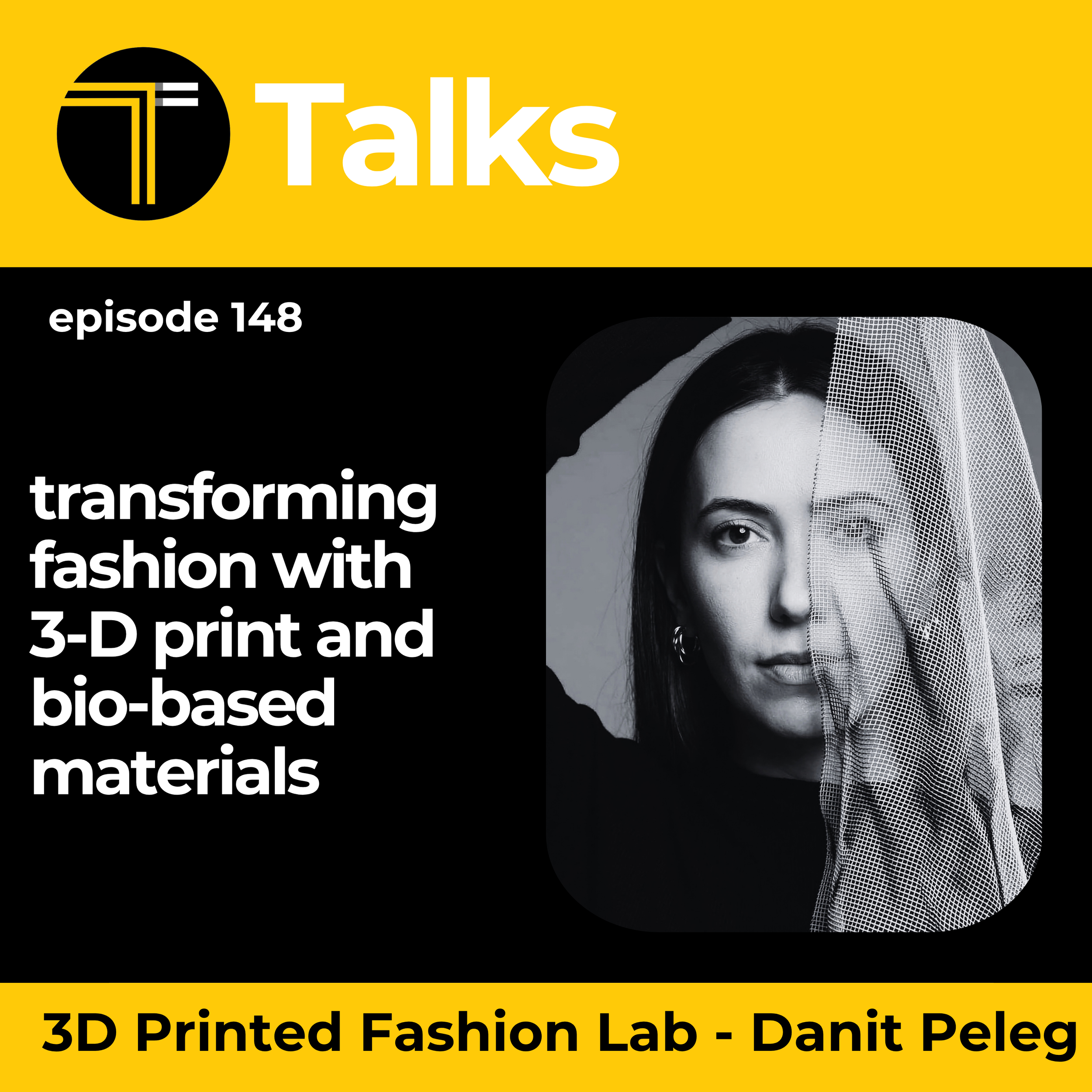
Join host Debbie McKeegan for an inspiring conversation with Danit Peleg, founder of 3D Fashion Lab and a trailblazer in 3D-printed fashion.
Danit reflects on her journey from experimenting with desktop printers to creating soft, wearable textiles—and explores how AI is helping designers turn ideas into garments more quickly. Discover how bio-based materials, custom-fit designs, and on-demand local production could reshape the way fashion is made and consumed, while reducing waste and opening up new creative possibilities for designers and customers alike.
Listen to learn more >>

In this podcast episode, James Watson, Managing Director of Surface Print, discussed the evolution of his fourth-generation family business in Lancashire.
Surface Print combines traditional craftsmanship with digital innovation- investing £2 million in a hybrid rotary screen Gravure machine and £600,000 in new HP digital printers.
The company achieved ISO 14001 accreditation, introduced solar panels, and plans to install a new boiler and water recirculation system. Watson emphasised the importance of balancing traditional techniques with modern technologies to maintain quality and sustainability. The company also leverages AI for efficiency and marketing, while maintaining a family-oriented work culture.
Listen to learn more >>
From Dongles to Digital: Future‑Proof Licensing for Global Creative Teams
Host Debbie McKeegan talks with NedGraphics President Frank Maeder and 10Duke CEO Neil Fenton about the shift from hardware dongles to secure, user‑centric cloud licensing.
They discuss how this transition reduces friction for designers, supports hybrid and global workflows, strengthens security and resilience, and even contributes to sustainability by eliminating physical keys and their shipping footprint.
If you’re in fashion, design, CAD/CAM, or any creative production environment and want to future‑proof your software delivery, this discussion is packed with insight and real‑world examples.
Listen to learn more >>
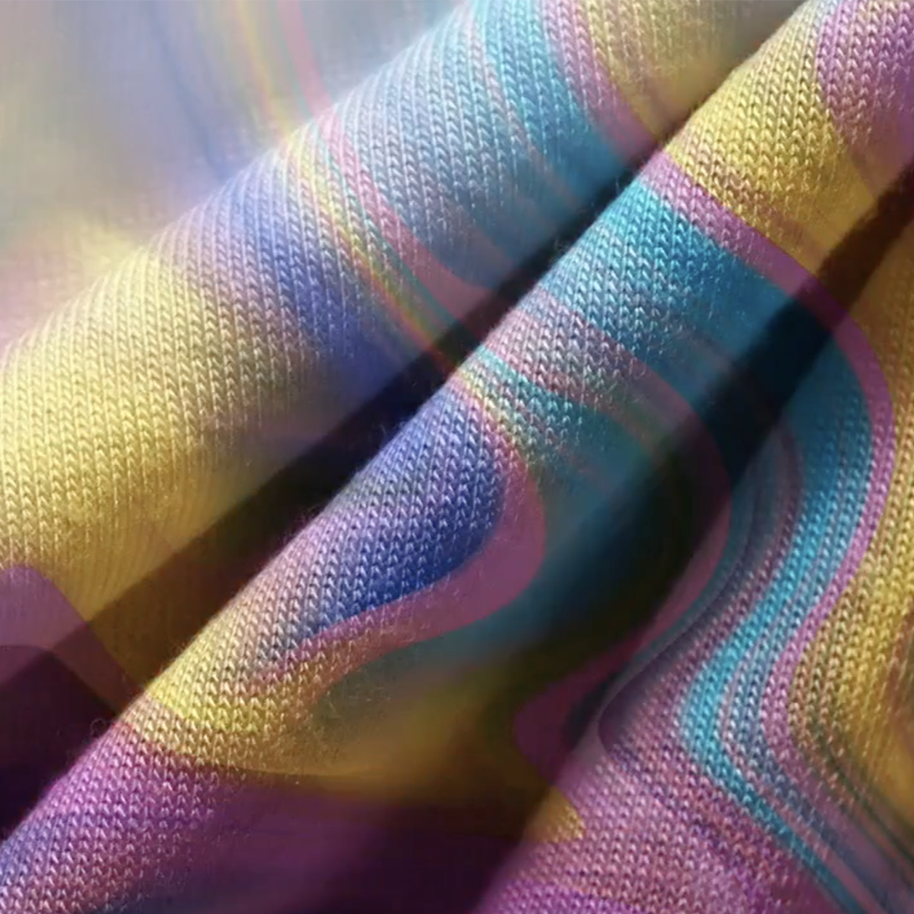
Colour Separation: The Craft Digital Textile Design Shouldn’t Forget
Textile designer Stephan Alker draws on more than 40 years in the industry, going back to his start at Transfertex in 1980, to trace how colour separation moved from drum scanners, hand-retouched films and engraved gravure cylinders to fully digital workflows.
He argues that this production knowledge still matters in the age of digital printing, because properly separated designs give brands far more freedom.
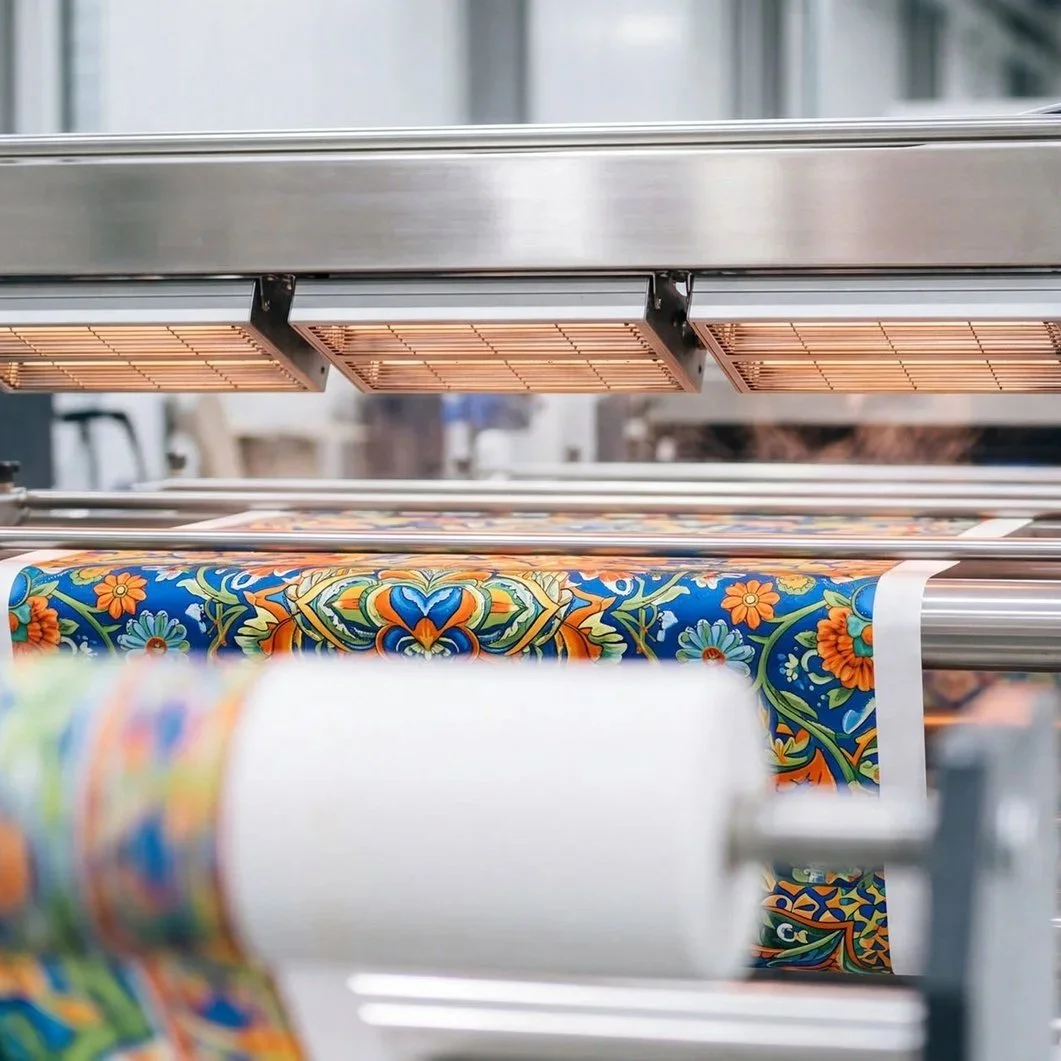
The Path Foward: Connect Every Link:
Design, colour, workflow, production, data. Each link now depends on the one before it, and the printers who will lead the market are those who strengthen the whole chain, not just the machinery at its centre.
So, this autumn, ask the bigger question on your own shop floor.
Not "Which printer?" but "How well does my business connect demand, design and production?"
Rebés's story isn't one of nostalgia - It's a working blueprint for how heritage manufacturers can stay indispensable in a market that rewards speed, certification, and specificity in equal measure. Four million metres of stock mean nothing without the digital printing capability to turn it into something distinctive.
A 150-year name means nothing without the R&D discipline to win a tender for antistatic, carbon-fibre-infused uniform fabric on the first attempt.
Image Credit: Tejidos Rebé

What if the next dress you wore never touched the factory floor?
This is no longer a fringe experiment. It is a maturing production model, backed by genuine material science, real circularity, and an AI-assisted workflow that is becoming more accessible by the month.
Her advice to designers and brands alike is refreshingly practical: start small, get hands-on with an accessible 3D printer, and build fluency before the technology becomes table stakes. The businesses that treat this moment with curiosity, rather than scepticism, will be the ones shaping fashion's next decade rather than reacting to it.

The 2027 FESPA Awards are now open for entry, and the message to businesses across textiles, apparel, interiors and beyond is simple: your work deserves recognition. Every gold winner featured here started in the same place every entrant does - with a project they believed was worth submitting.
As the only independent awards programme with 18 categories dedicated to print and signage, FESPA offers a genuinely global stage, with shortlisted entries displayed at FESPA Global Print Expo in Spring 2027.

Shrewsbury, UK – November 2026 – Big Value Banners, a UK-based manufacturer of custom printed banners and signage, has chosen the Veloblade Nexus from Vivid Laminating Technologies Ltd to support its growing production capabilities. The announcement follows a period of evaluation, culminating in staff training completed today in Shropshire.

Exclusive Mimaki distributor, Hybrid Services will host two Mimaki Technology Taster Days at its Crewe showroom this November, giving businesses the opportunity to explore their next printing investment, diversification or upgrade in a relaxed, informal setting.
Taking place on Thursday 12th and 19th November, from 10am - 4pm, the events are designed for companies at any stage of their research, including those still considering which direction to take. Visitors can explore the Mimaki range, see printed applications and discuss their ideas with Hybrid’s product specialists.

Milan, 4 November 2026 – The 37th edition of Viscom, the international exhibition dedicated to visual communication, has concluded in Milan, debuting its new Exhibition & Conference format at the Allianz MiCo Convention Centre. The refreshed venue and identity reflect the transformations underway across the industry, delivering two dynamic days that brought together 5,189 visitors and more than 90 exhibitors to explore the sector's emerging opportunities.

Wednesday, November 04, 2026 - Aarhus, DK & Milwaukee, WI — To provide the proper level of support for customers in the Americas, Mikkelsen Innovation ApS has registered and started its U.S. subsidiary, FASTSEWN, Inc., located in Milwaukee, WI. In addition to the U.S. sales and management team, Steve Aranoff (Chief Business Officer) and Jim Manelski (Director of Sales, Americas), whom many in the industry already know, industry veteran Ranjan Singh has now joined as COO for FASTSEWN, Inc. Part of the engineering team is also in Milwaukee, bringing the number of U.S. employees to six so far.

Oswestry, UK – November 2026 – China Print Supplies (CPS) has confirmed it can supply ink, spare parts and servicing for Gongzheng printers across the UK, following the voluntary liquidation of Your Embroidery Services (YES) on 15 October. YES notified customers by email on 20 October that it could no longer provide servicing, technical assistance or customer support.
Gongzheng was one of the brands YES supplied in the UK, covering UV flatbed, eco solvent and UV DTF machines. The sudden withdrawal of support has left an unknown number of owners without a clear path to consumables, parts or engineering help, raising concerns about machine downtime across the sector.
CPS already supplies Gongzheng equipment and holds the supplier relationships needed to source consumables and parts for any Gongzheng machine in the country, regardless of where it was originally purchased.