TEXINTEL TALKS - EPISODE 112 - Exploring Mimaki's latest textile printing technology with Marc Verbeem
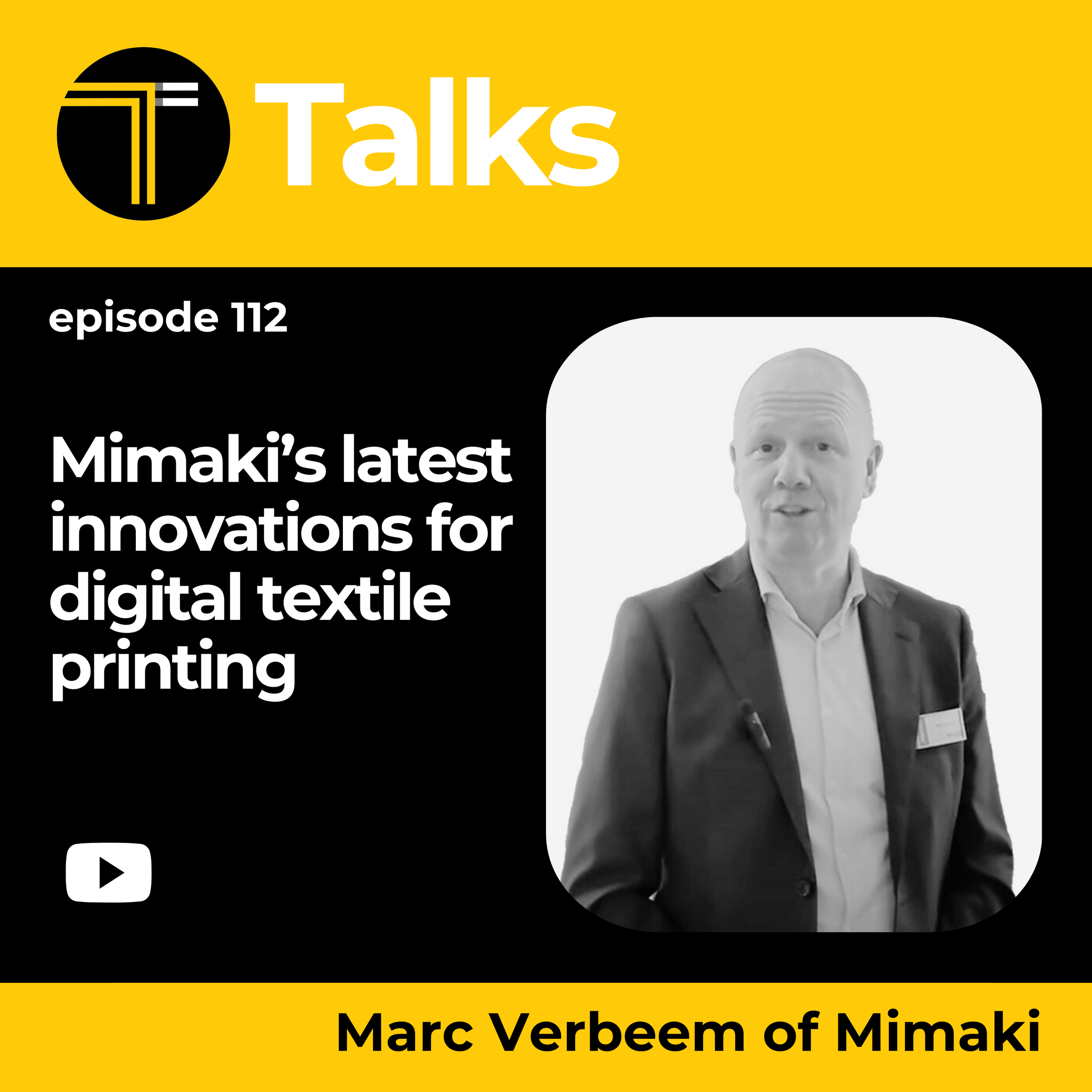
In this podcast episode, Debbie McKeegan interviews Mark Verbeem, the product management supervisor at Mimaki Europe, about sustainable product development in the printing industry.
They discuss the textile industry trends, market shifts, and the growing demand for sustainability. They also explore the evolving relationship between manufacturers and brands, the importance of transparency and storytelling, and the need for manufacturers to specify the source of inks, certifications, water usage, and energy usage.
The conversation emphasizes the need for strong partnerships with resellers and the importance of staying close to the market and customer needs.
The key takeaways include the potential for growth in the textile market, the focus on environmentally friendly solutions, and the importance of innovation and creativity in Mimaki's technology.
Listen to learn more…

Summary
In this podcast episode, Debbie McKeegan interviews Mark Verbeem, the product management supervisor at Mimaki Europe, about sustainable product development in the printing industry. They discuss the textile industry trends, market shifts, and the growing demand for sustainability. They also explore the evolving relationship between manufacturers and brands, the importance of transparency and storytelling, and the need for manufacturers to specify the source of inks, certifications, water usage, and energy usage.
The conversation then shifts to how Mimaki customers have evolved, including new business models, emerging markets, and the convergence from the signage industry. They discuss the benefits of onshoring and nearshoring, the ability to source multiple products from one print source, and the importance of agile manufacturing. The episode concludes with a discussion on adapting to on-demand printing and the introduction of innovative technologies like the Trappist solution for pigment applications and the Tiger 600 high-speed dye sublimation printer.
The conversation discusses the Tiger 600 printer and its target market, which includes larger production houses and smaller companies with diverse production requirements. The printer offers high-speed and high-quality printing, making it suitable for the fast fashion industry. The conversation also touches on the importance of automation and workflow integration in the printing process. The discussion then shifts to the direct-to-film (DTF) technology and its impact on the market. The Mimaki TXF150 and TXF300 machines are highlighted as disruptive solutions in the DTF market.
The conversation emphasizes the need for strong partnerships with resellers and the importance of staying close to the market and customer needs. The key takeaways include the potential for growth in the textile market, the focus on environmentally friendly solutions, and the importance of innovation and creativity in Mimaki's technology.
Takeaways
The textile industry is shifting towards sustainability, with a focus on reducing waste and CO2 footprint.
Manufacturers and brands need to collaborate to meet the growing demand for sustainable products.
Onshoring and nearshoring allow for shorter delivery times and more agile manufacturing.
Innovative technologies like the Trapis solution for pigment applications and the Tiger 600 printer for high-speed dye sublimation printing offer new opportunities. The Tiger 600 printer is targeted at larger production houses and smaller companies with diverse production requirements, particularly in the fast fashion industry.
Automation and workflow integration are crucial in the printing process to ensure efficiency and productivity.
The direct-to-film (DTF) technology, represented by the Mimaki TXF150 and TXF300 machines, has disrupted the market and offers advantages such as continuous printing and simplified finishing.
Strong partnerships with resellers and staying close to the market are essential for success in the textile industry.
Mimaki aims to continue developing printers that are environmentally friendly, energy-efficient, and enable customers to create unique and profitable products.
CHAPTERS
00:00 Introduction and Sustainable Product Development
03:00 The Evolving Relationship Between Manufacturers and Brands
06:42 Adapting to On-Demand Printing and New Business Models
12:37 Innovative Technologies for Pigment Applications and High-Speed Printing
29:08 Automation and Workflow Integration in the Printing Process
31:05 Disrupting the Market with Direct-to-Film Technology
36:06 Building Strong Partnerships and Staying Close to the Market
39:40 Innovation and Sustainability in Mimaki's Technology