
TEXINTEL TALKS - EPISODE 139 - The Nature of Fashion - The Deep Connections between Fashion, Nature, and Sustainability with Carry Somers

In this podcast episode, Carry Somers discusses her book, 'The Nature of Fashion,' which explores the deep connections between Fashion, Nature, and Sustainability.
She emphasises the importance of understanding fashion's botanical past to envision a more sustainable future. The conversation delves into the impact of natural fibers, the exploitation within the fashion industry, and the lessons we can learn from history.
Carry shares inspiring stories of individuals working to revive traditional textile practices, and highlights the need for a balance between modern innovation and ancient wisdom. Ultimately, she calls for a shift in perspective, urging listeners to see the deeper connections behind the materials we use in fashion.
Listen to learn more >>
KEY TAKEAWAYS:
The story of humanity can be told through textiles.
Textiles reflect historical choices and their impacts.
Natural fibers are often chemically processed, affecting biodegradability.
Fashion's issues stem from a disconnection with nature.
Exploitation and greed are intertwined with textile production.
Historical lessons can guide sustainable practices today.
Reviving traditional practices can lead to sustainable innovation.
Modern innovation should blend with ancient wisdom.
Understanding the origins of materials fosters deeper connections.
Chapters
00:00 Introduction to The Nature of Fashion
01:33 Exploring Fashion's Botanical Past
12:20 The Dark Side of Fashion: Exploitation and Greed
18:55 Rediscovering Lost Wisdom in Textiles
23:36 The Separation from Nature in Fashion
27:36 Balancing Modern Innovation with Ancient Knowledge
35:12 A Call to Action for Consumers


Join host Debbie McKeegan for an inspiring conversation with Danit Peleg, founder of 3D Fashion Lab and a trailblazer in 3D-printed fashion.
Danit reflects on her journey from experimenting with desktop printers to creating soft, wearable textiles—and explores how AI is helping designers turn ideas into garments more quickly. Discover how bio-based materials, custom-fit designs, and on-demand local production could reshape the way fashion is made and consumed, while reducing waste and opening up new creative possibilities for designers and customers alike.
Listen to learn more >>

In this podcast episode, James Watson, Managing Director of Surface Print, discussed the evolution of his fourth-generation family business in Lancashire.
Surface Print combines traditional craftsmanship with digital innovation- investing £2 million in a hybrid rotary screen Gravure machine and £600,000 in new HP digital printers.
The company achieved ISO 14001 accreditation, introduced solar panels, and plans to install a new boiler and water recirculation system. Watson emphasised the importance of balancing traditional techniques with modern technologies to maintain quality and sustainability. The company also leverages AI for efficiency and marketing, while maintaining a family-oriented work culture.
Listen to learn more >>
From Dongles to Digital: Future‑Proof Licensing for Global Creative Teams
Host Debbie McKeegan talks with NedGraphics President Frank Maeder and 10Duke CEO Neil Fenton about the shift from hardware dongles to secure, user‑centric cloud licensing.
They discuss how this transition reduces friction for designers, supports hybrid and global workflows, strengthens security and resilience, and even contributes to sustainability by eliminating physical keys and their shipping footprint.
If you’re in fashion, design, CAD/CAM, or any creative production environment and want to future‑proof your software delivery, this discussion is packed with insight and real‑world examples.
Listen to learn more >>
In this insightful interview, Dave Conner, Director of Product Marketing at Stahls and Fulfill Engine, shares his journey into the textile industry.
The commercial opportunity presented by printed, personalised merchandise is already a lucrative revenue stream; it is the core driver of growth in a multi-billion-pound industry. And the mandate for print businesses is clear: automate, adapt, and offer undeniable added value, or choose to gradually lose market share.
This is not merely a shift in consumer demand; it is the fundamental evolution of the printed surface. By leveraging adaptive manufacturing, 3D added value, and sustainable surface effects, digital printers can secure their future by offering unique print applications across apparel, interior décor, accessories, and bespoke objects.
Discover how automation, materials, and community collaboration are shaping the future of on-demand garment decoration and fulfilment.
Listen to learn more >>
In this podcast episode, Ulrich Scherbel, CEO of AMSilk, discusses the innovative production of bioengineered spider silk protein and its applications in the textile industry, going far beyond fibre and with the power to radically transform inks and chemistry.
He explains the challenges of scaling up production, the importance of sustainability, and how AMSilk's technology can significantly reduce carbon emissions. The conversation also touches on the role of AI in protein bioengineering and the future vision for transforming the textile supply chain through collaboration and innovation.
Listen to learn more >>

What if the next dress you wore never touched the factory floor?
This is no longer a fringe experiment. It is a maturing production model, backed by genuine material science, real circularity, and an AI-assisted workflow that is becoming more accessible by the month.
Her advice to designers and brands alike is refreshingly practical: start small, get hands-on with an accessible 3D printer, and build fluency before the technology becomes table stakes. The businesses that treat this moment with curiosity, rather than scepticism, will be the ones shaping fashion's next decade rather than reacting to it.

The 2027 FESPA Awards are now open for entry, and the message to businesses across textiles, apparel, interiors and beyond is simple: your work deserves recognition. Every gold winner featured here started in the same place every entrant does - with a project they believed was worth submitting.
As the only independent awards programme with 18 categories dedicated to print and signage, FESPA offers a genuinely global stage, with shortlisted entries displayed at FESPA Global Print Expo in Spring 2027.

Colour Is Too Important to Leave to Chance
Print will always be the part of the garment people see first.
But the sum of all parts — the fabric, the trims, the fasteners, the finish — is what determines whether a design actually delivers on its promise. Brands that continue to treat colour as a single creative decision, rather than a coordinated technical discipline spanning their entire supply chain, will keep paying for it in re-dips, delays, and disappointed design teams.
A Century of Textiles, and an Ever-changing World
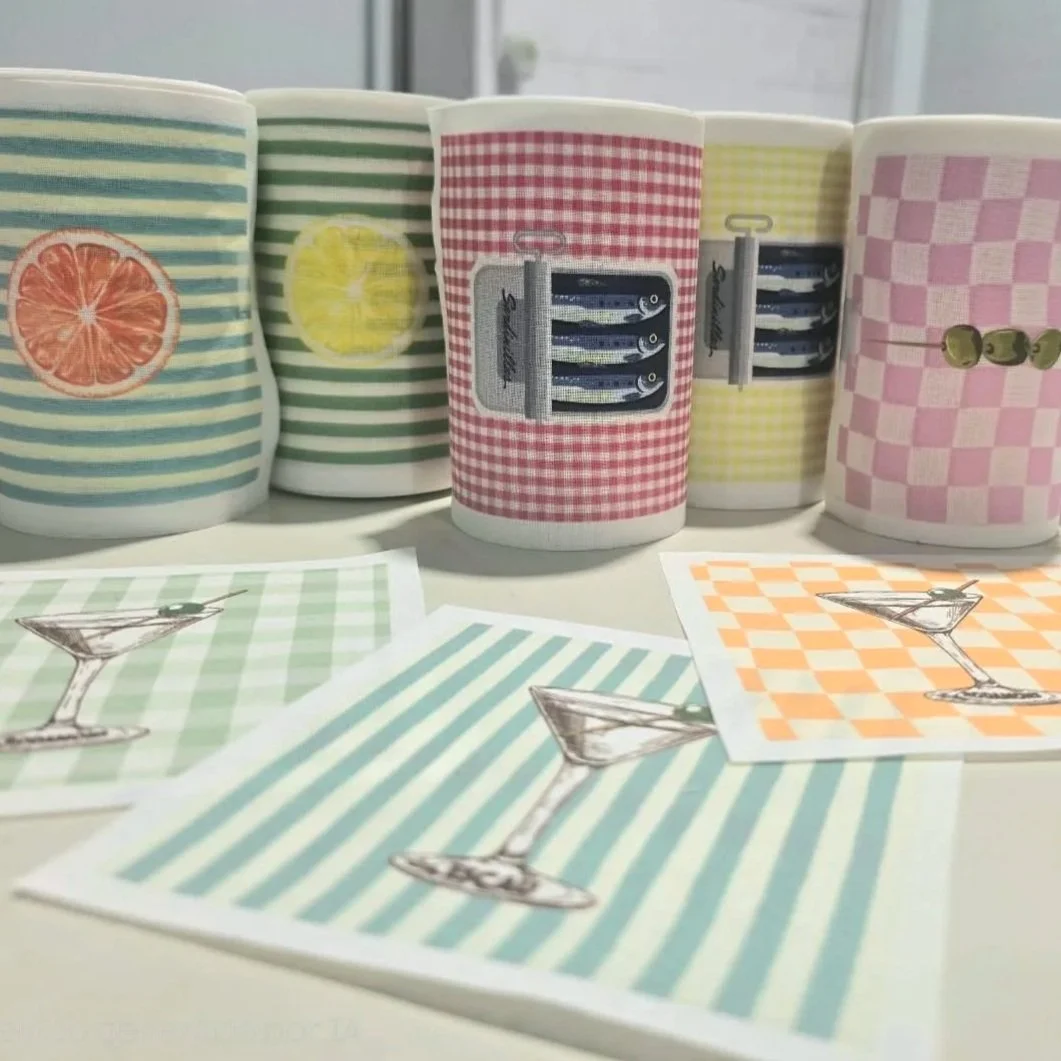
Few companies can trace their roots back more than a century and still count themselves among their industry's innovators. Texia, headquartered in Monistrol de Montserrat, Spain, is one of them.
But the story of Texia is not simply one of longevity.
It is a story of continual reinvention. As the textile industry has grown more global and competitive, Texia has repeatedly reshaped its business, investing in technology, developing its own brands, and placing sustainability at the centre of its mission. In doing so, it offers a compelling example of how a heritage manufacturer can lead rather than follow through a period of profound industry change. Image Credit: Texia
What are we craving Ultimately?
The instinct to slow down while simultaneously optimising every measurable aspect of life isn't a passing curiosity. It's a structural response to a world that feels increasingly unstable, and it's reshaping what people expect from their homes, hotels, workplaces and healthcare environments alike.
For the design and manufacturing sectors, this means rethinking both product and process.

Telford, UK – October 2026 – China Print Supplies UK Ltd has today released its new 2026 price list, introducing new machines, updated bundle deals, and revised pricing across its range of print, cutting, and finishing solutions.
The updated catalogue reflects the company's ongoing commitment to equipping print businesses with reliable, cost-effective equipment as the industry continues to evolve.
With new machinery added to the lineup and refreshed bundle options, China Print Supplies UK aims to make it easier for customers to find solutions tailored to their operational needs and budgets.

Burgdorf, Switzerland / Geretsried, Germany, October, 2026 – Long-lasting performance textiles require solutions that address a wide range of consumer expectations, from lasting freshness and comfort to reliable protection against the elements.
SANITIZED and RUDOLF are highlighting their latest innovations, demonstrating how specialized textile technologies can support the functional durability and wearability of modern apparel.

Altstätten, Switzerland – October 2026 – Zünd has announced that it will open its headquarters in Altstätten, Switzerland, on 18–19 November 2026 for Zünd Technology Days 2026, a two-day event dedicated to live technology demonstrations, expert presentations, and an in-depth look at real-world production processes.
Milan, Italy – October 2026 – Agfa has confirmed its participation in Viscom Italia 2026, the international trade fair dedicated to visual communication and graphic arts.
The event will take place on 28–29 October 2026 at the Allianz MiCo Convention Center in Milan, with doors open daily from 9:30 AM to 6:00 PM.

Watford = Hertfordshire- October – 2026 – Epson has announced that selected SureColor printers and inks are now covered by the 3M™ MCS™ Warranty, marking a significant step forward in the company's ongoing commitment to delivering durable, high-performance graphics solutions.
The certification reinforces the longstanding relationship between Epson and 3M, and underscores both companies' shared dedication to quality and innovation in the graphics industry.