
Global Brands and Financiers Linked to Borneo Deforestation Through The Royal Golden Eagle (RGE) Group of Companies
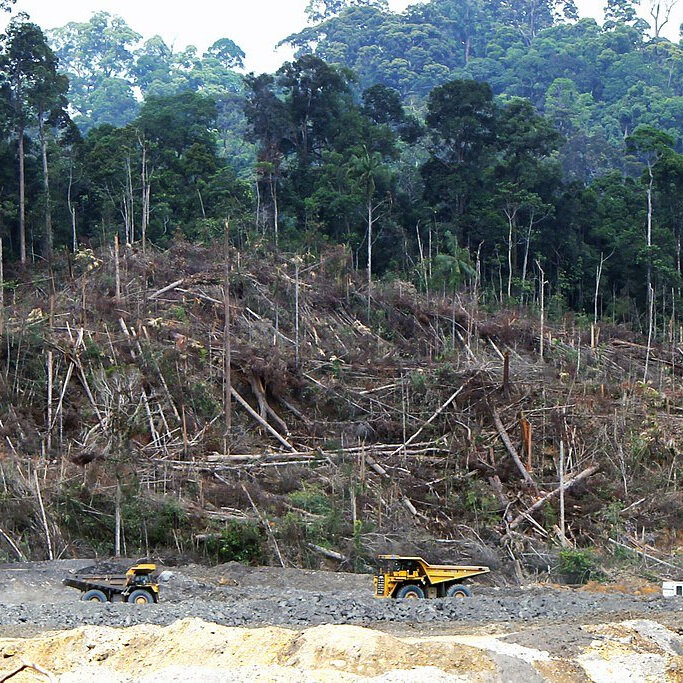
Image Courtesy of Wikipaedia
In a recent report, NGO’s, including Greenpeace and The Rainforest Action Network, state that In June 2015 APRIL Group, Indonesia’s second largest pulp and paper producer, and its parent conglomerate, Royal Golden Eagle (RGE) Group owner of Sateri, one of the the worlds largest viscose fibre producers, adopted policies to have “no deforestation” in their supply chains.
APRIL also committed to “no new development by APRIL and its suppliers on forested peatland.”
Based on analysis using satellite imagery, this report documents extensive deforestation, including clearance of forests on peatlands, in the concession area of PT Adindo Hutani Lestari (Adindo), one of APRIL’s top five wood suppliers, during the period June 3, 2015 – August 31, 2020.
These findings represent significant violations of both APRIL’s and RGE Group’s commitments to stop new development on forested peatlands – and more broadly, they challenge the integrity of the groups’ “no deforestation” pledge.
Deforestation was detected on 7,291 hectares (ha) of land (equivalent to 10,000 football pitches) during a period in which Adindo delivered over 2 million cubic meters of wood (nearly 80,000 truckloads) to APRIL’s pulp mill in Sumatra. .
APRIL has sought to assure stakeholders of its compliance with its Sustainable Forest Management Policy 2.0 by commissioning international auditing firm KPMG to produce “limited assurance reports”.
Yet neither the latest KPMG “assurance report”, published in July 2019, nor any of the previous ones, indicated that extensive deforestation has occurred within the Adindo concession on HCV areas and peatlands.
The apparent failure of the KPMG “assurance reports” to detect and report on this deforestation and peatland development raises concerns about the effectiveness of APRIL’s systems to ensure compliance with its own sustainability policy.
Collectively, these findings raise troubling questions about the manner in which APRIL and the RGE Group’s commitments to “no deforestation” and “no new development on forested peatlands” are being both implemented and monitored.
This impacts the integrity of sustainability commitments by downstream users of APRIL’s pulp, including its sister company Sateri, a leading producer of viscose staple fiber (VSF).
It is believed that Sateri’s customers, and, indirectly, APRIL’s, include many of the world’s largest fashion brands, “big box” clothing stores, and online retailers.
RGE has received significant financing from multinational banks, including those with stringent Environmental, Social and Governance (ESG) financing criteria.
Between 2017 and April 2020, RGE received close to $2.6 billion in loans for its pulp & paper operations, of which over $1.8 billion was directed to APRIL.
Some of the largest lenders have included Japanese megabank Mitsubishi UFJ Financial Group (MUFG) as well as Dutch bank ABN AMRO, despite both being signatories to the UN Principles for Responsible Banking (PRB) and having policies on financing sustainable palm oil.
ABN AMRO’s financing of RGE is particularly egregious given its explicit requirement that clients who produce or process palm oil have a “commitment to source from plantations which protect HCV Forest, HCS and peatland.” ICBC, a PRB founding member, has also financed RGE’s operations.
“The reputations of major brands and banks continue to face serious risk of damage through association with Royal Golden Eagle,” said Gemma Tillack with Rainforest Action Network. “To insulate themselves from market backlash, these brands and banks must all suspend sourcing from, or joint-ventures and financing of, the Royal Golden Eagle group and all its subsidiaries and associated companies until the corporate group can prove its compliance with No Deforestation, No Peatland and No Exploitation benchmarks.”