
WHEN THE SHOE FITS...HOW VOLUMENTAL USES 3D SCANNING TO DELIVER THE PERFECT FIT
When the Shoe Fits…How Volumental Uses 3D Scanning to Deliver the Perfect Fit
As consumers increasingly turn to online shopping, brands and retailers are looking for ways to enhance the customer experience and to reduce product returns when the product the consumer receives doesn’t fit or otherwise doesn’t meet expectations. Volumental has an answer for shoe retailers and brands.
Guest Article By Cary Sherburne of What They Think
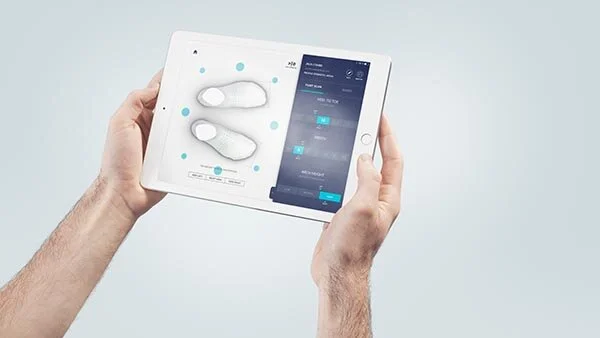
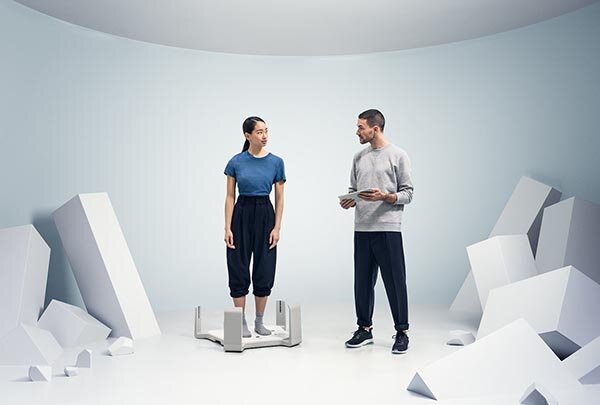
Volumental spun out of the Royal Institute of Technology in Stockholm in 2012 as an AI-based tech company. The goal was to bring to market a 3D scanner for footwear that could quantify fit for consumers, making it easier for them to not only buy shoes that fit, but also get recommendations on styles more suited to their feet. For brands and retailers, an improved customer experience leading to increased customer loyalty and a reduction in the number of shoes purchased and then returned were among the expected benefits.
Alper Aydemir, the company’s Chief Technology Officer, reports that today the company has about 50 employees and has foot scanners deployed to about 2,000 locations around the globe. “To date, we have scanned about five million people, and that number grows every day,” he says. “We are a tech company in our DNA, but we also combine that with great design and taste because those are the things our brand and retailer customers worry about.”
Volumental headquarters works with its global and regional footwear brands and retailers helping them plan both retail and ecommerce implementations of the technology. “Our scanners are placed primarily in retail locations,” Aydemir explains. “The customer walks in, and a store associate can get a scan in about five seconds. Along with the scan, we present shoe recommendations on an iPad based on the 3D data and machine learning models built on top of that. The iPad is linked to the cloud so that data can be aggregated for further machine learning. It’s great when the physical and digital worlds can fuse together. Most of our competition approaches this from the physical world; we are more on the merging side.”
Beyond giving the customer a great shoe fit, brands and retailers can use the data for highly targeted personalized messaging to individual shoppers as well as ecommerce integration. “With that integration,” Aydemir says, “shoppers can log into the brand or retailer site and immediately see footwear and size recommendations.”
The software is customized for each brand or retailer, and Volumental offers easy onboarding. A typical brand or retailer can be up and running in two to three weeks at most. “We don’t have to see or scan the shoes,” Aydemir notes. “We get their catalog and go from there.
The system is based on combining 3D scans with purchases and artificial intelligence to determine which kind of shoe is best for each kind of foot.
Even for anonymous website visitors, there are shoe tags that explain how each shoe fits, whether it is for high arches, or comes in narrow or wide widths. This is based on all the data we have from the foot scans we have done.”
The next step is to develop a mobile app so that people can self-scan in their homes “This is not meant to replace our real scanner,” Aydemir says, “which will be more accurate and provides a different retail experience. But scanning at home is a huge enabler to go from scan to website. We think that will have a huge impact on reducing returns and on the experience in general. Where we have integrated already with ecommerce and online portals, we are seeing great conversion rates, high customer satisfaction, and reduced return rates.” Initially, Volumental plans to release an iOS mobile app, with Android to follow later. “The bottom line is, you should not have to think about fit anymore but just focus on the shoes you like to wear,” Aydemir comments.
At this point, the company does not plan to extend into design customization, such as customization services offered by several athletic footwear brands, according to Aydemir.
“It’s more about the shopping experience and the personalization of digital channels,” he says. “We have figured out how to acquire and pay for things online, and the next level is building something that is experiential and that changes based on who you are and what you want. That is limited right now in footwear.”
He also points out that especially for large brands or retailers with huge catalogs, the consumer faces a search problem, and any type of help with the search will improve the experience. “What we offer is high personalization based on your 3D foot shape, and it doesn’t get more personal than that,” Aydemir remarks. “Obviously, once you are scanned, you can more easily buy shoes you will be happy with, whether hitting the high street or shopping online.”
In terms of future expansion into other types of body scans, Aydemir says, “I definitely see that in our future, but for now we are focused on footwear. We want to get that right and do it really well, become the best in the world and change the industry. Until that mission is accomplished, we will be focused on footwear.”
CARY SHERBURNE IS A WELL-KNOWN AUTHOR, JOURNALIST AND MARKETING CONSULTANT WHOSE PRACTICE IS FOCUSED ON MARKETING COMMUNICATIONS STRATEGIES FOR THE PRINTING AND PUBLISHING INDUSTRIES.
Cary Sherburne is available for speaking engagements and consulting projects. To get more information contact us.
Please offer your feedback to Cary. She can be reached at cary@whattheythink.com
